Control Wire
CN → US| HS Code | Tariff Rate | Origin | Destination | Doc |
|---|---|---|---|---|
| 8544493040 | 40.3% | CN | US | Official Doc |
| 8544493080 | 40.3% | CN | US | Official Doc |
Product Images
AI Analysis
🔌 Insulated Control Wires & Cables (Voltage ≤ 1,000 V)
🌐 HS Code Reference & Customs Clearance Guide | 2026 Latest Tariff Analysis | Professional Entry Strategy
📌 I. Product Definition & Classification: Do You Really Understand "Control Wire"?
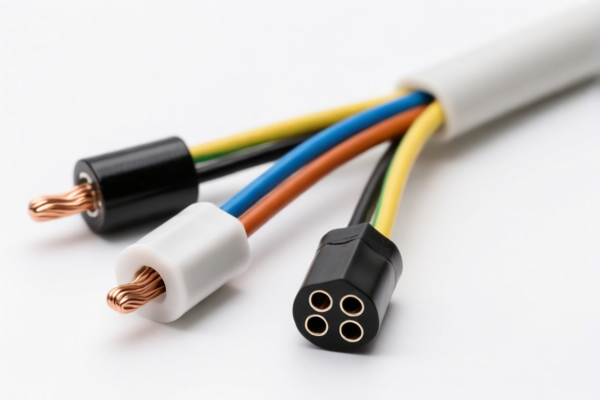
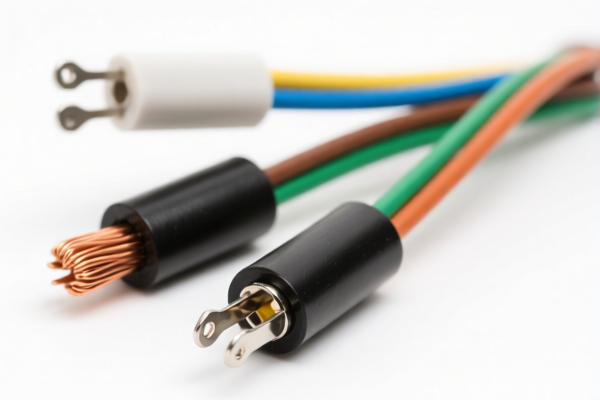
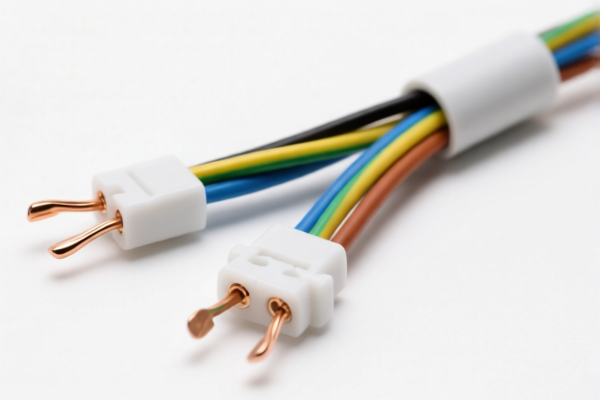
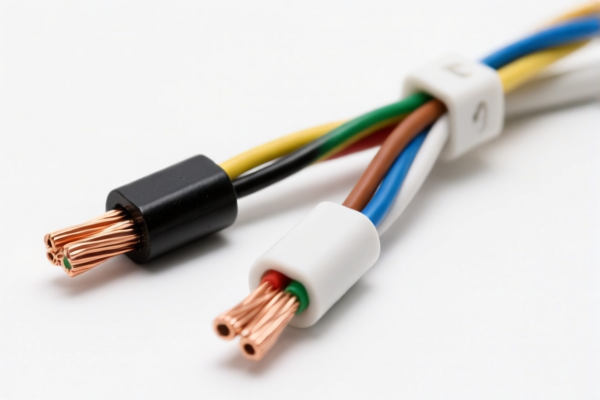
Control wires (often referred to as Instrumentation Cables or Control Cables) are essential components in industrial automation, power distribution, and electrical machinery. They transmit signals, control commands, or low-power electrical energy between control panels, sensors, actuators, and machinery.
In international trade, these products are strictly categorized by Voltage, Conductor Material, and Insulation Type. For the scope of this guide, we focus on Insulated Electric Conductors for Voltage Not Exceeding 1,000 V.
⚠️ Critical Distinction:
- Insulated Wires/Cables: Covered under HS 8544.
- Optical Fiber Cables: Covered under a different subheading (not included in this specific dataset).
- Connectors: If sold separately, they may fall under HS 8536, but fitted cables stay under 8544.
- Voltage Threshold: The key split in your data is between "Not Exceeding 1,000 V" and specific voltage brackets (like >600V) within that limit.
📦 II. HS Code Classification Details (2026 Latest Tariff Authority)
Based on the provided <DATA>, the product falls under Heading 8544: Insulated (including enameled or anodized) wire, cable... other insulated electric conductors...
Specifically, it is classified under 8544.49: Other electric conductors, for a voltage not exceeding 1,000 V.
The two specific HS Codes provided are:
| HS Code | Product Description | Key Characteristics | Voltage Range | Conductor Material |
|---|---|---|---|---|
8544.49.30.40 |
Other Electric Conductors, For a voltage exceeding 600 V | • Insulated wire/cable • Not exceeding 1,000 V • Voltage > 600 V • Of Copper |
600 V < Voltage ≤ 1,000 V | Copper |
8544.49.30.80 |
Other Electric Conductors, Of Copper (Other) | • Insulated wire/cable • Not exceeding 1,000 V • Not exceeding 600 V (implied by "Other" in contrast to the >600V code) • Of Copper |
Voltage ≤ 600 V | Copper |
🔍 Interpretation Note:
- The dataset explicitly separates conductors by voltage bands within the "≤ 1,000 V" category.
-8544.49.30.40applies if the rated voltage is between 601 V and 1,000 V.
-8544.49.30.80applies if the rated voltage is 600 V or lower (the "Other" category for copper conductors ≤1,000V).
- Both require Copper conductors. Aluminum or other metals are excluded from this specific snippet.
💰 III. 2026 Latest Tariff Rate Details (Tax Breakdown)
✅ Applicable Jurisdiction: United States (US)
✅ Origin: China (CN) (Implied by "Additional Tariff" structure)
✅ Effective Date: Current US Trade Policy (Section 301 & IEEPA)
🎯 1. 8544.49.30.40 —— Insulated Copper Wire/Cable, 600V < V ≤ 1,000V
| Item | Content |
|---|---|
| Base Tariff | 0.0% (Basic duty rate) |
| Additional Tariff | 0.0% (No Section 301 or IEEPA surcharge listed in this specific snippet) |
| Total Tax Rate | 0.0% |
| Tax Detail | Base: 0.0%, Additional: 0.0% |
| Calculation | CIF Value × 0.0% = $0 |
| Legal Basis | HS 8544.49.30.40 under US HTSUS |
📌 Explanation:
- This specific code appears to be exempt from additional tariffs in this dataset.
- This is a rare and favorable classification for high-voltage (but still ≤1kV) copper cables.
- Warning: Verify if recent executive orders have changed this status, as tariff lists are dynamic. However, based strictly on<DATA>, it is 0%.
🎯 2. 8544.49.30.80 —— Insulated Copper Wire/Cable, V ≤ 600V
| Item | Content |
|---|---|
| Base Tariff | 5.3% |
| Additional Tariff | 25.0% (Section 301/Trade War Surcharge) |
| Total Tax Rate | 30.3% |
| Tax Detail | Base: 5.3%, Additional: 25.0% |
| Calculation | CIF Value × 30.3% |
| Legal Basis | HS 8544.49.30.80 under US HTSUS |
📌 Explanation:
- This code attracts the standard 5.3% MFN (Most Favored Nation) duty.
- It is subject to the heavy 25% additional tariff, likely under Section 301 of the Trade Act of 1974 (targeting Chinese goods).
- Total Cost Impact: 30.3% of the customs value. This significantly affects profit margins.
🛠️ IV. Customs Clearance Practical Advice (Avoiding Pitfalls)
✅ 1. Documentation Checklist (Essential for Smooth Clearance)
| Document | Required? | Notes |
|---|---|---|
| ✅ Commercial Invoice | ✔️ | Must clearly state: "Insulated Copper Wire/Cable", Voltage Rating, Conductor Material (Copper). |
| ✅ Packing List | ✔️ | Detail net/gross weight, number of spools/units. |
| ✅ Product Specification Sheet | ✔️ | Must confirm: 1. Max Voltage Rating (to determine if >600V or ≤600V). 2. Conductor Material (Copper vs. Aluminum). 3. Insulation Type (Enameled, Anodized, PVC, XLPE). |
| ✅ Country of Origin Certificate | ✔️ | To prove origin for tariff calculation. |
| ✅ Letter of Guarantee | ✔️ | If unsure about voltage rating, provide a signed statement that the product does not exceed 1,000V. |
✅ 2. Declaration Tips (Key Formulas)
🔥 “Voltage Determines Code, Copper is Key, 600V is the Split!”
| Scenario | Correct HS Code | Tax Rate | Risk if Wrong |
|---|---|---|---|
| Copper Wire, 480V, Insulated | 8544.49.30.80 |
30.3% | Under-declaration of tax if misclassified as 0% |
| Copper Wire, 800V, Insulated | 8544.49.30.40 |
0.0% | Over-declaration if misclassified as 30.3% |
| Aluminum Wire, ≤1,000V | ❌ Not in Dataset | N/A | Must consult other HTSUS codes (likely higher base rate) |
| Fiber Optic Cable | ❌ Not in Dataset | N/A | Misclassification as 8544 → Penalties + Rejection |
✅ 3. Special Considerations
| Situation | Handling Advice |
|---|---|
| Mixed Voltage Ratings | If a shipment contains both ≤600V and >600V cables, separate them or declare both HS codes on the same entry to avoid penalties. |
| Cable Assemblies | If the wire is fitted with connectors (e.g., Molex, JST), it may still fall under 8544 if the connector is integral. Ensure the description says "with connectors". |
| "Other" Category Trap | For 8544.49.30.80, ensure the product is not excluded by other "Notes to Chapter 85". For example, if it is a coaxial cable, it might have a different subheading. However, the dataset includes "coaxial cable" in the header, so verify if your specific cable is truly "other". |
🌍 V. Global Market Comparison (2026)
| Country/Region | Recommended HS Code (≤1kV Copper) | Tariff Estimate | Notes |
|---|---|---|---|
| 🇺🇸 USA | 8544.49.30.40 (0%) or 8544.49.30.80 (30.3%) |
0% or 30.3% | Highly sensitive to voltage rating. Section 301 applies to ≤600V. |
| 🇨🇳 China | 8544.49.30.80 |
5.3% - 8% | Base rate varies; no "Additional Tariff" for imports into China typically. |
| 🇪🇺 EU | 8544.42 or 8544.39 |
0% - 2.7% | Often lower base rates; check for anti-dumping duties on copper. |
| 🇬🇧 UK | 8544.42 |
0% - 5% | Post-Brexit tariff schedules; generally competitive. |
📌 Conclusion:
- USA is the most complex market due to the voltage-dependent tariff split and Section 301.
- EU/UK generally have simpler, lower base rates but may have environmental/RoHS compliance costs.
📌 VI. Common Errors & Pitfalls (Lessons Learned)
❌ Error 1: Ignoring the 600V Threshold
👉 Result: Misclassifying a 750V cable as 8544.49.30.80 (30.3%) instead of 8544.49.30.40 (0%).
💡 Fix: Check the insulation label. It must explicitly state the rated voltage.
❌ Error 2: Assuming All Insulated Wires are "Other"
👉 Result: Coaxial cables or fiber optics misclassified.
💡 Fix: Verify if the product is a standard insulated conductor. Coaxial is included in 8544 header but may have specific subheadings.
❌ Error 3: Ignoring Material
👉 Result: Declaring Aluminum wire as Copper.
💡 Fix: Copper has different tariff treatments in some jurisdictions. Ensure material is certified.
🎯 VII. Conclusion: Precision Saves Money
🎯 Remember This Rule:
🔹 "Voltage > 600V = 0% Tax"
🔹 "Voltage ≤ 600V = 30.3% Tax"
🔹 "Copper is Required for This Dataset"
📌 Pro Tip:
If you are shipping control cables to the US:
1. Verify the voltage rating on every spool.
2. If you can design/spec a cable rated at 601V instead of 480V, you save 30.3% in tariffs.
3. Always use the phrase "Insulated Copper Conductor, Not Exceeding 1,000 Volts" in the declaration.
📣 Immediate Action:
📞 Confirm voltage rating with your engineering team.
📄 Update your packing list to highlight voltage and material.
🚀 Clear customs smoothly, avoid 30.3% penalties, and boost your margin!
✨ Professional Customs Compliance Starts with Accurate Classification!
💼 Every Percent Counts in International Trade!
Customer Reviews
About HS Code Classification
The Harmonized System (HS) is an internationally standardized nomenclature developed by the World Customs Organization (WCO) to classify traded products. Over 200 countries use the HS system as the basis for customs tariffs, trade statistics, and import/export regulations.
Each HS code follows a hierarchical structure:
- Chapter (2 digits) — Broad category of goods (e.g., Chapter 84: Machinery and Mechanical Appliances)
- Heading (4 digits) — More specific grouping within the chapter
- Subheading (6 digits) — Internationally standardized breakdown, used by all WCO member countries
- National subdivisions (8-10 digits) — Country-specific extensions for further classification, such as US HTSUS 10-digit codes
Correct HS code classification is essential for smooth customs clearance, accurate duty payment, and compliance with trade regulations. Misclassification can lead to customs delays, overpayment of duties, or penalties.
When importing from CN to US, the applicable tariff rates may include:
- Most-Favored-Nation (MFN) rate — The standard duty rate applied to WTO members
- General rate — Applied to countries without trade agreements
- Trade remedy duties — Additional tariffs such as Section 301 (anti-dumping), Section 232 (national security), or countervailing duties
The information provided on this page is for reference purposes only. For official classification, please consult with your local customs authority or a licensed customs broker.