controllers
CN → US| HS Code | Tariff Rate | Origin | Destination | Doc |
|---|---|---|---|---|
| 8471900000 | 35.0% | CN | US | Official Doc |
| 9032896075 | 36.7% | CN | US | Official Doc |
| 9032896040 | 36.7% | CN | US | Official Doc |
| 8471801000 | 35.0% | CN | US | Official Doc |
| 8542310030 | 60.0% | CN | US | Official Doc |
Product Images
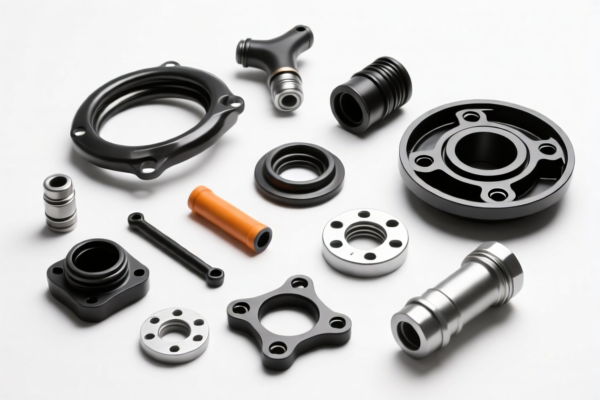
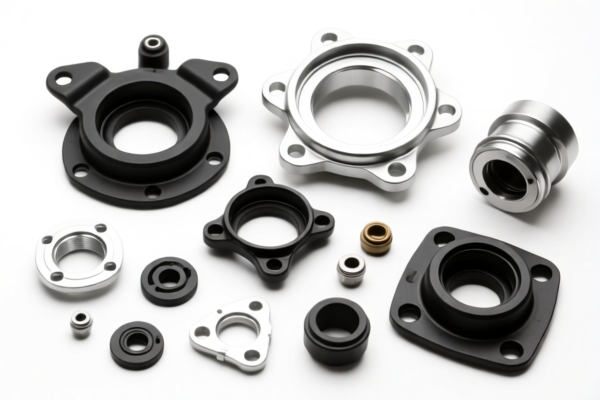
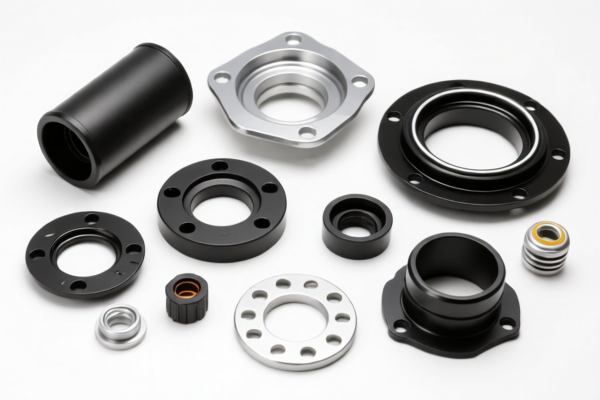
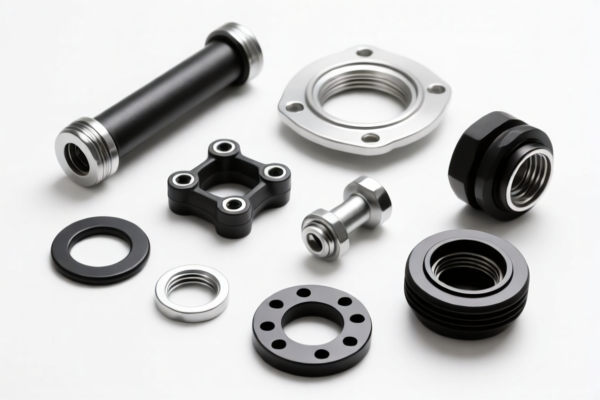
AI Analysis
🎛️ Controllers (Intelligent & Process Control Units)
🌐 HS Code Reference & Clearance Guide | 2026 Latest Tariff Analysis | Professional Customs Strategy
📌 1. Product Definition & Classification: Do You Really Understand "Controllers"?
Controllers are the "brains" of modern machinery, ranging from automated data processing systems to industrial temperature control devices. In international trade, the classification hinges entirely on application logic and functional attributes. Misclassification here can lead to massive tariff discrepancies (e.g., 35% vs. 60%).
Core Distinctions: * Data Processing Controllers (8471/8542): Used for computing, data handling, or general intelligent control without specific industrial process parameters. * Process Control Instruments (9032): Used for regulating physical parameters (temperature, pressure, flow) in industrial environments.
⚠️ Critical Identification Point:
- If it handles data/logic for computers or general intelligence → Likely Chapter 84 or 85.
- If it specifically regulates industrial processes (e.g., thermostats, flow regulators) → Likely Chapter 90.
- No Material Conflict: None of the provided HS codes have material restrictions, so function is the sole determinant.
📦 2. HS Code Classification Details (2026 Latest Tariff Authority)
Based on the provided data, here are the specific classifications for "Controllers":
| HS Code | Product Description | Summary of Classification Logic | Total Tax Rate |
|---|---|---|---|
| 8471.90.00.00 | Parts of Automatic Data Processing Machines | Controller as a control/processing component of ADP equipment. Fits the "Other" category with no material conflicts. | 35.0% |
| 9032.89.60.75 | Process Control Instruments (Other) | Controller as a core component of process control instruments. Fits "Other" category; no functional/material conflict. | 36.7% |
| 9032.89.60.40 | Process Control Instruments (Other) | Matches "Process control instruments and devices." Fits the "Other/Other" catch-all based on temperature control logic. | 36.7% |
| 8471.80.10.00 | Control Units for ADP | Matches "Control Unit" definition exactly. No explicit material restrictions; no conflict with ADP equipment. | 35.0% |
| 8542.31.00.30 | Intelligent Controllers | "Intelligent Controller" fits the general "Controller" category under "Other" with no material conflicts. | 60.0% |
| 8542.31.00.15 | Microcontrollers/Controllers | Matches definition of "Controllers (including microcontrollers)." No material or form conflicts. | 60.0% |
🔍 Key Insight:
- The lowest tax burden (35%) is for controllers classified as parts of Automatic Data Processing (ADP) machines.
- The highest tax burden (60%) is for Intelligent/Microcontrollers classified under electronic integrated circuits/components (8542).
- Process Control (9032) sits in the middle at 36.7%, often overlooked but critical for industrial equipment.
💰 3. 2026 Latest Tariff Rate Breakdown (Including Surcharges & Policy Add-ons)
✅ Applicable Country: United States (US)
✅ Origin: China (CN)
✅ Effective Date: Post-2025 policies (Section 301 & IEEPA)
🎯 1. 8471.90.00.00 & 8471.80.10.00 —— ADP Equipment Parts/Control Units
| Item | Content |
|---|---|
| Base Duty | 0.0% |
| Section 301 Surcharge | +25.0% |
| IEEPA Clause 122 | +10.0% |
| Total Rate | 35.0% |
| Tax Calculation | CIF Value × 35% |
| De Minimis Exemption | ❌ Not Applicable (High tax burden prevents small parcel benefits) |
| Legal Path | USITC:8471.x → Section 301: 25% → IEEPA: 10% |
📌 Explanation:
- These codes are favored for cost-saving because the Base Duty is 0%.
- The total 35% is driven solely by punitive tariffs.
- Suitable for computer peripherals, server control units, and general computing controllers.
🎯 2. 9032.89.60.75 & 9032.89.60.40 —— Process Control Instruments
| Item | Content |
|---|---|
| Base Duty | 1.7% |
| Section 301 Surcharge | +25.0% |
| IEEPA Clause 122 | +10.0% |
| Total Rate | 36.7% |
| Tax Calculation | CIF Value × 36.7% |
| De Minimis Exemption | ❌ Not Applicable |
| Legal Path | USITC:9032.x → Section 301: 25% → IEEPA: 10% |
📌 Explanation:
- Slightly higher than ADP controllers due to the 1.7% Base Duty.
- Best for industrial automation, HVAC controls, and manufacturing process regulators.
🎯 3. 8542.31.00.30 & 8542.31.00.15 —— Intelligent & Microcontrollers
| Item | Content |
|---|---|
| Base Duty | 0.0% |
| Section 301 Surcharge | +50.0% |
| IEEPA Clause 122 | +10.0% |
| Total Rate | 60.0% |
| Tax Calculation | CIF Value × 60% |
| De Minimis Exemption | ❌ Not Applicable |
| Legal Path | USITC:8542.x → Section 301: 50% → IEEPA: 10% |
📌 Warning:
- HIGHEST TAX BURDEN (60%).
- The Section 301 surcharge for electronic components/microcontrollers is 50%, double that of ADP parts.
- Only use this code if the product is strictly defined as a microcontroller or electronic control circuit board, not a complete functional unit. Avoid if possible due to cost.
🛠️ 4. Clearance Practical Advice (Battle-Tested Pitfall Guide)
✅ 1. Preparation Checklist (Non-negotiable)
| Material | Required | Note |
|---|---|---|
| ✅ Product Datasheet | ✔️ | Must specify "Function": Is it for Computing (ADP) or Process Control? |
| ✅ Circuit Diagram | ✔️ | Critical to distinguish between a "Microcontroller Chip" (8542) and a "Control Unit" (8471/9032). |
| ✅ Product Photos | ✔️ | Clear shots of labels, interfaces, and housing. |
| ✅ Commercial Invoice | ✔️ | Description must be precise: e.g., "Control Unit for Server" vs. "Process Control Instrument." |
| ✅ Origin Certificate | ✔️ | Essential for confirming China origin and applying correct IEEPA rates. |
✅ 2. Declaration Strategy (Key Mnemonic)
🔥 “Define Function First, Avoid 60% Trap, Choose ADP or Process, Not Chip!”
| Scenario | Recommended HS Code | Reason |
|---|---|---|
| Controller for PC/Server/Network | 8471.90.00.00 / 8471.80.10.00 | Low Base Duty (0%), Total 35%. Safest for IT gear. |
| Industrial Thermostat/Flow Controller | 9032.89.60.75 / 9032.89.60.40 | Fits "Process Control." Total 36.7%. Slightly higher base, but legally accurate for industrial use. |
| Standalone Microcontroller Chip/IC | 8542.31.00.30 / 8542.31.00.15 | Only if it's an electronic component. Total 60%. Avoid if it's a complete unit. |
✅ 3. Special Cases & Tips
| Situation | Handling Advice |
|---|---|
| "Smart Controller" (IoT Device) | If it connects to the internet for data, argue for 8471 (ADP) to save 24.5% vs. 8542. If it controls a machine's temperature, argue for 9032. |
| Kit vs. Finished Unit | Do not disassemble a finished controller into parts (chip + PCB + Case) to lower tax. Customs will reclassify as the finished unit (highest applicable tax) and issue penalties. |
| Pre-certified Devices | Ensure FCC/CE certification matches the declared HS code. A mismatch between "Process Control" and "Electronic Component" certification can cause delays. |
🌍 5. Global Market Comparison (2026 Context)
| Market | Recommended HS Code | Estimated Total Tax (China Origin) | Key Requirement |
|---|---|---|---|
| 🇺🇸 USA | 8471.90.00.00 or 9032.89.60.75 |
35% - 36.7% | Strict Section 301 + IEEPA enforcement. |
| 🇨🇳 China (Import) | 8471.90.00.00 |
~3-5% (General MFN) | CCC Certification for some controllers. |
| 🇪🇺 EU | 8471.80.10.00 |
0% - 4% | CE Marking mandatory. |
| 🇯🇵 Japan | 8471.80.10.00 |
0% - 2% | PSE Certification for electrical parts. |
📌 Conclusion:
- USA is the most expensive market for controllers due to the layered 301/IEEPA taxes.
- Strategic Choice: Classifying as 8471 (ADP) is generally the most cost-effective strategy (35%) compared to 8542 (60%).
- Industrial Goods: Must use 9032 (36.7%) as it reflects the true nature of process control.
📌 6. Common Errors & Pitfalls (Lessons Learned)
❌ Error 1: Declaring an "Intelligent Controller" as 8542.31 (Microcontroller) when it is a complete control panel.
👉 Consequence: Customs may reclassify as a complete machine, leading to additional duties + penalties. Worse, you pay 60% tax unnecessarily.
❌ Error 2: Declaring an Industrial Controller as 8471 (ADP) to avoid the 1.7% base duty.
👉 Consequence: If the controller lacks computing/data processing functions and only regulates temperature/pressure, it is misclassified. Risk of audit and back-taxes.
❌ Error 3: Ignoring the IEEPA 10% surcharge.
👉 Consequence: Underestimation of landed cost. The 10% is mandatory for Chinese-origin electronics/equipment under Clause 122.
✅ Correct Approach:
“Industrial Temperature Controller, Model XYZ, for HVAC Systems, Class 9032.89”
OR
“Server Control Unit, Model ABC, for Data Processing, Class 8471.90”
🎯 7. Conclusion: Smart Classification Saves Millions!
🎯 Remember the Golden Rule:
🔹 “Function determines Code; Code determines Cost.”
🔹 “35% (ADP) < 36.7% (Process) << 60% (Micro/Smart Component).”
🔹 “Never disassemble; always declare the principal function.”
📌 Pro Tip:
For high-volume shipments, apply for an Advance Ruling (Pre-classification) with US Customs (CBP). This locks in the HS code (e.g., 8471.90.00.00) and protects you from sudden reclassifications to the 60% bracket.
📣 Immediate Action:
📞 Audit your BOM (Bill of Materials): Is it a "Chip" (8542) or a "Unit" (8471/9032)?
🚀 Optimize your declaration description to match the functional logic of the chosen HS code.
💰 Save up to 24.5% in duties by choosing the correct functional classification!
✨ Professional Clearance Starts with Accurate Classification!
💼 Every percentage point saved is pure profit!
Customer Reviews
About HS Code Classification
The Harmonized System (HS) is an internationally standardized nomenclature developed by the World Customs Organization (WCO) to classify traded products. Over 200 countries use the HS system as the basis for customs tariffs, trade statistics, and import/export regulations.
Each HS code follows a hierarchical structure:
- Chapter (2 digits) — Broad category of goods (e.g., Chapter 84: Machinery and Mechanical Appliances)
- Heading (4 digits) — More specific grouping within the chapter
- Subheading (6 digits) — Internationally standardized breakdown, used by all WCO member countries
- National subdivisions (8-10 digits) — Country-specific extensions for further classification, such as US HTSUS 10-digit codes
Correct HS code classification is essential for smooth customs clearance, accurate duty payment, and compliance with trade regulations. Misclassification can lead to customs delays, overpayment of duties, or penalties.
When importing from CN to US, the applicable tariff rates may include:
- Most-Favored-Nation (MFN) rate — The standard duty rate applied to WTO members
- General rate — Applied to countries without trade agreements
- Trade remedy duties — Additional tariffs such as Section 301 (anti-dumping), Section 232 (national security), or countervailing duties
The information provided on this page is for reference purposes only. For official classification, please consult with your local customs authority or a licensed customs broker.