conversion cable
CN → US| HS Code | Tariff Rate | Origin | Destination | Doc |
|---|---|---|---|---|
| 8544429090 | 87.6% | CN | US | Official Doc |
| 8473309100 | 35.0% | CN | US | Official Doc |
| 8544422000 | 85.0% | CN | US | Official Doc |
| 8544429090 | 87.6% | CN | US | Official Doc |
| 3926909989 | 22.8% | CN | US | Official Doc |
Product Images
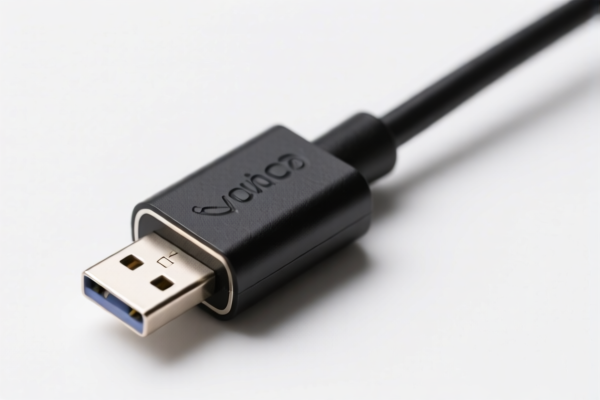
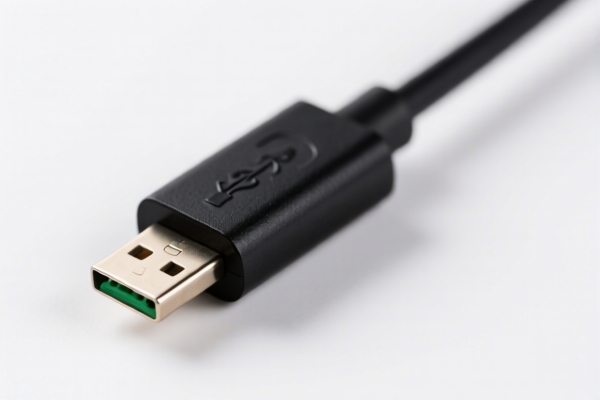
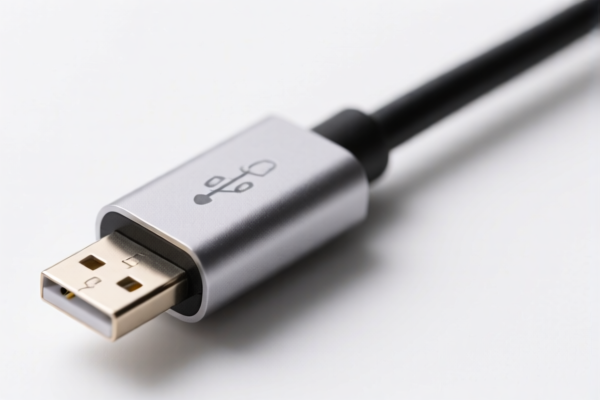
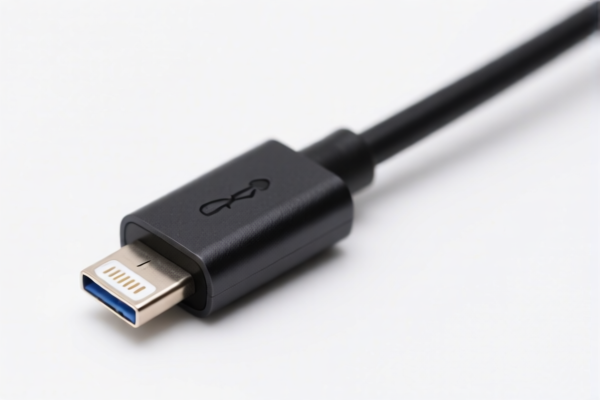
AI Analysis
🔌 Conversion Cable (Data/Power Adapter Cables)
🌐 HS Code Reference & Clearance Guide | 2026 Latest Tariff Analysis | Professional Clearance Strategy
📌 I. Product Definition & Classification: Do You Really Understand "Conversion Cables"?
A "Conversion Cable" is a broad term in international trade, typically referring to cables that transform signal protocols, voltage levels, or physical interfaces to ensure compatibility between devices. In the context of US Customs (CBP), the classification depends entirely on material composition, presence of connectors, and functional nature (data vs. electrical power).
⚠️ Key Distinction Points:
- If it is an insulated electrical conductor with connectors (standard data cable): Falls under Chapter 85 (Electrical machinery/equipment).
- If it is primarily a plastic housing/adapter without significant electrical conductance characteristics: May fall under Chapter 39 (Plastics) or Chapter 84 (Machinery parts).
- If it is strictly for telecommunications (high-speed data transmission): Tends toward 8544.42 (Optical fibers or other optical fiber assemblies, or insulated copper wires for telephone/telegraph).
📦 II. HS Code Classification Details (2026 Latest Tariff Authoritative Comparison)
Based on the provided data analysis, here are the five potential HS Codes and their logical justifications:
| HS Code | Product Description | Justification Summary | Primary Attribute |
|--------|--------------------------|-------------------|
| 8544.42.90.90 | Insulated electrical conductors, whether or not fitted with connectors | The product is fundamentally an insulated electrical conductor (copper/metal core + plastic insulation) fitted with connectors for conversion purposes. | Electrical Conductor |
| 8473.30.91.00 | Parts and accessories suitable for use solely or principally with machines of heading 8471 (Automatic Data Processing Machines) | Inferred as copper/plastic material, shaped as electronic connection lines, classified as accessories/parts for computers/data processing equipment. | Computer Accessory |
| 8544.42.20.00 | Insulated electrical conductors for telecommunications purposes | Functionally classified as an electrical conductor for telecommunications, physically an insulated conductor, fitting the description of cables. | Telecom Cable |
| 3926.90.99.89 | Other articles of plastics and articles of other materials of heading 39 | Based on the fact that data cables are mainly composed of plastic casings and insulation layers, classified as other plastic articles not specified elsewhere. | Plastic Article |
| 8544.42.90.90 | Insulated electrical conductors with connectors (Duplicate/Alternative View) | Functionally an insulated electrical conductor with connectors, material is metal conductor + insulation layer. (Same as first row, different summary logic). | Electrical Conductor |
🔍 Critical Note:
- 8544.42.90.90 and 8544.42.20.00 both fall under Chapter 85 (Electrical), but the former is a "catch-all" for insulated conductors, while the latter is specific to telecommunications.
- 3926.90.99.89 is a "low-tax" trap. If customs determines the cable's primary value/function is electrical conduction, they will reclassify it to Chapter 85, triggering higher tariffs.
- 8473.30.91.00 is niche: It applies only if the cable is strictly an accessory for Automatic Data Processing Machines (computers/servers) and not general-purpose.
💰 III. 2026 Latest Tariff Rate Breakdown (Including Surcharges, Policy Surcharges)
✅ Applicable Country: United States (US)
✅ Country of Origin: China (CN)
✅ Effective Time: 2025/2026 (Current Trade War Context)
🎯 1. 8544.42.90.90 —— Insulated Electrical Conductors (General/Conversion)
| Item | Content |
|---|---|
| Base Rate | 2.6% (Ad valorem) |
| Section 301 Surcharge | +25.0% (List 3/4 China Goods) |
| Section 232 Surcharge | +50.0% (If containing Steel, Aluminum, or Copper Products) |
| Section 122 Surcharge | +10.0% (Newly applied surcharge on specific electronic/electrical items from China) |
| Total Rate | 87.6% (2.6 + 25 + 50 + 10) |
| Tax Calculation | CIF Value × 87.6% |
| De Minimis Exemption | ❌ Not Eligible (deny_de_minimis) |
| Legal Basis Path | USITC:8544.42.90.90 → SECTION301:Footnote9903.88.01 → SECTION232:Copper/Steel → SECTION122:New Policy |
📌 Explanation:
- This is the most common classification for standard USB/Ethernet/HDMI conversion cables.
- The 50% Section 232 tariff applies if the cable contains copper (which most do). This is the biggest cost driver.
- Combined with 25% (Section 301) and 10% (Section 122), the total burden is extremely high.
🎯 2. 8473.30.91.00 —— Parts/Accessories for Automatic Data Processing Machines
| Item | Content |
|---|---|
| Base Rate | 0.0% |
| Section 301 Surcharge | +25.0% |
| Section 122 Surcharge | +10.0% |
| Total Rate | 35.0% |
| Tax Calculation | CIF Value × 35.0% |
| De Minimis Exemption | ❌ Not Eligible |
| Legal Basis Path | USITC:8473.30.91.00 → SECTION301:Footnote → SECTION122 |
📌 Explanation:
- If you can prove the cable is solely an accessory for a computer/data processor (e.g., internal server cabling, not general consumer USB), you might qualify for 0% base rate.
- Risk: CBP is strict. If it's a general USB-C to HDMI cable for phones/laptops, this classification will likely be rejected.
🎯 3. 8544.42.20.00 —— Insulated Conductors for Telecommunications
| Item | Content |
|---|---|
| Base Rate | 0.0% |
| Section 301 Surcharge | +25.0% |
| Section 122 Surcharge | +10.0% |
| Section 232 Surcharge | +50.0% (If Copper/Steel/Aluminum) |
| Total Rate | 85.0% |
| Tax Calculation | CIF Value × 85.0% |
| De Minimis Exemption | ❌ Not Eligible |
| Legal Basis Path | USITC:8544.42.20.00 → SECTION232:Copper → SECTION301 → SECTION122 |
📌 Explanation:
- Similar to8544.42.90.90but classified specifically for telecom.
- High tariff due to copper content (232) and trade wars.
🎯 4. 3926.90.99.89 —— Other Plastic Articles
| Item | Content |
|---|---|
| Base Rate | 5.3% |
| Section 301 Surcharge | +7.5% (Lower than standard 301 for some plastics?) |
| Section 122 Surcharge | +10.0% |
| Total Rate | 22.8% |
| Tax Calculation | CIF Value × 22.8% |
| De Minimis Exemption | ❌ Not Eligible |
| Legal Basis Path | USITC:3926.90.99.89 → SECTION301 → SECTION122 |
📌 Explanation:
- Lowest tariff option (22.8%).
- High Risk: CBP will likely challenge this. If the primary function is electrical conduction (not just plastic shape), they will reclassify to Chapter 85.
- Use only if the item is primarily a plastic adapter/housing with minimal electrical function (e.g., a simple passive plastic splitter).
🛠️ IV. Clearance Practical Advice (Real-World Pitfall Avoidance)
✅ 1. Preparation Checklist (Must-Haves)
| Material | Required | Description |
|---|---|---|
| ✅ Product Specs | ✔️ | Detail conductor material (Copper/Optical), insulation type, connector type. |
| ✅ Circuit Diagram | ✔️ | To distinguish between active (electronic) and passive (cable) components. |
| ✅ Product Photos | ✔️ | Clear shots of connectors, branding, and internal structure (if possible). |
| ✅ Third-Party Test Report | ✔️ | FCC ID, RoHS, UL (if applicable). |
| ✅ Commercial Invoice | ✔️ | Describe accurately: "Passive Data Conversion Cable, Copper Core, PVC Insulation." |
| ✅ Origin Certificate | ✔️ | To confirm CN origin for tariff calculations. |
| ✅ Packing List | ✔️ | Detail contents to avoid suspicion of hidden high-tariff components. |
✅ 2. Declaration Strategy (Key Mantras)
🔥 “Copper Triggers 232, Plastic Lowers Tax but Risks Rejection, Computer Parts Need Proof.”
| Scenario | Correct Declaration | Wrong Practice |
|---|---|---|
| Standard USB/Ethernet Cable | 8544.42.90.90 |
Misdeclare as Plastic (3926) → Audit & Penalty |
| Active Optical Cable (AOC) | 8544.42.90.90 or 9032 |
Misdeclare as 8473 → Classification Error |
| Pure Plastic Adapter (No Conductors) | 3926.90.99.89 |
Misdeclare as Cable → Under-declaration |
| Server Internal Cable | 8473.30.91.00 |
Misdeclare as General Cable → Missed Tax Break |
✅ 3. Special Cases Handling
| Situation | Handling Suggestion |
|---|---|
| Cable contains Copper | Expect 50% Section 232 Tariff. Factor this into cost. |
| Active Cable (with IC chip) | May be classified under 8543 or 8517, not 8544. Requires circuit analysis. |
| Optical Fiber Cable | Check if it’s 8544.42 (optical fiber assemblies) or 9001 (optical fibers). Rates differ. |
| OEM Custom Cables | Provide design drawings to prove specific use case (e.g., for a specific machine) to support 8473 classification. |
🌍 V. Global Market Clearance Comparison (2026 Latest)
| Country/Region | Recommended HS Code | Tariff (China Origin) | Certification | Notes |
|---|---|---|---|---|
| 🇺🇸 USA | 8544.42.90.90 |
87.6% (With 232/301/122) | FCC + UL | Highest tariff; 232 applies to copper. |
| 🇺🇸 USA | 3926.90.99.89 |
22.8% | N/A | Low tax but high risk of reclassification. |
| 🇨🇳 China | 8544.42.90.90 |
5% - 10% | CCC (if applicable) | No 232/301 surcharges. |
| 🇪🇺 EU | 8544.42 |
0% - 2.7% | CE + RoHS | No trade war surcharges. |
| 🇬🇧 UK | 8544.42 |
0% - 2.7% | UKCA + RoHS | Post-Brexit rules similar to EU. |
📌 Conclusion:
- USA is the most challenging market for conversion cables due to cumulative tariffs (232 + 301 + 122).
- Copper content is the critical factor for Section 232 (50% tariff).
- Chapter 39 classification is a strategy, not a guarantee. It must be defended based on "plastic article" criteria.
📌 VI. Common Mistakes & Pitfall Guide (Lessons Learned)
❌ Mistake 1: Declaring all cables as 3926 (Plastic) to avoid tariffs.
👉 Consequence: CBP will inspect, find copper cores, and reclassify to 8544. Result: Back taxes + 232/301/122 penalties.
❌ Mistake 2: Ignoring Section 232.
👉 Consequence: If the cable contains copper, you owe an additional 50% regardless of Section 301. Total can exceed 80%.
❌ Mistake 3: Mixing "Active" and "Passive" cables.
👉 Consequence: Active cables (with signal conversion chips) may fall under 8543 (Other electrical machines), which has different tariff rules and documentation requirements.
❌ Mistake 4: Assuming "De Minimis" ($800) applies.
👉 Consequence: Section 122 and Section 301 explicitly deny de minimis exemption for Chinese goods. Even small shipments are taxable.
✅ Correct Approach:
"Passive USB-C to HDMI Conversion Cable, Copper Conductor, PVC Insulation, No Active Components, Model XYZ, FCC Exempt"
🎯 VII. Conclusion: Professional Declaration Saves Money!
🎯 Remember the Mantra:
🔹 “Copper means 232, Plastic means Risk, Computer means Proof.”
🔹 “HS Code determines fate, Tariff difference is 65%, Misdeclaration costs thousands!”
📌 Pro Tip:
If your conversion cables are active (contain chips), consider if they can be classified under 8543.70 (Other machines) which might have different surcharge applicability. However, for most standard passive cables, 8544.42.90.90 is the safest and most accurate classification, despite the high tax.
📣 Immediate Action:
📞 Consult a Customs Broker + Provide Cable Cross-Section Photos + Apply for Advance Ruling if importing large volumes.
🚀 Let your cables clear smoothly, navigate tariffs efficiently, and maximize profit!
✨ Professional Clearance Starts with Accurate Classification!
💼 Every Cent of Cost Deserves Precise Calculation!
Customer Reviews
About HS Code Classification
The Harmonized System (HS) is an internationally standardized nomenclature developed by the World Customs Organization (WCO) to classify traded products. Over 200 countries use the HS system as the basis for customs tariffs, trade statistics, and import/export regulations.
Each HS code follows a hierarchical structure:
- Chapter (2 digits) — Broad category of goods (e.g., Chapter 84: Machinery and Mechanical Appliances)
- Heading (4 digits) — More specific grouping within the chapter
- Subheading (6 digits) — Internationally standardized breakdown, used by all WCO member countries
- National subdivisions (8-10 digits) — Country-specific extensions for further classification, such as US HTSUS 10-digit codes
Correct HS code classification is essential for smooth customs clearance, accurate duty payment, and compliance with trade regulations. Misclassification can lead to customs delays, overpayment of duties, or penalties.
When importing from CN to US, the applicable tariff rates may include:
- Most-Favored-Nation (MFN) rate — The standard duty rate applied to WTO members
- General rate — Applied to countries without trade agreements
- Trade remedy duties — Additional tariffs such as Section 301 (anti-dumping), Section 232 (national security), or countervailing duties
The information provided on this page is for reference purposes only. For official classification, please consult with your local customs authority or a licensed customs broker.