conversion tube
CN → US| HS Code | Tariff Rate | Origin | Destination | Doc |
|---|---|---|---|---|
| 8443992550 | 17.5% | CN | US | Official Doc |
| 8483903000 | 39.5% | CN | US | Official Doc |
| 8483308090 | 39.5% | CN | US | Official Doc |
| 8477908601 | 38.1% | CN | US | Official Doc |
| 8536908585 | 85.0% | CN | US | Official Doc |
Product Images


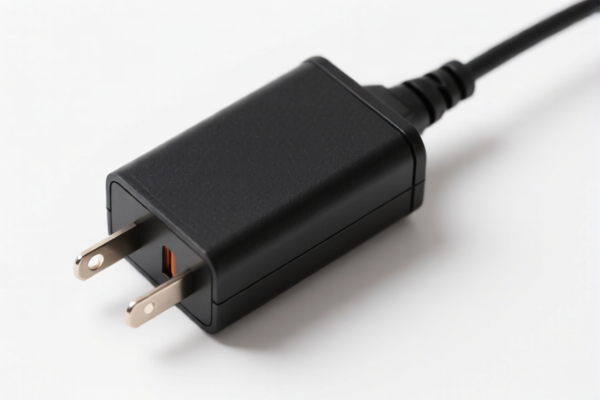

AI Analysis
🔄 Conversion Tube (Printers, Machinery Parts & Electrical Connectors)
🌐 HS Code Reference & Customs Clearance Guide | 2026 Latest Tariff Analysis | Professional Clearance Strategy
📌 I. Product Definition & Classification: What Exactly is a "Conversion Tube"?
In international trade, the term "Conversion Tube" is ambiguous and context-dependent. It generally refers to a component used to convert, transfer, or connect functions between different systems. Based on the provided data, this product can fall into four distinct categories depending on its specific function, material, and application industry (Printing, Mechanical Transmission, Injection Molding, or Electrical Circuits).
⚠️ Critical Distinction Point:
- If used in Printers as a mechanical component → HS 8443.99.25.50 (Lowest Tax)
- If used in Machinery/Transmission systems → HS 8483.90.30.00 or 8483.30.80.90 (High Tax)
- If used in Injection Molding accessories → HS 8477.90.86.01 (Medium-High Tax)
- If used as an Electrical Connector/Adapter → HS 8536.90.85.85 (Highest Tax)
📦 II. HS Code Classification Details (Based on Provided Data)
| HS Code | Product Description & Logic | Tax Rate (Total) | Key Characteristics |
|---|---|---|---|
8443.99.25.50 |
Printer Component / Part Identified as a drum or component belonging to the printer assembly, classified under "Other" parts and accessories of printing machinery. |
17.5% | ✅ Lowest Risk/Cost - Base: 0% - Add-on: 7.5% - Section 122: 10% |
8483.90.30.00 |
Transmission/Mechanical Connection Part Classified as a bearing housing or sliding bearing part, falling under "Other" in mechanical transmission components. |
39.5% | ⚠️ High Tax - Base: 4.5% - Add-on: 25.0% - Section 122: 10% |
8483.30.80.90 |
Structural Component for Bearings/Transmission Regarded as a structural part of bearing seats or transmission devices, complying with "Spare Parts/Components" rules. |
39.5% | ⚠️ High Tax - Base: 4.5% - Add-on: 25.0% - Section 122: 10% |
8477.90.86.01 |
Functional Component for Plastic Processing Material compatible with injection molding machinery processing fields; classified as a functional part for plastics processing machines. |
38.1% | ⚠️ Medium-High Tax - Base: 3.1% - Add-on: 25.0% - Section 122: 10% |
8536.90.85.85 |
Electrical Equipment / Circuit Connector Classified as an electrical device for circuit connection or conversion, falling under "Other" categories for electrical apparatus. |
85.0% | 🔥 HIGHEST RISK/COST - Base: 0% - Add-on: 25.0% - Section 122: 10% (Steel/Aluminum/Copper: +50%) |
🔍 Key Observation:
The tax liability ranges from 17.5% to 85.0%. The classification depends entirely on the end-use and technical definition provided by the exporter. Misclassification can lead to massive tax discrepancies or customs detention.
💰 III. Detailed Tariff Rate Breakdown (2026 Analysis)
✅ Applicable Country: USA (US)
✅ Origin: China (CN) (Inferred from "Section 122" and typical duty structures in the data)
✅ 生效时间: Current rates apply
🎯 1. 8443.99.25.50 —— Printer Parts (Optimal Classification)
| Item | Content |
|---|---|
| Base Tariff | 0% |
| Add-on Tariff (Section 301/Other) | +7.5% |
| Section 122 Tariff | +10% |
| Total Tax Rate | 17.5% |
| Calculation | CIF Value × 17.5% |
| De Minimis Exemption? | ❌ No (Usually excluded for Section 122 items) |
📌 Explanation:
- This is the most favorable classification for a "Conversion Tube" if it can be proven to be a printer part. - The base duty is 0%, making the total burden significantly lower than other mechanical or electrical classifications.
🎯 2. 8483.90.30.00 & 8483.30.80.90 —— Mechanical Transmission Parts
| Item | Content |
|---|---|
| Base Tariff | 4.5% |
| Add-on Tariff (Section 301/Other) | +25.0% |
| Section 122 Tariff | +10% |
| Total Tax Rate | 39.5% |
| Calculation | CIF Value × 39.5% |
| De Minimis Exemption? | ❌ No |
📌 Explanation:
- These two HS codes are technically similar but differ in sub-headings (bearing housing vs. general structural part). - The 25% add-on tariff is the dominant cost driver here. This is typical for mechanical parts originating from China under current trade policies.
🎯 3. 8477.90.86.01 —— Injection Molding Machine Parts
| Item | Content |
|---|---|
| Base Tariff | 3.1% |
| Add-on Tariff (Section 301/Other) | +25.0% |
| Section 122 Tariff | +10% |
| Total Tax Rate | 38.1% |
| Calculation | CIF Value × 38.1% |
| De Minimis Exemption? | ❌ No |
📌 Explanation:
- Slightly lower base rate (3.1%) than mechanical parts, but the 25% add-on still results in a high total. - Requires proof that the tube is specifically for plastics processing machinery.
🎯 4. 8536.90.85.85 —— Electrical Connectors/Converters (Critical Warning)
| Item | Content |
|---|---|
| Base Tariff | 0% |
| Add-on Tariff (Section 301/Other) | +25.0% |
| Section 122 Tariff | +10% |
| Additional Metal Tariff | +50% (For Steel, Aluminum, Copper) |
| Total Tax Rate | 85.0% (If metal) or 35.0% (If non-metal/plastic) |
| Calculation | CIF Value × 35%~85% |
| De Minimis Exemption? | ❌ No |
📌 CRITICAL WARNING:
- If the "Conversion Tube" is made of Steel, Aluminum, or Copper, an additional 50% tariff applies! - Total: 85%. This is an extreme cost burden. - Recommendation: Avoid this classification if possible. Ensure the product is not described as an "electrical converter" or "circuit adapter" in documentation.
🛠️ IV. Customs Clearance Operational Advice (Best Practices)
✅ 1. Documentation Strategy (Critical for Classification)
| Document | Requirement | Purpose |
|---|---|---|
| Product Name | Use specific terms like "Printer Drum Assembly" or "Mechanical Coupling Shaft" instead of vague "Conversion Tube". | To guide customs to the correct HS code (8443 vs 8483 vs 8536). |
| Technical Drawing | Must show function: Is it rotating? Conducting electricity? Holding bearings? | Proves mechanical vs. electrical nature. |
| Material Composition | Explicitly state material (Plastic, Steel, Aluminum). | Determines if the +50% metal tariff applies to HS 8536. |
| End-Use Statement | Declare intended use: "For use in HP/LaserJet printers" or "For Injection Molding Machines". | Supports classification under 8443 or 8477. |
✅ 2. Clearance Tactics
🔥 "Avoid 8536, Prefer 8443, Verify Material!"
| Scenario | Recommended HS Code | Action |
|---|---|---|
| Part of a Printer | 8443.99.25.50 |
Best Option. Clearly state it is a printer component. Tax: 17.5%. |
| Mechanical Shaft/Bearing Part | 8483.90.30.00 |
Accept 39.5% tax. Ensure drawings show mechanical transmission function. |
| Plastic Injection Part | 8477.90.86.01 |
Accept 38.1% tax. Provide machine compatibility list. |
| Electrical Connector | 8536.90.85.85 |
AVOID IF METAL. If non-metal, tax is 35%. If metal, tax is 85%. Rename product to avoid "electrical" description if functionally possible. |
✅ 3. Special Notes on Metal Tariffs
- For HS 8536.90.85.85:
- If the conversion tube is made of aluminum or steel, the 50% additional tariff is mandatory.
- Strategy: If the tube is made of plastic or ceramic, the 50% does not apply. In this case, the rate drops to 35% (0% base + 25% add-on + 10% Section 122).
- Recommendation: If possible, change material to plastic/ceramic to save 50% on the base value.
🌍 V. Global Market Comparison (2026 Estimate)
| Country/Region | Recommended HS Code | Est. Total Duty | Notes |
|---|---|---|---|
| 🇺🇸 USA | 8443.99.25.50 |
17.5% | Best case scenario. |
| 🇺🇸 USA | 8536.90.85.85 (Metal) |
85.0% | Worst case scenario. |
| 🇪🇺 EU | Varies | ~0-15% | Depends on local classification; likely no Section 122. |
| 🇨🇳 China | Varies | ~0-10% | Import duties may be lower, but check for counter-tariffs. |
📌 Conclusion:
The USA market imposes the highest variability due to Section 122 and Section 301 tariffs. The difference between 17.5% and 85% is a profit killer. Precise classification is not just administrative; it is a cost-saving strategy.
📌 VI. Common Errors & Pitfalls
❌ Error 1: Using generic term "Conversion Tube" on Invoice
👉 Result: Customs may assign the highest default tariff (HS 8536) or request expensive re-classification services.
❌ Error 2: Failing to declare Material for Electrical Parts
👉 Result: If HS 8536 is applied, missing the material declaration can lead to penalties for not paying the 50% metal tariff.
❌ Error 3: Misclassifying Printer Parts as General Machinery
👉 Result: Tax jumps from 17.5% to 39.5%. Unnecessary cost increase.
✅ Correct Practice:
"Printer Drum Conversion Tube, Plastic, For Use in Laser Printers, Model XYZ"
→ HS 8443.99.25.50 → 17.5% Tax
🎯 VII. Conclusion: Precision Saves Money!
🎯 Remember the Key Rule:
🔹 "Printer Part = 17.5%"
🔹 "Mechanical Part = 39.5%"
🔹 "Electrical Metal Part = 85.0%"
🔹 "Describe Function, Declare Material, Avoid Ambiguity!"
📌 Pro Tip:
If your "Conversion Tube" is electrical but made of plastic, insist on classification under 8536.90.85.85 without the metal surcharge (35% total). If it is a printer part, fight for 8443.99.25.50 (17.5% total).
Consult a licensed customs broker to apply for a Binding Ruling if the value is high.
📣 Immediate Action:
📞 Review your product specs.
📄 Update your Invoice and Packing List with specific functional descriptions.
🚀 Prevent 67% tax difference with one word change!
✨ Professional Clearance Starts with Accurate Classification!
💼 Every percentage point counts in your bottom line!
Customer Reviews
About HS Code Classification
The Harmonized System (HS) is an internationally standardized nomenclature developed by the World Customs Organization (WCO) to classify traded products. Over 200 countries use the HS system as the basis for customs tariffs, trade statistics, and import/export regulations.
Each HS code follows a hierarchical structure:
- Chapter (2 digits) — Broad category of goods (e.g., Chapter 84: Machinery and Mechanical Appliances)
- Heading (4 digits) — More specific grouping within the chapter
- Subheading (6 digits) — Internationally standardized breakdown, used by all WCO member countries
- National subdivisions (8-10 digits) — Country-specific extensions for further classification, such as US HTSUS 10-digit codes
Correct HS code classification is essential for smooth customs clearance, accurate duty payment, and compliance with trade regulations. Misclassification can lead to customs delays, overpayment of duties, or penalties.
When importing from CN to US, the applicable tariff rates may include:
- Most-Favored-Nation (MFN) rate — The standard duty rate applied to WTO members
- General rate — Applied to countries without trade agreements
- Trade remedy duties — Additional tariffs such as Section 301 (anti-dumping), Section 232 (national security), or countervailing duties
The information provided on this page is for reference purposes only. For official classification, please consult with your local customs authority or a licensed customs broker.