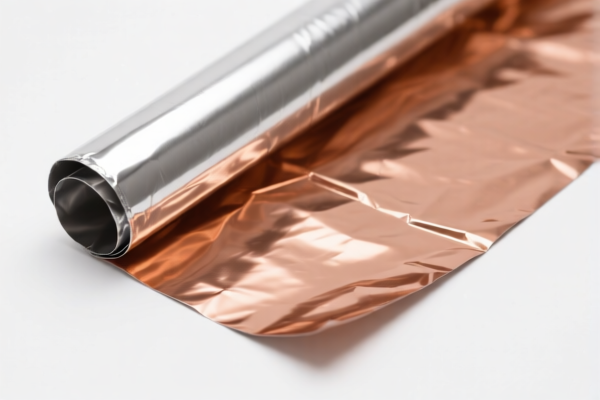
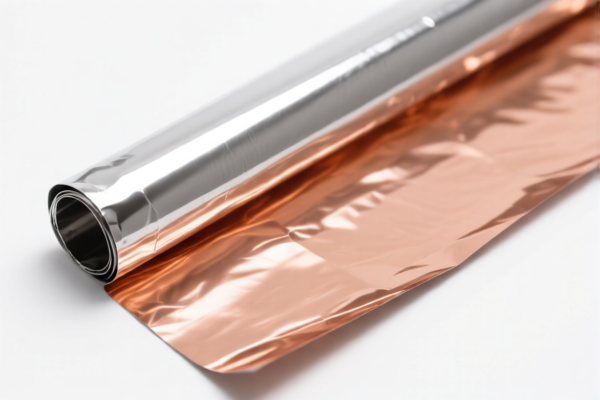
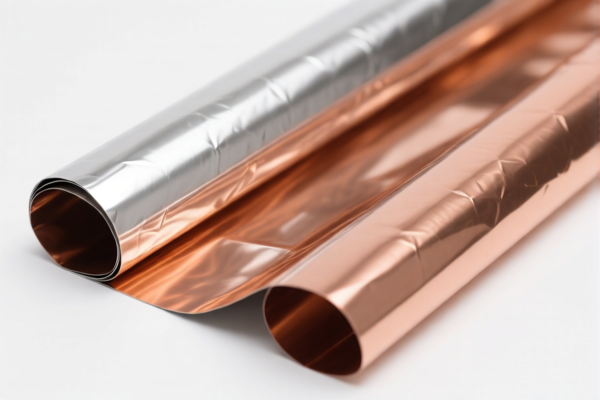
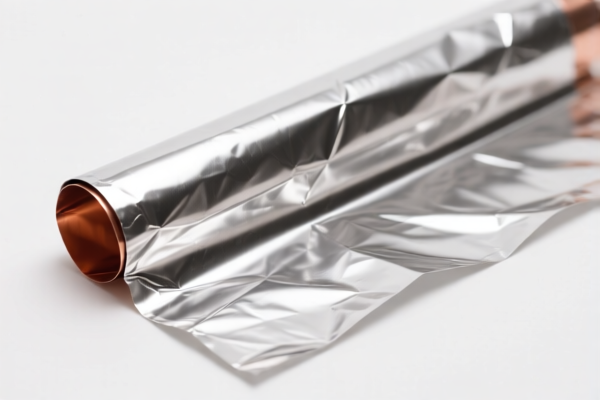
copper foil patch
CN → US| HS Code | Tariff Rate | Origin | Destination | Doc |
|---|---|---|---|---|
| 7410110000 | 86.0% | CN | US | Official Doc |
| 7410120030 | 86.0% | CN | US | Official Doc |
| 8544493040 | 40.3% | CN | US | Official Doc |
| 8544493080 | 40.3% | CN | US | Official Doc |
Product Images
AI Analysis
🥉 Copper Foil Patches (Electromagnetic Shielding & EMI/RFI Solutions)
🌐 HS Code Reference & Customs Clearance Guide | 2026 Latest Tariff Analysis | Professional Clearance Strategy
📌 I. Product Definition & Classification: What Exactly is a "Copper Foil Patch"?
In the context of international trade and electronics manufacturing, a "Copper Foil Patch" typically refers to small, pre-cut pieces of copper foil used for Electromagnetic Interference (EMI) and Radio Frequency Interference (RFI) shielding, thermal management, or grounding in electronic assemblies. These are often self-adhesive or conductive tape segments.
The classification depends heavily on two key factors: 1. Is it backed? (i.e., does it have paper, plastic, or adhesive backing attached?) 2. Is it insulated? (i.e., is it enameled, anodized, or covered with a dielectric layer?)
⚠️ Critical Distinction:
- If the product is pure copper foil (possibly with paper/plastic backing but no insulation), it falls under Chapter 74.
- If the product is insulated wire/cable (e.g., enameled copper for windings), it falls under Chapter 85.
- Note: "Patches" are rarely "insulated wires" in the traditional sense. They are usually flat foils. Therefore, the primary classification is likely under 7410 unless specifically defined as a conductive adhesive tape with specific electrical insulation properties that trigger Chapter 85.
📦 II. HS Code Classification Details (2026 Latest Tariff Authority Comparison)
Based on the provided <DATA>, here are the applicable HS Codes and their tax implications for Copper Foil Patches.
🎯 Scenario A: Unbacked or Simply Backed Copper Foil (Most Common for "Patches")
If the patch is refined copper (pure copper, not an alloy) and thickness ≤ 0.15mm:
| HS Code | Product Description | Key Condition |
|---|---|---|
7410.11.00.00 |
Copper foil of refined copper (thickness ≤ 0.15mm), not backed or backed with paper/plastic. | Refined Copper only. No copper alloys. |
🔍 Explanation:
- This code covers copper foil of a thickness not exceeding 0.15 mm.
- "Not backed" or backed with paper/plastic/plastics does not change the classification if it remains refined copper.
- Crucial: If the patch is made of Brass (Copper-Zinc Alloy), it cannot use this code. It would fall under7410.12.00.30.
🎯 Scenario B: Copper Alloy (Brass) Foil Patches
If the patch is made of Copper-Zinc Base Alloys (Brass):
| HS Code | Product Description | Key Condition |
|---|---|---|
7410.12.00.30 |
Copper foil of copper-zinc base alloys (brass) (thickness ≤ 0.15mm). | Must be Brass/Alloy. |
⚠️ Important Note on Insulated Conductors (Chapter 85)
The <DATA> also includes codes for insulated electric conductors (8544.49.30.40 and 8544.49.30.80).
Do NOT misclassify simple copper foil patches here unless they meet the strict definition of "insulated wire/cable."
- Why? A "patch" is typically a flat foil, not a "wire or cable." Even if it has adhesive backing, if it is not an "insulated electric conductor" (like enameled wire for motors/transformers), it generally does not fit Chapter 85.
- Exception: If the "patch" is actually a segment of insulated copper wire (e.g., for winding), then:
- 8544.49.30.40: Voltage > 600V → 0% Tax
- 8544.49.30.80: Other (Voltage ≤ 1,000V) → 30.3% Tax
📌 Recommendation: For standard EMI shielding patches, Chapter 74 is the correct classification. Chapter 85 applies only if the item is functionally an insulated electrical conductor (wire/cable).
💰 III. 2026 Latest Tariff Rate Details (Including Surtaxes & Policy Add-ons)
✅ Applicable Country: United States (US)
✅ Origin: China (CN) (Assuming origin based on "50% surtax" context in data)
✅ Effective Date: Current as per 2026 tariff rules provided.
🎯 1. 7410.11.00.00 —— Copper Foil (Refined Copper, ≤ 0.15mm)
| Item | Content |
|---|---|
| Base Duty Rate | 0% |
| Section 301 Surtax (Steel/Aluminum/Copper Products) | +50% |
| Total Duty Rate | 50.0% |
| Tax Calculation | CIF Value × 50% |
| De Minimis Exemption | ❌ Not Eligible (Deny de minimis for China-origin copper/steel/aluminum surtaxed goods) |
| Legal Basis | Section 301: Steel, Aluminum, Copper Products Surtax 50% |
📌 Explanation:
- The data explicitly states: "Steel, Aluminum, Copper Products Surtax: 50%".
- Even though the base duty is 0%, the 50% surtax applies to copper products from China.
- Total Cost Impact: High. A $1,000 shipment will incur $500 in duties.
🎯 2. 7410.12.00.30 —— Copper Foil (Brass/Alloy, ≤ 0.15mm)
| Item | Content |
|---|---|
| Base Duty Rate | 0% |
| Section 301 Surtax (Steel/Aluminum/Copper Products) | +50% |
| Total Duty Rate | 50.0% |
| Tax Calculation | CIF Value × 50% |
| De Minimis Exemption | ❌ Not Eligible |
| Legal Basis | Section 301: Steel, Aluminum, Copper Products Surtax 50% |
📌 Explanation:
- Same tax treatment as refined copper. Brass is considered a copper alloy under this surtax rule.
🎯 3. 8544.49.30.40 & 8544.49.30.80 —— Insulated Conductors (If Applicable)
| HS Code | Voltage Condition | Total Duty Rate | Notes |
|---|---|---|---|
8544.49.30.40 |
Exceeds 600V | 0.0% | No surtax mentioned for this specific subheading in the provided data. |
8544.49.30.80 |
Other (≤ 1,000V) | 30.3% | Base 5.3% + Surtax 25.0%. |
⚠️ Warning: If you mistakenly classify a 0.15mm copper foil patch as an insulated conductor (Chapter 85), you might get a lower tax (0% or 30.3%). However, this is risky because: - A foil patch is not a "wire or cable." - Customs may reclassify it to
7410and assess 50% + penalties. - Only use Chapter 85 if the product is truly an insulated electric conductor.
🛠️ IV. Customs Clearance Practical Advice (Pitfall Avoidance Guide)
✅ 1. Preparation Checklist (Essential Documents)
| Document | Required? | Purpose |
|---|---|---|
| ✅ Product Specification Sheet | ✔️ | Must specify: Thickness (≤ 0.15mm), Material (Refined Copper vs. Brass), Backing Type (None, Paper, Plastic), and Insulation Status. |
| ✅ Material Safety Data Sheet (MSDS) | ✔️ | To confirm chemical composition and ensure it’s not hazardous. |
| ✅ Product Photos | ✔️ | Show cross-section to prove thickness and backing type. |
| ✅ Commercial Invoice | ✔️ | Must clearly state: "Copper Foil Patch, EMI Shielding, Pure Copper, Thickness 0.10mm, Self-Adhesive" |
| ✅ Packing List | ✔️ | Detail net/gross weight. |
✅ 2. Declaration Strategy (Key Tips)
🔥 "Be Specific, Be Accurate, Avoid Misclassification!"
| Situation | Correct Declaration | Incorrect Declaration | Consequence |
|---|---|---|---|
| Pure Copper Foil Patch | 7410.11.00.00 |
8544.49.30.80 |
Risk of 50% surtax + penalties for misclassification. |
| Brass Foil Patch | 7410.12.00.30 |
7410.11.00.00 |
50% surtax still applies, but risk of dispute if material is wrong. |
| Insulated Copper Wire Segment | 8544.49.30.80 |
7410.11.00.00 |
30.3% vs 50% – Misclassification here saves money but is illegal if not a conductor. |
✅ 3. Special Handling for "Patches"
- Self-Adhesive Backing: The presence of adhesive does not automatically move the product to Chapter 35 or 39. If the adhesive is for bonding the foil to a surface, it remains a copper foil product under Chapter 74.
- Thickness Verification: Ensure the thickness is ≤ 0.15mm. If it exceeds 0.15mm, it may fall under a different subheading (not covered in the provided data), potentially with different tax rules.
- EMI Shielding Claims: Do not over-emphasize "EMI Shielding" as the primary function if it doesn’t change the material composition. Focus on material (Copper/Brass) and form (Foil).
🌍 V. Global Market Comparison (2026)
| Country/Region | Recommended HS Code | Duty Rate | Notes |
|---|---|---|---|
| 🇺🇸 USA | 7410.11.00.00 |
50% | High surtax on Chinese copper products. |
| 🇨🇳 China | 7410.11.00.00 |
~0-10%* | Check current Chinese import tariff. |
| 🇪🇺 EU | 7410.11.00.00 |
~0-2.5% | No 301-style surtax. |
| 🇯🇵 Japan | 7410.11.00.00 |
~0-1.5% | Low duty, but EORI registration required. |
📌 Conclusion:
- The 50% US surtax is a significant cost driver.
- Consider supply chain diversification (e.g., sourcing from Vietnam, India, or Mexico) to avoid the 50% surtax if exporting to the US.
📌 VI. Common Errors & Pitfalls (Blood & Tears Lessons)
❌ Error 1: Classifying copper foil patches as "General Hardware" or "Miscellaneous"
👉 Consequence: Customs may reclassify to 7410 and assess 50% + back taxes.
❌ Error 2: Claiming "Insulated Wire" for flat copper patches to avoid surtax
👉 Consequence: Fraud. Customs will inspect and find no insulation/wire structure. Heavy fines and blacklisting risk.
❌ Error 3: Ignoring thickness
👉 Consequence: If thickness > 0.15mm, the code 7410.11.00.00 is invalid. Must use a different code (not in provided data), leading to delays.
🎯 VII. Conclusion: Professional Declaration Saves Money!
🎯 Key Takeaways:
🔹 Copper Foil Patches ≤ 0.15mm → HS Code 7410.11.00.00 (if pure copper) or 7410.12.00.30 (if brass).
🔹 US Duty: 50% (Base 0% + 50% Surtax).
🔹 Do Not Misclassify as insulated wires unless they are truly wires/cables.
🔹 De Minimis Exemption: Not Available for these goods from China to US.
📌 Pro Tip:
If your copper foil patches are self-adhesive EMI shielding, ensure your invoice clearly states:
"Copper Foil, Pure, Thickness 0.10mm, Self-Adhesive Backing, For EMI Shielding, HS Code 7410.11.00.00"
📣 Immediate Action:
📞 Verify Material Composition: Is it Pure Copper or Brass?
📏 Measure Thickness: Is it ≤ 0.15mm?
📄 Prepare Documentation: Specs, Photos, Invoice.
🚀 Consult Customs Broker: For pre-clearance if value is high.
✨ Professional Clearance Starts with Accurate Classification!
💼 Your Cost Efficiency Depends on It!
Customer Reviews
About HS Code Classification
The Harmonized System (HS) is an internationally standardized nomenclature developed by the World Customs Organization (WCO) to classify traded products. Over 200 countries use the HS system as the basis for customs tariffs, trade statistics, and import/export regulations.
Each HS code follows a hierarchical structure:
- Chapter (2 digits) — Broad category of goods (e.g., Chapter 84: Machinery and Mechanical Appliances)
- Heading (4 digits) — More specific grouping within the chapter
- Subheading (6 digits) — Internationally standardized breakdown, used by all WCO member countries
- National subdivisions (8-10 digits) — Country-specific extensions for further classification, such as US HTSUS 10-digit codes
Correct HS code classification is essential for smooth customs clearance, accurate duty payment, and compliance with trade regulations. Misclassification can lead to customs delays, overpayment of duties, or penalties.
When importing from CN to US, the applicable tariff rates may include:
- Most-Favored-Nation (MFN) rate — The standard duty rate applied to WTO members
- General rate — Applied to countries without trade agreements
- Trade remedy duties — Additional tariffs such as Section 301 (anti-dumping), Section 232 (national security), or countervailing duties
The information provided on this page is for reference purposes only. For official classification, please consult with your local customs authority or a licensed customs broker.