copper scrap
CN → US| HS Code | Tariff Rate | Origin | Destination | Doc |
|---|---|---|---|---|
| 7404003020 | 35.0% | CN | US | Official Doc |
| 7404006020 | 35.0% | CN | US | Official Doc |
| 7402000000 | 35.0% | CN | US | Official Doc |
Product Images
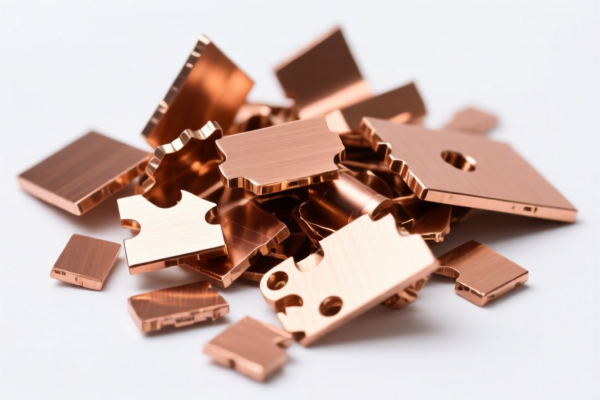
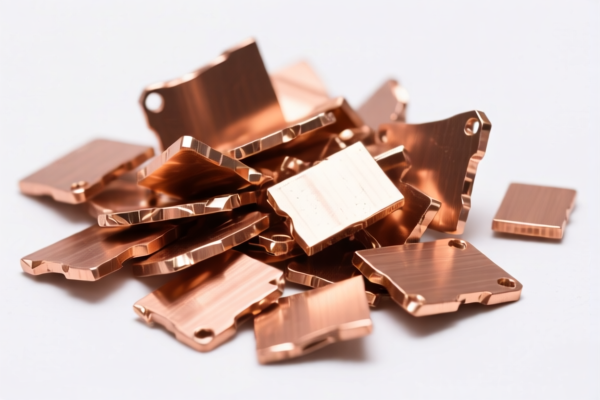

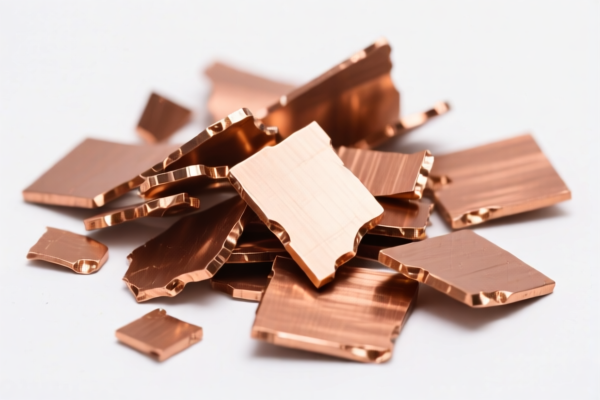
AI Analysis
🏭 Copper Scrap (Waste & Scraps of Copper)
🌐 HS Code Reference & Clearance Guide | 2026 Latest Tariff Analysis | Professional Customs Strategy
📌 I. Product Definition & Classification: Understanding "Copper Scrap"
Copper scrap refers to waste and by-products of copper or copper alloys, including ingots, anodes, and other solid forms used primarily as raw materials for smelting and refining. In international trade, it is categorized based on material composition (copper), form (scrap/waste), and purity/refinement level.
⚠️ Key Distinction Point:
- Scrap & Waste: Unrefined, mixed forms, turnings, shavings → Classified under 7404 or 7402.
- Refined Copper: Pure copper anodes or ingots (if not scrap) → Classified under 7403.
- Note: The provided data focuses on scrap/waste forms, specifically matching 7404 and 7402 subheadings for customs valuation and tariff application.
📦 II. HS Code Classification Details (2026 Latest Tariff Authority Comparison)
| HS Code | Product Description | Applicable Scenario | Key Characteristics |
|---|---|---|---|
7404.00.30.20 |
Waste and scrap of copper; specifically matching material "Copper" and form "Scrap/Waste" | Mixed copper scrap, turnings, shavings, low-grade waste | ✅ Matches Material + Form exactly |
7404.00.60.20 |
Other waste and scrap of copper; fits refined copper scrap description | High-purity copper scrap, clean cuttings, refined waste | ✅ Matches Refined Copper Scrap description |
7402.00.00.00 |
Unrefined copper; anodes for electrolytic refining | Inferior refined copper, primary copper forms used as raw material | ✅ Inferred as Raw Material Category due to "unrefined/primary" feature |
🔍 Key Reminder:
- All three codes are linked to Copper (Cu) and Waste/Scrap/Unrefined forms.
- The distinction lies in purity and physical form:
-7404.xxxxxx.xx: General scrap/waste.
- `7402.00.00.00**: Specifically for unrefined copper or anodes, often treated as a "raw material" rather than simple waste.
💰 III. 2026 Latest Tariff Rate Breakdown (Including Surcharge Policies)
✅ Applicable Country: United States (US)
✅ Origin: China (CN)
✅ Effective Date: Current (as per data context)
✅ Total Tariff Rate: 35.0% for all listed HS Codes
🎯 1. 7404.00.30.20 & 7404.00.60.20 — Copper Waste and Scrap
| Item | Detail |
|---|---|
| Base Tariff | 0.0% (ad valorem) |
| Section 301 Surcharge | +25.0% (Additional tariff under US Trade Law Section 301) |
| Section 122 Tariff | +10.0% (Specific tariff clause for certain copper scrap categories) |
| Total Tariff | 35.0% |
| Tax Calculation | CIF Value × 35% |
| De Minimis Exemption | ❌ Not Applicable (High tariff items are typically excluded from $800 de minimis exemption) |
| Legal Basis Path | USITC:7404.00.30.20 / 7404.00.60.20 → Section 301: Footnote 9903.88.01 → Section 122: Specific Copper Provision |
📌 Explanation:
- Base 0%: Standard MFN (Most Favored Nation) rate for copper scrap is often zero or low.
- 301 Surcharge (+25%): Applies to most Chinese-origin goods under Trump-era/Biden-maintained trade policies.
- Section 122 (+10%): A specific addition for copper scrap, reflecting strategic resource control.
- Total 35%: This is a significant cost burden, requiring precise classification to avoid under/over-estimation.
🎯 2. 7402.00.00.00 — Unrefined Copper / Primary Copper Forms
| Item | Detail |
|---|---|
| Base Tariff | 0.0% |
| Section 301 Surcharge | +25.0% |
| Section 122 Tariff | +10.0% |
| Total Tariff | 35.0% |
| Tax Calculation | CIF Value × 35% |
| De Minimis Exemption | ❌ Not Applicable |
| Legal Basis Path | USITC:7402.00.00.00 → Section 301 → Section 122 |
📌 Note:
- Even though7402.00.00.00is for "unrefined copper," if classified as scrap/raw material from China, it attracts the same 35% total tariff.
- This highlights that origin (China) and product type (Copper Scrap) are the primary drivers of the high tariff, not just the subheading.
🛠️ IV. Customs Clearance Practical Advice (Real-World Pitfall Guide)
✅ 1. Required Documentation Checklist (All Mandatory)
| Document | Required | Description |
|---|---|---|
| ✅ Commercial Invoice | ✔️ | Must clearly state: "Copper Scrap," material purity %, and HS Code. |
| ✅ Packing List | ✔️ | Detail weight, volume, and packaging type (bales, loose, etc.). |
| ✅ Certificate of Origin | ✔️ | To confirm Chinese origin and apply correct tariff schedule. |
| ✅ Material Composition Report | ✔️ | Third-party lab test proving Cu content ≥95% (or specified threshold). |
| ✅ Photos of Cargo | ✔️ | Clear images showing scrap type (e.g., bright copper, wire, mixed). |
| ✅ Bill of Lading (B/L) | ✔️ | Consistent with invoice and packing list. |
✅ 2. Declaration Strategy (Key Rules)
🔥 “Be Specific: Name, Grade, and Origin!”
| Scenario | Correct Declaration | Incorrect Practice |
|---|---|---|
| Mixed Copper Scrap | 7404.00.30.20 with description "Mixed Copper Scrap, Cu≥95%" |
Vague "Metal Scrap" → High risk of misclassification & penalty |
| Clean Refined Scrap | 7404.00.60.20 with description "Refined Copper Scrap, High Purity" |
Lumping with mixed scrap → May trigger higher scrutiny |
| Unrefined Copper Ingots | 7402.00.00.00 with description "Unrefined Copper Anodes/Ingots" |
Calling it "scrap" when it’s primary metal → Potential fraud allegation |
✅ 3. Special Handling Tips
| Situation | Handling Advice |
|---|---|
| High Moisture/Contamination | Ensure weight is declared as net dry weight; wet weight may lead to disputes. |
| Mixed with Non-Copper Metals | Must disclose % of other metals; if Cu <95%, HS Code may change (e.g., to 7403 or other). |
| Environmental Compliance | Provide EPA/RCRA compliance documents if required by US customs for hazardous waste classification. |
| Pre-Arrival Review | Apply for Advance Ruling if unsure between 7404 and 7402 to avoid detention. |
🌍 V. Global Market Comparison (2026 Update)
| Country/Region | Recommended HS Code | Total Tariff | Key Requirements | Notes |
|---|---|---|---|---|
| 🇺🇸 USA | 7404.00.30.20 / 7404.00.60.20 / 7402.00.00.00 |
35% | Certificate of Origin, Material Test | Highest tariff burden due to 301 + 122 clauses |
| 🇨🇳 China (Import) | 7404 |
~1% - 5% | Environmental Permit | China often imports copper scrap as raw material |
| 🇪🇺 EU | 7404 |
0% - 2% | REACH Compliance | Strict waste import regulations; may require EUCER |
| 🇮🇳 India | 7404 |
7.5% - 10% | BIS Certification | High anti-dumping duties on some copper forms |
📌 Conclusion:
- USA imposes a heavy 35% tariff on Chinese copper scrap, significantly impacting profitability.
- EU and India have lower base tariffs but stricter environmental and quality controls.
- Strategy: Consider supply chain diversification or value-added processing abroad to mitigate US tariffs.
📌 VI. Common Errors & Pitfalls (Lessons Learned)
❌ Error 1: Declaring "Copper Scrap" without purity percentage
👉 Consequence: Customs may downgrade classification or demand re-inspection → Delays & Storage Fees
❌ Error 2: Confusing 7404 (Scrap) with 7403 (Refined Copper)
👉 Consequence: If declared as 7403 but actually scrap, it’s misdeclaration → Fines & Penalties
❌ Error 3: Ignoring Section 122 Tariff
👉 Consequence: Underestimating landed cost by 10% → Profit Erosion
❌ Error 4: Not providing Material Test Reports
👉 Consequence: Customs doubts Cu content → Cargo Held for Inspection
✅ Correct Practice:
"Copper Scrap, Bright Copper Wire, Cu ≥ 98%, Origin: China, HS Code: 7404.00.30.20, 35% Total Tariff Applicable"
🎯 VII. Conclusion: Professional Declaration, Cost Control, Efficient Clearance
🎯 Remember the Golden Rules:
🔹 "HS Code Determines Tariff, 35% is the Key Threshold for US-China Copper Scrap!"
🔹 "Material Purity is King: 95%+ Cu for Standard Scrap Codes!"
🔹 "Don’t Skip Section 122: It’s a 10% Hidden Cost!"
📌 Pro Tip:
- For large-volume imports, apply for Section 301 Exclusions if eligible (check USTR lists annually).
- Consider bonded warehouses in free trade zones to defer tariff payment until final sale.
📣 Immediate Action:
📞 Consult a Certified Customs Broker + Provide Lab Test Reports + Apply for HS Code Pre-Ruling
🚀 Ensure Smooth Customs Clearance, Accurate Costing, and Maximized Profit Margins
✨ Professional Clearance Starts with Accurate Classification!
💼 Every Percent of Tariff Counts in Copper Scrap Trading!
Customer Reviews
About HS Code Classification
The Harmonized System (HS) is an internationally standardized nomenclature developed by the World Customs Organization (WCO) to classify traded products. Over 200 countries use the HS system as the basis for customs tariffs, trade statistics, and import/export regulations.
Each HS code follows a hierarchical structure:
- Chapter (2 digits) — Broad category of goods (e.g., Chapter 84: Machinery and Mechanical Appliances)
- Heading (4 digits) — More specific grouping within the chapter
- Subheading (6 digits) — Internationally standardized breakdown, used by all WCO member countries
- National subdivisions (8-10 digits) — Country-specific extensions for further classification, such as US HTSUS 10-digit codes
Correct HS code classification is essential for smooth customs clearance, accurate duty payment, and compliance with trade regulations. Misclassification can lead to customs delays, overpayment of duties, or penalties.
When importing from CN to US, the applicable tariff rates may include:
- Most-Favored-Nation (MFN) rate — The standard duty rate applied to WTO members
- General rate — Applied to countries without trade agreements
- Trade remedy duties — Additional tariffs such as Section 301 (anti-dumping), Section 232 (national security), or countervailing duties
The information provided on this page is for reference purposes only. For official classification, please consult with your local customs authority or a licensed customs broker.