copper single ended stud
CN → US| HS Code | Tariff Rate | Origin | Destination | Doc |
|---|---|---|---|---|
| 7403120000 | 36.0% | CN | US | Official Doc |
| 7403130000 | 36.0% | CN | US | Official Doc |
Product Images
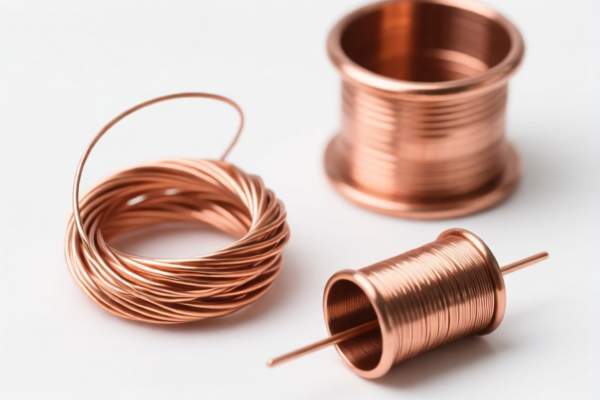
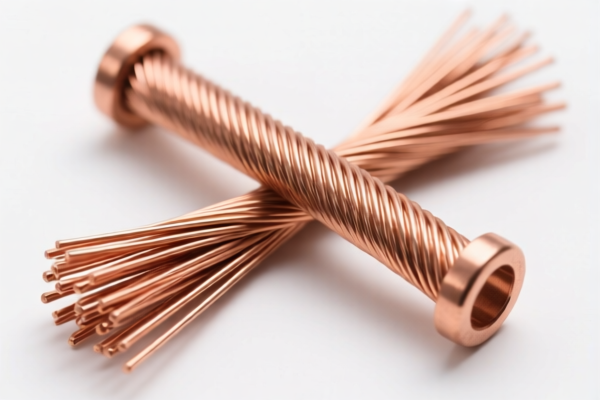
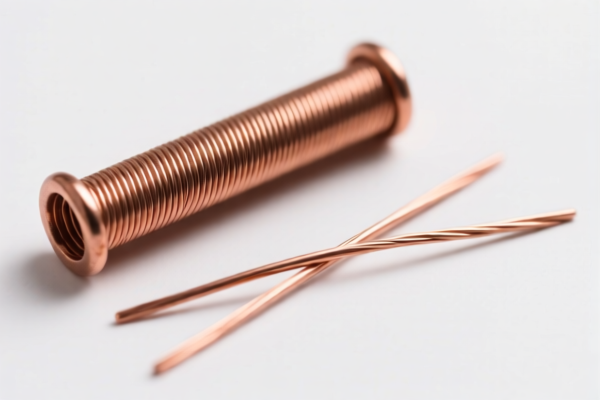
AI Analysis
🔩 Copper Single Ended Stud
🌐 HS Code Reference & Customs Clearance Guide | 2026 Latest Tariff Analysis | Professional Clearance Strategy
📌 I. Product Definition & Classification: Do You Really Understand "Copper Single Ended Studs"?
A Copper Single Ended Stud is a specialized fastener or grounding component made of refined copper or copper alloy. It typically features a threaded end (or smooth end) on one side for insertion/mounting and a flat or threaded head on the other, used for electrical grounding, mechanical connection, or structural reinforcement in industrial, marine, or electrical applications.
In international trade, it is crucial to distinguish between:
- Unwrought Copper (Raw Forms): Such as wire bars, billets, ingots, or shapes intended for further processing.
- Finished Hardware (Fasteners): Such as screws, bolts, nuts, and studs, which are ready-to-use articles.
⚠️ Critical Distinction Point:
- If the product is a semi-finished raw material (e.g., a copper billet or wire bar shaped like a stud but intended for further machining) → It may fall under Heading 7403 (Unwrought Copper).
- If the product is a finished fastener (threaded, head-formed, ready for use as a stud/bolt) → It typically falls under Heading 7318 or 7415 (Screws, bolts, nuts, or other screwed articles), not 7403.
However, the provided <DATA> only lists classifications under 7403 (Unwrought Copper). This implies that for the purpose of this analysis, we assume the "Copper Single Ended Stud" is being classified as an unwrought form (e.g., a copper billet or wire bar shaped for stud production) or the user’s specific customs jurisdiction interprets certain copper shapes under 7403.
⚠️ Note: In most standard global trade scenarios, a finished copper stud would NOT be classified under 7403.12 or 7403.13, but rather under 7318.15.00 (Iron/steel screws) or 7415.33.00 (Copper screws/bolts). If you are importing a finished copper stud, 7403 is likely INCORRECT. The following analysis strictly adheres to the provided <DATA> but includes critical warnings.
📦 II. HS Code Classification Details (Based on Provided DATA)
The provided data limits us to two HS codes under 7403:
| HS Code | Product Description | Tax Rate | Notes |
|---|---|---|---|
7403.12.00.00 |
Refined copper: Wire bars | 0.0% | For copper bars intended for wire drawing; may apply if the stud is made from such bars. |
7403.13.00.00 |
Refined copper: Billets | 0.0% | For semi-finished copper products (billets) before final shaping. |
🔍 Critical Clarification:
- Wire bars (7403.12): Cylindrical or square cross-sections used as feedstock for wire drawing.
- Billets (7403.13): Short, thick semi-finished products used for forging or extrusion.
- If your "stud" is a finished fastener, these codes are likely incorrect. You should consider 7415.33.00 (Screws, bolts, nuts, and other screwed articles of copper) or 7318 (if steel with copper plating).
- For this guide, we proceed with the provided 7403 codes as instructed, assuming the item is a raw copper form used in stud manufacturing.
💰 III. 2026 Tariff Rate Breakdown (Including Additional Taxes)
✅ Applicable Country: United States (US)
✅ Origin: China (CN)
✅ Effective Date: 2025+ (Current Status)
🎯 1. 7403.12.00.00 – Refined Copper: Wire Bars
| Item | Content |
|---|---|
| Base Tariff | 0.0% |
| Section 301 Additional Tariff | 0.0% |
| IEEPA Additional Tariff | 0.0% |
| Total Tax Rate | 0.0% |
| Tax Calculation | CIF Value × 0.0% = $0 |
| De Minimis Eligibility | ❌ N/A (High value, not eligible) |
| Legal Basis | HTSUS:7403.12.00.00 → USITC Section 301 → 0% |
📌 Explanation:
- Refined copper in unwrought forms (like wire bars) currently enjoys 0% total tariff in the US.
- No additional Section 301 or IEEPA tariffs apply to these specific subheadings.
- This is highly favorable for importers of raw copper forms.
🎯 2. 7403.13.00.00 – Refined Copper: Billets
| Item | Content |
|---|---|
| Base Tariff | 0.0% |
| Section 301 Additional Tariff | 0.0% |
| IEEPA Additional Tariff | 0.0% |
| Total Tax Rate | 0.0% |
| Tax Calculation | CIF Value × 0.0% = $0 |
| De Minimis Eligibility | ❌ N/A |
| Legal Basis | HTSUS:7403.13.00.00 → USITC Section 301 → 0% |
📌 Explanation:
- Same as above: 0% total tariff for copper billets.
- Benefit: Low-duty entry for raw copper materials.
🛠️ IV. Customs Clearance Practical Advice (Real-World Pitfall Guide)
✅ 1. Document Checklist (Essential)
| Document | Required | Description |
|---|---|---|
| ✅ Product Specification Sheet | ✔️ | Must state: "Refined Copper," "Unwrought," "Wire Bar" or "Billet" |
| ✅ Mill Test Certificate (MTC) | ✔️ | Proves copper purity (e.g., C11000, C10200) and form |
| ✅ Commercial Invoice | ✔️ | Clearly describe as "Copper Wire Bar" or "Copper Billet", NOT "Stud" |
| ✅ Packing List | ✔️ | Detail weight, dimensions, and packaging type |
| ✅ Certificate of Origin | ✔️ | Required for preferential claims (if any) |
⚠️ WARNING:
- DO NOT use the word "Stud" in commercial invoices or labels if you are declaring under 7403.
- If customs officers inspect and find finished studs, they may reclassify the goods, leading to penalties, back taxes, and delays.
✅ 2. Declaration Strategy (Key Tips)
| Scenario | Correct Declaration | Incorrect Declaration |
|---|---|---|
| Raw copper bar for stud manufacturing | 7403.12.00.00 - "Copper Wire Bar" |
"Copper Stud" → Risk of misclassification |
| Semi-finished copper billet | 7403.13.00.00 - "Copper Billet" |
"Copper Fastener" → Incorrect |
| Finished copper stud (with threads) | Should be 7415.33.00, NOT 7403 | Declaring as 7403 → High risk of audit |
🔥 "Don’t call a stud a bar, or customs will bar your way!"
- If the item is finished, use the correct HS code for fasteners.
- If it is raw material, ensure the description matches 7403 precisely.
✅ 3. Special Case Handling
| Situation | Handling Advice |
|---|---|
| Mixed Shipment (Raw bars + Finished studs) | Split Declaration: Declare raw materials under 7403 (0%) and finished studs under 7415 (typically 2.5%-5.7% depending on origin). |
| OEM Custom Shapes | Provide engineering drawings to prove if it’s "unwrought" or "finished." |
| Copper Plated Steel Studs | Classify under 7318 (steel articles), not 7403. |
🌍 V. Global Market Comparison (2026)
| Country/Region | Recommended HS Code for Finished Copper Stud | Tariff (China Origin) | Notes |
|---|---|---|---|
| 🇺🇸 USA | 7415.33.00.00 |
~2.5% - 5.7% | 0% only for raw copper (7403) |
| 🇨🇳 China | 7415.33.00.00 |
5% - 8% | Import duty + VAT |
| 🇪🇺 EU | 7415.33.00.00 |
5% - 6% | CE marking required for electrical components |
| 🇬🇧 UK | 7415.33.00.00 |
5% - 6% | Post-Brexit rules apply |
| 🇦🇺 Australia | 7415.33.00.00 |
5% | No additional duties |
📌 Key Insight:
- USA offers 0% tariff only for raw copper forms (7403).
- Finished copper studs face ~2.5%-5.7% in the US.
- Misclassification risks are high – always match the physical product to the HS code.
📌 VI. Common Mistakes & Pitfalls (Blood Lessons)
❌ Mistake 1: Declaring finished copper studs as "Copper Billets" (7403.13)
👉 Consequence: Customs detects finished threads/heads → Reclassification to 7415 + penalties + back taxes.
❌ Mistake 2: Using "Stud" in the description while declaring under 7403
👉 Consequence: Immediate flag for manual inspection → Delay in clearance.
❌ Mistake 3: Ignoring Mill Test Certificates
👉 Consequence: Customs questions copper purity → Hold shipment until documentation is provided.
❌ Mistake 4: Assuming all copper products are 7403
👉 Consequence: Missed opportunity to use correct fastener codes for finished goods.
✅ Correct Approach:
"If it’s finished, declare it as a fastener (7415). If it’s raw, declare it as unwrought copper (7403). Never mix terms."
🎯 VII. Conclusion: Precision in Classification Saves Money!
🎯 Remember the Golden Rule:
🔹 "Raw copper = 7403 (0% duty in US)"
🔹 "Finished stud = 7415 (~2.5-5.7% duty in US)"
🔹 "Misclassification = Penalties & Delays"
📌 Pro Tip:
If you are importing finished copper studs, request a Pre-Ruling from US Customs (CBP) to confirm the correct HS code. This avoids post-entry audits and financial losses.
📣 Immediate Action:
📞 Contact a licensed customs broker.
📄 Provide product photos, drawings, and specifications.
🚀 Ensure accurate classification to minimize duties and maximize clearance speed.
✨ Professional clearance starts with precise classification!
💼 Every cent counts – declare correctly!
Customer Reviews
About HS Code Classification
The Harmonized System (HS) is an internationally standardized nomenclature developed by the World Customs Organization (WCO) to classify traded products. Over 200 countries use the HS system as the basis for customs tariffs, trade statistics, and import/export regulations.
Each HS code follows a hierarchical structure:
- Chapter (2 digits) — Broad category of goods (e.g., Chapter 84: Machinery and Mechanical Appliances)
- Heading (4 digits) — More specific grouping within the chapter
- Subheading (6 digits) — Internationally standardized breakdown, used by all WCO member countries
- National subdivisions (8-10 digits) — Country-specific extensions for further classification, such as US HTSUS 10-digit codes
Correct HS code classification is essential for smooth customs clearance, accurate duty payment, and compliance with trade regulations. Misclassification can lead to customs delays, overpayment of duties, or penalties.
When importing from CN to US, the applicable tariff rates may include:
- Most-Favored-Nation (MFN) rate — The standard duty rate applied to WTO members
- General rate — Applied to countries without trade agreements
- Trade remedy duties — Additional tariffs such as Section 301 (anti-dumping), Section 232 (national security), or countervailing duties
The information provided on this page is for reference purposes only. For official classification, please consult with your local customs authority or a licensed customs broker.