cord for socks
CN → US| HS Code | Tariff Rate | Origin | Destination | Doc |
|---|---|---|---|---|
| 5605009000 | 48.2% | CN | US | Official Doc |
| 6115966010 | 36.3% | CN | US | Official Doc |
| 6115940000 | 28.8% | CN | US | Official Doc |
Product Images
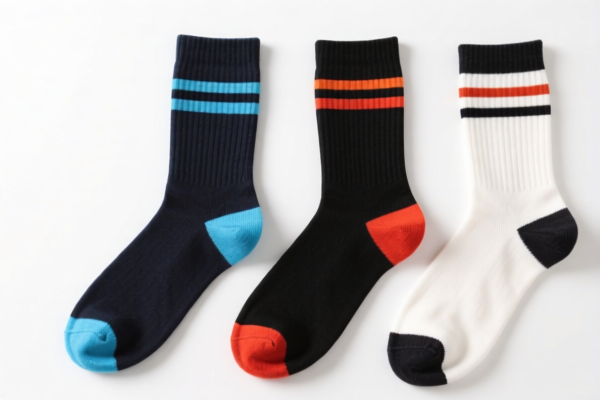
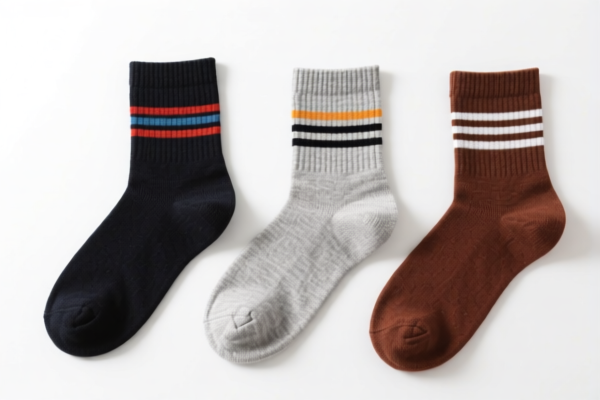
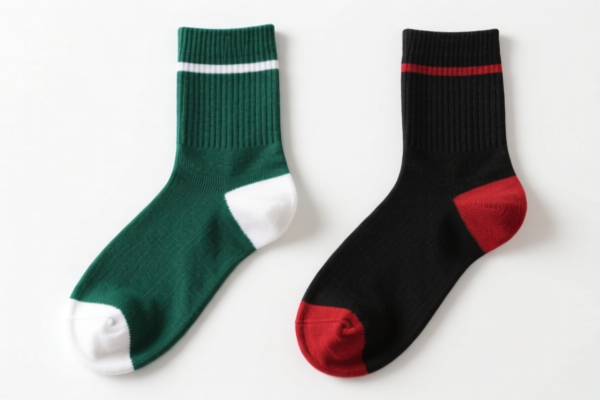
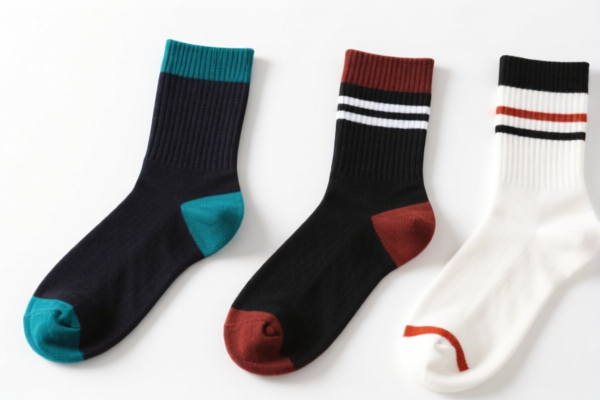
AI Analysis
🧦 Cord for Socks (Textile Cords/Togglers)
🌐 HS Code Reference & Customs Clearance Guide | 2026 Latest Tariff Analysis | Professional Classification Strategy 📌 Part I: Product Definition & Classification — Do You Really Know What "Cord for Socks" Is?
"Cord for Socks" (often referred to as toggles, drawstrings, aglets, or elastic cords used in sock manufacturing) is a specialized textile component. In international trade, its classification depends heavily on its material composition and physical form:
- Metalized/Synthetic Yarn Cords: If the cord is made of metallic yarn, coated fibers, or complex braided textiles designed specifically for finishing garments, it may fall under "Metalized Yarn" or specific "Other Textile Yarns."
- Finished Socks (with integrated cord): If the product being imported is actually the sock itself (which includes the elastic cord as an integral functional part), it must be classified under the heading for Socks, not the cord itself.
⚠️ Critical Distinction:
- If importing loose cords/toggles only → Classify under Heading 5605 (Metalized Yarn) or 5607/5609 depending on construction. - If importing socks (even with elastic drawstrings) → Classify under Heading 6115 (Socks). - Common Error: Importing socks but declaring them as "Cords" to avoid higher tariffs on apparel. This is high-risk and leads to penalties.
📦 Part II: HS Code Classification Details (2026 Latest Tariff Authority Cross-Reference)
Based on the provided data, we analyze three potential scenarios. Note that Data Source 1 classifies "Cords for Socks" as a raw material/component, while Data Sources 2 & 3 classify "Socks" as the finished article.
| HS Code | Product Description | Application Scenario | Material/State |
|---|---|---|---|
5605.00.90.00 |
Metalized Yarn / Cord for Socks | Raw material: Braided, metallic-coated, or synthetic cords used to make socks | ✅ Component/Material |
6115.96.60.10 |
Socks (Other Knitted/Crocheted) | Finished product: Socks made of synthetic fibers (e.g., nylon, polyester) with integrated elastic/cords | ✅ Finished Apparel |
6115.94.00.00 |
Socks (Other Knitted/Crocheted) | Finished product: Socks made of other textile materials (e.g., cotton blends, wool blends) | ✅ Finished Apparel |
🔍 Key Insight:
- Scenario A: You are importing bulk cords/toggles to be used in sock manufacturing in your country. → Use5605.00.90.00.
- Scenario B: You are importing finished socks from a factory. Even if the seller calls it "Cord for Socks" colloquially, if it's a wearable item, it must be6115.96.60.10or6115.94.00.00.
- Scenario C: Misclassification. Do not declare finished socks as "Cords" (5605) to save taxes. Customs will inspect and reclassify, leading to back-taxes and fines.
💰 Part III: 2026 Latest Tariff Rate Breakdown (Including Surcharges & Policy Add-ons)
✅ Applicable Country: USA (US)
✅ Origin: China (CN)
✅ Effective Date: Post-November 2025 (Current Trade War Status)
🎯 1. 5605.00.90.00 — Metalized Yarn / Cord for Socks (Component)
| Item | Content |
|---|---|
| Base Duty Rate | 13.2% (ad valorem) |
| Section 301 Surcharge | +25.0% (From USITC Footnote 9903.88.01) |
| 122 Provision Surcharge | +10.0% (Specific provision for certain textile components/cords) |
| Total Effective Tax Rate | 48.2% |
| Tax Calculation | CIF Value × 48.2% |
| De Minimis Eligibility | ❌ Not Eligible (Textile components often excluded or subject to strict scrutiny) |
| Legal Basis Path | USITC:5605.00.90.00 → SECTION301:9903.88.01 → PROVISION122 |
📌 Explanation:
- This classification applies if you are importing only the cords/toggles.
- The 48.2% rate is extremely high due to the combination of base tariff (13.2%), Section 301 (25%), and the specific 122 Clause (10%).
- Strategy: This is a high-cost raw material. Consider sourcing cords from Vietnam/Mexico if possible to avoid China-origin surcharges.
🎯 2. 6115.96.60.10 — Socks (Synthetic Fiber, Other)
| Item | Content |
|---|---|
| Base Duty Rate | 18.8% (ad valorem) |
| Section 301 Surcharge | +7.5% (Standard apparel surcharge for certain categories) |
| 122 Provision Surcharge | +10.0% (Applied to textile apparel items) |
| Total Effective Tax Rate | 36.3% |
| Tax Calculation | CIF Value × 36.3% |
| De Minimis Eligibility | ❌ Not Eligible (Apparel is strictly scrutinized under de minimis) |
| Legal Basis Path | USITC:6115.96.60.10 → SECTION301 → PROVISION122 |
📌 Explanation:
- Applies to finished socks made of synthetic fibers (e.g., polyester, nylon).
- 36.3% is lower than the component rate (5605), but still high.
- Strategy: Ensure the description clearly states "Socks" not "Cords." Misdeclaration is a major audit risk.
🎯 3. 6115.94.00.00 — Socks (Other Textile Material)
| Item | Content |
|---|---|
| Base Duty Rate | 11.3% (ad valorem) |
| Section 301 Surcharge | +7.5% (Standard apparel surcharge) |
| 122 Provision Surcharge | +10.0% (Applied to textile apparel items) |
| Total Effective Tax Rate | 28.8% |
| Tax Calculation | CIF Value × 28.8% |
| De Minimis Eligibility | ❌ Not Eligible |
| Legal Basis Path | USITC:6115.94.00.00 → SECTION301 → PROVISION122 |
📌 Explanation:
- Applies to finished socks made of materials other than synthetic fibers (e.g., cotton, wool, blends).
- 28.8% is the lowest rate among the three, but only if the socks are not primarily synthetic.
- Strategy: If your socks are cotton-blend, this is the most cost-effective classification. Ensure material content % is accurately declared.
🛠️ Part IV: Customs Clearance Operational Advice (Practical Pitfall Avoidance)
✅ 1. Documentation Checklist (Non-negotiable)
| Document | Required? | Description |
|---|---|---|
| ✅ Commercial Invoice | ✔️ | Must clearly state "Socks" or "Cords" — no vague terms like "Textile Accessories." |
| ✅ Packing List | ✔️ | Detail items: If socks, list quantity per pair. If cords, list weight/meters. |
| ✅ Product Description | ✔️ | For Socks: "Knitted Cotton Socks, Size M, with Elastic Cuff." For Cords: "Metalized Synthetic Cord, 2mm diameter, for textile use." |
| ✅ Material Content Declaration | ✔️ | Crucial for distinguishing 6115.96 (Synthetic) vs 6115.94 (Other). |
| ✅ Fiber Content Label | ✔️ | US Customs requires clear labeling on the product itself. |
| ✅ Certificate of Origin | ✔️ | To verify China origin and apply correct Section 301/122 rates. |
✅ 2. Classification Strategy (Key Rules)
🔥 “Finished Goods Win, Components Lose, Material Matters!”
| Scenario | Correct HS Code | Why? |
|---|---|---|
| Importing Finished Socks | 6115.96.60.10 or 6115.94.00.00 |
The sock is the essential character. The cord is just a part. |
| Importing Bulk Cords/Toggles | 5605.00.90.00 |
Only the raw material is being imported. |
| Mixed Shipment (Socks + Extra Cords) | Split Classification | Declare socks under 6115 and extra cords under 5605. Do not lump them. |
| Socks with No Elastic/Cord | 6115.96.60.10 or 6115.94.00.00 |
Classification remains the same; the cord is optional. |
📌 Critical Warning:
- Do NOT declare finished socks as "Cords" (5605) to avoid the 36.3%/28.8% apparel tax.
- Customs officers will inspect. If they find socks, they will reclassify to6115, apply the correct (or higher) duty, plus penalties for misdeclaration.
- The 48.2% on cords is punitive for raw materials. The 28.8%-36.3% on socks is standard for apparel.
✅ 3. Special Cases & Handling
| Situation | Recommendation |
|---|---|
| OEM Custom Socks | Provide design specs showing the cord is integrated. Must use 6115. |
| Sample Shipment | Even samples are subject to duty. Use same HS Code. No de minimis exemption for textiles. |
| Cord Only (No Socks) | Ensure the invoice says "Cords for Socks" not "Socks." Provide sample images. |
| Mixed Material Socks | Use the principal material rule. If >50% synthetic → 6115.96. If >50% cotton → 6115.94. |
🌍 Part V: Global Market Comparison (2026 Latest)
| Country/Region | Recommended HS Code | Estimated Duty (China Origin) | Notes |
|---|---|---|---|
| 🇺🇸 USA | 5605.00.90.00 (Cord) |
48.2% | Highest rate. Section 301 + 122 Clause. |
| 🇺🇸 USA | 6115.96.60.10 (Sock Synth) |
36.3% | Standard apparel rate. |
| 🇺🇸 USA | 6115.94.00.00 (Sock Other) |
28.8% | Lowest rate, but strict material proof. |
| 🇨🇳 China | 6115.96.60.10 |
~15% | No Section 301/122. |
| 🇪🇺 EU | 6115.96.60.10 |
~12% | No anti-dumping on socks generally. |
📌 Conclusion:
- USA is the most expensive market for textile components and apparel due to Section 301 + 122 Clause.
- Raw Material (Cord) Tax > Finished Sock Tax in some cases due to punitive clauses on specific textile inputs.
- Strategy: If you are a manufacturer, consider substantial transformation in a third country (e.g., Vietnam) to change origin and reduce US tariffs.
📌 Part VI: Common Mistakes & Pitfall Guide (Lessons Learned)
❌ Mistake 1: Declaring socks as "Textile Cords" to avoid higher apparel duties.
👉 Consequence: Customs reclassification → Back-taxes (up to 48.2% vs 28.8%) + Penalties + Delay.
❌ Mistake 2: Not specifying material content for socks.
👉 Consequence: Customs uses default "Other Textile" → May misclassify between 28.8% and 36.3%.
❌ Mistake 3: Ignoring the 122 Clause.
👉 Consequence: Many importers forget the 10% 122 surcharge, leading to underpayment and interest charges.
❌ Mistake 4: Using "De Minimis" ($800) for textile shipments.
👉 Consequence: Textiles are excluded from de minimis in many cases or heavily scrutinized. Expect full duty payment.
✅ Correct Action:
“Knitted Socks, 80% Cotton, 20% Polyester, with Elastic Cuff, Size M, 12 Pairs/Carton, Made in China.”
🎯 Part VII: Conclusion — Professional Classification Saves Money!
🎯 Remember:
🔹 “Cords are 48%, Socks are 29-36%. Don’t mix them!”
🔹 “Material content dictates the sock rate. Synthetic is 36%, Cotton is 29%.”
🔹 “122 Clause adds 10% to everything. Plan for it!”
📌 Pro Tip:
If your supply chain allows, consider sourcing cords from non-China origins to reduce the 48.2% component tax, or sourcing finished socks from Vietnam/Mexico to avoid US Section 301 and 122 surcharges entirely.
📣 Immediate Action:
📞 Consult a licensed customs broker for Advance Ruling if your product is borderline.
📸 Take clear photos of the product label and packaging.
📄 Prepare accurate Fiber Content Declarations.
✨ Professional Clearance Starts with Accurate Classification!
💼 Every percentage point saved is pure profit!
Customer Reviews
About HS Code Classification
The Harmonized System (HS) is an internationally standardized nomenclature developed by the World Customs Organization (WCO) to classify traded products. Over 200 countries use the HS system as the basis for customs tariffs, trade statistics, and import/export regulations.
Each HS code follows a hierarchical structure:
- Chapter (2 digits) — Broad category of goods (e.g., Chapter 84: Machinery and Mechanical Appliances)
- Heading (4 digits) — More specific grouping within the chapter
- Subheading (6 digits) — Internationally standardized breakdown, used by all WCO member countries
- National subdivisions (8-10 digits) — Country-specific extensions for further classification, such as US HTSUS 10-digit codes
Correct HS code classification is essential for smooth customs clearance, accurate duty payment, and compliance with trade regulations. Misclassification can lead to customs delays, overpayment of duties, or penalties.
When importing from CN to US, the applicable tariff rates may include:
- Most-Favored-Nation (MFN) rate — The standard duty rate applied to WTO members
- General rate — Applied to countries without trade agreements
- Trade remedy duties — Additional tariffs such as Section 301 (anti-dumping), Section 232 (national security), or countervailing duties
The information provided on this page is for reference purposes only. For official classification, please consult with your local customs authority or a licensed customs broker.