cordless hair curler
CN → US| HS Code | Tariff Rate | Origin | Destination | Doc |
|---|---|---|---|---|
| 8509805095 | 14.2% | CN | US | Official Doc |
| 8509805045 | 14.2% | CN | US | Official Doc |
| 8516320020 | 13.9% | CN | US | Official Doc |
| 8516320040 | 13.9% | CN | US | Official Doc |
Product Images
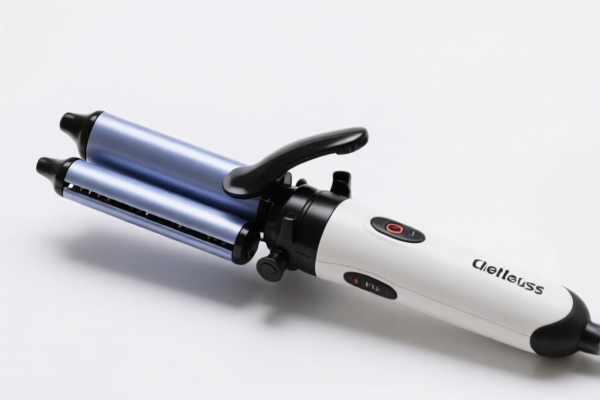
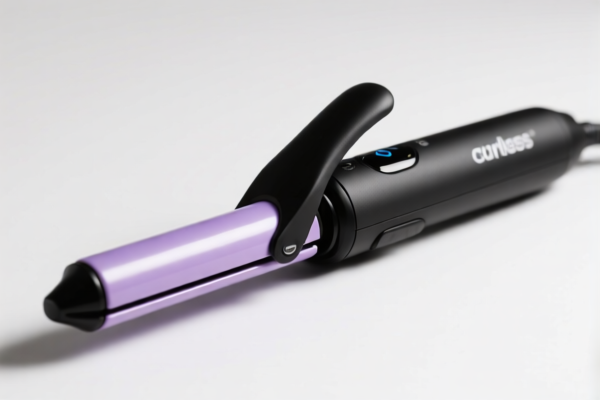
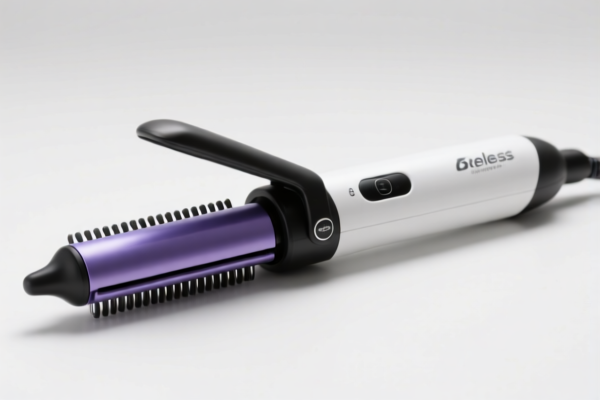
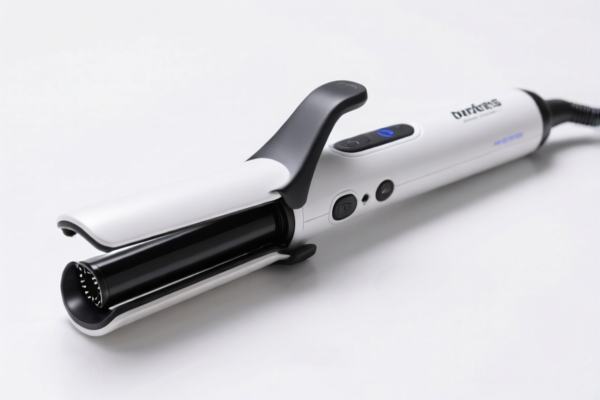
AI Analysis
💇♀️ Cordless Hair Curlers: Electrical Hairdressing Apparatus Classification Guide
🌐 HS Code Reference & Customs Clearance Guide | 2026 Latest Tariff Analysis | Professional Clearance Strategy
📌 I. Product Definition & Classification: Do You Really Understand "Cordless Hair Curlers"?
Cordless hair curlers are personal care devices designed to style hair using heat or thermal technology, powered by internal rechargeable batteries rather than a direct mains connection. In international trade, despite the "cordless" feature, they are classified under Electrothermic Hairdressing Apparatus because their primary function is thermal styling via electricity.
There are two distinct categories based on the specific mechanism and component type:
1. Curlers (Dedicated Curling Devices): Devices specifically designed to create curls (barrels, rotating clips, etc.). 2. Other Hairdressing Apparatus (General Purpose/Multi-function): Devices that may include curling functions but are broader in scope, or generic heating elements not specifically defined as "curlers."
⚠️ Key Distinction Point:
- If the product is a specific curling device (e.g., rotating curler, hot rollers with heating element) → Classified under 8516.32.00.20
- If the product is a general hairdressing tool (e.g., hair dryer with curling attachment, straightener that curls, or non-specific heating head) → Classified under 8516.32.00.40
📦 II. HS Code Classification Details (2026 Latest Tariff Authority Reference)
| HS Code | Product Description | Applicable Scenario | Tax Rate (Total) |
|---|---|---|---|
8516.32.00.20 |
Electrothermic hairdressing apparatus: Other hairdressing apparatus: Curlers | Dedicated curling rods, rotating curlers, electric hot rollers | 0.0% |
8516.32.00.40 |
Electrothermic hairdressing apparatus: Other hairdressing apparatus: Other | Hair dryers, straighteners, multi-function stylers, generic heating devices | 3.9% |
🔍 Important Note:
- 8516.32.00.20 is for specific curlers. If your device is marketed primarily as a "Curler," use this code.
- 8516.32.00.40 is a catch-all for other electrothermic hairdressing tools. If the device is a straightener, dryer, or a multi-styler that isn't exclusively a curler, use this code.
- Misclassification Risk: Declaring a hair dryer as a "Curler" to avoid the 3.9% tax is risky. Customs may inspect the product and reclassify it, leading to penalties.
💰 III. 2026 Latest Tariff Rate Details (Detailed Breakdown)
✅ Applicable Region: United States (US)
✅ Origin: China (CN)
✅ Effective Date: As per current USITC and IEEPA regulations
🎯 1. 8516.32.00.20 —— Dedicated Curlers
| Item | Content |
|---|---|
| Base Tariff | 0.0% (ad valorem) |
| USITC Additional Tariff | 0.0% |
| IEEPA Additional Tariff | 0.0% |
| Total Tariff | 0.0% |
| Tax Calculation | CIF Value × 0.0% = $0 |
| De Minimis Exemption | ✅ Yes (if under $800, subject to current de minimis rules; note: recent policy changes may affect this, verify with current CBP guidance) |
| Legal Basis Path | USITC:8516.32.00.20 |
📌 Explanation:
- This category enjoys a zero-duty rate.
- No Section 301 (USITC) or IEEPA additional tariffs apply to this specific subheading for hair curlers.
- Cost Advantage: This is the most tariff-friendly classification for hair styling devices.
🎯 2. 8516.32.00.40 —— Other Hairdressing Apparatus
| Item | Content |
|---|---|
| Base Tariff | 3.9% (ad valorem) |
| USITC Additional Tariff | 0.0% |
| IEEPA Additional Tariff | 0.0% |
| Total Tariff | 3.9% |
| Tax Calculation | CIF Value × 3.9% |
| De Minimis Exemption | ✅ Yes (if under $800, subject to current CBP guidance) |
| Legal Basis Path | USITC:8516.32.00.40 |
📌 Explanation:
- This category has a 3.9% base tariff.
- No additional Section 301 or IEEPA tariffs are currently applied to this specific subheading.
- Cost Impact: Slightly higher than curlers, but still relatively low compared to other electronics.
🛠️ IV. Customs Clearance Practical Advice (Real-World Pitfall Guide)
✅ 1. Required Documentation Checklist (Missing items = Delays)
| Document | Mandatory | Description |
|---|---|---|
| ✅ Product Specification Sheet | ✔️ | Must clearly state: "Electrothermic Hair Curler," battery type (Li-ion), voltage (e.g., 3.7V), and charging time. |
| ✅ Product Photos | ✔️ | Clear images of the device, heating element, and controls. Must show it is a standalone unit. |
| ✅ Commercial Invoice | ✔️ | Description must match HS Code. Use precise terms: "Electric Hair Curler" or "Electric Hair Styler." |
| ✅ Packing List | ✔️ | Detail contents: Device, charger, case, accessories. |
| ✅ Battery Safety Certificate | ✔️ | UN38.3 test report and MSDS for lithium batteries (critical for air/sea freight). |
| ✅ CE/FCC Certification | ✔️ | Mandatory for electronic devices in US/EU markets. |
✅ 2. Declaration Tips (Key Mantras)
🔥 "Be Specific: Curler vs. Other!"
| Scenario | Correct Declaration | Incorrect Practice |
|---|---|---|
| Dedicated Curling Device | 8516.32.00.20Desc: "Electric Hair Curler" |
Misdeclared as "Hair Dryer" (8516.32.00.40) → Pay extra 3.9% unnecessarily |
| Hair Straightener / Dryer | 8516.32.00.40Desc: "Electric Hair Dryer" or "Hair Straightener" |
Misdeclared as "Curler" → Risk of Customs Penalty for false classification |
| Multi-styler (Heat Wand) | 8516.32.00.40Desc: "Electric Hair Styler" |
Vague description: "Beauty Tool" → Customs will reclassify and assess highest rate |
⚠️ Warning:
- Do not use vague terms like "Beauty Device" or "Gadget."
- If the product is a multi-styler (e.g., can curl and straighten), it is generally classified under 8516.32.00.40 ("Other") unless it is exclusively a curler.
✅ 3. Special Situations Handling
| Situation | Handling Advice |
|---|---|
| Cordless vs. Corded | Classification is the same. "Cordless" refers to power source, not function. Both go under 8516.32. |
| Accessories (Combs, Cases) | Declared with the main unit. If sold separately, accessories may be classified under different headings (e.g., 8544 for cables, 9615 for combs). |
| Lithium Battery Transport | Ensure UN38.3 and MSDS are attached. Air freight requires "Lithium Battery Marking" on packages. |
| Low-Value Shipments | For US imports under $800, de minimis rules may apply, but tariff rates still technically apply if not exempted. Verify current CBP enforcement on Section 321. |
🌍 V. Global Market Comparison (2026 Latest)
| Country/Region | Recommended HS Code | Tariff | Certification | Note |
|---|---|---|---|---|
| 🇺🇸 USA | 8516.32.00.20 (Curlers)8516.32.00.40 (Others) |
0% / 3.9% | FCC + UL (Recommended) | No Section 301 tariffs for these specific codes. |
| 🇨🇳 China | 8516.32.00 |
Varies (Import Duty) | CCC (If applicable) | Check for anti-dumping duties if any. |
| 🇪🇺 EU | 8516.32 |
0% (Most likely) | CE + RoHS + REACH | WEEE directive applies for waste management. |
| 🇬🇧 UK | 8516.32 |
0% | UKCA + CE | Post-Brexit rules apply. |
| 🇯🇵 Japan | 8516.32 |
Varies | PSE Mark | Mandatory for heating appliances. |
📌 Conclusion:
- USA: Zero tariff for dedicated curlers, 3.9% for others. No additional trade war tariffs on these specific subheadings.
- EU/UK: Generally 0% duty, but strict safety and environmental certifications (CE, RoHS, WEEE).
- Key Takeaway: Ensure precise product description to avoid reclassification and unexpected duties.
📌 VI. Common Errors & Pitfalls (Lessons Learned)
❌ Error 1: Declaring a Hair Dryer as a "Curler" to avoid 3.9% tax.
👉 Consequence: Customs inspection reveals it's a dryer → Reclassified to 8516.32.00.40 + Penalties.
❌ Error 2: Using vague description: "Hair Styling Tool."
👉 Consequence: Customs cannot determine if it's a curler or other → Reclassified to "Other" (3.9%) or higher if deemed suspicious.
❌ Error 3: Ignoring Battery Documentation.
👉 Consequence: Shipment held at customs for safety review → Delays and storage fees.
❌ Error 4: Misclassifying as "Electrical Parts" (8543) instead of "Complete Appliance" (8516).
👉 Consequence: Incorrect duty rate and regulatory non-compliance.
✅ Correct Practice:
"Cordless Electric Hair Curler, Lithium Battery Powered, 100-240V Auto, Model XYZ, FCC Certified"
🎯 VII. Conclusion: Precise Classification Saves Money!
🎯 Remember the Mantra:
🔹 "Curler is 0%, Other is 3.9% — Be Specific to Stay Safe!"
🔹 "Battery Docs are Critical — Don't Risk Air Freight!"
🔹 "HS Code Determines Duty — Accurate Description is Key!"
📌 Pro Tip:
If you are importing multi-functional stylers, lean towards 8516.32.00.40 ("Other") unless the device is exclusively a curler. This avoids the risk of misclassification penalties.
For high-volume imports, consider applying for a Binding Tariff Information (BTI) or Advance Ruling from customs to secure your classification.
📣 Immediate Action:
📞 Contact a licensed customs broker + Provide Product Photos + Verify Battery Compliance
🚀 Ensure your Cordless Hair Curlers pass customs smoothly, avoid delays, and maximize your profit margins!
✨ Professional Clearance Starts with Accurate Classification!
💼 Every Cent Saved is a Cent Earned!
Customer Reviews
About HS Code Classification
The Harmonized System (HS) is an internationally standardized nomenclature developed by the World Customs Organization (WCO) to classify traded products. Over 200 countries use the HS system as the basis for customs tariffs, trade statistics, and import/export regulations.
Each HS code follows a hierarchical structure:
- Chapter (2 digits) — Broad category of goods (e.g., Chapter 84: Machinery and Mechanical Appliances)
- Heading (4 digits) — More specific grouping within the chapter
- Subheading (6 digits) — Internationally standardized breakdown, used by all WCO member countries
- National subdivisions (8-10 digits) — Country-specific extensions for further classification, such as US HTSUS 10-digit codes
Correct HS code classification is essential for smooth customs clearance, accurate duty payment, and compliance with trade regulations. Misclassification can lead to customs delays, overpayment of duties, or penalties.
When importing from CN to US, the applicable tariff rates may include:
- Most-Favored-Nation (MFN) rate — The standard duty rate applied to WTO members
- General rate — Applied to countries without trade agreements
- Trade remedy duties — Additional tariffs such as Section 301 (anti-dumping), Section 232 (national security), or countervailing duties
The information provided on this page is for reference purposes only. For official classification, please consult with your local customs authority or a licensed customs broker.