cork board for particle board
CN → US| HS Code | Tariff Rate | Origin | Destination | Doc |
|---|---|---|---|---|
| 4410110060 | 35.0% | CN | US | Official Doc |
| 4410110010 | 35.0% | CN | US | Official Doc |
| 4411933000 | 35.0% | CN | US | Official Doc |
Product Images
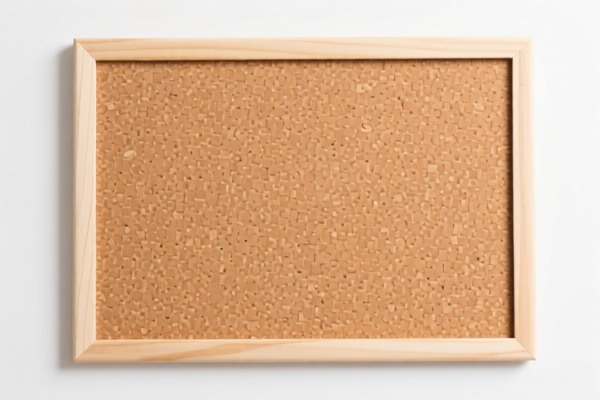
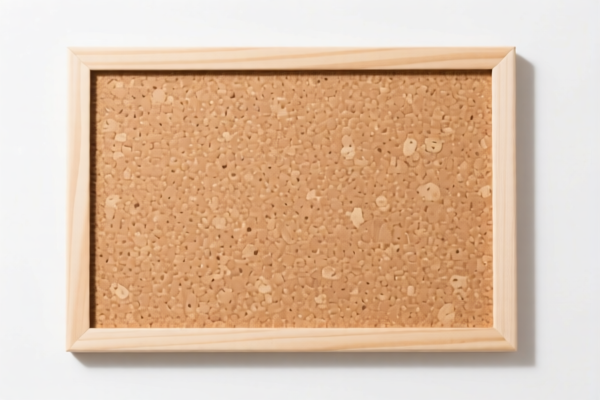
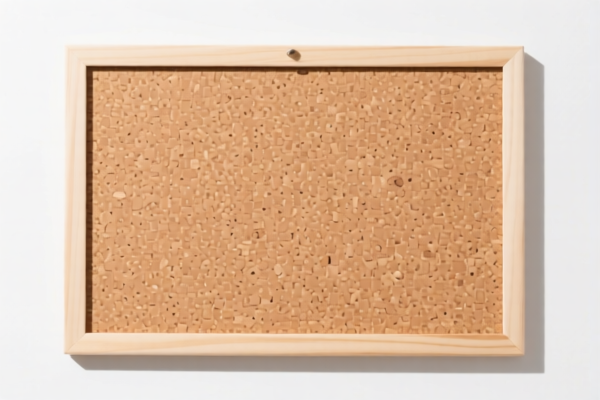
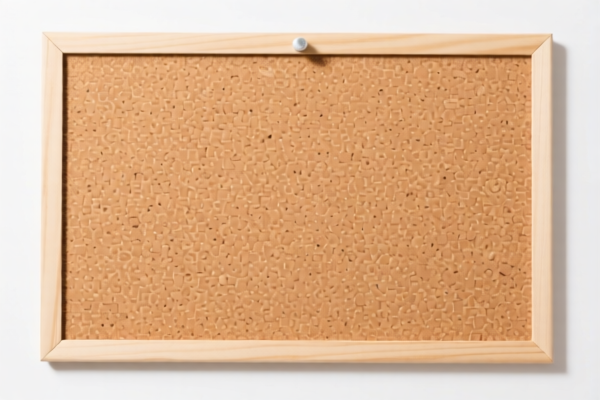
AI Analysis
🌿 Cork Board for Particle Board (Natural Cork Articles)
🌐 HS Code Reference & Customs Clearance Guide | 2026 Latest Tariff Analysis | Professional Entry Strategies
📌 I. Product Definition & Classification: Do You Truly Understand "Cork Board"?
In international trade, "Cork Board for Particle Board" (often referred to as a cork panel, cork sheet, or cork veneer applied to particle board) is primarily classified based on the material composition and processing method of the natural cork itself.
While the substrate is "Particle Board," customs authorities often focus on the valuable natural material (Cork) if it forms the visible or functional surface, or they may classify based on the final composite nature. However, based on the provided data, we are looking specifically at Articles of Natural Cork.
⚠️ Critical Distinction:
- If the cork is merely a thin veneer glued to particle board and used as a wall covering (decorative/functional wall panel), it falls under "Wallcoverings, backed with paper or otherwise reinforced".
- If the cork board is used for other purposes (e.g., bulletin boards, insulation, craft materials, flooring backing) and is not classified as a wallcovering, it falls under "Other".
📦 II. HS Code Classification Details (2026 Latest Tariff Authority Comparison)
Based on the provided dataset, here are the two possible HS Codes for "Cork Board for Particle Board," depending on its end-use and structure:
| HS Code | Product Description | Application Scenario | Key Differentiator |
|---|---|---|---|
4503.90.40.00 |
Wallcoverings, backed with paper or otherwise reinforced | Decorative wall panels, cork-backed wallpaper, soundproof wall panels where cork is the primary visible/reinforced layer | ✅ Wallcovering: Used for interior wall decoration or protection. |
4503.90.60.00 |
Other | Bulletin boards, craft kits, cork flooring underlayment, insulation sheets, cork blocks for industrial use | ✅ Other: Not primarily used as a wallcovering; functional or structural use. |
🔍 Key Reminder:
- If your "Cork Board for Particle Board" is installed on walls for aesthetic or acoustic purposes → Use4503.90.40.00.
- If it is used as a standalone board (e.g., for pinning notes), packaging, or non-wall applications → Use4503.90.60.00.
- Do not classify under wood products (Chapter 44) if the primary value and identity come from the natural cork (Chapter 45).
💰 III. 2026 Latest Tariff Rate Details (Including Surcharge Policies)
✅ Applicable Country: United States (US)
✅ Origin: China (CN)
✅ Effective Date: Current rates apply (Subject to USITC/IEEPA regulations)
🎯 1. 4503.90.40.00 —— Wallcoverings, Cork (Backed/Reinforced)
| Item | Detail |
|---|---|
| Base Tariff Rate | 0.0% (ad valorem) |
| Surcharge Tariff (Section 301 / IEEPA) | +25.0% |
| Total Tariff Rate | 25.0% |
| Tax Calculation | CIF Value × 25% |
| De Minimis Exemption | ❌ Not Eligible (High tariff rates usually exclude de minimis benefits for bulk imports) |
| Legal Basis Path | USITC:4503.90.40.00 → Footnote: Section 301 Surcharge |
📌 Explanation:
- Although the Base Tariff is 0%, the 25% Surcharge applies because this is a Chinese-origin good subject to US trade restrictions (Section 301).
- Total Tax Burden: 25% of the declared value.
🎯 2. 4503.90.60.00 —— Other Cork Articles
| Item | Detail |
|---|---|
| Base Tariff Rate | 0.0% (ad valorem) |
| Surcharge Tariff (Section 301 / IEEPA) | +0.0% |
| Total Tariff Rate | 0.0% |
| Tax Calculation | CIF Value × 0% = $0 |
| De Minimis Exemption | ✅ Eligible (if value <$800, though bulk shipments should still be properly declared) |
| Legal Basis Path | USITC:4503.90.60.00 → No Footnote Surcharge |
📌 Explanation:
- This category enjoys a duty-free entry (0% total tax).
- This is a significant cost advantage if your product qualifies as "Other" rather than "Wallcovering."
- Strategy: If possible, structure your product labeling and use case to fit "Other" (e.g., emphasize industrial or craft use rather than wall decoration) to avoid the 25% surcharge.
🛠️ IV. Customs Clearance Practical Advice (Risk Avoidance Guide)
✅ 1. Required Documentation Checklist
| Document | Mandatory? | Notes |
|---|---|---|
| ✅ Product Specification Sheet | ✔️ | Clearly state material: "Natural Cork Veneer on Particle Board Substrate" |
| ✅ Composition Breakdown | ✔️ | Percentage of cork vs. particle board. If cork >50% by value/weight, Chapter 45 applies. |
| ✅ Product Photos | ✔️ | Show both sides: cork surface and particle board backing |
| ✅ Commercial Invoice | ✔️ | Must accurately describe the item (see "Naming Tips" below) |
| ✅ Packing List | ✔️ | Weight and dimensions of each package |
| ✅ Certificate of Origin | ✔️ | Prove Chinese origin to apply correct tariff |
✅ 2. Declaration Naming Tips (Crucial for Classification)
🔥 Rule: Description determines Classification!
| Scenario | Recommended Declaration Name | HS Code | Tax Rate |
|---|---|---|---|
| Wall Decoration Panels | "Natural Cork Wallcoverings, Reinforced with Particle Board" | 4503.90.40.00 |
25% |
| Bulletin/Craft Boards | "Natural Cork Boards for Bulletin Use, Backed with Particle Board" | 4503.90.60.00 |
0% |
| Insulation Materials | "Cork Insulation Panels with Particle Board Backing" | 4503.90.60.00 |
0% |
📌 Pro Tip:
- Avoid using the word "Wallpaper" or "Wallcovering" if you want to qualify for 0% tax.
- Instead, use terms like "Cork Panels," "Cork Sheets," "Bulletin Boards," or "Insulation Boards."
- Ensure the particle board is described as "backing" or "substrate," not the primary material.
✅ 3. Special Case Handling
| Situation | Handling Advice |
|---|---|
| Mixed Use | If 50% of sales are wall panels and 50% are craft boards, classify shipments individually. Do not lump them together under the higher tax rate. |
| OEM Customization | Provide end-user instructions or marketing materials showing "Craft" or "Industrial" use to support 4503.90.60.00 classification. |
| High Cork Content | If cork is >50% by weight/value, Chapter 45 is mandatory. Do not try to classify under Chapter 44 (Wood) as it may trigger audits. |
| Particle Board Dominance | If cork is <10% and purely decorative, Customs may challenge Chapter 45. Be prepared with value analysis. |
🌍 V. Global Market Comparison (2026 Latest)
| Country/Region | Recommended HS Code | Tariff (China Origin) | Notes |
|---|---|---|---|
| 🇺🇸 USA | 4503.90.40.00 |
25% | High surcharge for wallcoverings |
| 🇺🇸 USA | 4503.90.60.00 |
0% | Duty-free for "Other" uses |
| 🇨🇳 China | 4503.90.40.00 |
0-5% | Varies by trade agreement |
| 🇪🇺 EU | 4503.90.40.00 |
0-6% | Generally lower than US |
| 🇪🇺 EU | 4503.90.60.00 |
0-6% | No major surcharge |
| 🇬🇧 UK | 4503.90.40.00 |
0-6% | Post-Brexit tariffs may vary |
| 🇦🇺 Australia | 4503.90.60.00 |
0-5% | Low tariff environment |
📌 Conclusion:
- The USA is the only market with a significant 25% surcharge for specific cork wallcoverings.
- "Other" cork articles (4503.90.60.00) are duty-free into the US, creating a strong incentive to classify correctly.
📌 VI. Common Mistakes & Pitfalls (Lessons Learned)
❌ Mistake 1: Describing "Cork Board" simply as "Wood Product"
👉 Result: Customs may reclassify under Chapter 44, leading to different tariffs and potential penalties for misclassification.
❌ Mistake 2: Assuming all cork boards are "Wallcoverings"
👉 Result: Paying 25% tax when 0% was possible. If the product is used for bulletin boards or crafts, argue for 4503.90.60.00.
❌ Mistake 3: Ignoring the "Backed with Paper or Reinforced" clause
👉 Result: If the particle board acts as a "reinforcement," and it's for walls, it still falls under 4503.90.40.00. Don't confuse "backed with paper" with "backed with wood"; the key is the wallcovering intent.
❌ Mistake 4: Undervaluing the cork content
👉 Result: If cork is minimal, Customs may classify under particle board (Chapter 44) but audit the value. Ensure documentation supports the 0% classification if applicable.
✅ Correct Practice:
"Cork Bulletin Boards, 4x8 ft, Natural Cork Surface on MDF Backing, For Office Organization, Model CB-400"
Classification:4503.90.60.00(0% Tax)
🎯 VII. Conclusion: Professional Classification Saves Money!
🎯 Remember the Mantra:
🔹 "Wallcovering = 25% Tax. Other Uses = 0% Tax."
🔹 "Describe Intent, Not Just Material."
🔹 "Cork is King in Chapter 45, But Watch the Surcharge!"
📌 Pro Tip:
If you are importing large volumes, consider structuring your product line to emphasize non-wall uses (e.g., "Cork Craft Sheets," "Cork Floor Underlayment") to qualify for the 0% tariff under 4503.90.60.00.
📣 Immediate Action:
📞 Consult with a customs broker to review your product photos and intended use.
📝 Request an Advance Ruling from US Customs (CBP) to lock in the 0% classification if possible.
🚀 Save 25% on every shipment by classifying correctly!
✨ Professional Clearance Starts with Accurate Classification!
💼 Every Dollar Saved is a Dollar Earned!
Customer Reviews
About HS Code Classification
The Harmonized System (HS) is an internationally standardized nomenclature developed by the World Customs Organization (WCO) to classify traded products. Over 200 countries use the HS system as the basis for customs tariffs, trade statistics, and import/export regulations.
Each HS code follows a hierarchical structure:
- Chapter (2 digits) — Broad category of goods (e.g., Chapter 84: Machinery and Mechanical Appliances)
- Heading (4 digits) — More specific grouping within the chapter
- Subheading (6 digits) — Internationally standardized breakdown, used by all WCO member countries
- National subdivisions (8-10 digits) — Country-specific extensions for further classification, such as US HTSUS 10-digit codes
Correct HS code classification is essential for smooth customs clearance, accurate duty payment, and compliance with trade regulations. Misclassification can lead to customs delays, overpayment of duties, or penalties.
When importing from CN to US, the applicable tariff rates may include:
- Most-Favored-Nation (MFN) rate — The standard duty rate applied to WTO members
- General rate — Applied to countries without trade agreements
- Trade remedy duties — Additional tariffs such as Section 301 (anti-dumping), Section 232 (national security), or countervailing duties
The information provided on this page is for reference purposes only. For official classification, please consult with your local customs authority or a licensed customs broker.