cork granules horticultural use
CN → USProduct Images
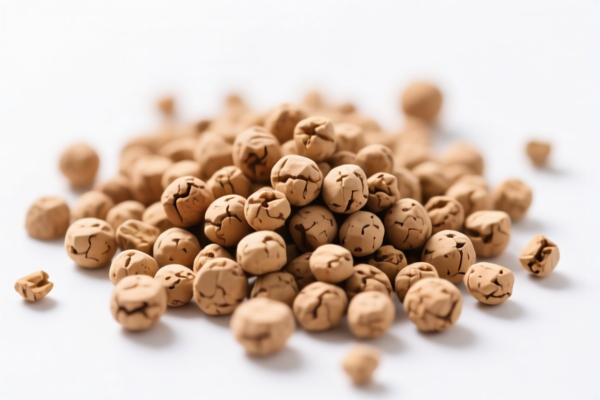
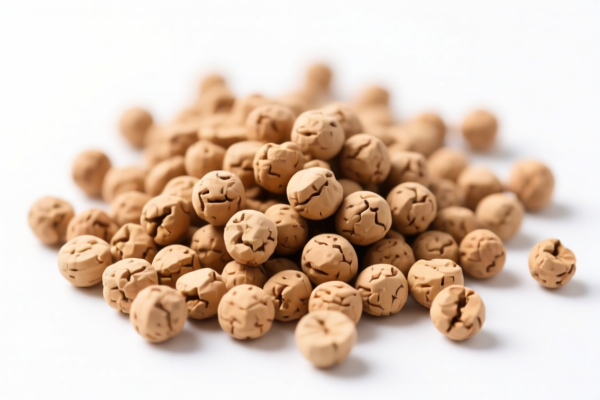
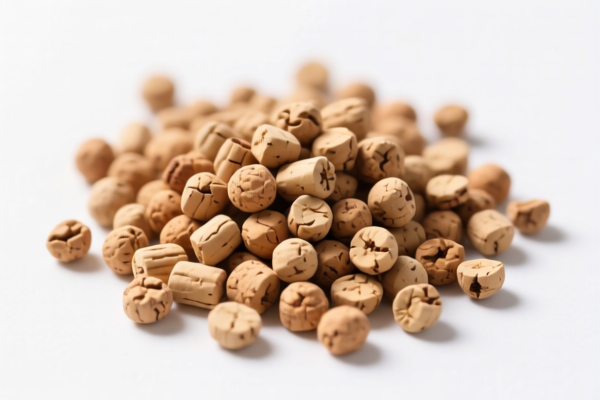
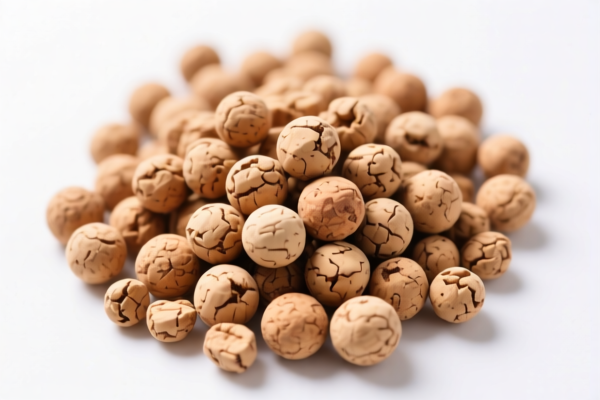
AI Analysis
🌿 Cork Granules (Horticultural Grade)
🌐 HS Code Reference & Customs Clearance Guide | 2026 Latest Tariff Analysis | Professional Import Strategy
📌 1. Product Definition & Classification: What Are Horticultural Cork Granules?
Cork Granules for horticultural use are processed pieces of natural cork (from the bark of the Quercus suber tree), sized typically between 1-5mm or 5-10mm. They are widely used in potting mixes, soil aeration, hydroponics, and as mulch due to their water retention, antibacterial properties, and lightweight nature.
Key Distinction:
- Granules for Horticulture: Used for soil amendment, drainage, or mulching.
- Granules for Industrial/Construction: Used for flooring, insulation, or shock absorption.
⚠️ Critical Classification Point:
- If intended for plant growth, soil improvement, or horticultural applications, they fall under HS 1404.90 (Vegetable products not elsewhere specified or included).
- If used for industrial purposes (e.g., construction materials), they may fall under HS 3918.90 (Plastic flooring, if processed differently) or HS 4421.99 (Other wood articles), but horticultural cork is strictly classified under HS 1404.90.
📦 2. HS Code Classification Details (2026 Latest Tariff Reference)
| HS Code | Product Description | Application | Notes |
|---|---|---|---|
1404.90.00.00 |
Other vegetable products (including cork granules for horticulture) | Soil amendment, mulch, potting mix | ✅ Correct for horticultural use |
3918.90.90.90 |
Other plastic flooring | Industrial/construction flooring | ❌ Incorrect for cork |
4421.99.99.99 |
Other wood articles | Furniture parts, decorative items | ❌ Not for horticultural granules |
1404.20.00.00 |
Lint (cotton) | Textile industry | ❌ Wrong material |
🔍 Important Reminder:
- Horticultural cork granules are vegetable products and must be declared under HS 1404.90.
- Misclassification as “wood products” or “plastic materials” can lead to high tariffs, delays, or rejection.
💰 3. 2026 Latest Tariff Rates (Including Surtaxes & Policy Surcharges)
✅ Applicable Country: United States (US)
✅ Origin: China (CN)
✅ Effective Date: November 10, 2025 (including subsequent imports)
🎯 1. 1404.90.00.00 —— Cork Granules (Horticultural Use)
| Item | Details |
|---|---|
| Base Tariff Rate | 0% (ad valorem) |
| USITC Surtax | +25% (USITC Footnote 9903.88.01) |
| IEEPA Surtax | +10% (against Chinese/Hong Kong products, effective Nov 10, 2025) |
| Total Rate | 45% |
| Tax Calculation | CIF Value × 45% |
| De Minimis Exemption | ❌ Not Eligible (deny_de_minimis) |
| Legal Basis Path | IEEPA:9903.01.25 → IEEPA:9903.01.24 → USITC:1404.90.00.00 → FOOTNOTE:9903.88.01 |
📌 Explanation:
- The 25% USITC surtax is under the Section 301 Tariffs.
- The 10% IEEPA surtax is the International Emergency Economic Powers Act tariff on Chinese goods.
- Total 45% is a high tariff burden, requiring advance planning.
🎯 2. Alternative: If Classified Under 1404.20.00.00 (Lint)
❌ Not Applicable: Cork granules are not lint. This is a common misclassification that can lead to penalties.
🛠️ 4. Customs Clearance Practical Advice (Real-World Pitfall Avoidance)
✅ 1. Required Documentation (Mandatory)
| Document | Required | Notes |
|---|---|---|
| ✅ Product Specification Sheet | ✔️ | Include granule size, moisture content, origin |
| ✅ Product Photos (Label + Packaging) | ✔️ | Show “Horticultural Grade” clearly |
| ✅ Certificate of Origin (CO) | ✔️ | If not from China, may qualify for lower rates |
| ✅ Commercial Invoice | ✔️ | Must state “Cork Granules, Horticultural Use” |
| ✅ Packing List | ✔️ | Detail weight, volume, number of packages |
| ✅ Phytosanitary Certificate | ❓ | May be required depending on origin |
✅ 2. Declaration Tips (Key Rules)
🔥 “Label as Horticultural, Declare as 1404.90, Avoid Industrial Misclassification!”
| Scenario | Correct Declaration | Incorrect Action |
|---|---|---|
| Cork granules for plant soil | 1404.90.00.00 |
Misdeclare as “wood chips” → 89.5% |
| Cork granules for flooring | 4421.99.99.99 |
Misdeclare as “horticultural” → 45% |
| Cork powder (not granules) | 1404.90.00.00 |
Same HTS, different particle size |
✅ 3. Special Cases
| Case | Handling Advice |
|---|---|
| Organic Certification | Provide Organic Certificate if marketed as organic |
| Bulk vs. Retail Packaging | Bulk imports may require phytosanitary inspection |
| OEM Private Label | Clearly state “Horticultural Cork Granules” in invoice |
🌍 5. Global Customs Comparison (2026 Latest)
| Country/Region | Recommended HS Code | Tariff | Certification | Notes |
|---|---|---|---|---|
| 🇺🇸 USA | 1404.90.00.00 |
45% (Chinese origin) | No special certs | High tariff due to Surtaxes |
| 🇨🇳 China | 1404.90.00.00 |
0% | None | Free trade within China |
| 🇪🇺 EU | 1404.90.00 |
0% (if organic) | CE, Organic Label | Low tariff for agricultural products |
| 🇦🇺 Australia | 1404.90.00 |
5% | None | Moderate tariff |
| 🇯🇵 Japan | 1404.90.00 |
0% | None | Low tariff for horticultural use |
📌 Conclusion:
- USA imposes the highest tariffs (45%) due to Section 301 and IEEPA surtaxes.
- EU, Japan, and China have favorable tariffs for horticultural cork.
- Consider sourcing from non-Chinese origins (e.g., Portugal, Spain) to mitigate US tariffs.
📌 6. Common Mistakes & Pitfall Avoidance (Lessons Learned)
❌ Mistake 1: Declaring cork granules as “wood chips” or “mulch”
👉 Consequence: Tariff jumps to 89.5% → Total cost increases significantly
❌ Mistake 2: Using vague terms like “natural material” in the invoice
👉 Consequence: Customs may reclassify, leading to delays, fines, or seizure
❌ Mistake 3: Ignoring phytosanitary requirements for agricultural products
👉 Consequence: Rejection or return at the port
✅ Correct Approach:
“Cork Granules, Horticultural Grade, Particle Size 2-4mm, for Soil Improvement, Origin: China, HS Code: 1404.90.00.00”
🎯 7. Conclusion: Precise Classification Saves Money!
🎯 Remember the Key Rules:
🔹 “Horticultural Cork = HS 1404.90 = 45% in USA”
🔹 “Industrial Cork = HS 4421.99 = 89.5% in USA”
🔹 “Misclassification = Fines, Delays, Returns”
📌 Pro Tip:
If your cork granules are sourced from Portugal, Spain, or Italy, you may qualify for lower tariffs or exemptions under USMCA or EU trade agreements.
Consider pre-arrival customs rulings to confirm classification and reduce risk.
📣 Immediate Action Required:
📞 Contact a licensed customs broker + Provide product specs + Request HS Code Advance Ruling
🚀 Ensure smooth customs clearance, lower costs, and faster delivery
✨ Professional Customs Clearance Starts with Accurate Classification!
💼 Every cent saved in tariffs is profit gained!
Customer Reviews
About HS Code Classification
The Harmonized System (HS) is an internationally standardized nomenclature developed by the World Customs Organization (WCO) to classify traded products. Over 200 countries use the HS system as the basis for customs tariffs, trade statistics, and import/export regulations.
Each HS code follows a hierarchical structure:
- Chapter (2 digits) — Broad category of goods (e.g., Chapter 84: Machinery and Mechanical Appliances)
- Heading (4 digits) — More specific grouping within the chapter
- Subheading (6 digits) — Internationally standardized breakdown, used by all WCO member countries
- National subdivisions (8-10 digits) — Country-specific extensions for further classification, such as US HTSUS 10-digit codes
Correct HS code classification is essential for smooth customs clearance, accurate duty payment, and compliance with trade regulations. Misclassification can lead to customs delays, overpayment of duties, or penalties.
When importing from CN to US, the applicable tariff rates may include:
- Most-Favored-Nation (MFN) rate — The standard duty rate applied to WTO members
- General rate — Applied to countries without trade agreements
- Trade remedy duties — Additional tariffs such as Section 301 (anti-dumping), Section 232 (national security), or countervailing duties
The information provided on this page is for reference purposes only. For official classification, please consult with your local customs authority or a licensed customs broker.