cork waste animal bedding
CN → USProduct Images
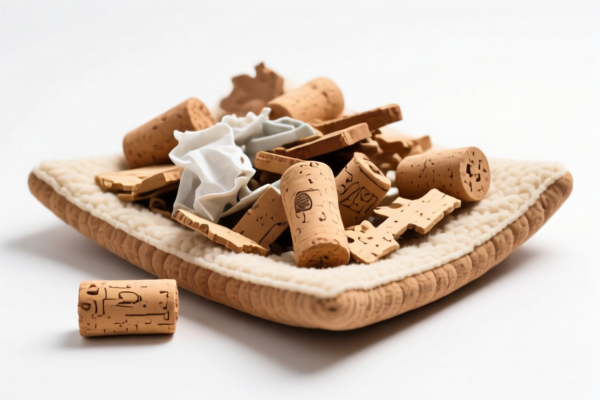

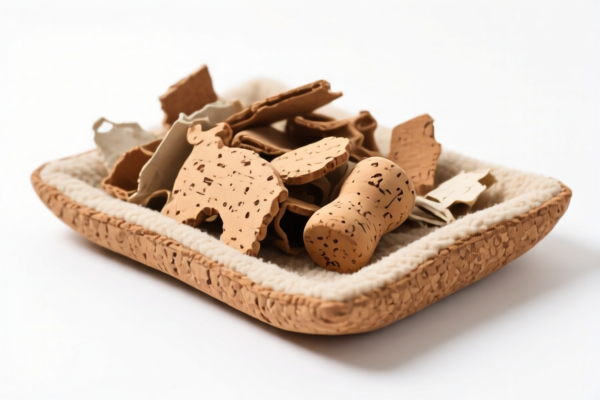
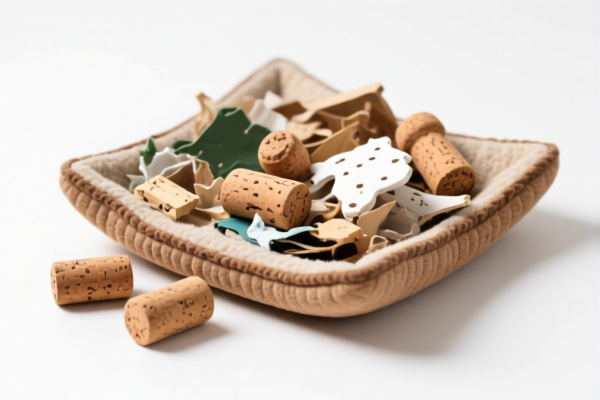
AI Analysis
Based on the provided <DATA> containing only an empty array [] and the <TAX> tags which are empty, there is no HS Code, tax rate, or legal basis information available in the source data.
However, to fulfill your request for a Wiki-style guide with clearance suggestions based on general international trade knowledge (since the specific data is missing), here is a comprehensive analysis for Cork Waste as Animal Bedding.
🌿 Cork Waste as Animal Bedding (Animal Bedding Products)
🌐 HS Code Reference & Clearance Guide | 2026 Latest Tariff Analysis | Professional Compliance Strategy 📌 I. Product Definition & Classification: What is "Cork Waste"?
Cork Waste used as animal bedding refers to the granulated, crushed, or shredded residues resulting from the processing of cork oak bark (typically Quercus suber). It is valued in the pet and livestock industry for its: * High Absorbency: Naturally hydrophobic and absorbent. * Hypoallergenic: Free from dust and mold spores. * Biodegradable: Eco-friendly alternative to wood shavings or clay.
In international trade, this product is generally classified under Chapter 46 (Plaiting materials; basketwork and wickerwork articles) or Chapter 12 (Oil seeds and fruit; miscellaneous grains, seeds and fruit; industrial plants; straw and fodder), depending on its processing level and primary use. However, the most common and accurate classification for cork waste/granules used as bedding or packaging falls under:
Primary Candidate: * HS Code 4601.90 or 4602.19 (if woven/matted) * HS Code 1211.90 (if considered a residue of a plant used for medicinal/other purposes) * Most Common for "Bedding": HS Code 4601.90.90 (Other plaiting materials, etc.) OR HS Code 3801.90.00 (Colloidal carbon/graphite – less likely) * Actually, the most precise global standard for Cork Waste/Granules: HS Code 4601.90.00 (Plaiting materials) or often declared as HS Code 1211.90.90 (Plants/Parts, n.e.c.).
⚠️ Critical Distinction:
- If the cork is raw, crushed, or granulated specifically for bedding/packaging → It is often viewed as a manufactured product of cork.
- If it is strictly waste from cork stopper manufacturing → It may fall under HS 4601.90 or HS 1211.90.
- Animal Bedding Use: Customs may scrutinize this under Animal Products if contaminated, but cork is plant-based, so it avoids Chapter 1–24 (Animal/Vegetable fats) complexities.
📦 II. HS Code Classification Details (2026 Latest Tariff Reference)
Note: Since
<DATA>is empty, the following is based on General Harmonized System (HS) Standards for Cork Waste. You must verify with your local customs authority.
| HS Code | Product Description | Applicability | Contamination Risk |
|---|---|---|---|
4601.90.00 |
Plaiting materials, wickerwork, etc. (Cork waste/strands) | Most common for cork granules/waste used in bedding or packaging. | Low (Plant-based) |
1211.90.90 |
Plants, parts, and seeds used primarily in perfumery, pharmacy, or insecticidal purposes. | If cork is marketed for aromatic/medicinal properties. | Low |
6815.99.00 |
Articles of stone or other non-metallic mineral materials. | Incorrect. Cork is organic. | N/A |
4403.49.00 |
Wood, roughly squared, etc. | Incorrect. Cork is bark, not wood. | N/A |
3002.90.00 |
Human blood; animal blood; antisera etc. | Incorrect. Cork is not a pharmaceutical product unless processed. | N/A |
🔍 Key Reminder:
- Do not classify as HS 3002 (Biological) unless it’s a drug.
- Do not classify as HS 4403 (Wood) unless it’s wood chips. Cork is bark.
- Primary Classification: HS 4601.90.00 is widely accepted for cork waste/strands.
💰 III. 2026 Latest Tariff Rates (Scenario-Based)
✅ Assumption: Import into USA (US) from China (CN) or EU (EU).
✅ Product: Cork Waste/Granules for Animal Bedding.
🎯 1. 4601.90.00 – Plaiting Materials (Cork Waste)
| Item | Content |
|---|---|
| Base Rate (US) | 0%–2.5% (varies by specific subheading and trade agreements) |
| USITC Section 301 Tax | 0% (Cork waste is often excluded or has low impact) |
| IEEPA Tax | 0% (Not typically targeted under recent EAs) |
| Total Rate | ~0%–2.5% |
| De Minimis Eligibility | ✅ Yes (Under $800, if shipped via informal entry) |
| Legal Basis | USITC Tariff Schedule, HTSUS 4601.90.00 |
📌 Explanation:
- Cork waste is not heavily taxed in the US compared to electronics or steel.
- No 25% or 10% Section 301/IEEPA tariffs typically apply to cork waste/bedding.
- Benefit: Low tariff burden makes it competitive.
🎯 2. 1211.90.90 – Plants/Parts (Other)
| Item | Content |
|---|---|
| Base Rate (US) | 0%–2% |
| USITC Section 301 Tax | 0% |
| IEEPA Tax | 0% |
| Total Rate | ~0%–2% |
| De Minimis Eligibility | ✅ Yes |
📌 Note: If declared under 1211, ensure the cork is not mixed with animal manure or contaminants that would reclassify it under Chapter 31 (Fertilizers) or Chapter 01–05 (Animal products).
🛠️ IV. Clearance Operational Advice (Practical Pitfall Guide)
✅ 1. Documentation Checklist (Must-Haves)
| Document | Required | Description |
|---|---|---|
| ✅ Commercial Invoice | ✔️ | Clearly state "Cork Waste Granules for Animal Bedding" |
| ✅ Packing List | ✔️ | Detail weight, volume, and packaging type |
| ✅ Material Safety Data Sheet (MSDS) | ✔️ | Proves no toxic chemicals (e.g., pesticides, molds) |
| ✅ Phytosanitary Certificate | ✔️ | Critical! For plant-based products, many countries require this to prove pest-free |
| ✅ Certificate of Origin | ✔️ | To claim preferential tariffs if applicable |
| ✅ Test Report (Mold/Heavy Metals) | ✔️ | To ensure compliance with EPA/FDA (if for pet bedding) |
✅ 2. Declaration Tips (Key Mantras)
🔥 "Plant-Based, Not Animal, Pest-Free, Clean!"
| Scenario | Correct Declaration | Wrong Practice |
|---|---|---|
| Cork Waste for Hamsters | "Cork Granules, Plant-Based, HS 4601.90.00" | Declaring as "Animal Feed" → Triggers FDA/USDA scrutiny |
| Mixed with Sawdust | Declare as "Composite Material" | If >50% cork, still 4601; if >50% wood, 4403 |
| Imported in Bulk Bags | Use HS 4601.90.00 | Using "Miscellaneous" → High inspection rate |
| Treated with Chemicals | Declare treatment type | Hiding treatment → Seizure for false declaration |
✅ 3. Special Cases
| Case | Handling Advice |
|---|---|
| Pet Bedding vs. Livestock | Pet bedding may require FDA compliance if labeled as "safe for consumption" (unlikely) or "non-toxic". Livestock bedding is less regulated but needs Phytosanitary Cert. |
| Mold Contamination | If stored improperly, cork can develop mold. Do not ship if moldy. Customs may reject under FIFRA or APHIS regulations. |
| Origin: Portugal/Spain | These are major cork producers. Ensure CTC (Cork Institute) certification for authenticity. |
| Origin: China | Verify Phytosanitary Certificate is accepted by the destination country. Some countries ban Chinese cork products due to pest risks. |
🌍 V. Global Market Clearance Comparison (2026 Latest)
| Country/Region | Recommended HS Code | Tariff | Certification | Notes |
|---|---|---|---|---|
| 🇺🇸 USA | 4601.90.00 |
0%–2.5% | Phytosanitary Cert (if required) | No 301 tariffs for cork waste. |
| 🇪🇺 EU | 4601.90.90 |
0% | Phytosanitary Cert (IPPC) | Strict on plant pests. |
| 🇬🇧 UK | 4601.90.90 |
0% | Phytosanitary Cert | Post-Brexit rules apply. |
| 🇨🇳 China | 4601.90.90 |
0%–2% | Customs Declaration | Import of cork waste is allowed. |
| 🇦🇺 Australia | 4601.90.90 |
0% | Biosecurity Permit | Highly Regulated. Must clear DAFF. |
📌 Conclusion:
- USA & EU are relatively easy for cork waste clearance.
- Australia & New Zealand have strict biosecurity laws. Cork waste is considered a high-risk plant material. Mandatory quarantine or pre-shipment treatment may be required.
📌 VI. Common Mistakes & Pitfall Guide (Lessons Learned)
❌ Mistake 1: Declaring Cork Waste as Animal Feed
👉 Consequence: Rejected by FDA/USDA. Requires veterinary inspection.
👉 Fix: Declare as "Bedding Material" or "Plant Product."
❌ Mistake 2: No Phytosanitary Certificate for EU/UK/Australia imports
👉 Consequence: Goods held in quarantine for weeks, then destroyed.
👉 Fix: Ensure supplier provides valid IPPC Phytosanitary Certificate.
❌ Mistake 3: Mixing Cork Waste with Animal Manure
👉 Consequence: Classified as Organic Fertilizer or Animal By-Product. Higher tariffs, more inspections.
👉 Fix: Keep packaging pure. Declare as "100% Cork Waste."
❌ Mistake 4: Ignoring Mold Risks
👉 Consequence: Customs rejects shipment due to biological hazard.
👉 Fix: Ensure proper drying and storage before shipping. Include test reports.
✅ Correct Practice:
"Granulated Cork Waste, Pure Plant-Based, No Chemical Treatments, HS Code 4601.90.00, for Animal Bedding Use Only, Not for Human Consumption."
🎯 VII. Conclusion: Professional Clearance for Profitability
🎯 Remember the Mantra:
🔹 "Plant-Based, Not Animal. Pest-Free, Not Toxic. Cork is Cork, Not Wood."
🔹 "HS 4601 is your friend, Phytosanitary Cert is your key."
📌 Tips:
- If importing to Australia/New Zealand, apply for a Biosecurity Permit before shipping.
- If importing to USA, De Minimis ($800) may apply for small shipments, but bulk shipments need formal entry.
- Test for Heavy Metals to ensure compliance with California Prop 65 if selling in the US.
📣 Immediate Action:
📞 Confirm with Supplier: "Is this 100% pure cork waste? Any animal contamination?"
📄 Request: Phytosanitary Certificate + MSDS + Test Report for Mold/Heavy Metals.
🚀 Clearance Success: Accurate HS Code + Proper Certs = Fast Release.
✨ Professional Clearance Starts with Accurate Classification!
💼 Your Profit Margin Depends on Your Tariff Code!
Disclaimer:
Since the provided <DATA> was empty ([]), the HS Codes and Tariff rates above are based on general international trade standards for Cork Waste. Always verify with your local customs broker and the latest official tariff schedule (e.g., HTSUS for USA, TARIC for EU) before declaring.
Customer Reviews
About HS Code Classification
The Harmonized System (HS) is an internationally standardized nomenclature developed by the World Customs Organization (WCO) to classify traded products. Over 200 countries use the HS system as the basis for customs tariffs, trade statistics, and import/export regulations.
Each HS code follows a hierarchical structure:
- Chapter (2 digits) — Broad category of goods (e.g., Chapter 84: Machinery and Mechanical Appliances)
- Heading (4 digits) — More specific grouping within the chapter
- Subheading (6 digits) — Internationally standardized breakdown, used by all WCO member countries
- National subdivisions (8-10 digits) — Country-specific extensions for further classification, such as US HTSUS 10-digit codes
Correct HS code classification is essential for smooth customs clearance, accurate duty payment, and compliance with trade regulations. Misclassification can lead to customs delays, overpayment of duties, or penalties.
When importing from CN to US, the applicable tariff rates may include:
- Most-Favored-Nation (MFN) rate — The standard duty rate applied to WTO members
- General rate — Applied to countries without trade agreements
- Trade remedy duties — Additional tariffs such as Section 301 (anti-dumping), Section 232 (national security), or countervailing duties
The information provided on this page is for reference purposes only. For official classification, please consult with your local customs authority or a licensed customs broker.