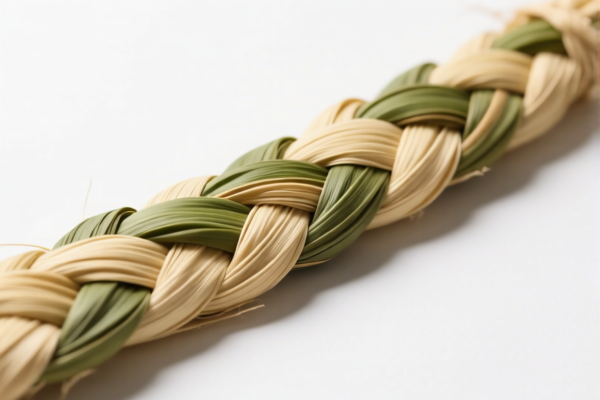
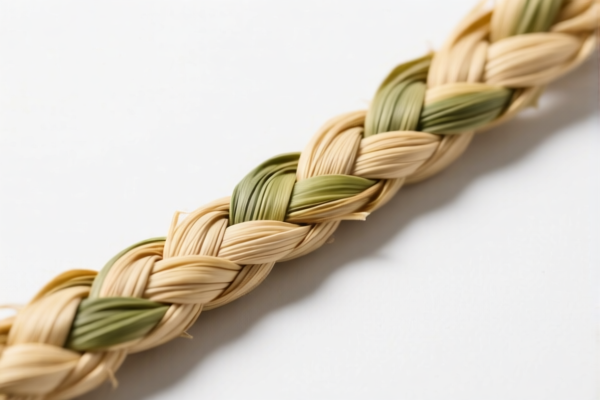
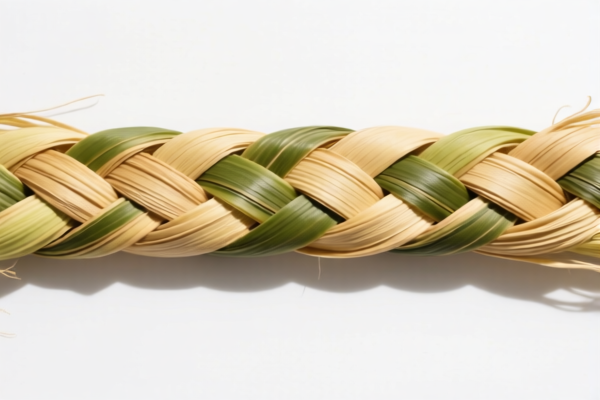
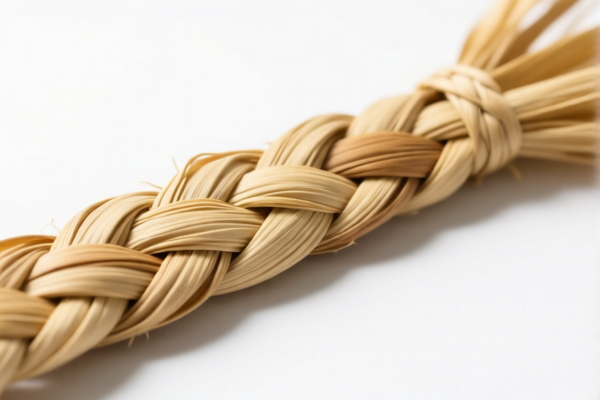
corn husk braided products
CN → US| HS Code | Tariff Rate | Origin | Destination | Doc |
|---|---|---|---|---|
| 4602198000 | 37.3% | CN | US | Official Doc |
| 4602191800 | 39.5% | CN | US | Official Doc |
| 9403893020 | 35.0% | CN | US | Official Doc |
| 9403893010 | 35.0% | CN | US | Official Doc |
Product Images
AI Analysis
🌽 Corn Husk Braided Products (Corn Husk Braided Mats/Pads)
🌐 HS Code Reference & Customs Clearance Guide | 2026 Latest Tariff Analysis | Professional Compliance Strategy
📌 I. Product Definition and Classification: What Exactly Are "Corn Husk Braided Products"?
Corn husk braided products, typically marketed as eco-friendly placemats, table runners, or decorative mats, are handicrafts made from dried corn husks. In international trade, their classification is critical because they straddle the line between textile/vegetable fiber articles and furniture/household items.
The key distinction lies in the specific material composition and the intended use as defined by the Harmonized System (HS):
- Vegetable Fiber Articles (Chapter 46): If the product is strictly defined as a "plaited product" made from vegetable materials (corn husks are vegetable fibers), it falls under Chapter 46. The classification depends on whether it is considered a "basketry" item or a general "plaited product."
- Household/Furniture Articles (Chapter 94): If the product is perceived as a "mattress support," "floor covering," or general "furniture accessory" rather than a woven basket-like structure, it may fall under Chapter 94.
⚠️ Key Distinction Point:
- If the product is rigid, structured, and resembles a mat or basket made of plaited vegetable material → Chapter 46 (4602)
- If the product is soft, flexible, and classified as a home furnishing item (like a mat for furniture or floor) → Chapter 94 (9403)
📦 II. HS Code Classification Details (2026 Latest Tariff Authority Comparison)
| HS Code | Product Description | Application Scenario | Material/Structure Logic |
|---|---|---|---|
4602.19.80.00 |
Plaited products of vegetable materials (Other) | Standard corn husk mats; general vegetable fiber braiding. | ✅ Vegetable material (Corn Husk) |
4602.19.18.00 |
Plaited products of vegetable materials (Baskets & Bags Extension) | Corn husk mats classified under specific "basket/bag" extensions. | ✅ Corn Husk (Vegetable Material) |
9403.89.30.20 |
Other furniture and parts thereof (Other) | Corn husk mats treated as "home furnishing/furniture accessories." | ✅ Plant fiber/Rattan-like material |
9403.89.30.10 |
Other furniture and parts thereof (Other Home Use) | Corn husk mats for home use, falling under "other materials." | ✅ Plant Fiber-like material |
🔍 Focus Reminder:
- Chapter 46 Codes (4602.xx) are generally for plaited/braided goods that retain their fiber identity.
- Chapter 94 Codes (9403.xx) are for articles of furniture or home furnishings.
- Customs authorities often challenge the classification based on whether the "corn husk" is viewed as a "vegetable fiber" (Ch 46) or a "similar material" (Ch 94).
💰 III. 2026 Latest Tariff Rate Breakdown (Including Surcharges & Policy Add-ons)
✅ Applicable Country: United States (US)
✅ Country of Origin: China (CN)
✅ Effective Date: From November 10, 2025 (and subsequent imports)
🎯 1. 4602.19.80.00 —— Plaited Products of Vegetable Materials (General)
| Item | Details |
|---|---|
| Base Tariff | 2.3% (ad valorem) |
| Section 301 Surcharge | +25.0% (USITC Footnote for China-origin goods) |
| Section 122 Surcharge | +10.0% (Specific tariff provision for certain Chinese goods) |
| Total Tariff Rate | 37.3% |
| Tax Calculation | CIF Value × 37.3% |
| De Minimis Eligibility | ❌ No (Section 301 goods are excluded from $800 de minimis exemption) |
| Legal Basis Path | USITC:4602.19.80.00 → FOOTNOTE:Section301 → Section122 |
📌 Explanation:
- The 2.3% base rate is the standard MFN duty for plaited vegetable products.
- The 25% Section 301 tariff applies to most Chinese-origin goods, including many handicrafts.
- The 10% Section 122 tariff is an additional surcharge that significantly increases the cost.
- Total: 37.3% is a high-duty rate. Importers must plan for this cost in their landed cost calculations.
🎯 2. 4602.19.18.00 —— Plaited Products (Baskets & Bags Category)
| Item | Details |
|---|---|
| Base Tariff | 4.5% (ad valorem) |
| Section 301 Surcharge | +25.0% |
| Section 122 Surcharge | +10.0% |
| Total Tariff Rate | 39.5% |
| Tax Calculation | CIF Value × 39.5% |
| De Minimis Eligibility | ❌ No |
| Legal Basis Path | USITC:4602.19.18.00 → FOOTNOTE:Section301 → Section122 |
📌 Note:
- This code has a higher base rate (4.5%) compared to the general plaited product (2.3%).
- It is often used if the product is specifically categorized under "baskets and bags" or similar subheadings.
- Total: 39.5% is even higher than4602.19.80.00. Avoid this code unless structurally it strictly fits the "basket/bag" definition.
🎯 3. 9403.89.30.20 —— Other Furniture/Accessories (Plant Fiber/Rattan-like)
| Item | Details |
|---|---|
| Base Tariff | 0.0% |
| Section 301 Surcharge | +25.0% |
| Section 122 Surcharge | +10.0% |
| Total Tariff Rate | 35.0% |
| Tax Calculation | CIF Value × 35.0% |
| De Minimis Eligibility | ❌ No |
| Legal Basis Path | USITC:9403.89.30.20 → FOOTNOTE:Section301 → Section122 |
📌 Strategy:
- The 0.0% base rate makes this code significantly cheaper in terms of base duty.
- However, the 35% total rate still applies due to surcharges.
- This code requires the product to be clearly defined as a "home furnishing" or "furniture accessory" rather than a "plaited basket."
- Use Case: If customs allows the interpretation of "corn husk" as a "rattan-like material" for home decor, this is the most cost-effective option among the four.
🎯 4. 9403.89.30.10 —— Other Furniture (Home Use)
| Item | Details |
|---|---|
| Base Tariff | 0.0% |
| Section 301 Surcharge | +25.0% |
| Section 122 Surcharge | +10.0% |
| Total Tariff Rate | 35.0% |
| Tax Calculation | CIF Value × 35.0% |
| De Minimis Eligibility | ❌ No |
| Legal Basis Path | USITC:9403.89.30.10 → FOOTNOTE:Section301 → Section122 |
📌 Note:
- Identical tax treatment to9403.89.30.20.
- The distinction between.10and.20often lies in specific regulatory updates or material nuances (e.g., "plant fiber" vs. "other materials").
- Recommendation: Both Chapter 94 codes offer the lowest total tariff (35%). Prioritize this classification if your product can be substantiated as a "home furnishing item."
🛠️ IV. Customs Clearance Practical Advice (Battle-Proven Pitfall Avoidance)
✅ 1. Documentation Checklist (Essential)
| Document | Required? | Explanation |
|---|---|---|
| ✅ Product Specifications | ✔️ | Must detail material: "100% Natural Corn Husk," dimensions, weight. |
| ✅ Product Photos | ✔️ | Clear images showing the braided texture, intended use (e.g., on a dining table). |
| ✅ Commercial Invoice | ✔️ | Describe clearly as "Corn Husk Braided Mat" or "Decorative Table Runner." Avoid vague terms like "Woven Bag." |
| ✅ Material Declaration | ✔️ | Explicitly state "Vegetable Material" or "Plant Fiber" to support Chapter 46 or 94 argument. |
| ✅ Origin Certificate | ❌ (But Recommended) | While China origin is stated, having proof can help in disputes. |
✅ 2. Declaration Strategy (Key Mnemonic)
🔥 "Structure Defines Code: Baskets go to 46, Home Decor goes to 94!"
| Scenario | Recommended HS Code | Reason |
|---|---|---|
| Rigid, basket-like mat | 4602.19.80.00 |
Fits "plaited vegetable products" definition. |
| Soft, decorative floor/table mat | 9403.89.30.20/10 |
Fits "home furnishing/furniture accessory." |
| Vague "Woven Item" | ❌ Avoid | High risk of misclassification, leading to audits and penalties. |
✅ 3. Special Circumstances Handling
| Situation | Handling Advice |
|---|---|
| Mixed Materials | If the mat has plastic threads or metal legs, Chapter 46 may be invalidated. Consider Chapter 94 or other headings. |
| OEM Custom Designs | Provide design sketches to prove "home use" intent, supporting Chapter 94. |
| Small Samples (De Minimis) | ❌ Do NOT rely on de minimis. Section 301 goods (even under $800) are not exempt from Section 301 tariffs. You must file a formal entry. |
🌍 V. Global Market Comparison (2026 Latest)
| Country/Region | Recommended HS Code | Total Tariff (China Origin) | Notes |
|---|---|---|---|
| 🇺🇸 USA | 9403.89.30.20 |
35.0% | Lowest total tariff among options. Avoid 4602.19.18.00 (39.5%). |
| 🇨🇳 China | 4602.19.80.00 |
~5-10% (Est.) | No Section 301/122. Standard import duties apply. |
| 🇪🇺 EU | 4602.19.90 |
~6.5% | No Section 301. Standard MFN rates apply. |
| 🇦🇺 Australia | 4602.19.90 |
~5% | No Section 301. Standard MFN rates apply. |
📌 Conclusion:
- The USA imposes significant additional tariffs (35-39.5%) on Chinese-origin corn husk products.
- Chapter 94 (9403.89.30.20/10) is the most cost-effective classification for the US market, saving 2-4.5% compared to Chapter 46.
- Ensure your product documentation supports the "home furnishing" classification to justify Chapter 94.
📌 VI. Common Mistakes & Pitfall Guide (Blood-Teaching Lessons)
❌ Mistake 1: Declaring "Corn Husk Mat" under 4602.19.18.00 without evidence.
👉 Consequence: Higher base rate (4.5%) leads to 39.5% total tax.
✅ Fix: Argue for 9403.89.30.20 (35.0%) if it’s a decorative home item.
❌ Mistake 2: Assuming small shipments (<$800) are tax-free.
👉 Consequence: Seizure or forced payment. Section 301 goods are not eligible for de minimis exemption.
✅ Fix: File proper customs entry for all shipments, regardless of value.
❌ Mistake 3: Vague description "Woven Mat."
👉 Consequence: Customs may classify it under a higher-duty heading or initiate an audit.
✅ Fix: Use precise descriptions: "Braided Corn Husk Table Mat, Home Decor."
🎯 VII. Conclusion: Precise Classification Saves Money!
🎯 Remember the Golden Rule:
🔹 "Home Decor → 94 (35%) | Basketry → 46 (37-39.5%)"
🔹 "No De Minimis for Section 301! All Entries Count."
📌 Pro Tip:
If your corn husk products are originating from Vietnam, Thailand, or Malaysia, you may be eligible for Section 301 exemption.
Action:
📞 Consult a licensed customs broker immediately.
📝 Submit a Pre-Ruling Request to US Customs and Border Protection (CBP) to confirm the best HS Code.
🚀 Minimize duties, maximize profits, and clear customs smoothly!
✨ Professional Clearance Starts with Accurate Classification!
💼 Every percentage point of tax matters in the global supply chain!
Customer Reviews
About HS Code Classification
The Harmonized System (HS) is an internationally standardized nomenclature developed by the World Customs Organization (WCO) to classify traded products. Over 200 countries use the HS system as the basis for customs tariffs, trade statistics, and import/export regulations.
Each HS code follows a hierarchical structure:
- Chapter (2 digits) — Broad category of goods (e.g., Chapter 84: Machinery and Mechanical Appliances)
- Heading (4 digits) — More specific grouping within the chapter
- Subheading (6 digits) — Internationally standardized breakdown, used by all WCO member countries
- National subdivisions (8-10 digits) — Country-specific extensions for further classification, such as US HTSUS 10-digit codes
Correct HS code classification is essential for smooth customs clearance, accurate duty payment, and compliance with trade regulations. Misclassification can lead to customs delays, overpayment of duties, or penalties.
When importing from CN to US, the applicable tariff rates may include:
- Most-Favored-Nation (MFN) rate — The standard duty rate applied to WTO members
- General rate — Applied to countries without trade agreements
- Trade remedy duties — Additional tariffs such as Section 301 (anti-dumping), Section 232 (national security), or countervailing duties
The information provided on this page is for reference purposes only. For official classification, please consult with your local customs authority or a licensed customs broker.