corner guard strip
CN → US| HS Code | Tariff Rate | Origin | Destination | Doc |
|---|---|---|---|---|
| 3925200091 | 22.8% | CN | US | Official Doc |
| 3925900000 | 40.3% | CN | US | Official Doc |
| 3916200091 | 40.8% | CN | US | Official Doc |
| 3916200020 | 40.8% | CN | US | Official Doc |
| 3926305000 | 22.8% | CN | US | Official Doc |
| 3926909989 | 22.8% | CN | US | Official Doc |
Product Images
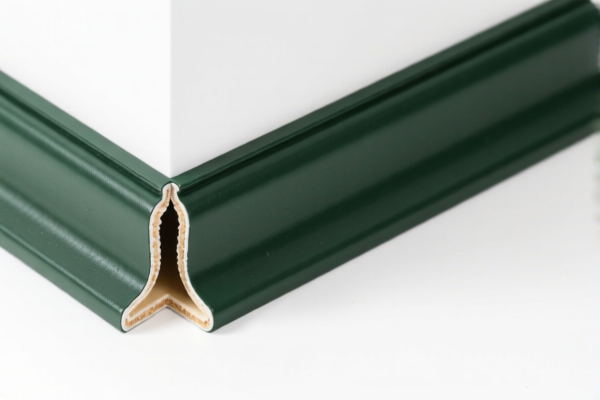
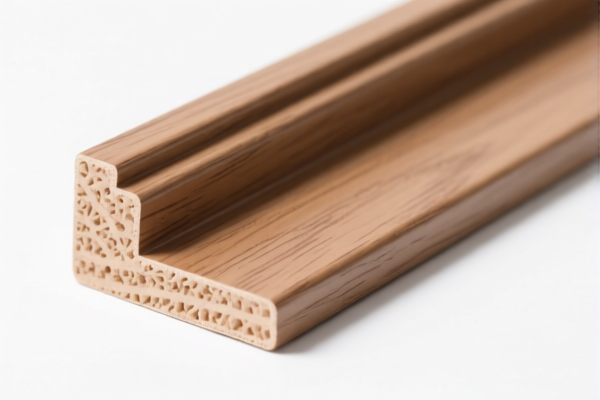
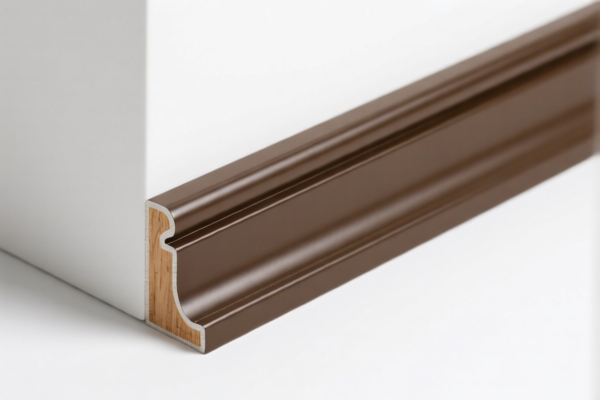
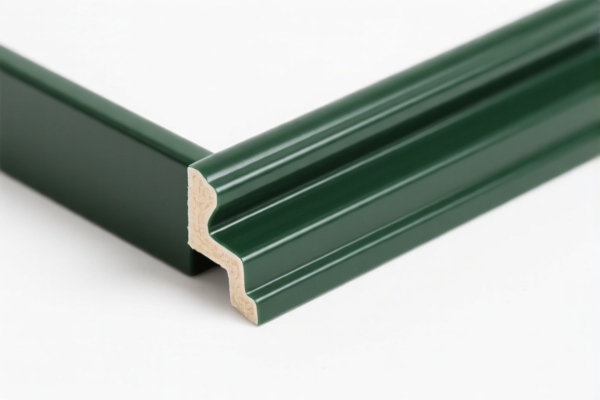
AI Analysis
🛡️ Corner Guard Strip (PVC Corner Protectors)
🌐 HS Code Reference & Customs Clearance Guide | 2026 Latest Tariff Analysis | Professional Clearance Strategy
📌 I. Product Definition & Classification: Do You Really Understand "Corner Guard Strips"?
Corner Guard Strips are essential architectural accessories used to protect building corners from impact, abrasion, and damage. In international trade, these products are primarily made of Plastics (specifically PVC) and are classified based on their shape (strip/profile vs. other), specific use (construction vs. furniture), and material composition (chlorinated polyvinyl).
Key Distinction Criteria: 1. Profile/Strip Shape: If the product is strictly a "strip" or "profile" used in construction, it often falls under 3916 (Monofilament, strips, rods, and profiles, excluding those of heading 3907). 2. Building Fixture: If classified as a general "building fixture" without specific profile characteristics, it may fall under 3925. 3. Other Plastic Article: If it doesn't fit the specific definitions of profiles or building fixtures, it defaults to 3926 (Other plastic articles).
⚠️ Critical Classification Point: - 3916.20: Specifically covers PVC profiles/strips. If your corner guards are extruded strips/profiles, this is the most technically accurate code. - 3925.20: Covers Building fixtures made of plastic. If the product is considered a "fixing" or "fixture" for buildings rather than just a raw profile, this applies. - 3926.90: The "Catch-all" for other plastic articles. This is often used if the specific "profile" or "fixture" definitions are disputed or if the product has a mixed form.
📦 II. HS Code Classification Details (2026 Latest Tariff Authority Comparison)
Based on the provided data, here are the specific HS Codes and their corresponding rationales:
| HS Code | Product Description | Application Scenario | Classification Logic |
|---|---|---|---|
3916.20.00.91 |
PVC Corner Guard Strip, Material: Chlorinated Polymer, Form: Strip/Profile, Use: Other Categories | Building corners, architectural trim | ✅ Form: Classified as a "Strip/Profile" (3916) due to extruded shape. ⚠️ Tax: High (40.8%) due to 301 & 232 tariffs. |
3916.20.00.20 |
PVC Corner Guard Strip, Material: Chlorinated Polymer, Form: Strip/Profile, Use: Construction/Furniture Profiles | Construction trim, furniture edge protection | ✅ Form: Classified as a "Strip/Profile" (3916) for specific use. ⚠️ Tax: High (40.8%) due to 301 & 232 tariffs. |
3925.20.00.91 |
PVC Corner Guard Strip, Material: Plastic, Use: Building Components, Form: Other Building Plastic Products | General building corner protection | ✅ Use: Classified as "Building Fixture" (3925). ✅ Tax: Lower (22.8%) due to lower additional tariffs (7.5% vs 25%). |
3925.90.00.00 |
PVC Corner Guard Strip, Material: Plastic, Form: Other Building Components, No Conflict | General building components | ⚠️ Risk: Higher tax (40.3%) due to higher additional tariff (25%). ❓ Ambiguity: "Other" category may be scrutinized. |
3926.30.50.00 |
PVC Corner Guard Strip, Material: Plastic, Use: Furniture/Car Body Connection/Protection | Furniture protection, interior corners | ✅ Use: Classified as "Other Plastic Articles" (3926) for specific connection/protection use. ✅ Tax: Lower (22.8%) due to lower additional tariffs. |
3926.90.99.89 |
PVC Corner Guard Strip, Material: Plastic, Form: Other Plastic Articles, No Obvious Conflict | General plastic protective items | ✅ Fallback: "Other" category when specific use/shape doesn't fit 3916/3925 precisely. ✅ Tax: Lower (22.8%) due to lower additional tariffs. |
🔍 Key Insight: - 3916 (Profiles) carries the highest tax burden (40.8%) because it is strictly classified as plastic profiles, triggering the maximum additional tariffs. - 3925/3926 (Other Articles/Fixtures) generally benefit from lower additional tariffs (7.5% instead of 25%), resulting in a total tax of 22.8%. - Strategy: If the product can be argued as a "building fixture" (3925) or "other plastic article" (3926) rather than a raw "profile" (3916), significant tariff savings are possible.
💰 III. 2026 Latest Tariff Rate Breakdown (Including Surcharges & Policy Add-ons)
✅ Applicable Country: United States (US)
✅ Origin: China (CN)
✅ Effective Time: November 10, 2025 (and subsequent imports)
🎯 1. 3916.20.00.91 & 3916.20.00.20 —— PVC Profiles/Strips (Highest Risk)
| Item | Content |
|---|---|
| Base Tariff Rate | 5.8% (ad valorem) |
| Section 301 Surcharge | +25.0% (USITC Footnote 9903.88.01 / 301 List 4B) |
| Section 232 Tariff | +10.0% (122 Clause / National Security on Plastics) |
| Total Tax Rate | 40.8% |
| Tax Calculation | CIF Value × 40.8% |
| De Minimis Exemption? | ❌ No (deny_de_minimis) |
| Legal Basis Path | USITC:3916.20.00.91 → SECTION_301:9903.88.01 → SECTION_232:122 |
📌 Explanation: - Base 5.8%: Standard MFN rate for plastic profiles. - 301 Surcharge 25%: Applies to all "Plastics and articles thereof" from China. - 232 Tariff 10%: Applies to specific plastic products deemed relevant to national security. - Total 40.8%: This is a very high tariff. Misclassification here can severely impact profitability.
🎯 2. 3925.20.00.91 —— Building Fixtures (Lower Tax Strategy)
| Item | Content |
|---|---|
| Base Tariff Rate | 5.3% (ad valorem) |
| Section 301 Surcharge | +7.5% (USITC Footnote 9903.88.01 - Note: Lower rate for certain construction fixtures) |
| Section 232 Tariff | +10.0% (122 Clause) |
| Total Tax Rate | 22.8% |
| Tax Calculation | CIF Value × 22.8% |
| De Minimis Exemption? | ❌ No (deny_de_minimis) |
| Legal Basis Path | USITC:3925.20.00.91 → SECTION_301:9903.88.02 → SECTION_232:122 |
📌 Explanation: - Base 5.3%: Standard rate for plastic building fixtures. - 301 Surcharge 7.5%: Crucial Difference! Certain building fixtures may qualify for a lower 301 surcharge compared to general profiles. - 232 Tariff 10%: Still applies. - Total 22.8%: This is 18 percentage points lower than the 3916 classification. This is the primary cost-saving strategy.
🎯 3. 3926.30.50.00 & 3926.90.99.89 —— Other Plastic Articles (Alternative Strategy)
| Item | Content |
|---|---|
| Base Tariff Rate | 5.3% (ad valorem) |
| Section 301 Surcharge | +7.5% (USITC Footnote 9903.88.02) |
| Section 232 Tariff | +10.0% (122 Clause) |
| Total Tax Rate | 22.8% |
| Tax Calculation | CIF Value × 22.8% |
| De Minimis Exemption? | ❌ No (deny_de_minimis) |
| Legal Basis Path | USITC:3926.30.50.00 / 3926.90.99.89 → SECTION_301:9903.88.02 → SECTION_232:122 |
📌 Explanation: - If the product cannot be clearly defined as a "profile" (3916) or a "building fixture" (3925), classifying it as "Other Plastic Article" (3926) is a valid fallback. - It enjoys the same favorable 7.5% 301 surcharge as building fixtures, resulting in the 22.8% total tax.
🎯 4. 3925.90.00.00 —— Other Building Components (High Risk Fallback)
| Item | Content |
|---|---|
| Base Tariff Rate | 5.3% (ad valorem) |
| Section 301 Surcharge | +25.0% (USITC Footnote 9903.88.01) |
| Section 232 Tariff | +10.0% (122 Clause) |
| Total Tax Rate | 40.3% |
| Tax Calculation | CIF Value × 40.3% |
| De Minimis Exemption? | ❌ No (deny_de_minimis) |
| Legal Basis Path | USITC:3925.90.00.00 → SECTION_301:9903.88.01 → SECTION_232:122 |
⚠️ Warning: - This code is for "Other" building components not specifically listed elsewhere. - It suffers the maximum 25% 301 surcharge, leading to a high 40.3% total tax. Avoid this unless necessary.
🛠️ IV. Customs Clearance Practical Advice (Battle-Tested Pitfall Guide)
✅ 1. Preparation Checklist (Non-negotiable)
| Document | Required | Explanation |
|---|---|---|
| ✅ Product Specification Sheet | ✔️ | Must clearly state: Material (PVC), Dimensions, Profile Shape (if any), Intended Use (Building/Furniture). |
| ✅ Product Photos | ✔️ | Clear images of the cross-section (to show if it's a profile) and installed state (to show building fixture use). |
| ✅ Commercial Invoice | ✔️ | Description should be precise: e.g., "PVC Corner Guard Strip, for Building Wall Protection, Not a Raw Profile." |
| ✅ Packing List | ✔️ | Show packaging details to support "finished article" status rather than "raw material." |
| ✅ Certifications | ✔️ | If applicable, provide RoHS, REACH, or Fire Rating certificates (Class A/B) to emphasize building safety compliance. |
✅ 2. Declaration Strategy (Key Mantras)
🔥 "Profile vs. Fixture: Shape Defines Code, Use Defines Tax!"
| Scenario | Correct Declaration | Wrong Declaration |
|---|---|---|
| Extruded PVC Strip for Walls | Option A (Preferred): 3925.20.00.91 Description: "PVC Corner Guard, Building Fixture, Protects Walls." Result: 22.8% Tax |
Option B (Risky): 3916.20.00.91 Description: "PVC Profile, Extruded Plastic Strip." Result: 40.8% Tax |
| Furniture Corner Protector | 3926.30.50.00 Description: "Plastic Corner Protector for Furniture/Car Body." Result: 22.8% Tax |
3926.90.99.89 Description: "Plastic Accessory." Result: 22.8% Tax (But less specific) |
| General Building Component | 3925.90.00.00 (Avoid if possible) Description: "Building Component." Result: 40.3% Tax |
3916.20.00.20 Description: "PVC Profile." Result: 40.8% Tax |
📌 Key Tip: - Argue "Fixture" over "Profile": Emphasize that the corner guard is a finished protective article installed on a building, not a raw plastic profile for further manufacturing. Use terms like "Corner Protector," "Wall Guard," "Architectural Trim" instead of "PVC Profile." - Highlight Building Use: Explicitly state the product is used in construction/architecture to support classification under 3925.
✅ 3. Special Situations
| Situation | Handling Advice |
|---|---|
| Custom Shape Corner Guards | If the shape is complex and not a standard "strip," argue for 3926 (Other Plastic Article) to avoid the 3916 profile classification. |
| Combined with Adhesive | If the product comes with adhesive backing, it is still a single functional article. Declare as "Corner Guard with Adhesive," not separate items. |
| OEM/White Label | Provide the manufacturer's design specs to prove the product is a finished article, not a raw material. |
| Fire-Rated Products | If the product is fire-rated, provide certification documents. This strengthens the "Building Fixture" argument under 3925. |
🌍 V. Global Market Customs Comparison (2026 Latest)
| Country/Region | Recommended HS Code | Tariff Rate | Certification Requirements | Notes |
|---|---|---|---|---|
| 🇺🇸 USA | 3925.20.00.91 |
22.8% | None specific for plastic, but fire ratings may be required locally | Avoid 3916 (40.8%) if possible. Use 3925/3926 for lower tax. |
| 🇨🇳 China | 3925.20.00.00 |
5% | CCC (if applicable for safety) | No additional tariffs. |
| 🇪🇺 EU | 3925.20.00 |
0% | CE, REACH, RoHS | No additional tariffs. Fire ratings critical for building use. |
| 🇬🇧 UK | 3925.20.00 |
0% | UKCA, Fire Safety Regulations | Post-Brexit rules apply. |
| 🇨🇦 Canada | 3925.20.00 |
0% (MFN) | CFIA, Fire Ratings | No additional tariffs. |
📌 Conclusion: - USA is the only market with significant additional tariffs. - Classifying as
3925.20.00.91or3926saves ~18% in tariffs compared to3916. - Documentation must support "Building Fixture" status, not "Plastic Profile."
📌 VI. Common Mistakes & Pitfalls (Lessons Learned)
❌ Mistake 1: Declaring as 3916.20.00.91 (PVC Profile)
👉 Consequence: 40.8% tariff. Loss of ~18% margin.
👉 Why?: Customs sees "strip" and assumes "profile." You must argue it's a "fixture."
❌ Mistake 2: Declaring as 3925.90.00.00 (Other Building Component)
👉 Consequence: 40.3% tariff. Loss of ~17.5% margin.
👉 Why?: This is a catch-all with high 301 surcharge. Use specific codes like 3925.20 if possible.
❌ Mistake 3: Using vague descriptions like "Plastic Strip"
👉 Consequence: Customs officer chooses the highest-risk code (3916 or 3925.90).
👉 Solution: Use precise descriptions: "PVC Corner Guard, Building Fixture, Wall Protection."
❌ Mistake 4: Ignoring the 232 Tariff 👉 Consequence: Unexpected 10% charge even if 301 is minimized. 👉 Note: The 232 tariff applies to all plastic articles in this category. It cannot be avoided, but it is consistent across codes.
✅ Correct Approach:
"PVC Corner Guard Strip, Finished Building Fixture, Protects Interior Wall Corners, Model XYZ, Fire-Rated Class B."
🎯 VII. Conclusion: Precise Classification Saves Money!
🎯 Remember the Mantra:
🔹 "Profile is Expensive (40.8%), Fixture is Cheaper (22.8%)."
🔹 "Don't call it a Profile, Call it a Corner Guard/Fixture."
🔹 "232 Tariff (10%) is unavoidable, but 301 Surcharge (25% vs 7.5%) is negotiable via classification."
📌 Pro Tip:
- If your corner guards are imported from Vietnam, Mexico, or Thailand, you may be eligible for IEEPA exemptions or lower tariffs.
- Apply for an Advance Ruling from US Customs (CBP) to get a binding classification decision before shipment. This prevents costly delays and re-classification fees.
📣 Immediate Action:
📞 Contact a Professional Customs Broker
📸 Provide Product Images (Cross-section & Installed View)
📝 Request an HS Code Advance Ruling for3925.20.00.91
🚀 Save 18% Tariffs, Ensure Smooth Clearance, Maximize Profit!
✨ Professional Clearance Starts with Accurate Classification!
💼 Every Dollar Saved in Tariffs is Pure Profit!
Customer Reviews
About HS Code Classification
The Harmonized System (HS) is an internationally standardized nomenclature developed by the World Customs Organization (WCO) to classify traded products. Over 200 countries use the HS system as the basis for customs tariffs, trade statistics, and import/export regulations.
Each HS code follows a hierarchical structure:
- Chapter (2 digits) — Broad category of goods (e.g., Chapter 84: Machinery and Mechanical Appliances)
- Heading (4 digits) — More specific grouping within the chapter
- Subheading (6 digits) — Internationally standardized breakdown, used by all WCO member countries
- National subdivisions (8-10 digits) — Country-specific extensions for further classification, such as US HTSUS 10-digit codes
Correct HS code classification is essential for smooth customs clearance, accurate duty payment, and compliance with trade regulations. Misclassification can lead to customs delays, overpayment of duties, or penalties.
When importing from CN to US, the applicable tariff rates may include:
- Most-Favored-Nation (MFN) rate — The standard duty rate applied to WTO members
- General rate — Applied to countries without trade agreements
- Trade remedy duties — Additional tariffs such as Section 301 (anti-dumping), Section 232 (national security), or countervailing duties
The information provided on this page is for reference purposes only. For official classification, please consult with your local customs authority or a licensed customs broker.