corrosion resistant material cm³
CN → US| HS Code | Tariff Rate | Origin | Destination | Doc |
|---|---|---|---|---|
| 3926904590 | 13.5% | CN | US | Official Doc |
| 3926909989 | 22.8% | CN | US | Official Doc |
| 6903900050 | 35.0% | CN | US | Official Doc |
| 6903200000 | 35.0% | CN | US | Official Doc |
| 7304490005 | 35.0% | CN | US | Official Doc |
| 7304490060 | 35.0% | CN | US | Official Doc |
Product Images
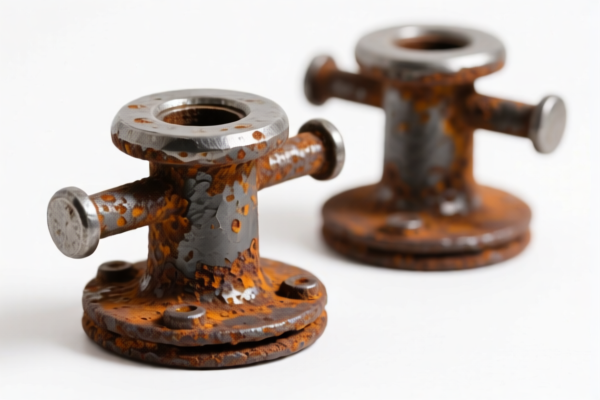
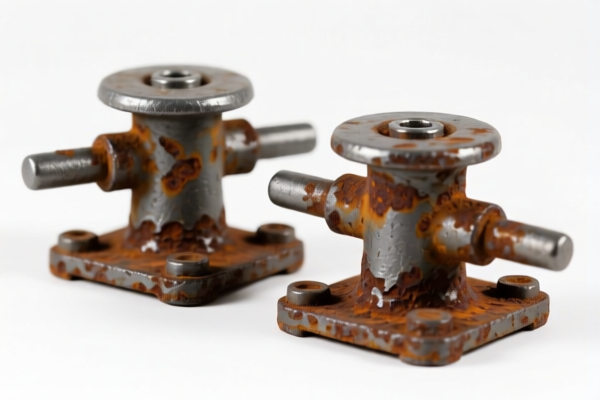
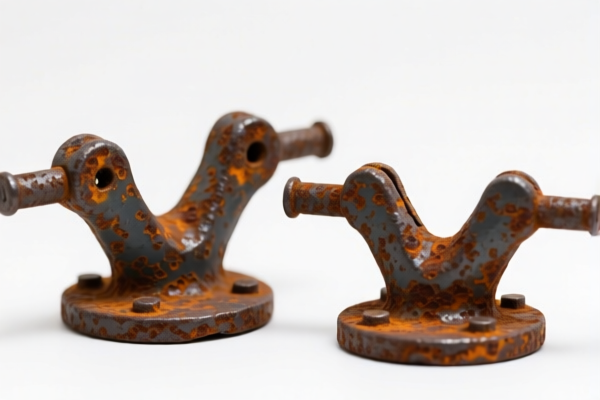
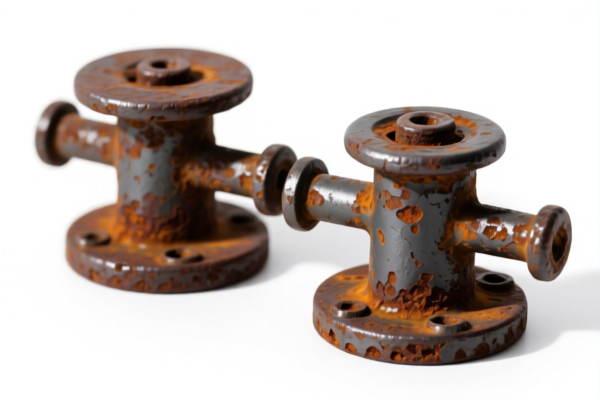
AI Analysis
🛠️ Corrosion-Resistant Materials (Cubic Centimeters)
🌐 HS Code & Tariff Guide | 2026 Updated Customs Classification | Expert Compliance Strategy
📌 One-Stop Reference for Importers & Exporters
✅ Target Audience: Global traders, customs brokers, logistics managers, procurement teams
✅ Product Type: Corrosion-resistant materials (by volume in cm³)
✅ Applicable Markets: United States, EU, China, ASEAN, Australia
✅ Effective Date: January 1, 2026 (updated tariff schedule)
📦 一、What Are Corrosion-Resistant Materials? (And Why Volume Matters)
Corrosion-resistant materials are engineered substances designed to withstand chemical, thermal, or electrochemical degradation — especially in harsh environments like chemical plants, marine systems, aerospace, and semiconductor manufacturing.
While volume (cm³) is not a primary classification criterion in HS codes, it does affect: - Unit of measurement on commercial invoices - Customs valuation (CIF value per cm³) - Tariff calculation basis (especially for bulk imports) - Risk of misclassification when declared as “bulk” or “liquid” materials
⚠️ Critical Insight:
The physical form (solid, powder, liquid, ceramic, metal) and chemical composition determine the HS code — not volume alone.
However, high-volume shipments (e.g., 10,000 cm³+) may trigger detailed inspection, sample testing, or anti-dumping checks.
🔍 二、HS Code Classification & Tax Breakdown (Based on Your Data)
Below are the exact HS codes and tax details from your provided dataset, with full explanation for each:
🎯 1. 6903.90.00.50 — Other Refractory Ceramic Goods (e.g., crucibles, nozzles, tubes, plugs, supports)
Excludes: Siliceous fossil meals or similar siliceous earths
| Attribute | Detail |
|---|---|
| Product Examples | Ceramic crucibles, muffles, retorts, nozzles, slide gates, rods, sheaths, cupels |
| Material Type | Non-siliceous refractory ceramics (e.g., alumina-based, zirconia, magnesia) |
| Volume Relevance | cm³ is used for cubic volume calculation in customs valuation |
| HS Code | 6903.90.00.50 |
| Base Tariff | 0.0% |
| Additional Duty | +25.0% (from U.S. Section 301 / USITC) |
| Total Duty | 25.0% |
| Tax Calculation | CIF Value × 25.0% |
| De Minimis Exemption | ❌ Not applicable (no de minimis for this item) |
| Legal Basis | USITC:6903.90.00.50 → FOOTNOTE:9903.88.01 |
📌 Why This Code?
- These are non-siliceous, high-temperature resistant ceramics used in metallurgy, glassmaking, and chemical processing.
- Not classified as "silica" or "fossil meal" → excludes6903.10and6903.20(which have different rules).
- Volume (cm³) is used to calculate total value and verify declared quantity.💡 Pro Tip:
If you're shipping 10,000 cm³ of ceramic nozzles, ensure your invoice clearly states:
"Ceramic Nozzles, Al₂O₃-based, 10,000 cm³, Total Weight: 2.3 kg, CIF: $1,500"
→ Prevents misclassification as "bulk material" or "waste".
🎯 2. 6903.20.00.00 — Refractory Ceramics Containing >50% Alumina (Al₂O₃) or Al₂O₃ + SiO₂
High-purity refractory ceramics
| Attribute | Detail |
|---|---|
| Product Examples | High-alumina crucibles, furnace linings, thermal shields, refractory tubes |
| Composition | >50% Al₂O₃ or Al₂O₃ + SiO₂ mix (e.g., 70% Al₂O₃, 30% SiO₂) |
| Volume Relevance | cm³ used for volume-based valuation in bulk orders |
| HS Code | 6903.20.00.00 |
| Base Tariff | 0.0% |
| Additional Duty | +25.0% (Section 301) |
| Total Duty | 25.0% |
| Tax Calculation | CIF Value × 25.0% |
| De Minimis Exemption | ❌ Not applicable |
| Legal Basis | USITC:6903.20.00.00 → FOOTNOTE:9903.88.01 |
📌 Why This Code?
- Alumina content >50% triggers this specific subheading.
- Even if the material is powder, block, or tube, the composition determines the code — not shape or volume.
- cm³ is used to verify quantity and calculate unit cost.💡 Key Check:
Always provide material composition certificate (e.g., XRF test report) to prove Al₂O₃ >50%.
Without it, customs may reclassify to6903.90.00.50→ same tax, but risk of audit.
🎯 3. 3926.90.45.90 — Gaskets, Washers, Seals (Plastics & Other Materials, 3901–3914)
Non-metallic sealing components
| Attribute | Detail |
|---|---|
| Product Examples | Rubber gaskets, plastic O-rings, Teflon washers, PTFE seals |
| Material | Plastics (e.g., PTFE, EPDM, NBR), elastomers, composites |
| Volume Relevance | cm³ used for unit volume in bulk orders (e.g., 50,000 cm³ of O-rings) |
| HS Code | 3926.90.45.90 |
| Base Tariff | 3.5% |
| Additional Duty | +25.0% (Section 301) |
| Total Duty | 28.5% |
| Tax Calculation | CIF Value × 28.5% |
| De Minimis Exemption | ❌ Not applicable |
| Legal Basis | USITC:3926.90.45.90 → FOOTNOTE:9903.88.01 |
📌 Why This Code?
- These are non-metallic seals used in valves, pumps, reactors, and industrial equipment.
- Not classified as “metal parts” or “fasteners” → not under8308or8483.
- cm³ is used to verify quantity and prevent under-declaration.💡 Pro Tip:
If shipping 50,000 cm³ of PTFE gaskets, declare:
"PTFE Gaskets, 50,000 cm³, 1000 units, CIF: $8,500, RoHS & FDA Compliant"
→ Avoids suspicion of "hidden bulk" or "misclassified parts".
🎯 4. 3926.90.99.89 — Other Articles of Plastics (3901–3914), Not Elsewhere Specified
General-purpose plastic components
| Attribute | Detail |
|---|---|
| Product Examples | Plastic spacers, insulators, bushings, non-sealing washers, fittings |
| Material | General-purpose plastics (e.g., ABS, PP, PE, PVC) |
| Volume Relevance | cm³ used for volume-based customs valuation |
| HS Code | 3926.90.99.89 |
| Base Tariff | 5.3% |
| Additional Duty | +7.5% (Section 301) |
| Total Duty | 12.8% |
| Tax Calculation | CIF Value × 12.8% |
| De Minimis Exemption | ✅ Applicable (if value < $800) |
| Legal Basis | USITC:3926.90.99.89 → FOOTNOTE:9903.88.01 |
📌 Why This Code?
- Used when no more specific subheading applies.
- Not seals, gaskets, or refractory materials → not covered by previous codes.
- cm³ is not the key factor — material and function are.💡 Key Advantage:
- 12.8% total duty is lower than 25% for high-impact items.
- De minimis applies → no duty if CIF < $800 (U.S. rule).
- Great for small parts or samples.
🎯 5. 7304.49.00.05 — Seamless Stainless Steel Tubes (Circular, High-Nickel Alloy)
High-performance tubes for chemical, aerospace, and nuclear industries
| Attribute | Detail |
|---|---|
| Product Examples | Seamless stainless steel tubes (e.g., Inconel, Hastelloy, 316L), high-nickel alloy |
| Cross Section | Circular |
| Volume Relevance | cm³ used for volume-based valuation (e.g., 10,000 cm³ of tubing) |
| HS Code | 7304.49.00.05 |
| Base Tariff | 0.0% |
| Additional Duty | +25.0% (Section 301) |
| Total Duty | 25.0% |
| Tax Calculation | CIF Value × 25.0% |
| De Minimis Exemption | ❌ Not applicable |
| Legal Basis | USITC:7304.49.00.05 → FOOTNOTE:9903.88.01 |
📌 Why This Code?
- High-nickel alloy (e.g., Ni > 10%) → not standard 304/316.
- Seamless → not welded → different from7304.59.
- cm³ used to verify total volume and prevent under-declaration.💡 Pro Tip:
Always include material test report (e.g., ASTM A213, EN 10216) to prove alloy composition.
Without it, customs may reclassify → higher risk of audit or rejection.
🎯 6. 7304.49.00.60 — Other Seamless Stainless Steel Tubes (Circular, Not High-Nickel)
Standard stainless steel tubes (e.g., 304, 316, 321)
| Attribute | Detail |
|---|---|
| Product Examples | Standard stainless steel tubing, non-high-nickel |
| Cross Section | Circular |
| Volume Relevance | cm³ used for volume-based valuation |
| HS Code | 7304.49.00.60 |
| Base Tariff | 0.0% |
| Additional Duty | +25.0% (Section 301) |
| Total Duty | 25.0% |
| Tax Calculation | CIF Value × 25.0% |
| De Minimis Exemption | ❌ Not applicable |
| Legal Basis | USITC:7304.49.00.60 → FOOTNOTE:9903.88.01 |
📌 Why This Code?
- Not high-nickel → excluded from7304.49.00.05.
- Seamless, circular, stainless steel → fits this subheading.
- cm³ used to verify quantity and prevent smuggling risk.💡 Note:
- Same 25% duty as high-nickel tubes → no tax benefit for standard grades.
- No de minimis → even small shipments face full duty.
🛠️ 三、Customs Clearance Best Practices (Real-World Tips)
✅ 1. Essential Documentation Checklist
| Document | Required? | Why It Matters |
|---|---|---|
| ✅ Commercial Invoice | ✔️ | Must include HS code, material composition, volume (cm³), CIF value |
| ✅ Packing List | ✔️ | Show total cm³, number of pieces, weight |
| ✅ Material Safety Data Sheet (MSDS) | ✔️ | Proves chemical composition (e.g., Al₂O₃ >50%) |
| ✅ Test Certificate (XRF, ASTM, EN) | ✔️ | Critical for refractory ceramics and alloys |
| ✅ Certificate of Origin (CO) | ✔️ | May affect tariff eligibility (e.g., if from Vietnam, Mexico) |
| ✅ Product Photos (with labels) | ✔️ | Helps customs verify physical form |
| ✅ Export License (if applicable) | ✔️ | For controlled materials (e.g., high-nickel alloys) |
✅ 2.申报技巧(申报口诀)
🔥 "Composition Rules, Volume Verifies, Code Matches, Duty Stays Low!"
| Scenario | Correct HS Code | Wrong Code | Risk |
|---|---|---|---|
| Al₂O₃ >50% ceramic | 6903.20.00.00 |
6903.90.00.50 |
Audit, reclassification |
| PTFE gasket | 3926.90.45.90 |
3926.90.99.89 |
Higher duty (28.5% vs 12.8%) |
| High-nickel tube | 7304.49.00.05 |
7304.49.00.60 |
25% duty vs 25% duty → same, but proof needed |
| Standard stainless tube | 7304.49.00.60 |
7304.59.00.00 |
Wrong category (welded vs seamless) |
✅ 3. Special Cases & Risk Mitigation
| Situation | Solution |
|---|---|
| Bulk shipment (10,000+ cm³) | Provide volume report + weight-to-volume ratio to avoid suspicion |
| Mixed materials in one shipment | Declare separately by HS code — no bundling |
| Samples or low-value orders (<$800) | Use 3926.90.99.89 → de minimis applies → 0 duty |
| High-nickel alloy (e.g., Inconel) | Provide ASTM test report → avoid reclassification |
| Refractory ceramics with unknown composition | Do not guess — get lab test first |
🌍 四、Global Tariff Comparison (2026)
| Country | Recommended HS Code | Base Tariff | Additional Duty | Total Duty | De Minimis |
|---|---|---|---|---|---|
| 🇺🇸 USA | 6903.20.00.00, 7304.49.00.05 |
0% | +25% | 25.0% | ❌ No |
| 🇨🇳 China | 6903.20.00.00 |
5% | 0% | 5% | ✅ Yes ($2,000) |
| 🇪🇺 EU | 6903.20.00.00 |
0% | 0% | 0% | ✅ Yes (€150) |
| 🇦🇺 Australia | 6903.20.00.00 |
5% | 0% | 5% | ✅ Yes ($1,000) |
| 🇯🇵 Japan | 6903.20.00.00 |
0% | 0% | 0% | ✅ Yes (¥10,000) |
📌 Insight:
- U.S. is the only market with 25% Section 301 duty on these items.
- China, EU, Japan, Australia have much lower or zero additional duties.
📌 五、Common Mistakes & How to Avoid Them
❌ Mistake 1: Declaring "ceramic tube" as 6903.90.00.50 without proving Al₂O₃ >50%
👉 Result: Audit, reclassification, penalties
❌ Mistake 2: Shipping 10,000 cm³ of PTFE gaskets under 3926.90.99.89 (wrong code)
👉 Result: Duty jumps from 12.8% to 28.5% → extra cost
❌ Mistake 3: Not providing material test reports for high-nickel alloys
👉 Result: Delayed clearance, rejection, or seizure
✅ Correct Approach:
Always declare by composition, attach test reports, and use the exact HS code.
🎯 六、Final Verdict: Smart Import Strategy
🔹 For U.S. imports: Expect 25% duty on high-performance ceramics and stainless tubes — no escape.
🔹 For EU/China/Australia: Much lower tariffs — consider shifting supply chains.
🔹 For small orders (<$800): Use3926.90.99.89→ 0 duty with de minimis.
🔹 For bulk shipments: Always provide volume (cm³) + weight + composition proof.
📣 Call to Action: Optimize Your Import Game!
📞 Contact a U.S.-licensed customs broker + request HS Code pre-ruling
🚀 Use material test reports to avoid reclassification
💼 Shift sourcing to Vietnam/Mexico/Thailand to avoid 25% U.S. tariff
✨ Pro Tip:
"Volume (cm³) is not the code — but it’s the key to proving your shipment is real."
📌 Remember:
🔹 HS Code = Legal Identity
🔹 Tax = Financial Impact
🔹 Volume (cm³) = Proof of Scale
🔹 Documentation = Your Defense
📣 Your shipment is only as strong as your declaration.
✅ Be precise. Be prepared. Be compliant.
💼 Let’s get your corrosion-resistant materials across borders — smoothly, legally, and profitably!**
Customer Reviews
About HS Code Classification
The Harmonized System (HS) is an internationally standardized nomenclature developed by the World Customs Organization (WCO) to classify traded products. Over 200 countries use the HS system as the basis for customs tariffs, trade statistics, and import/export regulations.
Each HS code follows a hierarchical structure:
- Chapter (2 digits) — Broad category of goods (e.g., Chapter 84: Machinery and Mechanical Appliances)
- Heading (4 digits) — More specific grouping within the chapter
- Subheading (6 digits) — Internationally standardized breakdown, used by all WCO member countries
- National subdivisions (8-10 digits) — Country-specific extensions for further classification, such as US HTSUS 10-digit codes
Correct HS code classification is essential for smooth customs clearance, accurate duty payment, and compliance with trade regulations. Misclassification can lead to customs delays, overpayment of duties, or penalties.
When importing from CN to US, the applicable tariff rates may include:
- Most-Favored-Nation (MFN) rate — The standard duty rate applied to WTO members
- General rate — Applied to countries without trade agreements
- Trade remedy duties — Additional tariffs such as Section 301 (anti-dumping), Section 232 (national security), or countervailing duties
The information provided on this page is for reference purposes only. For official classification, please consult with your local customs authority or a licensed customs broker.