cotton ankle socks
CN → US| HS Code | Tariff Rate | Origin | Destination | Doc |
|---|---|---|---|---|
| 6115959000 | 31.0% | CN | US | Official Doc |
| 6115103000 | 31.0% | CN | US | Official Doc |
| 6117809510 | 32.1% | CN | US | Official Doc |
| 6117909080 | 32.1% | CN | US | Official Doc |
| 6115959000 | 31.0% | CN | US | Official Doc |
Product Images
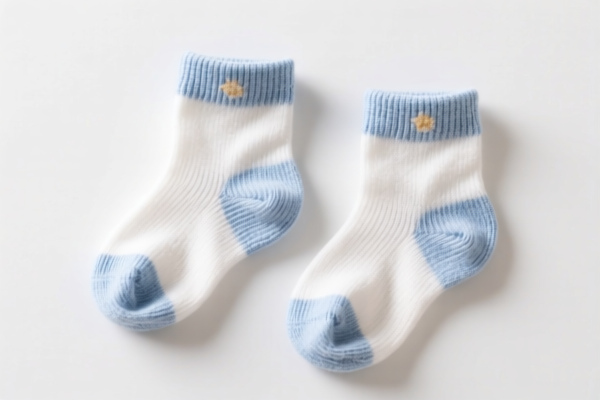
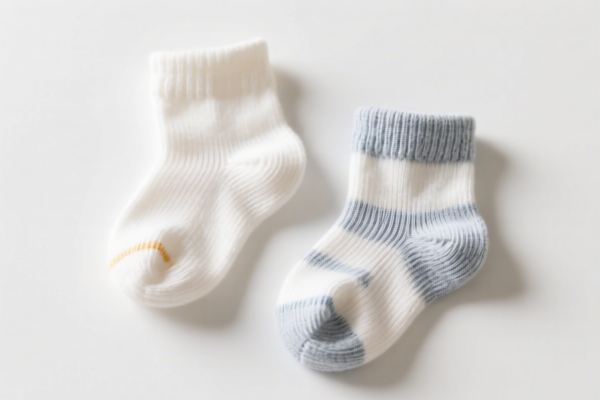
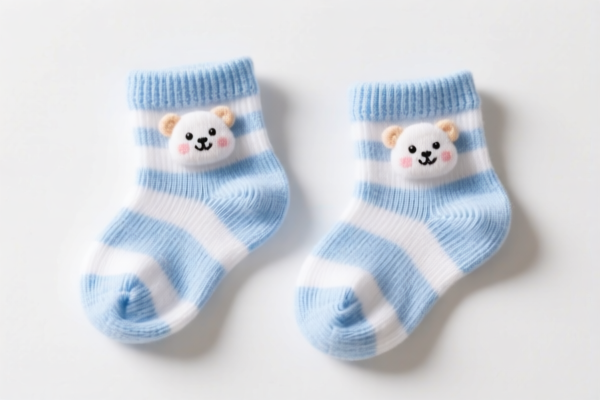
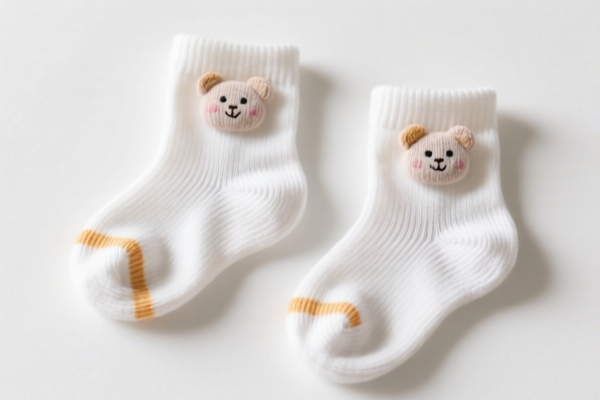
AI Analysis
🧦 Cotton Ankle Socks (Knitted or Crocheted)
🌐 HS Code Reference & Customs Clearance Guide | 2026 Latest Tariff Analysis | Professional Clearance Strategy
📌 Part 1: Product Definition & Classification: Do You Really Understand "Cotton Ankle Socks"?
Cotton ankle socks are essential hosiery items, widely used in daily wear, sports, and casual settings. In international trade, they fall under the category of "Hosiery". Specifically, for knitted or crocheted socks made of cotton, the classification depends heavily on the presence of decorative elements like lace or mesh.
Key Distinction Points:
- Standard Ankle Socks: Plain, ribbed, or patterned (non-lace/mesh) → Classify under 6115.95.90.00 ("Other").
- Decorative Ankle Socks: Containing lace or net structures as a defining feature → Classify under 6115.95.60.00 ("Containing lace or net").
⚠️ Critical Note:
- If the sock is 100% cotton and has no lace/net, it is "Other" →6115.95.90.00.
- If the sock has lace trim, mesh panels, or net-like patterns that are integral to the design, it is "Lace/Net" →6115.95.60.00.
- Do not classify as footwear with soles (e.g., slippers) or compression garments unless explicitly stated.
📦 Part 2: HS Code Classification Details (2026 Latest Tariff Authority Comparison)
| HS Code | Product Description | Applicable Scenario | Contains Lace/Net? |
|---|---|---|---|
6115.95.90.00 |
Other cotton hosiery (ankle socks, etc.), not containing lace or net | Plain cotton socks, ribbed socks, sport socks (no mesh) | ❌ No |
6115.95.60.00 |
Cotton hosiery containing lace or net | Socks with lace tops, mesh ventilation panels, decorative netting | ✅ Yes |
🔍 Key Reminder:
- Both codes fall under Chapter 61: Articles of Apparel and Clothing Accessories, Knitted or Crocheted.
- Subheading 6115.95 refers to "Other" hosiery (i.e., not panty hose or stockings for varicose veins).
- The distinction between.60and.90is purely material/decorative: lace/net vs. other.
💰 Part 3: 2026 Latest Tariff Rate Details (Including Surtaxes & Policy Additions)
✅ Applicable Country: United States (US)
✅ Origin: China (CN)
✅ Effective Date: Current rates apply as per 2025/2026 trade policies
🎯 1. 6115.95.90.00 —— Cotton Ankle Socks (Other, No Lace/Net)
| Item | Content |
|---|---|
| Base Tariff Rate | 0.0% |
| Surtax (Section 301/IEEPA) | 0.0% |
| Total Tariff Rate | 0.0% |
| Tax Calculation | CIF Value × 0.0% = $0 |
| De Minimis Eligibility | ✅ Yes (If ≤ $800, generally exempt from duties & taxes under Section 321) |
| Legal Basis | HTSUS 6115.95.90.00 + USITC Footnotes |
📌 Explanation:
- Base Tariff: 0% is standard for most cotton hosiery from most FTA partners or under general rates.
- Surtax: 0.0% applies. This means NO additional Section 301 or IEEPA tariffs are currently applied to this specific subheading for Chinese-origin cotton socks.
- Total Tax: 0.0%. This is a low-risk, low-cost item for importers.
- De Minimis: For shipments ≤ $800 (Section 321), these socks can often enter duty-free and tax-free with minimal documentation.
🎯 2. 6115.95.60.00 —— Cotton Ankle Socks (Containing Lace or Net)
| Item | Content |
|---|---|
| Base Tariff Rate | 0.0% |
| Surtax (Section 301/IEEPA) | 0.0% |
| Total Tariff Rate | 0.0% |
| Tax Calculation | CIF Value × 0.0% = $0 |
| De Minimis Eligibility | ✅ Yes (If ≤ $800) |
| Legal Basis | HTSUS 6115.95.60.00 + USITC Footnotes |
📌 Explanation:
- Same as above: Base 0% + Surtax 0% = 0%.
- The presence of lace or net does not trigger higher tariffs for cotton hosiery in this specific subheading.
- Still eligible for de minimis exemption if shipped under $800.
🛠️ Part 4: Customs Clearance Practical Advice (Battle-Tested Pitfall Avoidance)
✅ 1. Required Documentation Checklist
| Document | Mandatory? | Notes |
|---|---|---|
| ✅ Commercial Invoice | ✔️ | Must clearly state "Cotton Ankle Socks" and material composition (e.g., "100% Cotton") |
| ✅ Packing List | ✔️ | Detail quantity, weight, and carton count |
| ✅ Product Photos | ✔️ | Show entire sock, especially lace/net details if claiming 6115.95.60.00 |
| ✅ Fiber Content Label | ✔️ | Must match invoice (e.g., "100% Cotton") |
| ✅ Country of Origin Certificate | ✔️ | If claiming preferential treatment (though here it’s 0% anyway) |
| ✅ FDA/CPSC Compliance | ✔️ | Socks are consumer goods; ensure no prohibited dyes or chemicals |
✅ 2. Declaration Tips (Key Mantra)
🔥 "Cotton Socks, Zero Tax, But Describe Correctly!"
| Scenario | Correct Declaration | Incorrect Practice |
|---|---|---|
| Plain cotton socks | 6115.95.90.00 + "Cotton Ankle Socks, No Lace" |
Mislabeling as "hosiery" without material detail → Risk of misclassification |
| Socks with lace tops | 6115.95.60.00 + "Cotton Ankle Socks, Containing Lace" |
Calling them "other" → Under-declaration risk if audited |
| Mixed material (e.g., 95% Cotton, 5% Spandex) | Still 6115.95.90.00 if cotton is >50% |
Claiming 100% cotton when it’s blended → False declaration |
| Socks with non-cotton lace (e.g., nylon lace) | Check if "cotton" refers to main body | If lace is non-cotton, still 6115.95.60.00 if cotton body |
✅ 3. Special Cases & Handling
| Case | Handling Advice |
|---|---|
| De Minimis Shipment (<$800) | No duty, no tax, simplified CBP entry (Type 86) |
| Bulk Commercial Shipment (>$800) | File formal entry (Type 01/03), provide commercial invoice, still 0% duty |
| Lace/Net Ambiguity | Provide photos. If lace is decorative trim only, may still qualify as "Other" (90.00) |
| Compression Socks | NOT this code. Compression socks go to 6115.95.30 or similar. Do not mix. |
🌍 Part 5: Global Market Comparison (2026 Latest)
| Country/Region | Recommended HS Code | Tariff Rate | Notes |
|---|---|---|---|
| 🇺🇸 USA | 6115.95.90.00 or 6115.95.60.00 |
0.0% | No surtaxes for cotton hosiery |
| 🇪🇺 EU | 6115.95.90 |
~12% | Standard EU tariff for cotton hosiery |
| 🇨🇳 China | 6115.95.90 |
~8-15% | Import tariff for finished hosiery |
| 🇬🇧 UK | 6115.95.90 |
~12% | Post-Brexit tariff alignment with EU |
📌 Conclusion:
- USA is the most favorable market for cotton ankle socks with 0% total duty.
- Always ensure accurate material description to avoid audits.
- For e-commerce de minimis, these socks are ideal candidates for duty-free entry.
📌 Part 6: Common Mistakes & Pitfall Guide (Lessons from the Field)
❌ Mistake 1: Declaring "Lace Socks" as "Other Socks" to avoid scrutiny
👉 Consequence: If audited, CBP may reclassify and charge back duties + penalties (though rate is 0%, risk of detention).
❌ Mistake 2: Confusing "Ankle Socks" with "Stockings"
👉 Consequence: Stockings (thigh-high) may have different codes. Ankle socks are 6115.95, not 6115.93 (panty hose).
❌ Mistake 3: Not declaring fiber content correctly
👉 Consequence: If declared "100% Cotton" but actual is "95% Cotton/5% Spandex", CBP may reject entry or require correction.
❌ Mistake 4: Assuming all "hosiery" is 0%
👉 Consequence: Non-cotton hosiery (e.g., nylon) may have different rates. Stick to cotton-specific codes.
✅ Correct Practice:
"Cotton Ankle Socks, 100% Cotton, Knitted, No Lace/Net, Model XYZ, for Retail Sale"
or
"Cotton Ankle Socks, 100% Cotton Body, with Lace Trim, Knitted"
🎯 Part 7: Conclusion: Precise Classification, Hassle-Free Clearance!
🎯 Remember the Mantra:
🔹 "Cotton Socks, 0% Duty, USA Market is Easy!"
🔹 "Lace vs. Net, Describe Clearly, Avoid Audit Trouble!"
🔹 "De Minimis $800, Duty-Free, Ship Small Orders Fast!"
📌 Pro Tip:
- For high-volume imports, consider Advance Ruling from CBP to lock in the HS code.
- Always keep product photos and composition labels on file for customs audits.
- De minimis is your friend for e-commerce: ship small, ship often, pay zero duty.
📣 Immediate Action:
📞 Consult a Customs Broker for complex multi-material socks.
📸 Photograph lace/net features for accurate classification.
📦 Label Clearly with fiber content and country of origin.
✨ Professional Clearance Starts with Accurate Classification!
💼 Your Cost Savings Begin with the Right HS Code!
Customer Reviews
About HS Code Classification
The Harmonized System (HS) is an internationally standardized nomenclature developed by the World Customs Organization (WCO) to classify traded products. Over 200 countries use the HS system as the basis for customs tariffs, trade statistics, and import/export regulations.
Each HS code follows a hierarchical structure:
- Chapter (2 digits) — Broad category of goods (e.g., Chapter 84: Machinery and Mechanical Appliances)
- Heading (4 digits) — More specific grouping within the chapter
- Subheading (6 digits) — Internationally standardized breakdown, used by all WCO member countries
- National subdivisions (8-10 digits) — Country-specific extensions for further classification, such as US HTSUS 10-digit codes
Correct HS code classification is essential for smooth customs clearance, accurate duty payment, and compliance with trade regulations. Misclassification can lead to customs delays, overpayment of duties, or penalties.
When importing from CN to US, the applicable tariff rates may include:
- Most-Favored-Nation (MFN) rate — The standard duty rate applied to WTO members
- General rate — Applied to countries without trade agreements
- Trade remedy duties — Additional tariffs such as Section 301 (anti-dumping), Section 232 (national security), or countervailing duties
The information provided on this page is for reference purposes only. For official classification, please consult with your local customs authority or a licensed customs broker.