cotton braided handbags
CN → US| HS Code | Tariff Rate | Origin | Destination | Doc |
|---|---|---|---|---|
| 4602112100 | 41.2% | CN | US | Official Doc |
| 4602192920 | 40.3% | CN | US | Official Doc |
| 4202224020 | 42.4% | CN | US | Official Doc |
| 4202228980 | 52.6% | CN | US | Official Doc |
| 6305200000 | 23.7% | CN | US | Official Doc |
Product Images
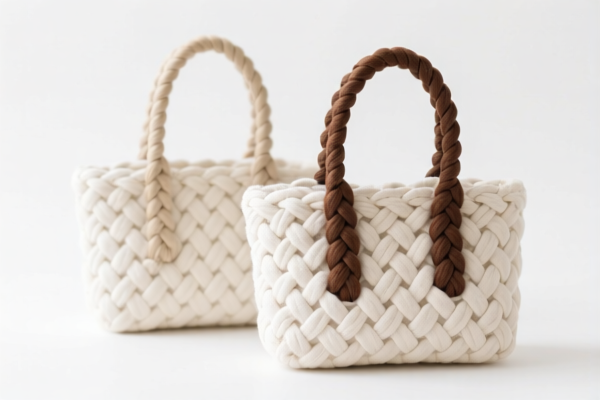
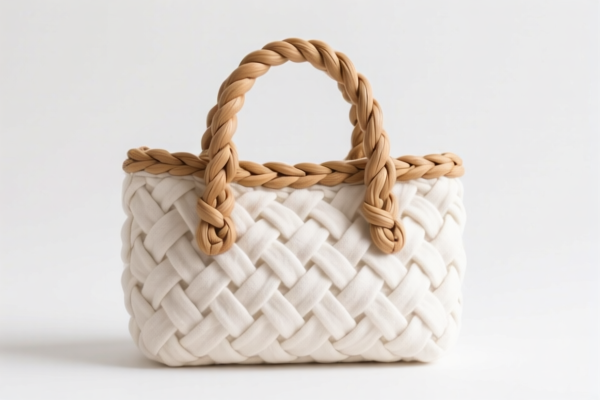
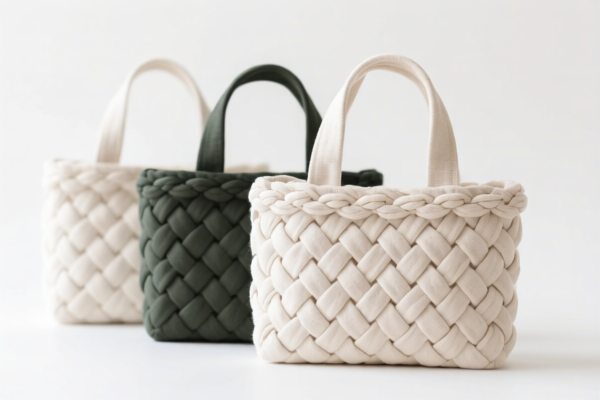
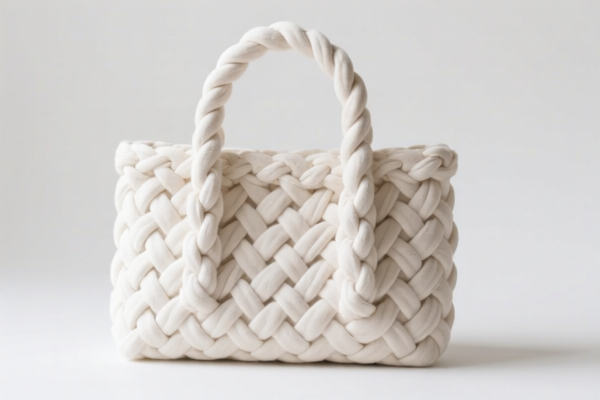
AI Analysis
🎒 Cotton Braided Handbags & Textile Bags (Cotton, Linen, & Plant Fibers)
🌐 HS Code Reference & Customs Clearance Guide | 2026 Latest Tariff Analysis | Professional Level Strategy 📌 Part 1: Product Definition & Classification: What Exactly Are "Cotton Braided Handbags"?
In international trade, "Cotton Braided Handbags" is often a generic marketing term that can fall into three distinct tariff categories depending on the primary material composition and manufacturing method. Misclassification leads to significant tariff discrepancies (from 40% to over 50%).
1. True Plant Material Bags (Bamboo/Rattan/Cane) - If the "braiding" refers to natural plant fibers (bamboo, reed, rattan), even if dyed or treated, they belong to Chapter 46. - Key Feature: Rigid structure, natural fiber origin.
2. Textile/Fabric Bags (Cotton/Linen) - If the bag is made of woven cotton fabric, canvas, or linen strips, it belongs to Chapter 42. - Key Feature: Flexible, fabric-based, typically lined with plastic or other materials.
3. Generic Woven Bags (Mixed Materials) - If the material is unspecified or a complex mix not fitting specific plant or textile definitions, it may fall under generic "woven" categories.
⚠️ Critical Distinction Point:
- Is the primary material natural plant stem/fiber (Bamboo/Rattan) → HS 4602.
- Is the primary material textile fabric (Cotton/Linen/Canvas) → HS 4202/4203.
- Do not assume "Cotton Braided" means HS 4602. If it’s cotton fabric braided, it’s HS 4202.
📦 Part 2: HS Code Classification Details (2026 Latest Tariff Authority Match)
Based on the provided data, here are the exact HS Codes and their corresponding product descriptions:
| HS Code | Product Description (Summary) | Material Origin |
|---|---|---|
4602.11.21.00 |
Woven Handbags, made of Bamboo, Rattan, or similar plant materials | Plant Fibers (Bamboo/Rattan) |
4602.19.29.20 |
Woven Handbags, made of Other Plant Material Woven Products | Other Plant Materials |
4202.22.40.20 |
Woven Handbags, made of Woven Materials (Generic) | Generic Woven Materials |
4202.22.89.80 |
Woven Handbags, made of Textile Materials | Textiles (Cotton/Linen Fabric) |
4202.92.60.91 |
Canvas Bags, made of Cotton Material | Cotton Specific |
🔍 Key Insight:
- Even if the bag is "Cotton Braided," if it is essentially a Canvas Bag (HS4202.92.60.91), it incurs a 41.3% tax.
- If it is classified broadly as Textile Material (HS4202.22.89.80), the tax jumps to 52.6%.
- Plant-based bags (HS4602...) are slightly cheaper at ~40-41%, but require proof of plant origin.
💰 Part 3: 2026 Latest Tariff Rate Breakdown (Including Surcharges & Policy Add-ons)
✅ Applicable Country: United States (US)
✅ Origin: China (CN)
✅ Effective Date: Includes subsequent imports post-2025 policies
All listed HS Codes are subject to the same three-tier tax structure.
🎯 1. Plant-Based Woven Bags (4602.11.21.00 & 4602.19.29.20)
| Item | Content |
|---|---|
| Base Tariff | 6.2% (for 4602.11.21.00) or 5.3% (for 4602.19.29.20) |
| Section 301 Surtax | +25.0% (Trade War Tariff) |
| Section 122 Tariff | +10.0% (Specific legislative provision) |
| Total Effective Rate | 41.2% (for 4602.11.21.00) 40.3% (for 4602.19.29.20) |
| Tax Calculation | CIF Value × Total Rate |
| De Minimis Exemption | ❌ Not Eligible (High tariff rates disqualify from $800 de minimis) |
| Legal Basis Path | Base Tariff → Section 301 (Footnote) → Section 122 → Total |
📌 Explanation:
- Base Tariff: The standard MFN duty for woven plant baskets/bags.
- Section 301 (+25%): The primary Trump-era/Biden-era tariff on Chinese goods.
- Section 122 (+10%): An additional layer often applied to specific woven articles or national security-related imports.
- Total: Even the "cheaper" plant-based bag hits 40.3% total tax.
🎯 2. Generic Woven Bags (4202.22.40.20)
| Item | Content |
|---|---|
| Base Tariff | 7.4% |
| Section 301 Surtax | +25.0% |
| Section 122 Tariff | +10.0% |
| Total Effective Rate | 42.4% |
| Tax Calculation | CIF Value × 42.4% |
| De Minimis Exemption | ❌ Not Eligible |
📌 Warning:
- Using a "generic" code like4202.22.40.20increases the base rate to 7.4%, resulting in a higher total tax (42.4%) than plant-based bags. Avoid this unless the material is truly undefined.
🎯 3. Textile Material Bags (4202.22.89.80)
| Item | Content |
|---|---|
| Base Tariff | 17.6% |
| Section 301 Surtax | +25.0% |
| Section 122 Tariff | +10.0% |
| Total Effective Rate | 52.6% |
| Tax Calculation | CIF Value × 52.6% |
| De Minimis Exemption | ❌ Not Eligible |
📌 Critical Alert:
- This is the most expensive category in the list.
- If your "Cotton Braided" bag is deemed a Textile Product (fabric rather than rigid weaving), you pay 52.6%.
- This is 10% higher than the plant-based option.
🎯 4. Cotton Canvas Bags (4202.92.60.91)
| Item | Content |
|---|---|
| Base Tariff | 6.3% |
| Section 301 Surtax | +25.0% |
| Section 122 Tariff | +10.0% |
| Total Effective Rate | 41.3% |
| Tax Calculation | CIF Value × 41.3% |
| De Minimis Exemption | ❌ Not Eligible |
📌 Note:
- Specifically for Cotton Canvas bags.
- Base rate is low (6.3%), making the total 41.3%, which is competitive compared to generic woven bags.
🛠️ Part 4: Customs Clearance Practical Advice (Pitfall Avoidance Guide)
✅ 1. Documentation Checklist (Mandatory)
| Document | Required? | Note |
|---|---|---|
| ✅ Product Specification Sheet | ✔️ | Must specify exact material composition (e.g., "100% Cotton Canvas" vs. "Bamboo Strips"). |
| ✅ Material Composition Proof | ✔️ | Factory declaration or test report proving the fiber type. |
| ✅ Product Photos | ✔️ | High-res images showing the weaving structure (Plant vs. Fabric). |
| ✅ Commercial Invoice | ✔️ | Must accurately describe the item as "Handbag" or "Bag," not just "Braided Item." |
| ✅ Packing List | ✔️ | Details weight and dimensions for duty calculation. |
✅ 2. Classification Strategy (Key Mantra)
🔥 "Material Determines Duty, Structure Determines HS Chapter!"
| Scenario | Correct HS Code | Total Tax | Why? |
|---|---|---|---|
| Bamboo/Rattan Handbag | 4602.11.21.00 |
41.2% | Plant fibers → Chapter 46. Lower base tariff. |
| Cotton Canvas Bag | 4202.92.60.91 |
41.3% | Cotton specific → Chapter 42. Low base tariff. |
| Mixed Woven Bag | 4202.22.40.20 |
42.4% | Generic woven → Chapter 42. Medium base tariff. |
| Textile Fabric Bag | 4202.22.89.80 |
52.6% | Textile material → Chapter 42. High base tariff (17.6%). |
📌 Warning:
- Do NOT classify a Cotton Fabric Bag as4602.11.21.00(Plant). Customs will reject it for material mismatch, causing delays and fines.
- Do NOT classify a Bamboo Bag as4202.22.89.80(Textile). You will pay 52.6% instead of 41.2%.
✅ 3. Special Cases
| Case | Handling Advice |
|---|---|
| "Braided" Cotton Ribbon | If it’s a bag made from braided cotton ribbon (not woven fabric), it might still be 4202.22.89.80. Ensure description matches. |
| Lined Bags | If the bag has a plastic or fabric lining, it does NOT change the classification. The outer material determines the HS code. |
| Accessories | If selling straps or handles separately, they may be classified as parts/accessories, but if sold with the bag, they are part of the main article. |
🌍 Part 5: Global Market Comparison (2026 Latest)
| Country/Region | Recommended HS Code | Base Tariff | Surtaxes | Total Tax (Approx.) | Notes |
|---|---|---|---|---|---|
| 🇺🇸 USA | 4602.11.21.00 / 4202.22.89.80 |
5.3% - 17.6% | +25% (301) +10% (122) | 40.3% - 52.6% | High barrier. Must pay all surtaxes. |
| 🇨🇳 China | 4602.11.21.00 / 4202.22.89.80 |
8% - 12% | None | ~8-12% | No Section 301/122. Low import duty. |
| 🇪🇺 EU | 4602.11.21.00 / 4202.22.89.80 |
4% - 6% | None | ~4-6% | Low tariff. CE/RoHS may apply for plastics. |
| 🇬🇧 UK | 4602.11.21.00 / 4202.22.89.80 |
4% - 6% | None | ~4-6% | Similar to EU post-Brexit. |
📌 Conclusion:
- The US market is the most expensive due to Section 301 and 122 tariffs.
- Plant-based bags (4602...) are slightly cheaper than textile bags (4202.22...) in the US.
- For other markets, focus on base tariff optimization and compliance certifications (CE, RoHS).
📌 Part 6: Common Mistakes & Pitfalls (Lessons Learned)
❌ Mistake 1: Calling all "Braided Bags" "Plant Material" to get lower tax.
👉 Consequence: Customs audit reveals cotton fabric → Back taxes + Fines + Seizure.
❌ Mistake 2: Misclassifying Canvas Bags as "Textile" (4202.22.89.80) when they qualify for "Cotton" (4202.92.60.91).
👉 Consequence: Pay 52.6% instead of 41.3% → $1,130 extra tax per $10k shipment.
❌ Mistake 3: Ignoring Section 122 Tariff.
👉 Consequence: Underpayment by 10% → Interest and penalties.
❌ Mistake 4: Assuming De Minimis ($800) applies.
👉 Consequence: High tariff goods are excluded from de minimis → Full duty collection.
✅ Correct Action:
"Precise Material Declaration + Accurate HS Code + Full Surtax Inclusion"
🎯 Part 7: Conclusion: Precision Pays!
🎯 Remember the Mantra:
🔹 "Plant is 40%, Canvas is 41%, Textile is 52% - Know Your Material!"
🔹 "Section 301 is 25%, Section 122 is 10% - Don't Ignore Them!"
🔹 "HS Code Dictates Profit, Misclassification Destroys Margin!"
📌 Pro Tip:
- If your cotton braided bags are made from recycled materials, check for potential Green Tariff Incentives in non-US markets.
- For US imports, consider Supply Chain Diversification (Vietnam/Mexico) to avoid Section 301/122 tariffs, though origin rules are strict.
📣 Immediate Action:
📞 Consult a Licensed Customs Broker + Provide Material Test Reports + Apply for Advance Ruling if unsure.
🚀 Let your handbags Clear Customs Smoothly, Maximize Profits, and Scale Globally!
✨ Professional Clearance Starts with Accurate Classification!
💼 Every Percent Saved is Pure Profit!
Customer Reviews
About HS Code Classification
The Harmonized System (HS) is an internationally standardized nomenclature developed by the World Customs Organization (WCO) to classify traded products. Over 200 countries use the HS system as the basis for customs tariffs, trade statistics, and import/export regulations.
Each HS code follows a hierarchical structure:
- Chapter (2 digits) — Broad category of goods (e.g., Chapter 84: Machinery and Mechanical Appliances)
- Heading (4 digits) — More specific grouping within the chapter
- Subheading (6 digits) — Internationally standardized breakdown, used by all WCO member countries
- National subdivisions (8-10 digits) — Country-specific extensions for further classification, such as US HTSUS 10-digit codes
Correct HS code classification is essential for smooth customs clearance, accurate duty payment, and compliance with trade regulations. Misclassification can lead to customs delays, overpayment of duties, or penalties.
When importing from CN to US, the applicable tariff rates may include:
- Most-Favored-Nation (MFN) rate — The standard duty rate applied to WTO members
- General rate — Applied to countries without trade agreements
- Trade remedy duties — Additional tariffs such as Section 301 (anti-dumping), Section 232 (national security), or countervailing duties
The information provided on this page is for reference purposes only. For official classification, please consult with your local customs authority or a licensed customs broker.