cotton braided handbags portable
CN → US| HS Code | Tariff Rate | Origin | Destination | Doc |
|---|---|---|---|---|
| 4202224020 | 42.4% | CN | US | Official Doc |
| 4202228930 | 52.6% | CN | US | Official Doc |
Product Images
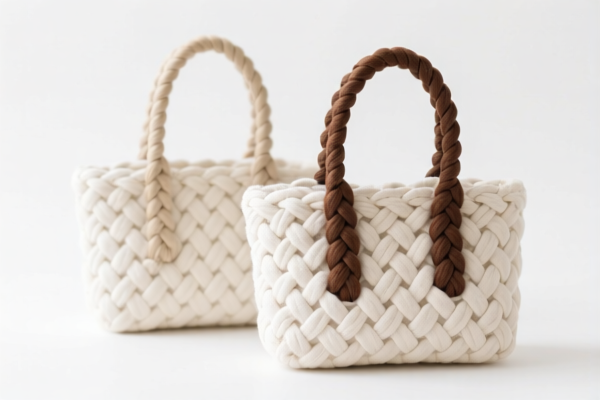
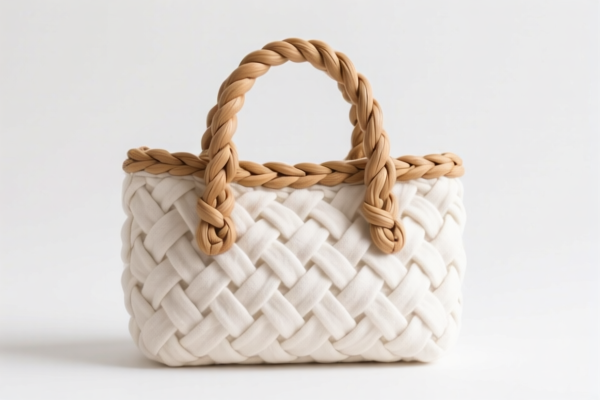
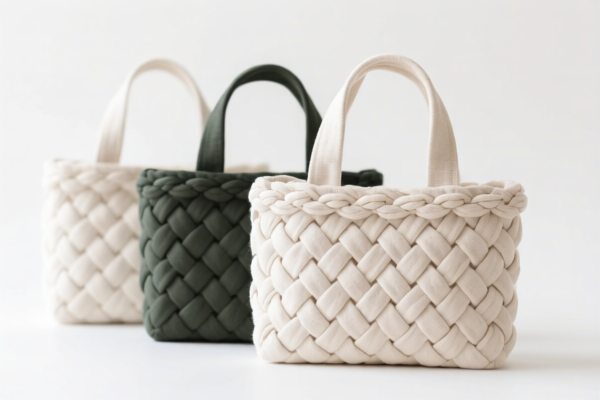
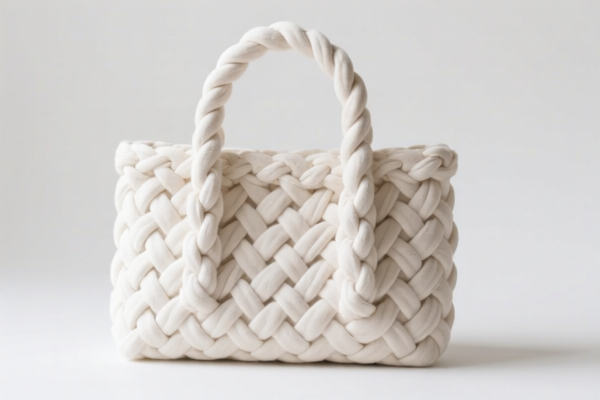
AI Analysis
👜 Cotton Braided Handbags (Portable)
🌐 HS Code Reference & Customs Clearance Guide | 2026 Latest Tariff Analysis | Professional Level Clearance Strategy
📌 I. Product Definition and Classification: Do you really understand "Cotton Braided Handbags"?
Cotton braided handbags are a popular category of fashion accessories, characterized by their lightweight, breathable, and portable nature. In international trade, these goods are classified under Chapter 42, specifically as "Traveling bags, knapsacks, and handbags... of textile materials."
The key distinction lies in the outer surface material and the manufacturing method: 1. Material: The outer surface must be primarily textile (in this case, cotton). 2. Structure: It is a "Handbag" (whether or not with shoulder strap, including those without handle). 3. Craftsmanship: The prompt specifies "Braided." If the cotton is woven into a braid (plait) and then formed into a bag, it falls under a specific sub-category. If it is simply woven fabric made into a bag, it falls under "Other."
⚠️ Key Classification Points:
- If the bag is made from braided cotton strips (plaited structure): It may qualify for4202.22.40.20.
- If the bag is made from standard cotton woven fabric (plain, twill, etc.) and has other features not listed in the specific "braid" category: It falls under4202.22.89.30.
- Crucial: The description "Wholly or in part of braid" is a specific legal term in the HS code. True "braided" bags often have a specific tariff line, while general "cotton handbags" fall into the residual "Other" category.
📦 II. HS Code Classification Details (2026 Latest Tariff Authority Comparison)
Based on the provided data, here are the two most relevant HS codes for cotton handbags. Note that the descriptions provided in the data are extremely specific.
| HS Code | Product Description | Key Characteristics | Applicable Scenario |
|---|---|---|---|
4202.22.40.20 |
Handbags... of textile materials... Wholly or in part of braid: Of cotton | Braided/Crafter's Style: The outer surface is made of cotton braid/plait. | Summer beach bags, braided tote bags, hand-woven style cotton bags where the texture is visibly braided. |
4202.22.89.30 |
Handbags... of textile materials... Other: Of cotton | Standard Woven Fabric: The outer surface is cotton textile (woven, knit, non-woven) but not specifically classified as "braid." | Standard cotton canvas bags, plain cotton totes, printed cotton handbags, or bags made from cotton fabric that is not braided. |
🔍 Important Note:
- Both codes fall under 4202.22: "With outer surface of textile materials."
- Both codes specify Of cotton as the final material descriptor.
- The primary difference is the construction method:40.20is for braid (plaited), while89.30is the residual category for other cotton textile handbags.
- Clarification: "Portable" is a functional descriptor and does not change the HS code. All handbags are inherently portable. The classification depends on material and structure.
💰 III. 2026 Latest Tariff Rate Details (Detailed Tax Clauses)
✅ Applicable Country: United States (US)
✅ Origin: Typically China (CN) or other major exporters
✅ Effective Time: Current as per 2026 tariff schedule provided in data
🎯 1. 4202.22.40.20 —— Cotton Braided Handbags
| Item | Content |
|---|---|
| Basic Tariff | 0.0% |
| Section 301/Additional Tariff | 0.0% |
| Total Tax Rate | 0.0% |
| Tax Calculation | CIF Value × 0.0% = $0 |
| De Minimis Eligibility | ✅ Yes (Low-value shipments may qualify under Section 321, but subject to change) |
| Legal Basis | HTSUS 4202.22.40.20 |
📌 Explanation:
- This code benefits from a 0% base duty and 0% additional tariffs.
- This is a highly favorable tariff line for braided cotton goods.
- Why 0%? Many textile articles have low base duties, and braided crafts are often categorized with zero additional penalties compared to high-tech goods or steel.
🎯 2. 4202.22.89.30 —— Other Cotton Handbags (Non-Braided)
| Item | Content |
|---|---|
| Basic Tariff | 0.0% |
| Section 301/Additional Tariff | 0.0% |
| Total Tax Rate | 0.0% |
| Tax Calculation | CIF Value × 0.0% = $0 |
| De Minimis Eligibility | ✅ Yes |
| Legal Basis | HTSUS 4202.22.89.30 |
📌 Explanation:
- This code also benefits from a 0% base duty and 0% additional tariffs.
- General cotton handbags (canvas, tote, etc.) are often duty-free or low-duty, reflecting the non-strategic nature of basic consumer textiles.
- Note: While the rate is 0%, customs may still scrutinize these for anti-dumping or countervailing duties if specific countries of origin are involved, but per the provided data, the rate is 0.0%.💡 Key Insight:
Both codes listed in the DATA have a Total Tax of 0.0%. This makes cotton handbags one of the most tariff-friendly consumer goods categories for import into the US, assuming they do not violate other trade remedies (e.g., forced labor laws).
🛠️ IV. Customs Clearance Practical Advice (Real-World Pitfall Avoidance Guide)
✅ 1. Documentation Checklist (Indispensable)
| Document | Mandatory? | Description |
|---|---|---|
| ✅ Commercial Invoice | ✔️ | Must clearly state: "Handbags, Cotton, Braided/Not Braided," Quantity, Value. |
| ✅ Packing List | ✔️ | Detail weight and dimensions. "Portable" implies lightweight; ensure weight matches. |
| ✅ Product Photos | ✔️ | Critical: Must show the texture. |
> - If claiming 4202.22.40.20 (Braided): Photos must clearly show plaited/braided strips. |
||
> - If claiming 4202.22.89.30 (Other): Photos should show woven fabric texture. |
||
| ✅ Material Declaration | ✔️ | Specify "100% Cotton" or "Cotton Blend." If mixed, the outer surface material determines the code. |
| ✅ Labeling/Tags | ✔️ | Must comply with US FTC labeling: Fiber content, Country of Origin, Manufacturer Info. |
✅ 2. Declaration Tips (Key Mantras)
🔥 "Material First, Structure Second, Photos Prove It!"
| Scenario | Correct Declaration | Wrong Practice |
|---|---|---|
| True Braided Bag | HS: 4202.22.40.20Desc: "Braided Cotton Handbag" |
Declare as "Tote Bag" → May be audited for misclassification. |
| Canvas/Cotton Fabric Bag | HS: 4202.22.89.30Desc: "Cotton Woven Handbag" |
Declare as "Braided" → Rejection if not actually braided. |
| Mixed Materials | HS: Depends on Outer Surface | If outer is cotton braid, use 40.20. If outer is cotton fabric, use 89.30. |
| Lined Bags | HS: Same as above | Inner lining (polyester, etc.) does not change the HS code if the outer is cotton. |
📌 Warning:
- Do not use vague terms like "Travel Bag" or "Suitcase" if it is clearly a handbag.
- Do not omit the word "Cotton." Misidentifying material can lead to fines.
- "Portable" is not a technical term for customs. Use "Handbag" or "Tote Bag."
✅ 3. Special Considerations
| Issue | Handling Advice |
|---|---|
| De Minimis (Section 321) | Shipments under $800 may enter duty-free without a formal entry. However, ensure the HS code is correctly reported even for de minimis to avoid future audits. |
| Forced Labor (UFLPA) | US Customs is strict on cotton. Ensure you have supply chain traceability proof to confirm no forced labor was used in cotton sourcing. |
| Branded Goods | If the bag has a logo (e.g., Gucci, Coach), ensure you have IP authorization to avoid seizure. |
| Size Limits | If the bag is large enough to be considered a "Travel Bag" rather than a "Handbag," it may fall under 4202.92 or 4202.12. Ensure dimensions align with "Handbag" classification (typically shoulder/carry size). |
🌍 V. Global Market Comparison (2026 Update)
| Country/Region | Recommended HS Code | Tariff (China Origin) | Key Requirements | Notes |
|---|---|---|---|---|
| 🇺🇸 United States | 4202.22.40.20 or 4202.22.89.30 |
0.0% | FTC Labeling, UFLPA Compliance | Most favorable tariff for cotton handbags. |
| 🇨🇳 China | 4202.22 (General) |
0% - 5% | CCC (if applicable), Quality Inspection | Domestic tariffs vary. |
| 🇪🇺 European Union | 4202.22 |
4% - 12% | CE (if safety-related), REACH | Higher base duties than US. |
| 🇬🇧 United Kingdom | 4202.22 |
4% - 12% | UKCA Marking (if applicable) | Post-Brexit rules apply. |
📌 Conclusion:
- The US market offers 0% duty for these specific cotton handbag codes, making it highly competitive.
- EU and UK impose higher base duties (4-12%), so cost calculations must include these tariffs.
📌 VI. Common Mistakes & Pitfalls (Lessons Learned)
❌ Mistake 1: Classifying a braided bag under 4202.22.89.30 ("Other")
👉 Consequence: While both are 0% in this data, misclassification can lead to audits or loss of preferential treatment in other trade agreements. Always be precise.
❌ Mistake 2: Ignoring UFLPA (Uyghur Forced Labor Prevention Act)
👉 Consequence: Cotton is a high-risk material. Without traceability documentation, shipments can be detained or destroyed at the US border, regardless of 0% tariff.
❌ Mistake 3: Using "Handbag" for items that are clearly Backpacks or Travel Bags
👉 Consequence: Misclassification under 4202.22 (Handbags) instead of 4202.12 (Backpacks) or 4202.92 (Travel Bags) may trigger errors in statistical tracking. Ensure the product matches the legal definition of "Handbag" (carried by hand or shoulder, not back).
✅ Correct Practice:
"Cotton Braided Handbag, Summer Style, Outer Surface: 100% Cotton Braid, With Lining, Model XYZ, Country of Origin: Vietnam/China, UFLPA Compliant."
🎯 VII. Conclusion: Professional Declaration, Risk-Free Clearance!
🎯 Remember the Mantra:
🔹 "Outer Surface Rules: Cotton + Braid = 4202.22.40.20"
🔹 "Cotton + Fabric (Other) = 4202.22.89.30"
🔹 "Zero Duty in US, but Prove Your Cotton Origin!"
📌 Pro Tip:
- If your cotton handbags are exported to the US, ensure you have UFLPA supply chain documentation ready.
- If you are unsure if your bag is "Braided" or "Woven," provide close-up photos to your customs broker. The visual texture is the deciding factor.
- Both codes in the provided data have 0% tax, so focus on correct classification to avoid penalties and supply chain compliance to avoid detention.
📣 Immediate Action:
📞 Contact your customs broker + Provide material specs + Obtain UFLPA compliance proof
🚀 Let your cotton handbags clear customs smoothly, efficiently, and profitably!
✨ Professional clearance starts with accurate classification!
💼 Every dollar saved in tariffs counts!
Customer Reviews
About HS Code Classification
The Harmonized System (HS) is an internationally standardized nomenclature developed by the World Customs Organization (WCO) to classify traded products. Over 200 countries use the HS system as the basis for customs tariffs, trade statistics, and import/export regulations.
Each HS code follows a hierarchical structure:
- Chapter (2 digits) — Broad category of goods (e.g., Chapter 84: Machinery and Mechanical Appliances)
- Heading (4 digits) — More specific grouping within the chapter
- Subheading (6 digits) — Internationally standardized breakdown, used by all WCO member countries
- National subdivisions (8-10 digits) — Country-specific extensions for further classification, such as US HTSUS 10-digit codes
Correct HS code classification is essential for smooth customs clearance, accurate duty payment, and compliance with trade regulations. Misclassification can lead to customs delays, overpayment of duties, or penalties.
When importing from CN to US, the applicable tariff rates may include:
- Most-Favored-Nation (MFN) rate — The standard duty rate applied to WTO members
- General rate — Applied to countries without trade agreements
- Trade remedy duties — Additional tariffs such as Section 301 (anti-dumping), Section 232 (national security), or countervailing duties
The information provided on this page is for reference purposes only. For official classification, please consult with your local customs authority or a licensed customs broker.