cotton floss and cotton
CN → US| HS Code | Tariff Rate | Origin | Destination | Doc |
|---|---|---|---|---|
| 5201001800 | 0.0% | CN | US | Official Doc |
| 5201003800 | 0.0% | CN | US | Official Doc |
| 6307904010 | 17.5% | CN | US | Official Doc |
| 6307905010 | 17.5% | CN | US | Official Doc |
Product Images
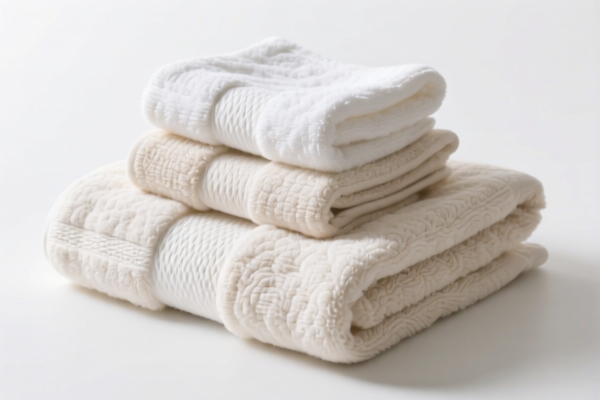
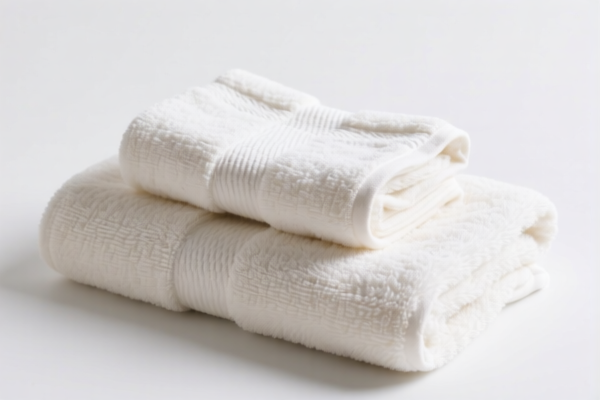
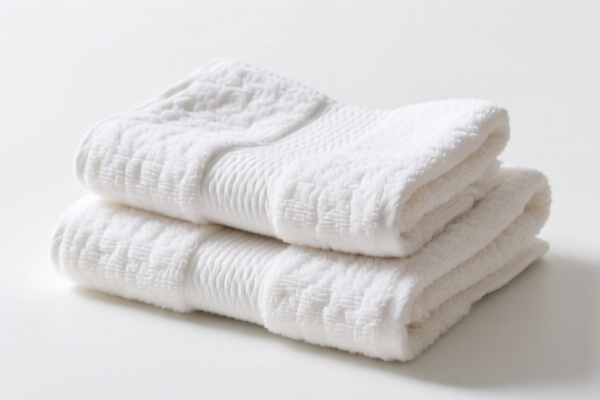
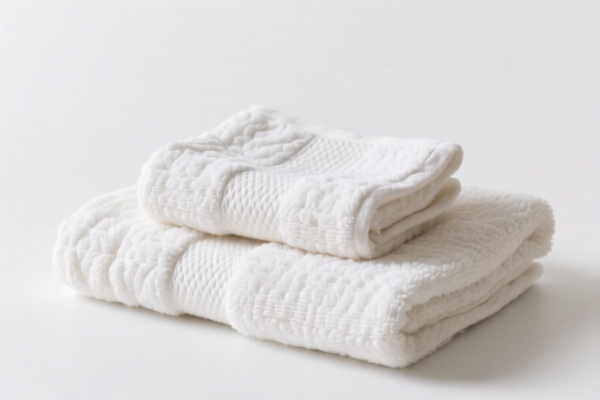
AI Analysis
🧵 Cotton Floss, Lacings & Raw Cotton: The "Soft" Trap in US Customs 🇺🇸
🌐 HS Code Reference & Clearance Guide | 2026 Latest Tariff Analysis | Professional Strategy for Textile Importers
📌 Part 1: Product Definition & Classification: Do You Really Know "Cotton"?
In international trade, "Cotton" is not just one item. It is a spectrum ranging from raw agricultural fibers to finished household accessories. Misclassification here is dangerous because the tax structure differs completely between raw materials (per kg + percentage) and manufactured articles (percentage).
Based on the provided data, we analyze four specific items: 1. Cotton Cords and Tassels (Finished textile articles) 2. Cotton Lacings (Finished textile articles) 3. Short Staple Cotton (Raw fiber, <1-1/8 inches) 4. Long Staple Cotton (Raw fiber, ≥1-1/8 inches but <1-3/8 inches)
⚠️ Key Distinction Point:
- If it is a finished article (tassels, lacings, dress patterns) → It falls under Chapter 63 (Other Made Up Articles).
- If it is raw material (unspun cotton) → It falls under Chapter 52 (Cotton).
- Critical Metric: For raw cotton, the staple length (fiber length) determines the specific HS code and tax calculation.
📦 Part 2: HS Code Classification Details (2026 Authority Reference)
| HS Code | Product Description | Application Scenario | Key Feature |
|---|---|---|---|
6307.90.40.10 |
Other made up articles: Cords and tassels Of cotton | Decorative tassels, curtain cords, fringes, dress patterns | ✅ Finished Article (Ch 63) |
6307.90.50.10 |
Other made up articles: Corset lacings, footwear lacings or similar lacings Of cotton | Shoe laces, corset strings, craft lacing | ✅ Finished Article (Ch 63) |
5201.00.18.00 |
Cotton, not carded or combed: Staple length under 28.575 mm (1-1/8 inches): Other | Short-staple raw cotton, short fiber bales | ✅ Raw Material (Ch 52) |
5201.00.38.00 |
Cotton, not carded or combed: Staple length 28.575 mm – 34.925 mm: Other | Medium-length raw cotton, standard commodity cotton | ✅ Raw Material (Ch 52) |
🔍 Important Note:
- Ch 63 Items (6307...) are taxed purely by value (Ad Valorem).
- Ch 52 Items (5201...) are taxed by Weight + Value (Specific + Ad Valorem).
- Raw Cotton must be not carded or combed (i.e., in the raw state). If carded/combed, it falls under different codes not listed here.
💰 Part 3: 2026 Latest Tariff Rate Breakdown (Including Surcharges & Policy Add-ons)
✅ Applicable Country: United States (US)
✅ Origin: China (CN)
✅ Effective Time: Current Trade Policy (Includes Section 301 and other surcharges)
🎯 1. 6307.90.40.10 & 6307.90.50.10 —— Cotton Tassels & Lacings (Finished Articles)
These items are classified as "Other made up articles." They do not have a specific per-kg tariff but are subject to standard US duties plus additional trade surcharges.
| Item | Content |
|---|---|
| Base Tariff Rate | 0.0% (Free) |
| Additional Surcharge | +7.5% |
| Total Effective Rate | 7.5% |
| Tax Calculation | CIF Value × 7.5% |
| De Minimis Eligibility | ❌ No (Subject to full scrutiny if declared separately) |
| Legal Basis | Standard USITC Schedule 8 + Section 301 Footnote |
📌 Explanation:
- The Base Rate is 0%, which is favorable for these textile accessories.
- The +7.5% is an additional surcharge applied to Chinese-origin goods under current trade restrictions.
- Total Cost: You pay 7.5% of the declared value. This is significantly lower than raw cotton imports.
🎯 2. 5201.00.18.00 & 5201.00.38.00 —— Raw Cotton (Short & Medium Staple)
Raw cotton is a sensitive strategic commodity. The tax structure is complex: Specific Duty (per kg) + Ad Valorem Duty (%).
| Item | Content |
|---|---|
| Base Tariff Rate | 31.4 cents/kg (Specific Duty) |
| Additional Surcharge | +25.0% (Ad Valorem on CIF Value) |
| Total Effective Rate | 31.4¢/kg + 25.0% |
| Tax Calculation | (Weight in kg × $0.314) + (CIF Value × 25%) |
| De Minimis Eligibility | ❌ No (High risk for low-value shipments) |
| Legal Basis | USITC Schedule 3 + Section 301 Footnote |
📌 Explanation:
- Specific Duty: Regardless of value, you pay $0.314 per kilogram.
- Ad Valorem Surcharge: An additional 25% of the total CIF value is added.
- Example Calculation:
- Import 100 kg of Cotton.
- CIF Value = $500.
- Specific Tax: 100 kg × $0.314 = $31.40.
- Ad Valorem Tax: $500 × 25% = $125.00.
- Total Tax: $31.40 + $125.00 = $156.40.
- Effective Rate: 31.28% (Higher than 25% due to the per-kg fee).⚠️ Critical Warning:
- The 25% surcharge on raw cotton is very high.
- The per-kg fee applies even if the cotton is cheap. This makes low-value, high-volume cotton imports extremely costly.
🛠️ Part 4: Customs Clearance Practical Advice (Pitfall Avoidance Guide)
✅ 1. Preparation Checklist (Must-Haves)
| Document | Required? | Description |
|---|---|---|
| ✅ Product Specification Sheet | ✔️ | Must specify: Material (100% Cotton), Form (Raw/Baled vs. Finished/Laced), Staple Length (if raw). |
| ✅ Photo of Product | ✔️ | Show tassels, labels, or bales. For raw cotton, show bale tags with fiber length info. |
| ✅ Commercial Invoice | ✔️ | Clearly state "Cotton Tassels" or "Raw Cotton – Not Carded." Do NOT use generic "Textile Parts." |
| ✅ Certificate of Origin | ✔️ | Proof of China origin triggers the 7.5% or 25% surcharge. |
| ✅ Fiber Length Test Report | ✔️ | For Raw Cotton Only: Lab report proving staple length (<28.575mm or 28.575-34.925mm) is mandatory for correct HS coding. |
✅ 2. Declaration Tips (Crucial Keywords)
🔥 "Raw Cotton Needs Length, Finished Goods Need Description!"
| Scenario | Correct Declaration | Wrong Declaration | Consequence |
|---|---|---|---|
| Tassels/Laces | "Cotton Tassels, Decorative, Not Carded" | "Cotton Parts" | Misclassification → Audit & Penalty |
| Raw Cotton (Short) | "Cotton, Not Carded, Staple <28.575mm" | "Cotton Fiber" | Wrong HS → 25% error or detention |
| Raw Cotton (Medium) | "Cotton, Not Carded, Staple 28.575-34.925mm" | "Cotton Floss" | Floss implies spun/threaded → Wrong Ch 56/63 |
| Mixed Shipment | Split HS Codes for Tassels vs. Raw Cotton | Single "Textile" Code | Major Compliance Violation |
📌 Note on "Cotton Floss":
- If "Floss" means embroidery floss (spun thread), it is NOT in the provided data. It likely falls under Ch 54 or 56.
- If "Floss" means raw cotton (uncard), use5201.00.18.00or5201.00.38.00.
- Do not declare embroidery floss as raw cotton – Customs will reject it for missing fiber length data.
✅ 3. Special Cases Handling
| Situation | Recommendation |
|---|---|
| Low-Value Shipments (<$800) | ❌ Avoid: These items are not eligible for de minimis (Section 321) due to high duties and specific HS codes. Declare formally. |
| Mixed Container | Separate HS codes clearly. Tassels (6307...) and Raw Cotton (5201...) have different tax structures. Combining them causes calculation errors. |
| Staple Length Uncertain | ⚠️ Risk: If you cannot prove staple length, Customs may assign the worst-case HS code or reject the entry. Get a lab test before shipping. |
| "Cotton Lace" for Shoes | Use 6307.90.50.10. Do not use 5608 (netting) unless it is truly netted fabric. Lacings are specifically listed. |
🌍 Part 5: Global Market Comparison (2026 Update)
| Region | Recommended HS Code | Approx. Total Duty | Notes |
|---|---|---|---|
| 🇺🇸 USA | 6307.90.40.10 / 5201.00.18.00 |
7.5% (Finished) / 31.4¢+25% (Raw) | High Surcharge on Raw Cotton. |
| 🇨🇳 China | 6307.90.40.10 / 5201.00.18.00 |
0% - 5% | Lower base rates, but check for export controls. |
| 🇪🇺 EU | 6307.90 / 5201.00 |
0% - 4% | No Section 301-style surcharges, but strict fiber labeling laws. |
| 🇬🇧 UK | 6307.90 / 5201.00 |
0% - 4% | Post-Brexit tariff schedules similar to EU. |
📌 Conclusion:
- USA is the most expensive market for cotton imports due to additional surcharges.
- Raw Cotton is heavily taxed in the US (>30% effective rate).
- Finished Cotton Articles (Tassels/Laces) are cheaper (7.5%) but still subject to surcharges.
📌 Part 6: Common Errors & Pitfalls (Lessons Learned)
❌ Error 1: Declaring "Cotton Floss" as 5201.00.18.00 when it is actually embroidery thread.
👉 Result: Customs requires fiber composition test → Delay 2-4 weeks. Embroidery thread may be 5209 or 5401.
❌ Error 2: Ignoring Staple Length for raw cotton.
👉 Result: If staple length is not specified, Customs may classify it under a default high-duty category or reject the entry. Always provide staple length.
❌ Error 3: Combining Tassels and Raw Cotton in one line item.
👉 Result: Tax calculation error. Tassels are 7.5%, Raw Cotton is 25%+per kg. This triggers an audit.
✅ Correct Approach:
"Cotton Tassels, Decorative, 100% Cotton" →
6307.90.40.10(7.5%)
"Cotton, Not Carded, Staple 30mm" →5201.00.38.00(31.4¢/kg + 25%)
🎯 Part 7: Conclusion: Precision in Textile Classification Saves Money!
🎯 Remember This Mantra:
🔹 "Finished? 7.5%! Raw? 25% + Per KG!"
🔹 "Staple Length is King for Raw Cotton!"
🔹 "Don't Mix Tassels with Fiber!"
📌 Pro Tip:
For cotton tassels and lacings, ensure the description explicitly states "Of Cotton" to qualify for
6307.90.x0.10. If mixed with synthetic fibers, the HS code and tax rate may change completely.
📣 Immediate Action:
📞 Pre-clearance Consultation: Provide product photos and fiber specs to your customs broker.
🚀 Get a Lab Test: If importing raw cotton, get a staple length test report before shipping to ensure the correct5201subheading.
✨ Professional Clearance Starts with Accurate Classification!
💼 Your Cotton, Your Cost – Control It with Precision!
Customer Reviews
About HS Code Classification
The Harmonized System (HS) is an internationally standardized nomenclature developed by the World Customs Organization (WCO) to classify traded products. Over 200 countries use the HS system as the basis for customs tariffs, trade statistics, and import/export regulations.
Each HS code follows a hierarchical structure:
- Chapter (2 digits) — Broad category of goods (e.g., Chapter 84: Machinery and Mechanical Appliances)
- Heading (4 digits) — More specific grouping within the chapter
- Subheading (6 digits) — Internationally standardized breakdown, used by all WCO member countries
- National subdivisions (8-10 digits) — Country-specific extensions for further classification, such as US HTSUS 10-digit codes
Correct HS code classification is essential for smooth customs clearance, accurate duty payment, and compliance with trade regulations. Misclassification can lead to customs delays, overpayment of duties, or penalties.
When importing from CN to US, the applicable tariff rates may include:
- Most-Favored-Nation (MFN) rate — The standard duty rate applied to WTO members
- General rate — Applied to countries without trade agreements
- Trade remedy duties — Additional tariffs such as Section 301 (anti-dumping), Section 232 (national security), or countervailing duties
The information provided on this page is for reference purposes only. For official classification, please consult with your local customs authority or a licensed customs broker.