cotton handbag for travel
CN → US| HS Code | Tariff Rate | Origin | Destination | Doc |
|---|---|---|---|---|
| 5311006000 | 37.7% | CN | US | Official Doc |
| 6307909891 | 24.5% | CN | US | Official Doc |
| 4202923131 | 52.6% | CN | US | Official Doc |
| 4202923900 | 52.6% | CN | US | Official Doc |
| 5311003090 | 35.0% | CN | US | Official Doc |
Product Images
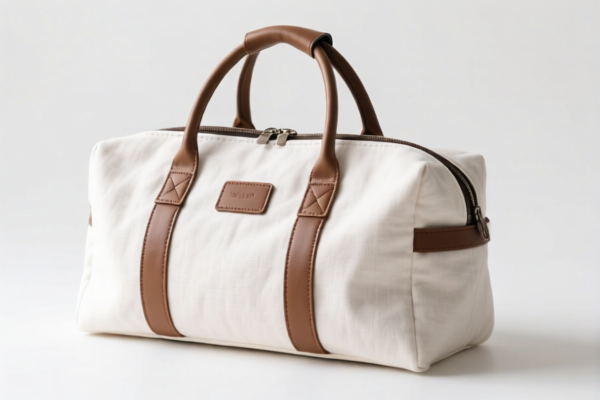
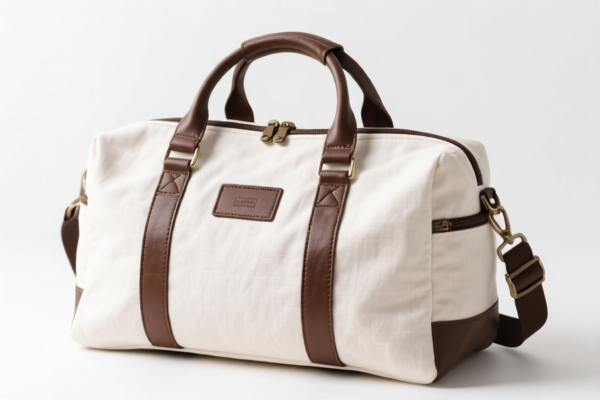
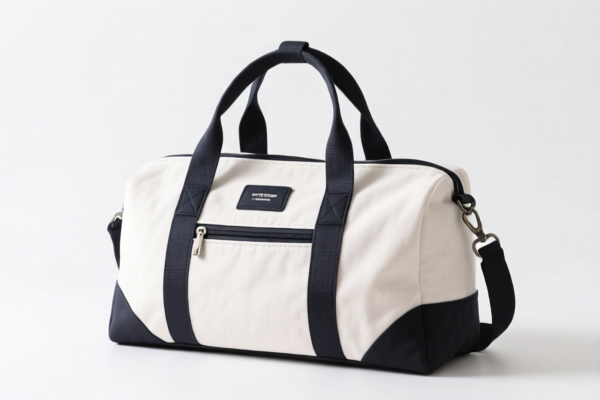
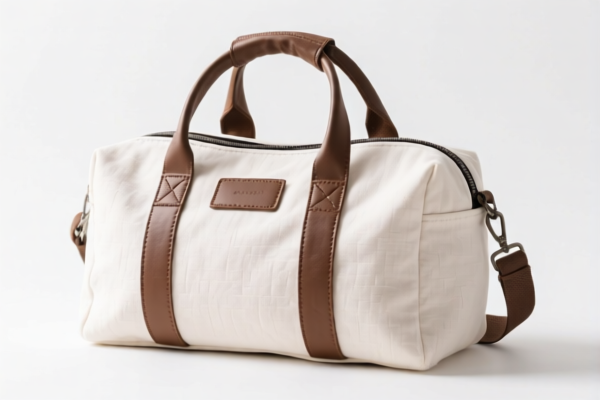
AI Analysis
👜 Cotton Paper-Yarn Travel Handbag (Travel Bag)
🌐 HS Code Reference & Clearance Guide | 2026 Latest Tariff Analysis | Professional Customs Strategy
📌 1. Product Definition & Classification: What Exactly is a "Cotton Paper-Yarn Travel Handbag"?
A "Cotton Paper-Yarn Travel Handbag" is a unique textile product combining traditional cotton materials with innovative paper-yarn (or paper-like) fibers, designed for travel purposes. In international trade, its classification hinges on whether it is treated as a raw textile material, a finished consumer good, or a specific luggage article.
⚠️ Key Distinction Points: - If classified as a raw textile fabric (roll/yarn state): Falls under Chapter 53. - If classified as a finished luggage/travel bag: Falls under Chapter 42. - If classified as a general textile article: Falls under Chapter 63.
💡 Critical Insight: The physical form (bag vs. fabric) and the specific composition (cotton vs. paper-yarn blend) dictate the HS Code, leading to massive differences in tax rates (from 24.5% to 52.6%).
📦 2. HS Code Classification Details (2026 Latest Tariff Authority对照)
| HS Code | Product Description | Application Scenario | Material Focus |
|---|---|---|---|
5311.00.60.00 |
Paper yarn fabrics, woven; of mixed or blended yarns, containing cotton or man-made fibers | Raw textile classification; assumes the product is primarily treated as a "paper-yarn fabric" | Paper-Yarn + Cotton |
6307.90.98.91 |
Other made-up articles, incl. dress patterns; made-up articles of textile materials, n.e.s. | Treated as a finished consumer good but not specifically classified as luggage | Cotton (Primary) |
4202.92.31.31 |
Bags with outer surface of textile materials, incl. shopping bags; of a kind used for the carriage of tools and goods, for sports, etc. | Treated as a travel bag/sports bag with textile exterior | Textile Fibers (Cotton/Paper-Yarn) |
4202.92.39.00 |
Other bags with outer surface of textile materials; of a kind used for the carriage of tools and goods, for sports, etc. | Treated as a travel bag under a broader subheading within Chapter 42 | Textile Materials |
5311.00.30.90 |
Paper yarn fabrics, woven; of mixed or blended yarns, containing plant fibers (e.g., cotton) | Treated as plant-fiber mixed fabric; emphasizes the "plant fiber" definition | Cotton + Plant Fiber |
🔍 Key Reminder: - Luggage vs. Fabric: If the item is a finished bag ready for use, Chapter 42 (
4202.92.xx.xx) is the most logical fit for "travel bags." However, if customs views the "paper-yarn" aspect as the dominant characteristic, they may push it to Chapter 53 (5311.00.xx.xx). - Consumer Good: If neither luggage nor raw fabric fits perfectly, Chapter 63 (6307.90.98.91) is the "other made-up articles" bucket.
💰 3. 2026 Latest Tariff Rate Breakdown (Including Additional Taxes & Policy Surcharges)
✅ Applicable Country: United States (US) ✅ Origin: China (CN) ✅ Effective Date: November 10, 2025 (and subsequent imports)
🎯 1. 5311.00.60.00 —— Paper Yarn Fabrics (Mixed/Blended with Cotton)
| Item | Content |
|---|---|
| Base Tariff | 2.7% (ad valorem) |
| Section 301 Additional Tariff | +25.0% |
| 122 Clause Tariff (IEEPA) | +10.0% |
| Total Tax Rate | 37.7% |
| Tax Calculation | CIF Value × 37.7% |
| De Minimis Exemption | ❌ Not Applicable (High risk of audit) |
| Legal Basis Path | Section 301: 9903.88.01 → 122 Clause: 9903.01.25 |
📌 Explanation: - This classification assumes the product is treated as fabric rather than a bag. - The 37.7% total rate is high due to the 25% Section 301 tariff and 10% 122 Clause tariff.
🎯 2. 6307.90.98.91 —— Other Made-Up Articles (Finished Consumer Good)
| Item | Content |
|---|---|
| Base Tariff | 7.0% (ad valorem) |
| Section 301 Additional Tariff | +7.5% |
| 122 Clause Tariff (IEEPA) | +10.0% |
| Total Tax Rate | 24.5% |
| Tax Calculation | CIF Value × 24.5% |
| De Minimis Exemption | ❌ Not Applicable |
| Legal Basis Path | Section 301: 9903.88.01 → 122 Clause: 9903.01.24 |
📌 Note: - This is the lowest tax rate among all options. - Suitable if the bag is considered a general "made-up article" rather than specialized luggage. - Caution: Customs may challenge this if the bag is clearly designed for travel/sports (which falls under Chapter 42).
🎯 3. 4202.92.31.31 —— Bags of Textile Materials (Travel/Sports)
| Item | Content |
|---|---|
| Base Tariff | 17.6% (ad valorem) |
| Section 301 Additional Tariff | +25.0% |
| 122 Clause Tariff (IEEPA) | +10.0% |
| Total Tax Rate | 52.6% |
| Tax Calculation | CIF Value × 52.6% |
| De Minimis Exemption | ❌ Not Applicable |
| Legal Basis Path | Section 301: 9903.88.01 → 122 Clause: 9903.01.25 |
📌 Critical Warning: - This is the highest tax rate. - Applies if customs strictly classifies the item as a travel/sports bag under Chapter 42. - The high base tariff (17.6%) combined with 25% + 10% additional tariffs makes this extremely costly.
🎯 4. 4202.92.39.00 —— Other Bags of Textile Materials
| Item | Content |
|---|---|
| Base Tariff | 17.6% (ad valorem) |
| Section 301 Additional Tariff | +25.0% |
| > 122 Clause Tariff (IEEPA) | +10.0% |
| Total Tax Rate | 52.6% |
| Tax Calculation | CIF Value × 52.6% |
| De Minimis Exemption | ❌ Not Applicable |
| Legal Basis Path | Section 301: 9903.88.01 → 122 Clause: 9903.01.25 |
📌 Note: - Identical tax rate to
4202.92.31.31. - Used when the bag doesn't fit the specific "sports/travel" sub-subheading but is still a textile bag.
🎯 5. 5311.00.30.90 —— Paper Yarn Fabrics (Plant Fiber Blend)
| Item | Content |
|---|---|
| Base Tariff | 0.0% (ad valorem) |
| Section 301 Additional Tariff | +25.0% |
| 122 Clause Tariff (IEEPA) | +10.0% |
| Total Tax Rate | 35.0% |
| Tax Calculation | CIF Value × 35.0% |
| De Minimis Exemption | ❌ Not Applicable |
| Legal Basis Path | Section 301: 9903.88.01 → 122 Clause: 9903.01.24 |
📌 Explanation: - The base tariff is 0%, which is attractive. - However, the 25% + 10% additional tariffs still apply. - Suitable if the product is classified as a fabric containing plant fibers (cotton).
🛠️ 4. Customs Clearance Practical Advice (Real-World Pitfall Guide)
✅ 1. Preparation Checklist (Must-Have)
| Document | Required | Explanation |
|---|---|---|
| ✅ Product Specification Sheet | ✔️ | Detail material composition: % Cotton, % Paper-Yarn. |
| ✅ Product Photos | ✔️ | Show the bag's structure, straps, and "paper-yarn" texture. |
| ✅ Commercial Invoice | ✔️ | Clearly state "Travel Handbag" or "Textile Bag." |
| ✅ Material Test Report | ✔️ | Prove the "paper-yarn" is actually textile-grade paper fiber (not just paper). |
| ✅ Packing List | ✔️ | Ensure no separate parts that could be reclassified. |
✅ 2. Declaration Strategy (Key Mantra)
🔥 "Shape Dictates Chapter: Bag = Ch.42, Fabric = Ch.53, General = Ch.63!"
| Scenario | Correct Declaration | Risk of Wrong Declaration |
|---|---|---|
| Finished Travel Bag | 4202.92.31.31 or 4202.92.39.00 |
If declared as fabric → May face questions, but tax is lower (35-37%). If declared as general article → Tax 24.5%. |
| Raw Fabric Roll | 5311.00.60.00 or 5311.00.30.90 |
If declared as bag → Tax jumps to 52.6%. |
| General Use Bag (Not Sports) | 6307.90.98.91 |
If declared as bag → Tax 52.6%. If declared as general article → Tax 24.5%. |
⚠️ Critical Warning: - Chapter 42 (Luggage) has the highest total tax (52.6%). - Chapter 63 (General Made-up) has the lowest total tax (24.5%). - Chapter 53 (Fabric) has medium tax (35-37.7%).
✅ 3. Special Handling Tips
| Situation | Recommendation |
|---|---|
| If the Bag is Clearly for Travel/Sports | Customs will likely force 4202.92.xx.xx (52.6%). Try to argue for 6307.90.98.91 (24.5%) if it's a general-purpose bag, not specialized sports gear. |
| If the "Paper-Yarn" is Dominant | Try to classify under 5311.00.xx.xx (35-37.7%). Provide material proofs that the paper-yarn is the main feature. |
| If You Want the Lowest Tax | Aim for 6307.90.98.91 (24.5%). Describe it as a "General Purpose Textile Bag" rather than a "Travel Bag." |
| Pre-Ruling | Highly Recommended! Apply for an Advance Ruling from CBP to lock in the HS Code and tax rate. |
🌍 5. Global Market Clearance Comparison (2026)
| Country/Region | Recommended HS Code | Tariff Rate | Remarks |
|---|---|---|---|
| 🇺🇸 USA | 6307.90.98.91 (if possible) |
24.5% | Lowest rate. If forced to Ch.42, rate is 52.6%. |
| 🇨🇳 China | 4202.92.31.31 |
~10% | No additional Section 301/122 tariffs. |
| 🇪🇺 EU | 4202.92.31.31 |
~12% | No additional tariffs. |
| 🇬🇧 UK | 4202.92.31.31 |
~12% | No additional tariffs. |
| 🇯🇵 Japan | 4202.92.31.31 |
~10% | No additional tariffs. |
📌 Conclusion: - USA is the only market with additional punitive tariffs (Section 301 + 122 Clause). - Strategy for USA: Avoid Chapter 42 (52.6%) if possible. Try to qualify for Chapter 63 (24.5%) or Chapter 53 (35%).
📌 6. Common Errors & Pitfalls (Lessons Learned)
❌ Mistake 1: Declaring a Travel Bag as Fabric (5311.00.60.00)
👉 Result: CBP may reject it as "finished goods," forcing reclassification to Chapter 42 (52.6%) or causing delays.
❌ Mistake 2: Declaring a General Bag as Travel Bag (4202.92.31.31)
👉 Result: Tax jumps from 24.5% to 52.6%. Loss of 28.1% in profit!
❌ Mistake 3: Ignoring the 122 Clause (10%) 👉 Result: Underpayment of taxes. The 10% IEEPA tariff applies to all Chinese-origin goods in these categories.
✅ Correct Approach:
"Travel Handbag, Cotton-Paper Yarn Blend, General Use, Model XYZ" Aim for
6307.90.98.91(24.5%) If challenged, defend5311.00.60.00(37.7%) Avoid4202.92.31.31(52.6%)
🎯 7. Conclusion: Smart Classification, Maximize Profit!
🎯 Remember the Mantra:
🔹 "Bag? Chapter 42 (52.6%). Fabric? Chapter 53 (35-37%). General? Chapter 63 (24.5%)." 🔹 "122 Clause is 10% on ALL. Don't forget it!" 🔹 "Save 28% by not calling it a 'Travel Bag' if it's just a 'General Bag'!"
✨ Professional Clearance Starts with Precise Classification! 💼 Your Every Penny Matters!
📣 Immediate Action:
📞 Consult a customs broker + Provide product images + Apply for Advance Ruling 🚀 Clear Customs Smoothly, Boost Margins, Stay Compliant!
Customer Reviews
About HS Code Classification
The Harmonized System (HS) is an internationally standardized nomenclature developed by the World Customs Organization (WCO) to classify traded products. Over 200 countries use the HS system as the basis for customs tariffs, trade statistics, and import/export regulations.
Each HS code follows a hierarchical structure:
- Chapter (2 digits) — Broad category of goods (e.g., Chapter 84: Machinery and Mechanical Appliances)
- Heading (4 digits) — More specific grouping within the chapter
- Subheading (6 digits) — Internationally standardized breakdown, used by all WCO member countries
- National subdivisions (8-10 digits) — Country-specific extensions for further classification, such as US HTSUS 10-digit codes
Correct HS code classification is essential for smooth customs clearance, accurate duty payment, and compliance with trade regulations. Misclassification can lead to customs delays, overpayment of duties, or penalties.
When importing from CN to US, the applicable tariff rates may include:
- Most-Favored-Nation (MFN) rate — The standard duty rate applied to WTO members
- General rate — Applied to countries without trade agreements
- Trade remedy duties — Additional tariffs such as Section 301 (anti-dumping), Section 232 (national security), or countervailing duties
The information provided on this page is for reference purposes only. For official classification, please consult with your local customs authority or a licensed customs broker.