cotton jewelry boxes
CN → US| HS Code | Tariff Rate | Origin | Destination | Doc |
|---|---|---|---|---|
| 6307909891 | 24.5% | CN | US | Official Doc |
| 4202926010 | 41.3% | CN | US | Official Doc |
| 4202926091 | 41.3% | CN | US | Official Doc |
Product Images
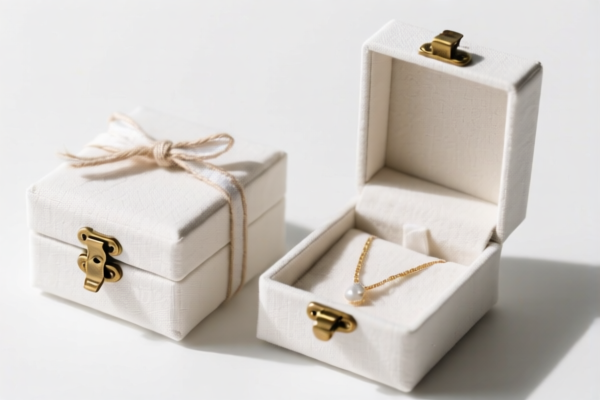
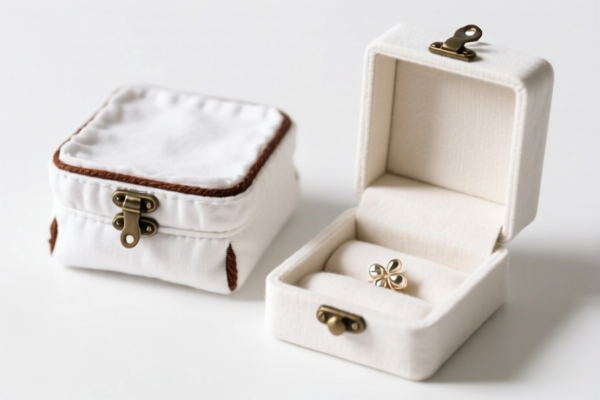
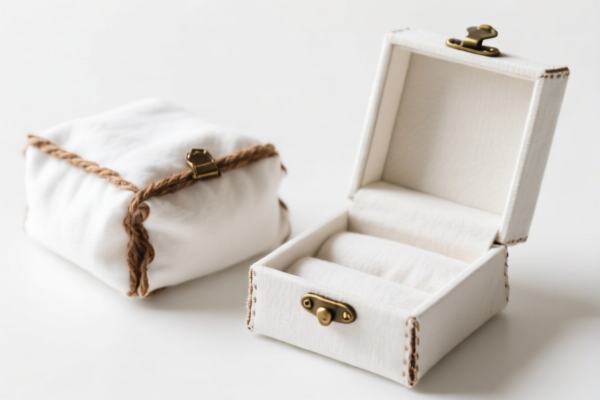
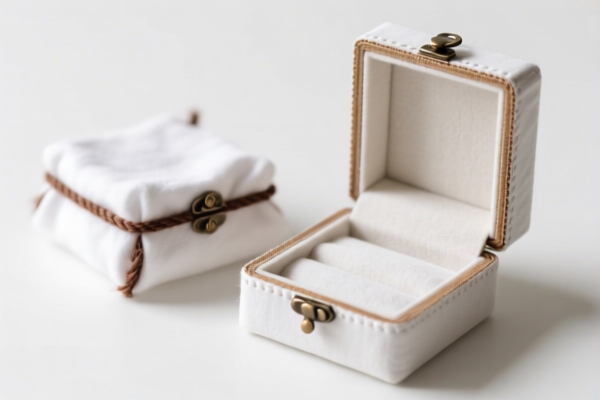
AI Analysis
💍 Cotton Jewelry Boxes (Textile Storage Containers)
🌐 HS Code Reference & Customs Clearance Guide | 2026 Latest Tariff Analysis | Professional Entry Strategy
📌 I. Product Definition & Classification: What Exactly is a "Cotton Jewelry Box"?
Cotton jewelry boxes are fabric-covered containers designed primarily for the storage, display, or protection of jewelry items. In international trade, they are categorized based on their primary material and specific utility.
Key Distinction: * Textile-Primary: If the box is primarily made of cotton fabric (e.g., fabric-covered boxes, pouches) and does not have the structural integrity of rigid leather or plastic cases, it leans towards Chapter 63. * Case/Luggage-Primary: If the box is designed specifically as a "case" for valuables (jewelry) and fits the definition of articles of a kind normally carried in pocket or handbag, it falls under Chapter 42 (Articles of Leather; Travel Goods).
⚠️ Critical Classification Point:
- If the product is viewed as a general textile finished good (e.g., a soft pouch or generic fabric container) → 6307.90.98.91
- If the product is viewed as a specific "jewelry case" or "trousseau chest" made of textile materials → 4202.92.60.10
- If the product is viewed as a generic textile container not specifically for jewelry but falls under "other" → 4202.92.60.91
📦 II. HS Code Classification Details (2026 Latest Tariff Authority Comparison)
| HS Code | Product Description | Application Scenario | Key Classification Logic |
|---|---|---|---|
6307.90.98.91 |
Other made-up textile articles, not elsewhere specified (Cotton Jewelry Box) | Generic fabric jewelry pouches, soft storage bags, textile-based "catch-all" containers | Textile Focus: Fits the "basket" logic for other made-up textile articles. Material is pure cotton. |
4202.92.60.10 |
Articles of a kind normally carried in the pocket or in the handbag, with outer surface of textile materials: Jewelry boxes | Specific jewelry cases/trousseau chests made of cotton | Specific Utility: "Jewelry box" is explicitly listed. Material is textile (cotton). |
4202.92.60.91 |
Articles of a kind normally carried in the pocket or in the handbag, with outer surface of textile materials: Other (Non-Jewelry/General) | Generic textile boxes, not specifically designated as jewelry cases | Generic Utility: Falls under "Other" for textile-covered cases. |
🔍 Key Reminder:
-4202.92.60.10is the most accurate for specific jewelry cases because Chapter 42 covers "trunks, suitcases, vanity cases, attache cases... and similar containers." A jewelry box often fits this "similar container" definition if it has structure.
-6307.90.98.91is the fallback (catch-all) for textile goods that don't fit specific textile headings. It applies if the box is considered a simple "made-up textile article" rather than a "container/case."
-4202.92.60.91applies if the item is a case but not specifically a jewelry box (e.g., a general cosmetic box or generic storage box).
💰 III. 2026 Latest Tariff Rate Breakdown (Including Additional Duties & Policy Surcharges)
✅ Applicable Country: United States (US)
✅ Origin: China (CN)
✅ Effective Date: 2025 November 10 onwards (Including subsequent imports)
🎯 1. 6307.90.98.91 —— Other Made-Up Textile Articles (Cotton Jewelry Box)
| Item | Content |
|---|---|
| Base Tariff Rate | 7.0% (ad valorem) |
| USITC Additional Duty | +7.5% (Section 301 / Trade Remedy) |
| IEEPA Additional Duty | +10.0% (Targeting China/HK products, effective Nov 10, 2025) |
| Total Tariff Rate | 24.5% |
| Tax Calculation | CIF Value × 24.5% |
| De Minimis Eligibility | ❌ Not Eligible (deny_de_minimis) |
| Legal Basis Path | IEEPA:9903.01.25 → USITC:6307.90.98.91 → FOOTNOTE:General Textile Rules |
📌 Explanation:
- The Base Rate (7.0%) is standard for made-up textile articles.
- The 7.5% additional duty is part of specific textile trade remedies or general Section 301 adjustments.
- The 10% IEEPA duty is a new surcharge on Chinese-origin textile goods.
- Total 24.5% is significantly lower than the 4202 category. This makes6307.90.98.91the cost-effective choice if customs accepts it.
🎯 2. 4202.92.60.10 —— Jewelry Boxes (Textile Outer Surface)
| Item | Content |
|---|---|
| Base Tariff Rate | 6.3% (ad valorem) |
| USITC Additional Duty | +25.0% (Section 301) |
| IEEPA Additional Duty | +10.0% (Targeting China/HK products, effective Nov 10, 2025) |
| Total Tariff Rate | 41.3% |
| Tax Calculation | CIF Value × 41.3% |
| De Minimis Eligibility | ❌ Not Eligible (deny_de_minimis) |
| Legal Basis Path | IEEPA:9903.01.24 → USITC:4202.92.60.10 → FOOTNOTE:301.1.1 |
📌 Note:
- Base Rate (6.3%) is slightly lower than6307, but the Additional Duty is much higher (25% vs 7.5%).
- This category is strictly for jewelry boxes. If your product is clearly a jewelry box, customs may insist on this code, leading to a 41.3% total cost.
- Total 41.3% is a high tariff burden.
🎯 3. 4202.92.60.91 —— Other Textile Containers (Not Jewelry-Specific)
| Item | Content |
|---|---|
| Base Tariff Rate | 6.3% (ad valorem) |
| USITC Additional Duty | +25.0% (Section 301) |
| IEEPA Additional Duty | +10.0% (Targeting China/HK products, effective Nov 10, 2025) |
| Total Tariff Rate | 41.3% |
| Tax Calculation | CIF Value × 41.3% |
| De Minimis Eligibility | ❌ Not Eligible (deny_de_minimis) |
| Legal Basis Path | IEEPA:9903.01.24 → USITC:4202.92.60.91 → FOOTNOTE:301.1.1 |
📌 Note:
- Same tax structure as4202.92.60.10.
- Use this only if the item is a container but not primarily for jewelry (e.g., a general cosmetic box). Misclassifying a jewelry box here to avoid the "jewelry" label is risky and may lead to audits.
🛠️ IV. Customs Clearance Operational Advice (Practical Pitfall Avoidance Guide)
✅ 1. Required Documentation Checklist (All Mandatory)
| Document | Must Provide | Explanation |
|---|---|---|
| ✅ Product Specification Sheet | ✔️ | Detail material composition (100% Cotton), dimensions, filling material (if any), and lining. |
| ✅ Product Photos (Clear) | ✔️ | Show the box from all angles, including interior structure. Highlight if it's "soft" (pouch) or "structured" (case). |
| ✅ Commercial Invoice | ✔️ | Clearly state "Cotton Jewelry Box" or "Textile Storage Bag." Avoid ambiguous terms like "Gift Box" without description. |
| ✅ Material Composition Certificate | ✔️ | Prove it is 100% Cotton to support Chapter 63 classification. |
| ✅ Packing List | ✔️ | Indicate net/gross weight and quantity. |
✅ 2. Declaration Strategy (Key Mnemonics)
🔥 "Soft Pouch = 6307, Rigid Case = 4202. Name it Right, Save Big!"
| Scenario | Correct Declaration | Risk if Incorrect |
|---|---|---|
| Soft, fabric-only pouch (no rigid frame) | 6307.90.98.91 |
If declared as 4202, you pay 41.3%. If declared as 6307 but customs sees rigid structure, you pay back taxes + penalties. |
| Structured Box with Cotton Cover | 4202.92.60.10 |
If declared as 6307 to save tax, customs may audit. If accepted, you save 16.8%. If rejected, you face compliance risks. |
| Generic Textile Box (not for jewelry) | 4202.92.60.91 |
Misusing this for jewelry boxes is fraud. |
✅ 3. Special Situations & Handling
| Situation | Handling Advice |
|---|---|
| Hybrid Material (e.g., Cotton exterior + Plastic interior frame) | Likely 4202.92.60.10. The structural material often dictates Chapter 42 if it forms the "case." |
| OEM/Private Label | Provide client design drawings. Prove if it's a "jewelry box" specifically. |
| De Minimis Loophole? | ❌ None. All three codes are deny_de_minimis. Do not attempt to split shipments to bypass $800 exemption. |
| Country of Origin | Must be China to trigger the IEEPA duties. If assembled in Vietnam with Chinese cotton, different rules may apply. |
🌍 V. Global Market Clearance Comparison (2026 Latest)
| Country/Region | Recommended HS Code | Tariff (China Origin) | Certification Requirements | Notes |
|---|---|---|---|---|
| 🇺🇸 USA | 6307.90.98.91 |
24.5% | None specific | Best Option if product is soft/fabric. |
| 🇺🇸 USA | 4202.92.60.10 |
41.3% | None specific | High Cost if product is a rigid case. |
| 🇨🇳 China | 6307.90.98.91 |
7.0% (Export Tax?) | N/A | Check export duties. |
| 🇪🇺 EU | 6307.90.99.90 |
~4.5% + VAT | CE (if applicable) | Lower tariffs than US, but VAT applies. |
| 🇬🇧 UK | 6307.90.99.90 |
~4.5% + VAT | UKCA | Post-Brexit rules apply. |
📌 Conclusion:
- The US market is the most critical due to the 16.8% tariff difference between6307(24.5%) and4202(41.3%).
- Strategy: If your jewelry box is soft, flexible, and lacks a rigid internal frame, aggressively classify it under6307.90.98.91.
- If it is a structured, rigid box (even if covered in cotton), customs will likely force4202, resulting in the higher rate.
📌 VI. Common Errors & Pitfalls (Blood & Tears Lessons)
❌ Error 1: Calling a structured box a "pouch" to get 6307
👉 Consequence: Customs rejects, imposes 41.3%, plus penalties.
👉 Fix: Only use 6307 if the product is genuinely a soft textile article.
❌ Error 2: Using 4202.92.60.91 for a jewelry box
👉 Consequence: Misclassification audit. You pay the same 41.3%, but risk fines for lying about product use.
👉 Fix: Be honest. Use 4202.92.60.10 for jewelry boxes.
❌ Error 3: Ignoring IEEPA 10% surcharge
👉 Consequence: Underestimating costs by 10-14%.
👉 Fix: Always include the 10% IEEPA duty in your landed cost calculation.
❌ Error 4: Assuming De Minimis applies
👉 Consequence: Package seized at border.
👉 Fix: All three codes are deny_de_minimis. Plan for full duty payment.
✅ Correct Declaration Example:
"Cotton Fabric Jewelry Pouch, Soft-Sided, 100% Cotton, No Rigid Frame, For Personal Use" → Supports
6307.90.98.91"Structured Cotton-Covered Jewelry Box, With Hinges, 100% Cotton Exterior" → Supports
4202.92.60.10
🎯 VII. Conclusion: Professional Declaration, Cost Savings!
🎯 Remember the Mnemonic:
🔹 "Soft & Cotton = 6307 (24.5%) | Rigid & Case = 4202 (41.3%)"
🔹 "IEEPA 10% is New, Don't Forget the Base!"
🔹 "No De Minimis, Pay Up or Get Delayed!"
📌 Pro Tip:
If your jewelry boxes are modular or disassembled, consider declaring them as textile components to explore lower tariff lines, but ensure they don't form a complete "case" upon assembly.
Recommendation: Always request a Pre-Ruling (Pre-Classification) from CBP if the product is borderline between 6307 and 4202.
📣 Immediate Action:
📞 Consult with a licensed customs broker
📸 Provide clear photos of the interior structure
🚀 Optimize your HS Code to save 16.8% in duties!
✨ Professional Customs Clearance Starts with Precise Classification!
💼 Every percentage point of tariff impacts your profit margin!
Customer Reviews
About HS Code Classification
The Harmonized System (HS) is an internationally standardized nomenclature developed by the World Customs Organization (WCO) to classify traded products. Over 200 countries use the HS system as the basis for customs tariffs, trade statistics, and import/export regulations.
Each HS code follows a hierarchical structure:
- Chapter (2 digits) — Broad category of goods (e.g., Chapter 84: Machinery and Mechanical Appliances)
- Heading (4 digits) — More specific grouping within the chapter
- Subheading (6 digits) — Internationally standardized breakdown, used by all WCO member countries
- National subdivisions (8-10 digits) — Country-specific extensions for further classification, such as US HTSUS 10-digit codes
Correct HS code classification is essential for smooth customs clearance, accurate duty payment, and compliance with trade regulations. Misclassification can lead to customs delays, overpayment of duties, or penalties.
When importing from CN to US, the applicable tariff rates may include:
- Most-Favored-Nation (MFN) rate — The standard duty rate applied to WTO members
- General rate — Applied to countries without trade agreements
- Trade remedy duties — Additional tariffs such as Section 301 (anti-dumping), Section 232 (national security), or countervailing duties
The information provided on this page is for reference purposes only. For official classification, please consult with your local customs authority or a licensed customs broker.