cotton paper rolls for certificates
CN → US| HS Code | Tariff Rate | Origin | Destination | Doc |
|---|---|---|---|---|
| 4823906700 | 35.0% | CN | US | Official Doc |
| 4817204000 | 35.0% | CN | US | Official Doc |
| 4802557020 | 35.0% | CN | US | Official Doc |
| 4823908680 | 35.0% | CN | US | Official Doc |
| 4802204020 | 35.0% | CN | US | Official Doc |
Product Images
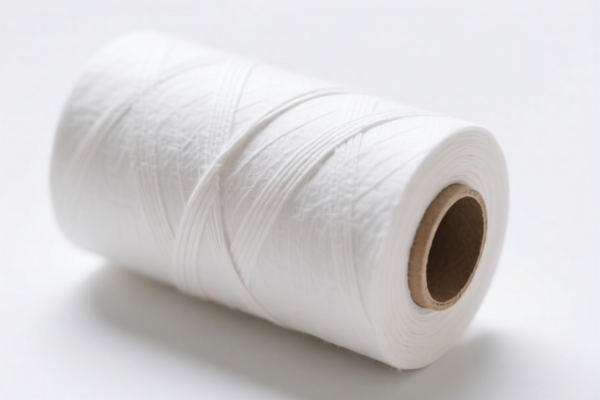
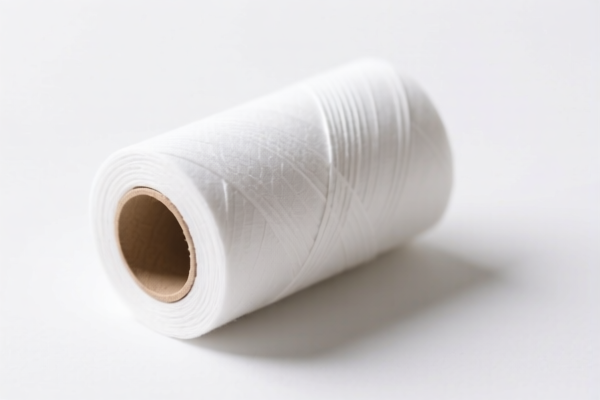
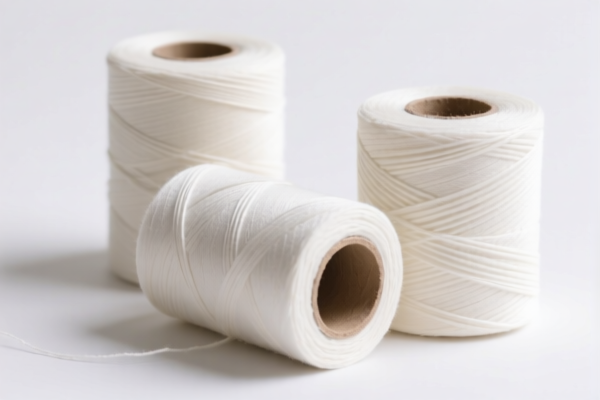
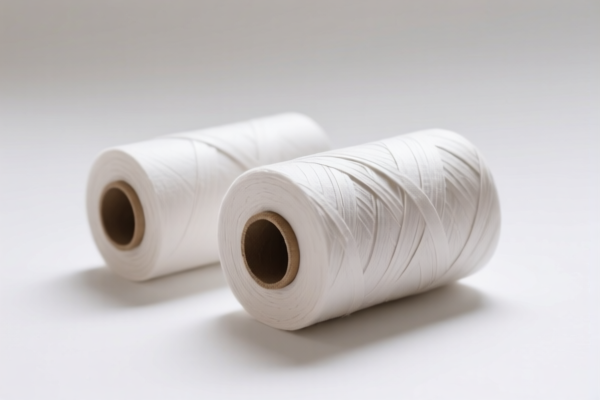
AI Analysis
📜 Cotton Paper Rolls for Certificates (Certificate Grade)
🌐 HS Code Reference & Customs Clearance Guide | 2026 Latest Tariff Analysis | Professional Entry Strategy
📌 I. Product Definition & Classification: What Exactly Are "Cotton Paper Rolls"?
"Cotton Paper" in the context of certificates and high-end stationery rarely refers to paper containing actual cotton fibers in a textile sense, but rather high-quality cellulose-based paper (often alpha-cellulose) known for durability, acid-free properties, and a luxurious texture. However, for customs classification purposes, the key determinants are: 1. Material: Cellulose fibers (paper/pulp). 2. Form: Rolls (unwound). 3. Treatment: Whether it is coated, uncoated, perforated, or printed.
⚠️ Critical Distinction:
- If the paper is uncoated and used for writing, printing, or certificates → Falls under Heading 4802 (Uncoated paper).
- If the paper is cut or processed into specific shapes (not just rolls) or other specific uses → May fall under Heading 4823 (Other paper articles).
- Misclassification Risk: Do not confuse "Cotton Paper" with "Textile Paper" or "Paper Containing Textile Fibers" (Heading 59). It remains Heading 48.
📦 II. HS Code Classification Details (2026 Latest Tariff Authority Comparison)
Based on the provided data, here are the four most likely HS Codes for "Cotton Paper Rolls for Certificates":
| HS Code | Product Description | Application Scenario | Key Classification Logic |
|---|---|---|---|
| 4802.55.70.20 | Other paper, mainly consisting of fibers of the fiber type specified in heading 48.02, other than paper of heading 48.01 or 48.03; uncoated; weighing more than 40 g/m²; containing 25% or more by weight of cotton fibers | High-end certificate paper, banknote paper, archival paper | Material Match: Explicitly mentions "Cotton" content. If the paper truly contains ≥25% cotton fiber, this is the most precise fit. |
| 4802.20.40.20 | Paper and paperboard, uncoated, of a kind used for writing, printing or other graphic purposes, in rolls | General certificate paper, official documents, legal papers | Form Match: "Rolls" + "Uncoated" + "Writing/Printing use". Assumes standard cellulose paper often marketed as "cotton feel." |
| 4817.20.40.00 | Envelopes, letter cards, plain postcards and correspondent cards, of paper or paperboard; other articles of paper or paperboard, of a kind used for office, stationery or commercial purposes, other than those of heading 48.16 or 48.17 | Stationery supplies, pre-printed certificate forms, business correspondence | Usage Match: If the rolls are intended for immediate use in stationery or office commercial purposes rather than blank raw material. |
| 4823.90.67.00 | Other paper, paperboard, cellulose wadding and webs of cellulose fibers, cut to size or shape; other articles of paper | Cut certificates, special format paper, other processed paper products | General Match: If the paper is not clearly defined by 4802/4817, this "Other" category is used. Suitable for non-standard rolls or mixed materials. |
| 4823.90.86.80 | Other paper, paperboard, cellulose wadding and webs of cellulose fibers, cut to size or shape; other articles of paper | Similar to above, specific sub-category for other cellulose articles | Material Match: Focuses on "Cellulose fiber web" without specific coating or printing attributes. |
🔍 Key Insight:
- 4802.55.70.20 is the "Best Fit" IF the paper genuinely contains ≥25% cotton fibers.
- 4802.20.40.20 is the "Safe Fit" for standard uncoated cellulose paper rolls used for certificates (where "cotton" is a texture/marketing term, not a fiber composition).
- 4817.20.40.00 is used if the product is considered stationery/commercial office supplies rather than raw paper.
💰 III. 2026 Latest Tariff Rate Breakdown (Including Surcharges, Policy Add-ons)
✅ Applicable Country: United States (US)
✅ Origin: China (CN)
✅ Effective Date: November 10, 2025 (and subsequent imports)
🎯 1. All Listed HS Codes (4802.55.70.20, 4802.20.40.20, 4817.20.40.00, 4823.90.67.00, 4823.90.86.80)
| Item | Content |
|---|---|
| Base Tariff | 0% (Ad Valorem) |
| USITC Section 301 Surcharge | +25% (From USITC Footnote 9903.88.01 / Section 301 List 4A) |
| IEEPA Surcharge | +10% (Targeting Chinese/HK products, effective Nov 10, 2025) |
| Total Tariff Rate | 35.0% |
| Tax Calculation | CIF Value × 35% |
| De Minimis Exemption Available? | ❌ NO (Deny de minimis for Section 301 & IEEPA goods) |
| Legal Basis Path | IEEPA:9903.01.25 → IEEPA:9903.01.24 → USITC:48xx.xx.xx.xx → FOOTNOTE:9903.88.01 |
📌 Explanation:
- "USITC Surcharge 25%": From the U.S. Trade Act Section 301 investigation against China. Paper products are included in the tariff lists.
- "IEEPA 10%": Additional levy under the International Emergency Economic Powers Act, specifically targeting certain Chinese goods starting from late 2025.
- Total 35%: This is a significant cost factor. Even though the base tariff is 0%, the effective duty is 35%.
- No De Minimis: Unlike some electronics, paper products from China are not exempt from the $800 de minimis threshold if they fall under these Section 301/IEEPA codes.
🛠️ IV. Customs Clearance Practical Advice (实战避坑指南)
✅ 1. Required Documentation Checklist (Non-negotiable)
| Document | Required | Explanation |
|---|---|---|
| ✅ Product Specification Sheet | ✔️ | Must specify: Fiber content (e.g., "100% Alpha Cellulose" or "25% Cotton"), GSM (weight), coating status (uncoated/coated), dimensions. |
| ✅ Commercial Invoice | ✔️ | Must clearly state: "Cotton Paper Rolls for Certificates," HS Code, Origin: China. |
| ✅ Packing List | ✔️ | Detail net/gross weight, number of rolls, dimensions per roll. |
| ✅ Certificate of Origin (CO) | ✔️ | To prove Chinese origin (triggers the 35% tax). If transshipped from Vietnam/Malaysia, ensure no substantial transformation occurred. |
| ✅ Material Composition Statement | ✔️ | Critical for distinguishing between 4802.55 (Cotton content) vs 4802.20 (Cellulose). Misstatement can lead to penalties. |
| ✅ Third-Party Test Report | ✔️ | Recommended: ISO certification for acid-free/archival quality, or fiber analysis report if claiming "Cotton" content. |
✅ 2. Declaration Tips (Key Mantras)
🔥 “Fiber Content is King, Form is Queen, Origin is the Trigger!”
| Scenario | Correct Declaration | Wrong Practice |
|---|---|---|
| Paper contains ≥25% Cotton | HS: 4802.55.70.20 |
Declaring as 4802.20 to avoid scrutiny → Risk of Audit |
| Paper is 100% Cellulose (Marketing "Cotton") | HS: 4802.20.40.20 |
Declaring as "Cotton" without proof → Customs Rejection |
| Coated/Glossy Certificate Paper | HS: 4810.13 or 4810.19 (Not in provided list, but check!) |
Declaring as Uncoated (4802.20) → Penalty for Misclassification |
| Pre-printed Certificates | HS: 4821.10 (Printed labels/sheets) |
Declaring as blank rolls → Smuggling Suspicion |
| Small Samples (<$800) | Still subject to 35% | Assuming "De Minimis" exemption → Detained at Border |
✅ 3. Special Case Handling
| Scenario | Handling Advice |
|---|---|
| OEM Custom Certificates | Provide Blank Rolls description. If pre-printed, declare as printed articles. Do not mix blank and printed in one shipment without clear breakdown. |
| "Cotton" vs. "Cellulose" | If the paper is chemically treated cellulose (not actual cotton fiber), declare as Cellulose. Only declare "Cotton" if there is a lab report confirming ≥25% cotton fiber content. |
| Transshipment from Southeast Asia | Ensure Substantial Transformation occurred. Merely repacking rolls in Vietnam/Malaysia will still trigger Chinese Origin tariffs. |
| Small Quantity Samples | Even under $800, declare truthfully. The 35% tax applies. Consider if the sample cost justifies the duty + clearance fees. |
🌍 V. Global Market Customs Comparison (2026 Latest)
| Country/Region | Recommended HS Code | Tariff Rate (China Origin) | Certification/Requirement | Notes |
|---|---|---|---|---|
| 🇺🇸 USA | 4802.55.70.20 or 4802.20.40.20 |
35% (25% Sec 301 + 10% IEEPA) | No special certification | High cost. No de minimis. |
| 🇨🇳 China | 4802.55.70.20 |
5% - 10% (Import Duty) | None | Lower tax for imports. |
| 🇪🇺 EU | 4802.55 or 4802.20 |
4.2% - 6.5% (Standard MFN) | REACH Compliance | No Section 301 equivalent. |
| 🇬🇧 UK | 4802.55 or 4802.20 |
4.2% - 6.5% | UKCA/CE (if applicable) | Post-Brexit tariff aligns with EU. |
| 🇯🇵 Japan | 4802.55 or 4802.20 |
0% - 3% | JIS Certification (optional) | Free trade agreement benefits if applicable. |
📌 Conclusion:
- The USA is the most expensive market for Chinese paper products due to the 35% combined tariff.
- Europe, UK, Japan have significantly lower tariffs (0-6.5%).
- For US-bound shipments, cost-benefit analysis is crucial. Consider pricing strategies to absorb the 35% duty or explore supply chain adjustments.
📌 VI. Common Errors & Pitfalls (Blood Lessons)
❌ Error 1: Claiming "Cotton Paper" for 100% Wood Pulp Paper
👉 Consequence: Customs demands fiber analysis report. Delay in clearance, potential fine for false declaration.
❌ Error 2: Assuming "De Minimis" Exemption for Small Rolls
👉 Consequence: Package detained. Duty + storage fees charged. Section 301 goods are NOT exempt under $800.
❌ Error 3: Misclassifying Coated Paper as Uncoated
👉 Consequence: Incorrect HS Code (4802 vs 4810). Penalty for misclassification and back-tariff.
❌ Error 4: Ignoring IEEPA 10% Surcharge
👉 Consequence: Under-declaring tax by 10%. Customs audit reveals omission. Back-tariff + Interest + Penalty.
✅ Correct Approach:
"Uncoated Paper Rolls, Cellulose-based, White, 120gsm, for Certificate Printing, Model XYZ, Origin: China"
🎯 VII. Conclusion: Professional Declaration, Cost Control, Efficiency!
🎯 Remember the Mantra:
🔹 "Fiber Content Dictates HS Code, Origin Dictates Tax Rate, Form Dictates Sub-heading!"
🔹 "35% Duty is Real, Don't Rely on De Minimis, Accurate Declaration Saves Money!"
📌 Pro Tip:
If your paper product is high-value (e.g., security paper for banknotes), ensure you have strong documentation (fiber analysis, security features) to justify the specific HS Code. For standard certificate paper, 4802.20.40.20 is often the safest and most common classification, avoiding the complexity of proving cotton content.
📣 Immediate Action:
📞 Contact a Licensed Customs Broker + Provide Product Photos + Material Spec Sheet
🚀 Let Your Certificates Clear Customs Smoothly, Avoid Delays, and Protect Your Margins!
✨ Professional Clearance Starts with Accurate Classification!
💼 Every Percent of Tax Matters!
Customer Reviews
About HS Code Classification
The Harmonized System (HS) is an internationally standardized nomenclature developed by the World Customs Organization (WCO) to classify traded products. Over 200 countries use the HS system as the basis for customs tariffs, trade statistics, and import/export regulations.
Each HS code follows a hierarchical structure:
- Chapter (2 digits) — Broad category of goods (e.g., Chapter 84: Machinery and Mechanical Appliances)
- Heading (4 digits) — More specific grouping within the chapter
- Subheading (6 digits) — Internationally standardized breakdown, used by all WCO member countries
- National subdivisions (8-10 digits) — Country-specific extensions for further classification, such as US HTSUS 10-digit codes
Correct HS code classification is essential for smooth customs clearance, accurate duty payment, and compliance with trade regulations. Misclassification can lead to customs delays, overpayment of duties, or penalties.
When importing from CN to US, the applicable tariff rates may include:
- Most-Favored-Nation (MFN) rate — The standard duty rate applied to WTO members
- General rate — Applied to countries without trade agreements
- Trade remedy duties — Additional tariffs such as Section 301 (anti-dumping), Section 232 (national security), or countervailing duties
The information provided on this page is for reference purposes only. For official classification, please consult with your local customs authority or a licensed customs broker.