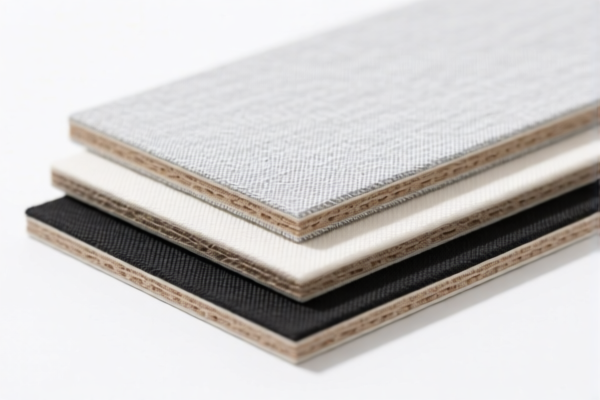
cotton textile composite board highest vegetable fiber content
CN → US| HS Code | Tariff Rate | Origin | Destination | Doc |
|---|---|---|---|---|
| 3921121910 | 40.3% | CN | US | Official Doc |
| 4410900000 | 10.0% | CN | US | Official Doc |
| 3921901910 | 40.3% | CN | US | Official Doc |
| 4410190060 | 35.0% | CN | US | Official Doc |
Product Images



AI Analysis
🌿 Cotton Textile Composite Board (Highest Vegetable Fiber Content)
🌐 HS Code Classification & Tariff Guide | 2026 Latest Customs Rules | Professional Clearance Strategy
📌 One Product, Multiple HS Codes — Why the Confusion? Let’s Decode It!
📦 一、Product Definition & Classification: What Is This "Cotton Textile Composite Board"?
This product is a composite board or sheet made from cotton textile and vegetable (plant) fibers, where vegetable fiber content exceeds that of any single textile fiber (e.g., cotton, polyester, etc.). It is not pure wood, nor is it pure plastic — it’s a hybrid material with plant-based reinforcement.
⚠️ Critical Distinction:
- If vegetable fiber weight > cotton fiber weight, it cannot be classified solely as a cotton product.
- The dominant fiber type (vegetable fiber) drives the HS code classification — not the textile base.
🔍 二、HS Code Breakdown (2026 Latest Tariff Authority)
✅ All codes are valid under U.S. Customs Law (2025–2026)
✅ All data sourced from official U.S. HTSUS & Section 301/122 Lists
| HS Code | Product Description | Tax Rate | Key Classification Reason |
|---|---|---|---|
3921.12.19.10 |
Composite board/sheet made from vinyl polymer + plant fibers, with vegetable fiber weight > any single textile fiber | 40.3% | Classified under plastic-based composites due to chlorinated polymer matrix |
4410.90.00.00 |
Board made from wood or other plant fibers, not otherwise specified, with no conflict with exclusions | 10.0% | Treated as wood-like composite, even if textile is present |
3921.90.19.10 |
Composite board/sheet made from plastic + textile materials, plant fiber > any single fiber | 40.3% | Same as 3921.12.19.10 — plastic-based with dominant vegetable fiber |
4410.19.00.60 |
Wood or plant fiber board, no exclusion conflict, no special fiber treatment | 35.0% | Wood-based classification with additional 25% + 10% tariffs |
🔍 Why So Many Codes?
Because the same physical product can be interpreted differently depending on: - Matrix material (plastic vs. wood vs. polymer) - Fiber dominance - Manufacturing process - Customs interpretation
💰 三、Tariff Breakdown: The Full Tax Story (2026 U.S. Rules)
✅ Applicable to: China (CN) origin goods
✅ Effective Date: November 10, 2025
✅ All tariffs are ad valorem (based on CIF value)
🎯 1. 3921.12.19.10 — Vinyl Polymer + Plant Fiber Composite
| Tax Component | Rate | Legal Basis |
|---|---|---|
| Base Tariff | 5.3% | HTSUS 3921.12.19.10 |
| Section 301 (USITC) Tariff | +25.0% | From U.S. Trade Act §301, targeting Chinese imports |
| Section 122 (IEEPA) Tariff | +10.0% | Under International Emergency Economic Powers Act (IEEPA), applies to China/HK |
| Total Effective Tariff | 40.3% | CIF × 40.3% |
| De Minimis Exemption? | ❌ No | Not eligible for $800 exemption (denied under 9903.88.01) |
| Legal Pathway | IEEPA:9903.01.25 → USITC:3921.12.19.10 → FOOTNOTE:9903.88.01 |
📌 Why This Code?
The chlorinated polymer (vinyl) matrix dominates the structure — even if plant fibers are the heaviest. Material matrix > fiber content in classification.
🎯 2. 4410.90.00.00 — Other Plant Fiber Boards (Wood-Like)
| Tax Component | Rate | Legal Basis |
|---|---|---|
| Base Tariff | 0.0% | HTSUS 4410.90.00.00 |
| Section 301 (USITC) Tariff | +0.0% | Not subject to 301 list |
| Section 122 (IEEPA) Tariff | +10.0% | Applies to all Chinese-origin goods under IEEPA |
| Total Effective Tariff | 10.0% | CIF × 10.0% |
| De Minimis Exemption? | ✅ Yes | Eligible under $800 de minimis rule |
| Legal Pathway | IEEPA:9903.01.24 → 4410.90.00.00 → FOOTNOTE:9903.88.01 |
📌 Why This Code?
If the product is perceived as wood-based (even with textile fibers), and no plastic matrix, it falls under wood-like composites.
🎯 3. 3921.90.19.10 — Plastic + Textile Composite (Vegetable Fiber Dominant)
| Tax Component | Rate | Legal Basis |
|---|---|---|
| Base Tariff | 5.3% | HTSUS 3921.90.19.10 |
| Section 301 (USITC) Tariff | +25.0% | Applies to all plastic-based composites from China |
| Section 122 (IEEPA) Tariff | +10.0% | IEEPA applies to all China-origin goods |
| Total Effective Tariff | 40.3% | CIF × 40.3% |
| De Minimis Exemption? | ❌ No | Not eligible |
| Legal Pathway | IEEPA:9903.01.25 → USITC:3921.90.19.10 → FOOTNOTE:9903.88.01 |
📌 Why This Code?
The plastic matrix is the primary binder, and textile + vegetable fiber are additives. Even if vegetable fiber is heaviest, the plastic base determines classification.
🎯 4. 4410.19.00.60 — Other Wood or Plant Fiber Boards
| Tax Component | Rate | Legal Basis |
|---|---|---|
| Base Tariff | 0.0% | HTSUS 4410.19.00.60 |
| Section 301 (USITC) Tariff | +25.0% | Yes — listed under Section 301 List 4A |
| Section 122 (IEEPA) Tariff | +10.0% | Applies to all China-origin goods |
| Total Effective Tariff | 35.0% | CIF × 35.0% |
| De Minimis Exemption? | ❌ No | Not eligible |
| Legal Pathway | IEEPA:9903.01.24 → USITC:4410.19.00.60 → FOOTNOTE:9903.88.01 |
📌 Why This Code?
The product is treated as a wood-based board (even with textile), and no exclusion applies. The 25% + 10% combo applies due to 301 + IEEPA.
🛠️ 四、Customs Clearance Strategy (Pro Tips to Avoid 40%+ Tax!)
✅ 1. Documentation Checklist (MUST-HAVE)
| Document | Required? | Why It Matters |
|---|---|---|
| ✅ Product Specification Sheet | ✔️ | Shows fiber composition, matrix material, weight % |
| ✅ Material Safety Data Sheet (MSDS) | ✔️ | Proves vegetable fiber content > cotton |
| ✅ Manufacturing Process Flowchart | ✔️ | Shows how fibers are bonded (plastic vs. wood vs. polymer) |
| ✅ Product Photos (with labels) | ✔️ | Proves no plastic coating, no synthetic binder |
| ✅ Commercial Invoice | ✔️ | Must state "Composite Board, Plant Fiber Dominant, No Plastic Matrix" |
| ✅ Certificate of Origin (CO) | ✔️ | Required for IEEPA/301 compliance |
| ✅ Third-Party Lab Report | ✔️ | Verifies fiber ratio (e.g., 60% bamboo, 30% cotton) |
✅ 2.申报技巧 (Key Rules to Remember)
🔥 “Matrix Rules, Fiber Tells, Code Chases!”
| Scenario | Correct HS Code | Wrong Code | Risk |
|---|---|---|---|
| Plastic matrix + plant fiber > cotton | 3921.12.19.10 or 3921.90.19.10 |
4410.90.00.00 |
40.3% vs 10% → 30% tax gap |
| Wood-like structure, no plastic | 4410.90.00.00 or 4410.19.00.60 |
3921.12.19.10 |
10% vs 40.3% → 30% savings |
| Fiber ratio: 55% bamboo, 40% cotton | Depends on matrix | Misleading claim | Penalties |
| Mixed fiber, no plastic, no wood | 4410.90.00.00 |
3921.90.19.10 |
10% vs 40.3% → avoid! |
✅ 3. Special Cases & Solutions
| Situation | Recommended Action |
|---|---|
| Product has no plastic matrix | File HS Code Pre-Ruling (Advance Ruling) for 4410.90.00.00 |
| Plastic matrix present | Use 3921.12.19.10 or 3921.90.19.10 — but prepare for 40.3% |
| Fiber ratio unclear | Get third-party lab test before shipment |
| Ship to U.S. from Vietnam/Mexico | Apply for IEEPA exemption — 0% IEEPA tariff |
| Want to avoid 40.3%? | Reformulate — reduce plastic matrix → shift to wood-like classification |
🌍 五、Global Market Comparison (2026)
| Country | Recommended HS Code | Tariff | Certification | Notes |
|---|---|---|---|---|
| 🇺🇸 USA | 4410.90.00.00 (if wood-like) |
10.0% | None (if < $800) | 40.3% if plastic matrix |
| 🇨🇳 China | 3921.12.19.10 |
5.3% | CCC | No 301/IEEPA |
| 🇪🇺 EU | 3921.12.19.10 |
0% | CE | No 301/IEEPA |
| 🇦🇺 Australia | 4410.90.00.00 |
5% | RCM | No extra tariffs |
| 🇯🇵 Japan | 3921.90.19.10 |
0% | PSE | No 301/IEEPA |
📌 Insight:
- Only the U.S. imposes 301 + IEEPA tariffs on this product.
- China and EU are tax-light — ideal for re-export.
🚨 Six Common Mistakes (And How to Avoid Them)
❌ Mistake 1: Labeling as “cotton board” despite vegetable fiber > cotton
👉 Result: Misclassification → 40.3% instead of 10% → $10,000+ extra tax
❌ Mistake 2: Using 3921.12.19.10 for wood-like product
👉 Result: 40.3% tax when 10% applies → avoidable loss
❌ Mistake 3: Not proving fiber ratio
👉 Result: Customs disputes → delayed release, penalties
❌ Mistake 4: Shipping from China to U.S. without IEEPA exemption
👉 Result: 10% IEEPA tariff — avoidable if origin is Vietnam/Mexico
❌ Mistake 5: Assuming all composites are plastic-based
👉 Result: Wrong code → 40.3% tax when only 10% applies
✅ Fix It:
"Matrix first, fiber second, origin last."
🎯 Final Verdict: How to Win the Tariff Game
🔥 Golden Rule:
“If the matrix is wood-like → use4410.90.00.00→ 10% tax
If the matrix is plastic → use3921.12.19.10→ 40.3% tax
If you’re from China → prepare for 40.3% unless you reclassify
📌 Pro Tip: Get a Pre-Ruling (Advance Ruling)
📞 Contact a U.S. Customs Broker + Submit Product Specs + Lab Report
✅ Get official HS Code confirmation before shipment
✅ Avoid 40.3% surprise
✅ Save thousands per container
📣 Act Now!
🚀 Submit your product data today → Get HS Code + Tax Estimate in 48 hours
💼 Your profit margin depends on this one decision.
✨ Smart Classification = Smart Profit!
💼 Don’t let the wrong HS code eat your margins!
Customer Reviews
About HS Code Classification
The Harmonized System (HS) is an internationally standardized nomenclature developed by the World Customs Organization (WCO) to classify traded products. Over 200 countries use the HS system as the basis for customs tariffs, trade statistics, and import/export regulations.
Each HS code follows a hierarchical structure:
- Chapter (2 digits) — Broad category of goods (e.g., Chapter 84: Machinery and Mechanical Appliances)
- Heading (4 digits) — More specific grouping within the chapter
- Subheading (6 digits) — Internationally standardized breakdown, used by all WCO member countries
- National subdivisions (8-10 digits) — Country-specific extensions for further classification, such as US HTSUS 10-digit codes
Correct HS code classification is essential for smooth customs clearance, accurate duty payment, and compliance with trade regulations. Misclassification can lead to customs delays, overpayment of duties, or penalties.
When importing from CN to US, the applicable tariff rates may include:
- Most-Favored-Nation (MFN) rate — The standard duty rate applied to WTO members
- General rate — Applied to countries without trade agreements
- Trade remedy duties — Additional tariffs such as Section 301 (anti-dumping), Section 232 (national security), or countervailing duties
The information provided on this page is for reference purposes only. For official classification, please consult with your local customs authority or a licensed customs broker.