cotton woven handbag minimalist
CN → US| HS Code | Tariff Rate | Origin | Destination | Doc |
|---|---|---|---|---|
| 6305200000 | 23.7% | CN | US | Official Doc |
| 4202224020 | 42.4% | CN | US | Official Doc |
| 6305900000 | 23.7% | CN | US | Official Doc |
| 4202228930 | 52.6% | CN | US | Official Doc |
Product Images
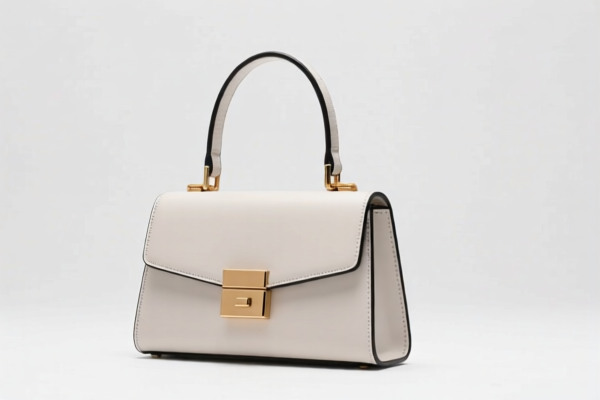
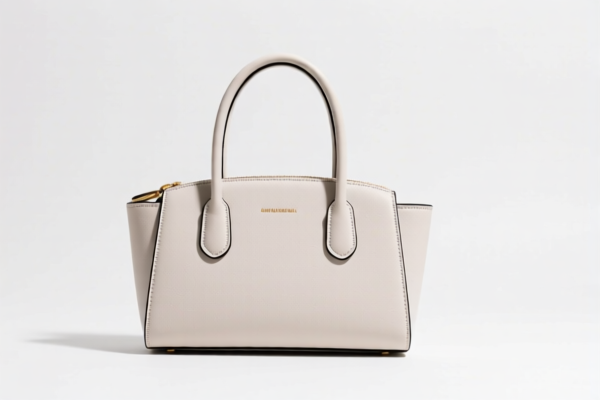
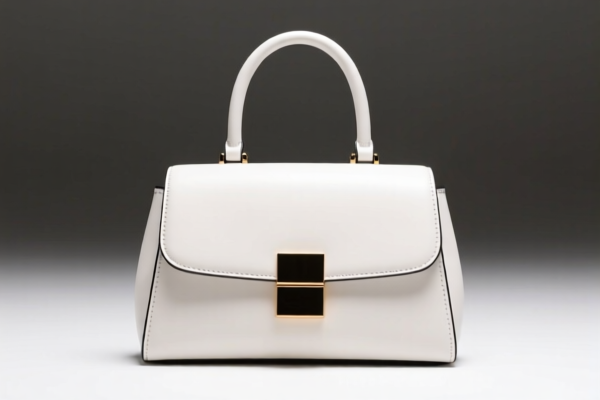
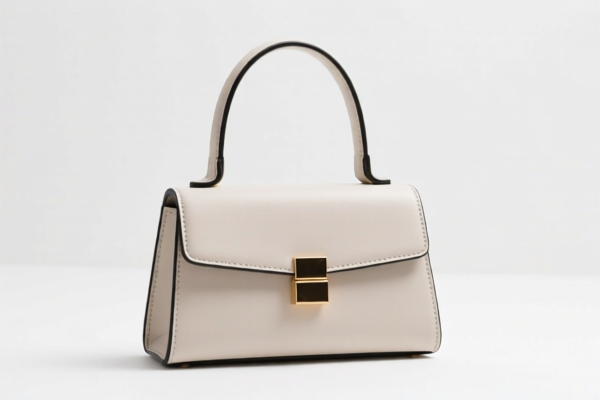
AI Analysis
🛍️ Cotton Woven Handbag - Minimalist (纯棉面料手提包,极简风格)
🌐 HS Code Classification & Customs Clearance Guide | 2026 Latest Tariff Analysis | Strategic Import Strategy
📌 Part I: Product Definition & Classification Nuances
The Cotton Woven Handbag (Minimalist) is a versatile accessory categorized under textile or leather articles, depending on its specific structural composition and material definition. In international trade, the classification hinges on:
1. Material Composition:
- Pure Cotton (100% Cotton): Falls under Chapter 63 (Made-up textile articles) or Chapter 42 (Articles of leather, if considered similar to leather goods).
- Textile Surface: If the outer surface is textile (cotton), it may be classified under Chapter 42 if deemed an article of leather/textile combination.
2. Form & Function:
- Bag/Handbag: Must maintain a recognizable bag shape, often with handles, zippers, or closures.
- Minimalist Design: Does not affect HS classification but ensures it is not classified as a "backpack" or "suitcase."
⚠️ Critical Distinction:
- If the bag is purely cotton and fits the definition of a "made-up textile article" → Chapter 63
- If the bag has a textile outer surface but is considered an "article of leather" due to structure/trim → Chapter 42
- Misclassification Risk: Declaring a cotton bag as "leather" (Chapter 42) when it is textile (Chapter 63) can lead to higher duties or customs rejection.
📦 Part II: HS Code Breakdown (2026 Latest Tariff Schedule)
| HS Code | Product Description | Applicable Scenario | Tax Rate |
|---|---|---|---|
6305.20.00.00 |
Pure cotton fabric handbag, shape: bag, material: cotton | Pure cotton woven handbag, minimalistic design, textile-focused | 23.7% |
4202.22.40.20 |
Handbag with textile outer surface, made of cotton | Textile surface cotton handbag, often with leather-like structure | 42.4% |
6305.90.00.00 |
Other textile material bags, shape: handbag | Other textile handbags (not pure cotton or mixed) | 23.7% |
4202.22.89.30 |
Handbag with textile outer surface, material: pure cotton | High-end cotton handbag with structural elements resembling leather goods | 52.6% |
🔍 Key Insight:
- Chapter 63 (6305) generally applies to pure textile bags (cotton) with lower duties (23.7%).
- Chapter 42 (4202) applies to textile-surface bags classified as "leather-like" goods, with higher duties (42.4% – 52.6%).
- Choice matters: Declaring under Chapter 63 saves ~18.7%–28.9% in duties compared to Chapter 42.
💰 Part III: 2026 Tariff Rate Breakdown (Including Surtaxes & Policy Surcharges)
✅ Applicable Country: United States (US)
✅ Origin: China (CN)
✅ Effective Date: From November 10, 2025 onwards
🎯 1. 6305.20.00.00 —— Pure Cotton Fabric Handbag
| Item | Content |
|---|---|
| Base Duty Rate | 6.2% (ad valorem) |
| Section 301 Surtax | +7.5% (from USITC Footnote 9903.88.01) |
| IEEPA Surtax | +10% (针对中国/香港产品,自2025年11月10日起) |
| Total Rate | 23.7% |
| Tax Calculation | CIF Value × 23.7% |
| De Minimis Eligible? | ❌ No (deny_de_minimis) |
| Legal Basis Path | IEEPA:9903.01.25 → IEEPA:9903.01.24 → USITC:6305.20.00.00 → FOOTNOTE:9903.88.01 |
📌 Explanation:
- "Base Duty 6.2%" is the standard MFN rate for textile bags.
- "Section 301 Surtax 7.5%" is the additional duty under the US Trade Act Section 301.
- "IEEPA 10%" is the additional duty under the International Emergency Economic Powers Act for Chinese goods.
- Total 23.7% is significantly lower than Chapter 42 rates.
🎯 2. 4202.22.40.20 —— Handbag with Textile Outer Surface (Cotton)
| Item | Content |
|---|---|
| Base Duty Rate | 7.4% |
| Section 301 Surtax | +25.0% |
| IEEPA Surtax | +10% |
| Total Rate | 42.4% |
| Tax Calculation | CIF Value × 42.4% |
| De Minimis Eligible? | ❌ No |
| Legal Basis Path | IEEPA:9901.25 → IEEPA:9903.01.24 → USITC:4202.22.40.20 → FOOTNOTE:9903.88.01 |
📌 Note:
- Higher base duty (7.4%) + higher Section 301 surtax (25%) → Total 42.4%.
- This classification is often used when the bag is marketed as a "luxury" or "structured" handbag with textile but leather-like appearance.
🎯 3. 6305.90.00.00 —— Other Textile Material Bags
| Item | Content |
|---|---|
| Base Duty Rate | 6.2% |
| Section 301 Surtax | +7.5% |
| IEEPA Surtax | +10% |
| Total Rate | 23.7% |
| Tax Calculation | CIF Value × 23.7% |
| De Minimis Eligible? | ❌ No |
| Legal Basis Path | IEEPA:9903.01.25 → IEEPA:9903.01.24 → USITC:6305.90.00.00 → FOOTNOTE:9903.88.01 |
📌 Note:
- Same as6305.20.00.00, applies to other textile bags (not pure cotton or mixed).
- Total 23.7%.
🎯 4. 4202.22.89.30 —— Handbag with Textile Outer Surface (Pure Cotton)
| Item | Content |
|---|---|
| Base Duty Rate | 17.6% |
| Section 301 Surtax | +25.0% |
| IEEPA Surtax | +10% |
| Total Rate | 52.6% |
| Tax Calculation | CIF Value × 52.6% |
| De Minimis Eligible? | ❌ No |
| Legal Basis Path | IEEPA:9903.01.25 → IEEPA:9903.01.24 → USITC:4202.22.89.30 → FOOTNOTE:9903.88.01 |
📌 Note:
- Highest duty rate (52.6%) applies to high-end cotton handbags classified under Chapter 42 with no further sub-category.
- Avoid this classification unless necessary, as it increases costs by ~30% vs. Chapter 63.
🛠️ Part IV: Customs Clearance Practical Advice (Real-World Pitfall Guide)
✅ 1. Required Documentation Checklist (Non-Negotiable)
| Document | Must Provide | Explanation |
|---|---|---|
| ✅ Product Specification Sheet | ✔️ | Material composition, dimensions, closure type, handle type |
| ✅ Material Composition Certificate | ✔️ | Proof of 100% cotton or textile mix |
| ✅ Product Photos (with labels) | ✔️ | Clear images of the bag, including interior/exterior, tags, and brand |
| ✅ Third-Party Test Report | ✔️ | OEKO-TEX, REACH, CPSIA (if applicable) |
| ✅ Commercial Invoice | ✔️ | Must specify "Cotton Handbag" or "Textile Bag," not "Leather Bag" |
| ✅ Certificate of Origin (CO) | ✔️ | For non-Chinese origin, to claim preferential rates |
| ✅ Packing List | ✔️ | Shows relationship between main item and accessories |
✅ 2. Declaration Strategy (Key Tips)
🔥 "Pure Cotton = Chapter 63, Textile-Like = Chapter 42, Declare Accurately, Save 30%!"
| Scenario | Correct Declaration | Wrong Practice |
|---|---|---|
| Pure Cotton Woven Handbag | 6305.20.00.00 or 6305.90.00.00 |
Misdeclare as 4202.22.40.20 → 42.4% |
| Handbag with Leather Trim + Cotton Body | 4202.22.40.20 or 4202.22.89.30 |
Misdeclare as 6305 → 23.7% (but high risk of penalty) |
| Minimalist Cotton Tote | 6305.20.00.00 |
Use vague term "Bag" → Delayed clearance |
| Structured Cotton Handbag | 4202.22.89.30 |
Ignore structural details → Higher duty |
✅ 3. Special Cases Handling
| Case | Handling Advice |
|---|---|
| OEM Custom Cotton Handbag | Provide client order + design sketches to avoid "non-standard" classification |
| Cotton Bag with Metal/Plastic Hardware | Still classified under Chapter 63 if cotton is primary material |
| Cotton Bag for Medical Use | If for non-commercial use, apply for "non-commercial" exemption, but requires proof |
| Cotton Bag for Military/Aerospace | Apply for "special purpose" declaration, but duty reduction is rare |
🌍 Part V: Global Market Clearance Comparison (2026 Latest)
| Country/Region | Recommended HS Code | Tariff | Certification Requirements | Notes |
|---|---|---|---|---|
| 🇺🇸 USA | 6305.20.00.00 |
23.7% (China origin) | OEKO-TEX + CPSIA (if applicable) | 42.4%–52.6% if misclassified as Chapter 42 |
| 🇨🇳 China | 6305.20.00.00 |
5% | None | No additional surtax |
| 🇪🇺 EU | 6305.20.00.00 |
4% (if under quota) | CE + REACH | No additional surtax |
| 🇦🇺 Australia | 6305.20.00.00 |
5% | None | No additional surtax |
| 🇯🇵 Japan | 6305.20.00.00 |
4% | PSE (if applicable) | No additional surtax |
📌 Conclusion:
- USA is the only market with high additional surtaxes (23.7%–52.6%).
- Chinese-origin cotton handbags face high clearance costs in the US, so accurate classification under Chapter 63 is critical.
- Other markets (EU, AU, JP) have much lower duties (4%–5%).
📌 Part VI: Common Errors & Pitfall Guide (Lessons Learned)
❌ Mistake 1: Declaring a pure cotton bag as a "leather-like handbag" (Chapter 42)
👉 Consequence: Duty jumps from 23.7% to 42.4%–52.6% → Cost increase of ~30%–35%
❌ Mistake 2: Using vague terms like "Bag" or "Tote" in the declaration
👉 Consequence: Customs delays or reclassification → Additional scrutiny & fines
❌ Mistake 3: Not providing material composition certificates
👉 Consequence: Customs cannot verify Chapter 63 eligibility → Delay or rejection
❌ Mistake 4: Using "Cotton Handbag" when the bag has significant leather/PU trim
👉 Consequence: Misclassification → Penalty + back duties
✅ Correct Practice:
"Minimalist Cotton Handbag, 100% Cotton, Woven Fabric, With Metal Zipper Closure, Model XYZ, OEKO-TEX Certified"
🎯 Part VII: Conclusion: Precision in Classification Saves Money!
🎯 Remember the Mantra:
🔹 "Pure Cotton = Chapter 63, Textile-Like = Chapter 42, Declare Accurately, Save 30%!"
🔹 "HS Code determines the duty, a small error costs thousands!"
📌 Pro Tip:
If your cotton handbags are originally from Vietnam, Mexico, Thailand, or Malaysia, you may qualify for IEEPA exemptions, reducing duties to 0%–5%.
It is recommended to apply for Advance Rulings before shipment to avoid clearance risks.
📣 Immediate Action Required:
📞 Contact a professional customs broker + Provide product images + Apply for HS Code Advance Ruling
🚀 Ensure your cotton handbags pass customs smoothly, boost profits, and expand globally!
✨ Professional Customs Clearance Starts with Accurate Classification!
💼 Every cent of cost deserves precise calculation!
Customer Reviews
About HS Code Classification
The Harmonized System (HS) is an internationally standardized nomenclature developed by the World Customs Organization (WCO) to classify traded products. Over 200 countries use the HS system as the basis for customs tariffs, trade statistics, and import/export regulations.
Each HS code follows a hierarchical structure:
- Chapter (2 digits) — Broad category of goods (e.g., Chapter 84: Machinery and Mechanical Appliances)
- Heading (4 digits) — More specific grouping within the chapter
- Subheading (6 digits) — Internationally standardized breakdown, used by all WCO member countries
- National subdivisions (8-10 digits) — Country-specific extensions for further classification, such as US HTSUS 10-digit codes
Correct HS code classification is essential for smooth customs clearance, accurate duty payment, and compliance with trade regulations. Misclassification can lead to customs delays, overpayment of duties, or penalties.
When importing from CN to US, the applicable tariff rates may include:
- Most-Favored-Nation (MFN) rate — The standard duty rate applied to WTO members
- General rate — Applied to countries without trade agreements
- Trade remedy duties — Additional tariffs such as Section 301 (anti-dumping), Section 232 (national security), or countervailing duties
The information provided on this page is for reference purposes only. For official classification, please consult with your local customs authority or a licensed customs broker.