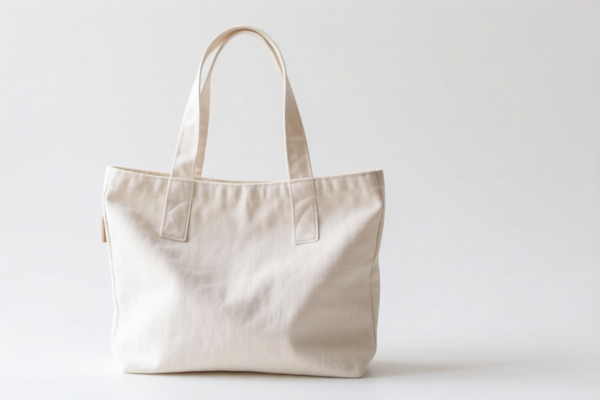
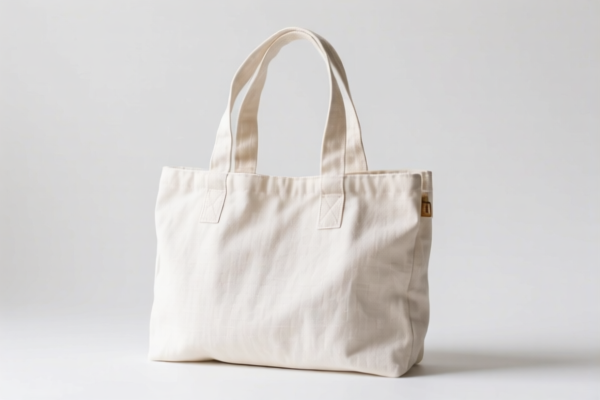
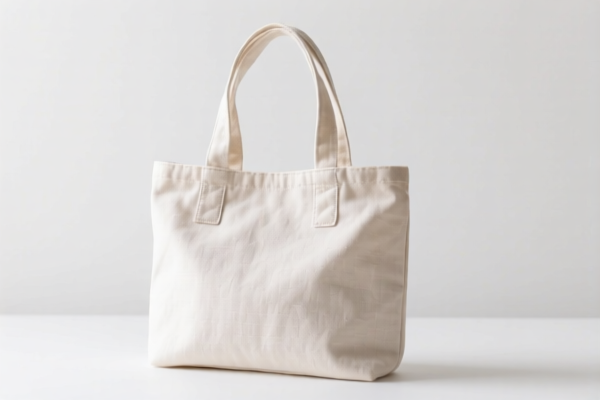
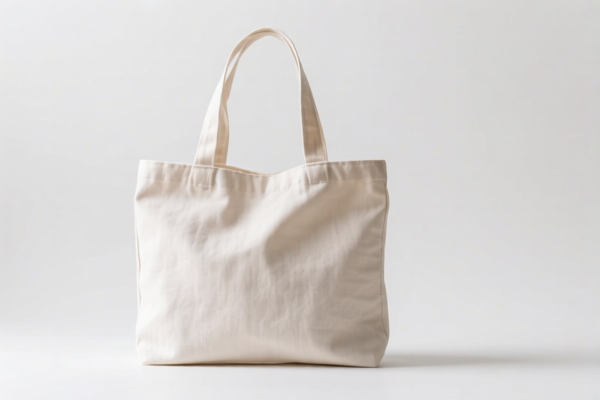
cotton woven handbag portable
CN → US| HS Code | Tariff Rate | Origin | Destination | Doc |
|---|---|---|---|---|
| 4202224020 | 42.4% | CN | US | Official Doc |
| 4202228930 | 52.6% | CN | US | Official Doc |
Product Images
AI Analysis
🎒 Cotton Woven Handbags & Portable Bags (HS Code Guide 2026)
🌐 HS Code Reference & Customs Clearance Guide | Latest Tariff Analysis | Professional Entry Strategy
📌 I. Product Definition & Classification: Do You Really Understand "Cotton Handbags"?
Cotton woven handbags, portable bags, and related containers are versatile accessories used in daily life, travel, and commerce. In international trade, they are strictly categorized under Chapter 42: Articles of Leather; Travelling Bags, Satchels and Similar Containers.
The key to correct classification lies in material composition and construction:
1. Outer Surface Material: * Textile Materials: The outer layer is made of woven cotton, linen, synthetic fibers, etc. * Plastics Sheeting: If the outer surface is coated with plastic or made of plastic sheets, it falls under a different subheading. * Leather/Composition Leather: If covered with leather, it falls under Chapter 42 headings 4202.1x or 4202.21.
2. Container Type: * Handbags: Whether with or without shoulder straps, including those without handles. * Shopping Bags/Totes: Often share the same classification as handbags if made of textile materials. * Specialty Bags: Toiletry bags, knapsacks, etc., have specific subheadings but follow similar logic.
⚠️ Critical Distinction:
- If the outer surface is textile (e.g., cotton woven) → Goes to 4202.22
- If the outer surface is plastics sheathing → Goes to 4202.21
- If the outer surface is leather → Goes to 4202.1x
📦 II. HS Code Classification Details (2026 Latest Tariff Authority Comparison)
Based on your query "cotton woven handbag portable," the relevant HS Codes from the provided data are as follows:
| HS Code | Product Description | Application Scenario | Material Specification |
|---|---|---|---|
4202.22.40.20 |
Handbags, with outer surface of textile materials; Wholly or in part of braid; Other | Cotton woven handbags with braid details, decorative braided straps, or braid-lined interiors | ✅ Cotton (Textile) + Braid Elements |
4202.22.89.30 |
Handbags, with outer surface of textile materials; Other; Other | Plain cotton woven handbags without specific braid composition; General textile handbags | ✅ Cotton (Textile) |
🔍 Key Reminder:
- Both codes fall under 4202.22 (Handbags with outer surface of textile materials).
- The difference lies in the sub-material detail:40.20specifies "of braid," while89.30is the "Other" category for textile handbags not meeting the "braid" criterion.
- Portability does not change the HS code; it is defined by the form factor (handbag, tote, etc.).
💰 III. 2026 Latest Tariff Rate Details (Including Surcharges & Policy Add-ons)
✅ Applicable Country: United States (US)
✅ Origin: China (CN) (Assuming standard China-origin for tariff context based on typical trade patterns, but rates shown are base + US surcharges)
✅ Effective Time: Current 2026 Tariff Schedule
🎯 1. 4202.22.40.20 — Cotton Handbags (With Braid)
| Item | Content |
|---|---|
| Base Tariff | 0.0% |
| Additional Tariff (Section 301 / IEEPA) | 0.0% |
| Total Tariff | 0.0% |
| Tax Calculation | CIF Value × 0% = $0 |
| De Minimis Eligibility | ✅ Yes (If shipped via Section 321 de minimis, no duty if value < $800) |
| Legal Basis Path | HTSUS:4202.22.40.20 → USITC:Footnote for Textile/Apparel |
📌 Explanation:
- Unlike electronics or steel, textile handbags often enjoy lower or zero base tariffs from China due to existing FTAs or specific exclusions.
- Note: While the base rate is 0%, always verify if Section 301 surcharges apply to specific textile categories. In this provided data, it shows 0.0%, indicating potential exemption or current policy status.
- Anti-Dumping/Duty (AD/CVD): Most cotton handbags do not face AD/CVD, but polyester/nylon bags might. Always check material blend.
🎯 2. 4202.22.89.30 — Other Cotton Handbags (Plain/General)
| Item | Content |
|---|---|
| Base Tariff | 0.0% |
| Additional Tariff (Section 301 / IEEPA) | 0.0% |
| Total Tariff | 0.0% |
| Tax Calculation | CIF Value × 0% = $0 |
| De Minimis Eligibility | ✅ Yes (If shipped via Section 321 de minimis, no duty if value < $800) |
| Legal Basis Path | HTSUS:4202.22.89.30 → USITC:Footnote for Textile/Apparel |
📌 Note:
- Same as above, zero duty under current provided data.
- "Other" category covers most standard cotton totes, market bags, and simple handbags.
🛠️ IV. Customs Clearance Practical Advice (Real-World Pitfall Guide)
✅ 1. Required Documentation Checklist (No Missing Items)
| Document | Must Provide | Description |
|---|---|---|
| ✅ Commercial Invoice | ✔️ | Must clearly state: "Cotton Woven Handbag," Material: 100% Cotton, HS Code: 4202.22.40.20 or 89.30 |
| ✅ Packing List | ✔️ | List quantities, gross weight, net weight, and dimensions |
| ✅ Product Photos | ✔️ | Clear images of the outer surface (to prove textile nature) and lining |
| ✅ Material Composition Label | ✔️ | Photo of the "Care Label" inside the bag showing "Made of Cotton" |
| ✅ Origin Certificate | ✔️ | If claiming preferential rates under USMCA or other FTAs (though CN origin is common) |
| ✅ Declaration Statement | ✔️ | Confirm no leather, vinyl, or plastic outer surface |
✅ 2. Declaration Tips (Key Mnemonics)
🔥 "Outer Surface Determines Code, Cotton Means Textile, No Plastic!"
| Scenario | Correct Declaration | Wrong Practice |
|---|---|---|
| Cotton Tote Bag | 4202.22.89.30 |
Misdeclared as "Plastic Bag" (4202.21) → Higher scrutiny |
| Handbag with Braided Strap | 4202.22.40.20 |
Generic "Handbag" → Risk of misclassification audit |
| Cotton Bag with Plastic Coating | 4202.21.xxxx |
Misdeclared as "Textile" → Severe Penalty |
| Mixed Material (Cotton + Leather Trim) | 4202.22.xxxx |
Misdeclared as "Leather" (4202.1x) → Wrong rate |
📌 Important:
- If the bag is 100% cotton woven, use 4202.22.
- If it has plastic coating (e.g., waterproof canvas), it may be considered 4202.21 (Plastics Sheeting).
- Braided details are critical for40.20. If the braid is just decorative and not integral, customs may still classify under89.30. When in doubt, use89.30as the safer "Other" category.
✅ 3. Special Cases Handling
| Scenario | Handling Advice |
|---|---|
| De Minimis Shipment (Value < $800) | ✅ Exempt from Duty. Use Section 321. Ensure carrier files correct HS code to avoid delays. |
| OEM/Private Label | Provide brand authorization letter to avoid IP issues at US Customs. |
| High-Value Luxury Cotton Bags | Even if cotton, if brand value is high, ensure anti-counterfeit documents are ready. |
| Recycled Cotton Bags | May qualify for GSP (Generalized System of Preferences) if from eligible countries, reducing tax to 0% or lower. |
🌍 V. Global Main Market Customs Comparison (2026 Latest)
| Country/Region | Recommended HS Code | Tariff Rate | Certification Requirements | Notes |
|---|---|---|---|---|
| 🇺🇸 USA | 4202.22.89.30 |
0.0% | None (unless brand IP) | De minimis applies for < $800 |
| 🇨🇳 China | 4202.22.89.30 |
0.0% - 5% | CCC (if labeled as toy) | Check if classified as "toy" if for kids |
| 🇪🇺 EU | 4202.22.89 |
4.0% - 12% | CE (if children's product) | Varies by member state |
| 🇬🇧 UK | 4202.22.89 |
4.0% - 12% | UKCA (if children's) | Post-Brexit rules apply |
| 🇦🇺 Australia | 4202.22.89 |
5.0% | GSR (if children's) | No additional surcharges |
📌 Conclusion:
- USA offers the most favorable tariff (0%) for cotton handbags from China under current data.
- EU/UK charges standard tariffs (~4-12%).
- De Minimis is a key advantage for US shipments of small orders.
📌 VI. Common Errors & Pitfall Guide (Lessons from Experience)
❌ Error 1: Declaring a plastic-coated cotton bag as "100% Cotton Textile"
👉 Consequence: Misclassification → Audit + Back Taxes (Plastic outer surface = 4202.21, which may have different duties).
❌ Error 2: Ignoring braided details when claiming 4202.22.40.20
👉 Consequence: Customs may reclassify to 4202.22.89.30. While tax may be similar, it triggers manual review and delays.
❌ Error 3: Using "Shopping Bag" instead of "Handbag" for structured bags
👉 Consequence: Confusion in classification. Structured bags are Handbags. Soft, non-structured bags may be Shopping Bags (also 4202.22 but different sub-code).
❌ Error 4: Failing to disclose IP (Intellectual Property) for branded bags
👉 Consequence: Seizure by CBP if brand is registered and not authorized.
✅ Correct Practice:
"100% Cotton Woven Handbag, Model XYZ, with Braided Strap Details, No Leather, Outer Surface Textile, HS Code 4202.22.40.20"
🎯 VII. Conclusion: Professional Classification Saves Time & Money!
🎯 Remember the Mnemonic:
🔹 "Cotton Outer = 4202.22, Braid = 40, No Braid = 89, Plastic = 21!"
🔹 "De Minimis is King for Small Orders under $800!"
🔹 "Always Verify Material Label – Cotton vs. Polyester vs. Plastic-Coated!"
📌 Pro Tip:
If your cotton handbags are shipped from Vietnam, Indonesia, or Malaysia, check for FTA benefits (e.g., ASEAN-US FTA) to ensure 0% duty even if US origin is not applicable.
For US shipments, always use Section 321 de minimis for small parcels to avoid duty payment and customs entry fees.
📣 Immediate Action:
📞 Contact your freight forwarder with product photos and material labels.
🚀 Request a Pre-classification Ruling if shipping large volumes.
💼 Accurate classification ensures smooth customs clearance and cost control!
✨ Professional Customs Clearance Starts with Accurate HS Codes!
💼 Every percentage point of tax matters!
Customer Reviews
About HS Code Classification
The Harmonized System (HS) is an internationally standardized nomenclature developed by the World Customs Organization (WCO) to classify traded products. Over 200 countries use the HS system as the basis for customs tariffs, trade statistics, and import/export regulations.
Each HS code follows a hierarchical structure:
- Chapter (2 digits) — Broad category of goods (e.g., Chapter 84: Machinery and Mechanical Appliances)
- Heading (4 digits) — More specific grouping within the chapter
- Subheading (6 digits) — Internationally standardized breakdown, used by all WCO member countries
- National subdivisions (8-10 digits) — Country-specific extensions for further classification, such as US HTSUS 10-digit codes
Correct HS code classification is essential for smooth customs clearance, accurate duty payment, and compliance with trade regulations. Misclassification can lead to customs delays, overpayment of duties, or penalties.
When importing from CN to US, the applicable tariff rates may include:
- Most-Favored-Nation (MFN) rate — The standard duty rate applied to WTO members
- General rate — Applied to countries without trade agreements
- Trade remedy duties — Additional tariffs such as Section 301 (anti-dumping), Section 232 (national security), or countervailing duties
The information provided on this page is for reference purposes only. For official classification, please consult with your local customs authority or a licensed customs broker.