craft cork sheets
CN → US| HS Code | Tariff Rate | Origin | Destination | Doc |
|---|---|---|---|---|
| 4504101000 | 35.0% | CN | US | Official Doc |
| 4504105000 | 35.0% | CN | US | Official Doc |
Product Images
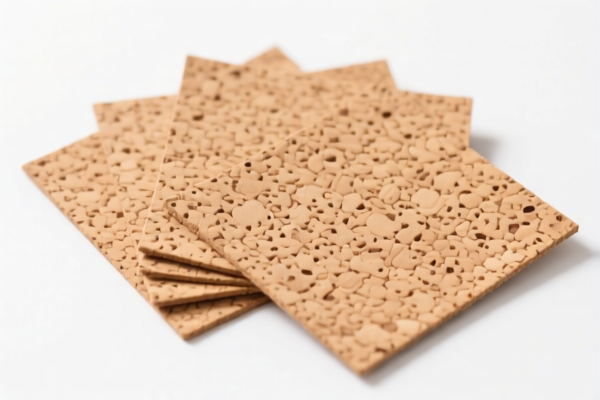
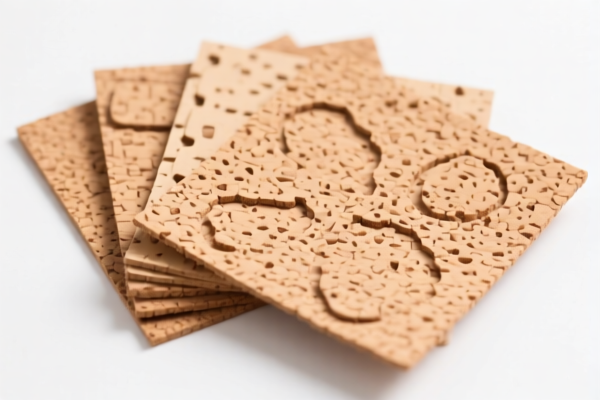
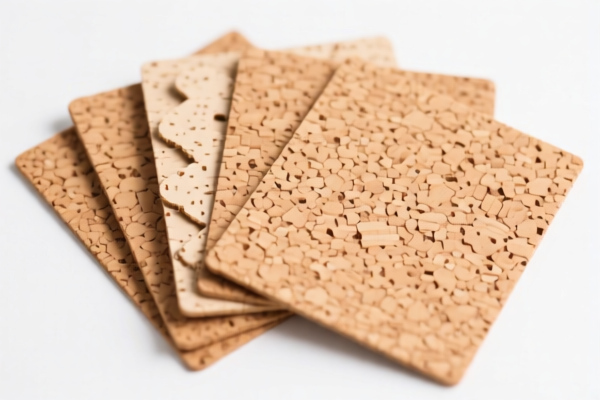
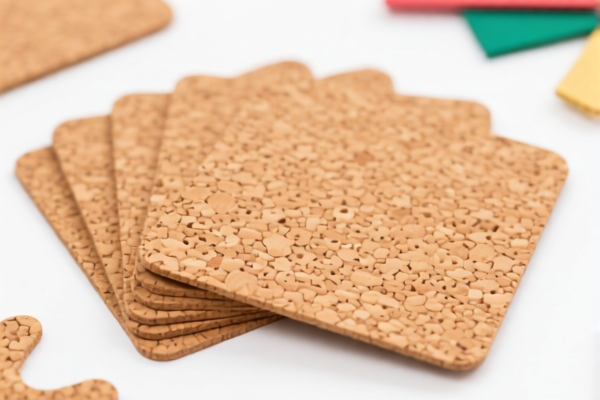
AI Analysis
🌳 Agglomerated Cork Sheets (Craft Cork & Industrial Cork)
🌐 HS Code Reference & Customs Clearance Guide | 2026 Latest Tariff Analysis | Professional Clearance Strategy
📌 I. Product Definition & Classification: Do You Really Understand "Agglomerated Cork"?
Agglomerated cork, often referred to as "reconstituted" or "granulated" cork, is a versatile material made from cork granules bonded together with a natural or synthetic binder. In international trade, "Craft Cork Sheets" specifically fall under the category of Agglomerated Cork (with or without a binding substance) and articles of agglomerated cork.
The classification depends heavily on the composition and form of the product:
Vulcanized Cork-Rubber Sheets:
- Composed wholly of ground or pulverized cork and rubber, vulcanized into solid slabs or sheets.
- Key Identifier: The presence of rubber as a primary binding agent, resulting in a flexible, durable sheet often used for gaskets or seals.
Other Agglomerated Cork Blocks/Plates/Sheets:
- Made primarily from cork granules bound by natural latex, synthetic polymers, or other substances, but not wholly vulcanized cork-rubber.
- Key Identifier: Standard craft cork, insulation boards, flooring tiles, or decorative sheets where cork is the dominant material.
⚠️ Critical Distinction:
- If the sheet is wholly made of vulcanized ground cork and rubber →归入 4504.10.10.00
- If it is standard agglomerated cork (with any other binding or no specific vulcanization) → 归入 4504.10.50.00
📦 II. HS Code Classification Details (2026 Latest Tariff Authority Comparison)
| HS Code | Product Description | Application Scenario | Composition Note |
|---|---|---|---|
4504.10.10.00 |
Vulcanized sheets and slabs wholly of ground or pulverized cork and rubber | Gaskets, sealing rings, anti-vibration pads, industrial flexible sheets | ✅ Wholly Cork + Rubber (Vulcanized) |
4504.10.50.00 |
Other (Blocks, plates, sheets, strip, tiles, solid cylinders) | Craft cork sheets, insulation boards, wine stoppers (bulk), flooring underlayment | ✅ Cork Granules + Binder (Latex/Resin/etc.) |
🔍 Key Reminder:
- "Craft Cork Sheets" for DIY, decoration, or general industrial use are almost always classified under 4504.10.50.00 unless they are explicitly engineered as vulcanized cork-rubber composites. - If the product is described merely as "Cork Sheet" or "Craft Cork" without mention of rubber vulcanization, assume 4504.10.50.00.
💰 III. 2026 Latest Tariff Rate Details (Including Surtaxes & Policy Add-ons)
✅ Applicable Country: United States (US)
✅ Country of Origin: China (CN)
✅ Effective Date: 2025-11-10 (and subsequent imports)
🎯 1. 4504.10.10.00 —— Vulcanized Cork-Rubber Sheets (Wholly)
| Item | Details |
|---|---|
| Basic Tariff | 0% (ad valorem) |
| Section 301 Surcharge | +25% |
| Total Tax Rate | 25.0% |
| Tax Calculation | CIF Value × 25% |
| De Minimis Exemption | ❌ Not Applicable (Denied) |
| Legal Basis Path | USITC:4504.10.10.00 → FOOTNOTE:301_TARIFF |
📌 Explanation:
- Although the base MFN (Most Favored Nation) rate is 0%, the 25% Section 301 surcharge applies to all agglomerated cork products originating from China. - This applies to both vulcanized cork-rubber (4504.10.10.00) and other agglomerated cork (4504.10.50.00).
🎯 2. 4504.10.50.00 —— Other Agglomerated Cork (Standard Craft Sheets)
| Item | Details |
|---|---|
| Basic Tariff | 0% (ad valorem) |
| Section 301 Surcharge | +25% |
| Total Tax Rate | 25.0% |
| Tax Calculation | CIF Value × 25% |
| De Minimis Exemption | ❌ Not Applicable (Denied) |
| Legal Basis Path | USITC:4504.10.50.00 → FOOTNOTE:301_TARIFF |
📌 Note:
- The tariff burden is identical for both subheadings. - Even if the product is low-value craft material, the 25% surcharge remains in force. - No de minimis exemption (under $800) for Chinese-origin goods under Section 301.
🛠️ IV. Customs Clearance Practical Advice (Pitfall Avoidance Guide)
✅ 1. Required Documentation Checklist (None Optional)
| Document | Mandatory? | Notes |
|---|---|---|
| ✅ Product Specification Sheet | ✔️ | Must specify: Material composition (e.g., "100% agglomerated cork" vs. "Cork-Rubber blend"), thickness, density, and binding agent. |
| ✅ Material Safety Data Sheet (MSDS) | ✔️ | Required if any chemical binders or rubber vulcanization agents are used. |
| ✅ Commercial Invoice | ✔️ | Clear description: "Agglomerated Cork Sheets, HS 4504.10.50.00, Origin: China" |
| ✅ Packing List | ✔️ | Detail dimensions and quantity (sheets/rolls). |
| ✅ Certificate of Origin (CO) | ✔️ | Essential to prove origin. If not from China, different rates may apply. |
✅ 2. Declaration Tips (Key Mnemonics)
🔥 “Be Specific on Composition! ‘Cork’ Alone is Not Enough!”
| Scenario | Correct Declaration | Wrong Practice |
|---|---|---|
| Standard Craft Cork | Agglomerated Cork Sheets (Cork + Latex Binder) |
Only stating "Cork Sheets" → Risk of misclassification or delay |
| Cork-Rubber Composite | Vulcanized Cork-Rubber Sheets (Wholly Cork/Rubber) |
Calling it "Cork Sheets" → Might be misclassified as rubber (4008) or cork (4504.10.50) |
| Origin Declaration | Explicitly state "Made in China" | Omitting origin → Triggers anti-dumping reviews or highest applicable rates |
✅ 3. Special Handling Cases
| Case | Handling Advice |
|---|---|
| Mixed Binders | If the product contains cork + non-rubber binders (e.g., PVC, silicone), always use 4504.10.50.00. |
| Natural Cork Planks | Do NOT confuse agglomerated cork with natural cork (4501). Natural cork has different tariffs and rules. |
| Small Samples | Even if value is under $800, de minimis does not apply to Chinese goods under Section 301. Declare fully and pay 25%. |
| Re-export from Vietnam/Mexico | If processed in a third country, ensure substantial transformation occurs to change origin. Simple repackaging does not exempt from 25% surcharge. |
🌍 V. Global Market Clearance Comparison (2026 Latest)
| Country/Region | Recommended HS Code | Tariff (China Origin) | Certification Requirements | Notes |
|---|---|---|---|---|
| 🇺🇸 USA | 4504.10.50.00 |
25% (Total) | None specific | Section 301 applies. No de minimis. |
| 🇨🇳 China | 4504.10.50.00 |
~5-10% (Import) | None | Low import duty for raw materials. |
| 🇪🇺 EU | 4504.10.50 |
0-5% | FSC Certification (Optional but recommended) | Sustainable sourcing proof helps. |
| 🇬🇧 UK | 4504.10.50 |
0% | UKCA (if applicable) | Post-Brexit rules may vary; check latest. |
| 🇯🇵 Japan | 4504.10.50 |
3-5% | None | Low tariff, stable market. |
📌 Conclusion:
- The US is the most challenging market due to the 25% Section 301 surcharge. - No duty-free entry for small packages from China. - EU and Japan offer more favorable conditions, with potential for 0% or low tariffs.
📌 VI. Common Mistakes & Pitfall Guide (Lessons from Reality)
❌ Mistake 1: Assuming "Craft Cork" is natural cork (4501)
👉 Consequence: Misclassification leads to incorrect HS Code, potential fines, and cargo delays. Natural cork has different tariffs.
❌ Mistake 2: Ignoring the 25% Surcharge for US Imports
👉 Consequence: Underestimating landed cost by 25% → Profit margin erosion.
❌ Mistake 3: Using "De Minimis" for Small Shipments from China
👉 Consequence: Packages seized or held by CBP. Section 301 goods are explicitly excluded from de minimis.
❌ Mistake 4: Not Specifying "Agglomerated" on Invoice
👉 Consequence: Customs may classify as raw cork or rubber, leading to audits.
✅ Correct Practice:
"Agglomerated Cork Sheets, 2mm Thick, Bound with Natural Latex, HS 4504.10.50.00, Made in China, CIF $X,000"
🎯 VII. Conclusion: Professional Declaration, Cost Control, Efficiency!
🎯 Remember the Mnemonic:
🔹 "Agglomerated Cork? 25% US Tax!"
🔹 "No De Minimis for China! Declare Fully!"
🔹 "Specify Composition: Cork vs. Cork-Rubber!"
📌 Pro Tip:
If your cork sheets are originating from Vietnam, Mexico, or Cambodia (and not just transshipped), you may qualify for lower or zero tariffs in the US. Ensure your supply chain documents clearly prove substantial transformation in the third country.
📣 Immediate Action:
📞 Consult a licensed customs broker for Advance Rulings if your product composition is complex (e.g., mixed binders).
🚀 Accurate classification saves money. Don't guess!
✨ Professional Clearance Starts with Precise Classification!
💼 Every dollar saved is a dollar earned!
Customer Reviews
About HS Code Classification
The Harmonized System (HS) is an internationally standardized nomenclature developed by the World Customs Organization (WCO) to classify traded products. Over 200 countries use the HS system as the basis for customs tariffs, trade statistics, and import/export regulations.
Each HS code follows a hierarchical structure:
- Chapter (2 digits) — Broad category of goods (e.g., Chapter 84: Machinery and Mechanical Appliances)
- Heading (4 digits) — More specific grouping within the chapter
- Subheading (6 digits) — Internationally standardized breakdown, used by all WCO member countries
- National subdivisions (8-10 digits) — Country-specific extensions for further classification, such as US HTSUS 10-digit codes
Correct HS code classification is essential for smooth customs clearance, accurate duty payment, and compliance with trade regulations. Misclassification can lead to customs delays, overpayment of duties, or penalties.
When importing from CN to US, the applicable tariff rates may include:
- Most-Favored-Nation (MFN) rate — The standard duty rate applied to WTO members
- General rate — Applied to countries without trade agreements
- Trade remedy duties — Additional tariffs such as Section 301 (anti-dumping), Section 232 (national security), or countervailing duties
The information provided on this page is for reference purposes only. For official classification, please consult with your local customs authority or a licensed customs broker.