crate lid
CN → US| HS Code | Tariff Rate | Origin | Destination | Doc |
|---|---|---|---|---|
| 4415103000 | 35.0% | CN | US | Official Doc |
| 4415106000 | 35.0% | CN | US | Official Doc |
| 4823908620 | 35.0% | CN | US | Official Doc |
| 3923102000 | 35.0% | CN | US | Official Doc |
| 3923109000 | 38.0% | CN | US | Official Doc |
Product Images



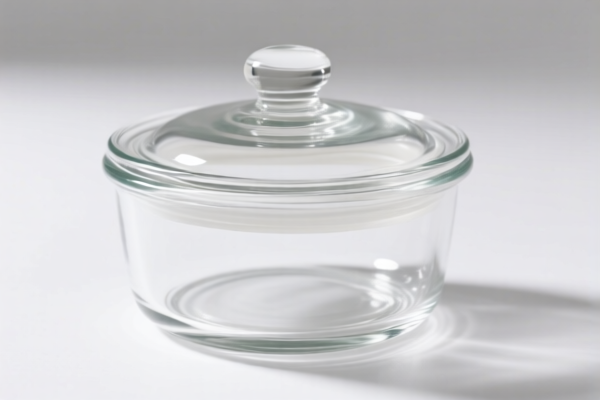
AI Analysis
📦 Crate Lids (Pallet Box Covers)
🌐 HS Code Reference & Customs Clearance Guide | 2026 Latest Tariff Analysis | Professional Clearance Strategy
📌 I. Product Definition & Classification: What Exactly is a "Crate Lid"?
In international trade, a Crate Lid (also known as a pallet box cover or crate cover) is the top component of a packaging system designed to protect goods during storage and transit. However, its HS Code classification depends entirely on its Material and Function.
It generally falls into two main categories: 1. Plastic Lids: Often used for reusable plastic tote boxes, pallet boxes, or industrial containers. 2. Wooden Lids: Components of wooden slat crates or pallets, acting as the closure for wooden packaging.
⚠️ Critical Distinction:
- If the lid is made of Plastic and functions as a container closure → Likely falls under Chapter 39.
- If the lid is made of Wood and is part of a wooden packaging system → Likely falls under Chapter 44.
- Misclassification can lead to significant tax discrepancies due to varying tariff rates.
📊 II. HS Code Classification Details (Based on Provided Data)
Below are the specific HS Codes provided in the data, along with their summaries and tax implications.
| HS Code | Material | Summary Description | Total Tax Rate |
|---|---|---|---|
3923.10.20.00 |
Plastic | Crate lid classified as a plastic product; form matches box/crate types; intended for packaging. | 35.0% |
3923.10.90.00 |
Plastic | Crate lid classified under "covers"; material is plastic; used for crate-like articles. | 38.0% |
4415.10.30.00 |
Wood | Crate lid is a component of wooden packing cases; material inferred as wood; fits wooden packaging category. | 35.0% |
4415.10.60.00 |
Wood | Crate lid is a component of slat crates; material is wood; consistent with Chapter 44. | 35.0% |
4823.90.86.20 |
Other/Paper-like | Crate lid classified as a crate accessory; form and function match; no material conflict noted (implies non-plastic/non-wood or specific paper composite). | 35.0% |
🔍 Key Takeaway:
- Plastic lids face higher complexity, with rates ranging from 35% to 38%.
- Wooden lids generally have a standard rate of 35%.
- The choice between plastic sub-codes (3923.10.20vs3923.10.90) depends on whether it is viewed strictly as a "box/crate" part or a general "cover."
💰 III. Detailed Tariff Rate Breakdown (Including Additional Taxes)
✅ Applicable Country: United States (US)
✅ Origin: China (CN)
✅ Note: The data indicates specific surcharges under "Section 301" and "Section 122" equivalents.
🎯 1. Plastic Crate Lids (HS Code: 3923.10.20.00)
| Item | Detail |
|---|---|
| Base Tariff | 0.0% |
| Section 301 Surcharge | +25.0% |
| Section 122 Tariff | +10.0% |
| Total Effective Tax Rate | 35.0% |
| Tax Calculation | CIF Value × 35% |
| Legal Basis | Implied USITC Section 301 & Section 122 authorities |
📌 Explanation:
- The base rate for many plastic packaging items is often 0%, but the 25% Section 301 tariff applies to many plastics from China.
- An additional 10% tariff (referenced as "Section 122" in the data, likely referring to specific retaliatory or emergency measures) is added.
- Total: 0% + 25% + 10% = 35%.
🎯 2. Plastic Crate Lids – Covers Category (HS Code: 3923.10.90.00)
| Item | Detail |
|---|---|
| Base Tariff | 3.0% |
| Section 301 Surcharge | +25.0% |
| Section 122 Tariff | +10.0% |
| Total Effective Tax Rate | 38.0% |
| Tax Calculation | CIF Value × 38% |
📌 Warning:
- This classification incurs a higher tax burden (38%) compared to the "box/crate" classification (35%).
- The difference lies in the Base Tariff (3% vs 0%).
- Strategy: Try to classify under3923.10.20.00if the product is clearly a "crate/box" component rather than a generic "cover."
🎯 3. Wooden Crate Lids (HS Codes: 4415.10.30.00 & 4415.10.60.00)
| Item | Detail |
|---|---|
| Base Tariff | 0.0% |
| Section 301 Surcharge | +25.0% |
| Section 122 Tariff | +10.0% |
| Total Effective Tax Rate | 35.0% |
| Tax Calculation | CIF Value × 35% |
📌 Note:
- Wooden packaging components also attract the 35% total rate.
- Ensure documentation clearly states "Wooden" to avoid being misclassified as plastic or vice versa.
🎯 4. Crate Accessories (HS Code: 4823.90.86.20)
| Item | Detail |
|---|---|
| Base Tariff | 0.0% |
| Section 301 Surcharge | +25.0% |
| Section 122 Tariff | +10.0% |
| Total Effective Tax Rate | 35.0% |
📌 Note:
- This code appears to be for accessories that don't fit strictly into plastic or wood categories, or perhaps specific paper/cardboard composites.
- Still subject to the same 35% total tax.
🛠️ IV. Customs Clearance Practical Advice (Avoiding Pitfalls)
✅ 1. Documentation Checklist (Mandatory)
| Document | Required? | Explanation |
|---|---|---|
| ✅ Product Specifications | ✔️ | Must clearly state Material (Plastic/Wood/Other). |
| ✅ Material Composition Statement | ✔️ | Crucial for distinguishing between HS 39 (Plastic) and HS 44 (Wood). |
| ✅ Product Photos | ✔️ | Show the lid installed on a crate to prove it is a "crate lid." |
| ✅ Commercial Invoice | ✔️ | Clearly describe as "Crate Lid" or "Pallet Box Cover." |
| ✅ Packing List | ✔️ | Indicate if lids are shipped separately or attached. |
✅ 2. Classification Strategy (Key Tips)
🔥 "Material is King, Form is Queen"
| Scenario | Recommended HS Code | Reason |
|---|---|---|
| Plastic Lid for Plastic Crate | 3923.10.20.00 |
Lower tax (35%) vs 3923.10.90.00 (38%). |
| Plastic Lid for Wooden Crate | Still 3923.10.20.00 |
The material of the lid determines Chapter 39. |
| Wooden Lid for Wooden Crate | 4415.10.30.00 or 4415.10.60.00 |
Matches wood packaging category. |
| Generic Cover (Not Crate-Specific) | 3923.10.90.00 |
Higher tax (38%); avoid if possible. |
⚠️ Risk Alert:
- Declaring a plastic lid as "wooden" to save on documentation is fraudulent and will result in penalties, seizures, and back taxes.
- Ensure the Material on the invoice matches the HS Code choice.
✅ 3. Special Cases
| Case | Handling Advice |
|---|---|
| Mixed Materials | If the lid has plastic parts and wooden inserts, consult a customs broker. May need to be classified by essential character. |
| Reusable vs. Disposable | Reusability does not change the material-based classification. Plastic is still HS 39. |
| Customs Valuation | Ensure the CIF value includes freight and insurance. The 35-38% tax applies to the total CIF value. |
🌍 V. Global Market Comparison (2026 Context)
| Market | Typical HS Code for Plastic Crate Lids | Base Tariff | Section 301/Retaliatory | Total Rate (China Origin) |
|---|---|---|---|---|
| 🇺🇸 USA | 3923.10.20.00 |
0% | +25% + 10% | 35% |
| 🇨🇳 China | 3923.10.20.00 |
5-8% | None | 5-8% |
| 🇪🇺 EU | 3923.10.90 |
6.5% | None | 6.5% |
| 🇬🇧 UK | 3923.10.90 |
6.5% | None | 6.5% |
📌 Conclusion:
- The US market is significantly more expensive for Chinese-made crate lids due to additional tariffs.
- EU and UK have lower base rates and no such retaliatory tariffs.
- Strategy: If targeting the US, consider supply chain diversification (e.g., sourcing from Vietnam or Mexico) to mitigate the 35% tax burden.
📌 VI. Common Mistakes & Pitfalls (Blood & Tears Lessons)
❌ Mistake 1: Classifying a Plastic Lid under 4415.10 (Wood)
👉 Consequence: Customs inspection reveals plastic material → Seizure, fines, and retroactive 35% tax.
❌ Mistake 2: Using 3923.10.90.00 when 3923.10.20.00 is applicable
👉 Consequence: Overpaying 3% (38% vs 35%) on every shipment.
👉 Solution: Argue that the item is a "crate/box part" not just a "cover."
❌ Mistake 3: Ignoring the 10% Section 122 Tariff
👉 Consequence: Underestimating landed cost → Profit margin erosion.
👉 Solution: Always include the full 35% (or 38%) in cost calculations.
❌ Mistake 4: Vague Description on Invoice ("Cover")
👉 Consequence: Customs assigns incorrect HS Code → Delays and audits.
👉 Solution: Use precise terms: "Plastic Crate Lid, Molded Polypropylene."
🎯 VII. Conclusion: Precision Classification Saves Money
🎯 Key Takeaways:
🔹 Plastic Lids: Aim for
3923.10.20.00(35%). Avoid3923.10.90.00(38%).
🔹 Wooden Lids: Use4415.10.x0.00(35%).
🔹 Always Declare Material: The HS Code is driven by Material, not just function.
🔹 Factor in All Taxes: Base (0-3%) + 301 (25%) + 122 (10%) = 35-38% Total.
📌 Pro Tip:
If your crate lids are high-value or high-volume, consider:
1. Advance Ruling: Request a binding tariff information from US Customs to confirm the correct HS Code.
2. Supply Chain Audit: Evaluate if sourcing from non-China origins can reduce the 35% tax burden.
3. Invoice Accuracy: Ensure the description explicitly states "Crate Lid" and "Material" to speed up clearance.
📣 Immediate Action:
📞 Consult your customs broker with product photos and material specs.
🚀 Optimize your HS Code selection to minimize duties and maximize profit.
✨ Professional Clearance Starts with Precise Classification!
💼 Every percentage point counts in global trade!
Customer Reviews
About HS Code Classification
The Harmonized System (HS) is an internationally standardized nomenclature developed by the World Customs Organization (WCO) to classify traded products. Over 200 countries use the HS system as the basis for customs tariffs, trade statistics, and import/export regulations.
Each HS code follows a hierarchical structure:
- Chapter (2 digits) — Broad category of goods (e.g., Chapter 84: Machinery and Mechanical Appliances)
- Heading (4 digits) — More specific grouping within the chapter
- Subheading (6 digits) — Internationally standardized breakdown, used by all WCO member countries
- National subdivisions (8-10 digits) — Country-specific extensions for further classification, such as US HTSUS 10-digit codes
Correct HS code classification is essential for smooth customs clearance, accurate duty payment, and compliance with trade regulations. Misclassification can lead to customs delays, overpayment of duties, or penalties.
When importing from CN to US, the applicable tariff rates may include:
- Most-Favored-Nation (MFN) rate — The standard duty rate applied to WTO members
- General rate — Applied to countries without trade agreements
- Trade remedy duties — Additional tariffs such as Section 301 (anti-dumping), Section 232 (national security), or countervailing duties
The information provided on this page is for reference purposes only. For official classification, please consult with your local customs authority or a licensed customs broker.