crochet petticoat other fabrics
CN → US| HS Code | Tariff Rate | Origin | Destination | Doc |
|---|---|---|---|---|
| 6208199000 | 26.2% | CN | US | Official Doc |
| 6208110000 | 32.4% | CN | US | Official Doc |
| 6108199030 | 24.1% | CN | US | Official Doc |
| 6108995015 | 10.6% | CN | US | Official Doc |
| 6117909095 | 32.1% | CN | US | Official Doc |
Product Images
AI Analysis
🌸 Crochet Petticoat – Other Fabrics
🌐 HS Code & Tariff Guide | 2026 U.S. Trade Compliance | Expert Customs Clearance Strategy
📌 One Product, Multiple Codes – Why the Tax Varies So Wildly!
📦 1. Product Definition & Classification: What Is a "Crochet Petticoat"?
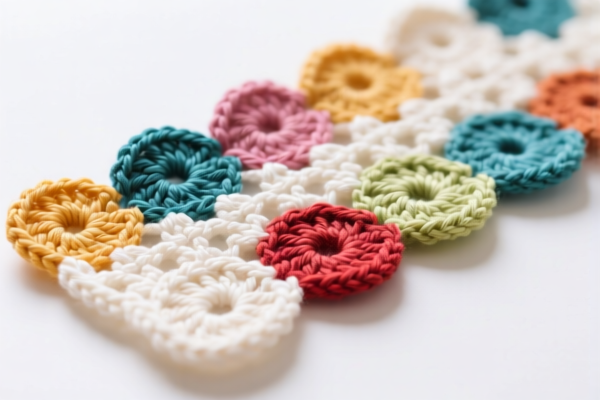
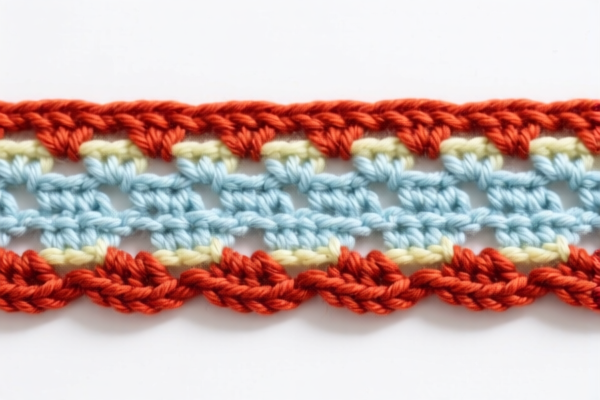
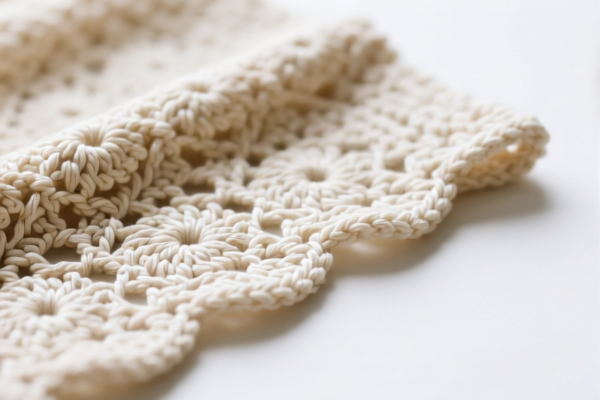
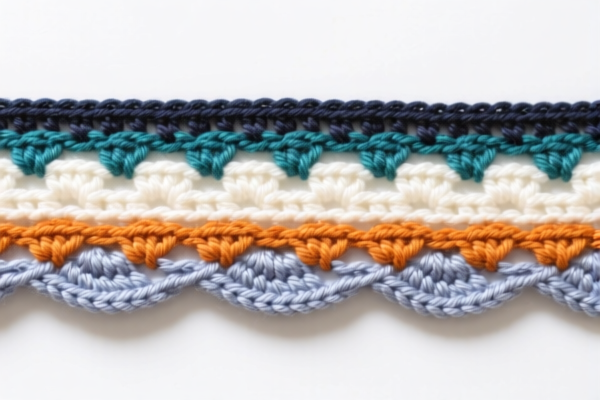
A crochet petticoat is a type of undergarment or inner skirt, typically made with a crocheted fabric (hand or machine-made), used as a foundation layer beneath dresses or skirts. It is often not fully lined, and may feature openwork or lace-like patterns.
In U.S. customs classification, the key is material composition, intended use, and whether it’s part of a set or standalone.
⚠️ Critical Distinction:
- If the petticoat is made from non-cotton, non-wool, non-nylon, non-silk fabric (e.g., polyester, rayon, acrylic, blends) → Different HS codes apply
- If it’s not clearly identifiable as cotton or synthetic fiber, it falls into "other fabrics" categories → "兜底类目" (catch-all)
📊 2. HS Code Classification Breakdown (2026 U.S. Tariff Schedule)
| HS Code | Product Description | Tax Rate | Key Classification Logic |
|---|---|---|---|
6208.19.90.00 |
Crochet petticoat, other fabrics, matched to other textile-based undergarments | 26.2% | "Other" fabric → Catch-all for non-cotton, non-wool, non-synthetic fiber types |
6208.11.00.00 |
Crochet petticoat, other fabrics, based on fiber content (reasonable inference) | 32.4% | Based on fiber type, even if not explicitly stated → Higher risk of misclassification |
6108.19.90.30 |
Crochet petticoat, other fabrics, matched to non-cotton, non-wool, non-silk definitions | 24.1% | "Other" fabric → Non-cotton, non-wool, non-silk → Lower base tariff |
6108.99.50.15 |
Crochet petticoat, other fabrics, under general catch-all provision | 10.6% | Lowest base tariff – applies when no better fit exists |
6117.90.90.95 |
Crochet petticoat, other fabrics, not cotton, synthetic, or wool | 32.1% | Applies when fiber type is ambiguous, but not cotton or man-made fibers |
🔍 Why So Many Codes?
The same product can be classified differently depending on: - Fiber content (even if not labeled) - Intended use (undergarment vs. fashion accessory) - Material match (e.g., does it pair with a specific garment?) - Customs’ interpretation of “other fabrics”
💰 3. 2026 U.S. Tariff Breakdown (Detailed & Legal-Compliant)
✅ Applicable Country: China (CN)
✅ Applicable Law: U.S. Trade Act 301, IEEPA, Section 122
✅ Effective Date: November 10, 2025 (with retroactive application)
🎯 1. 6208.19.90.00 – Crochet Petticoat, Other Fabrics, Catch-All Match
| Item | Detail |
|---|---|
| Base Duty | 8.7% (ad valorem) |
| Section 301 (USITC) | +7.5% |
| Section 122 (IEEPA) | +10% |
| Total Tariff | 26.2% |
| Tax Calculation | CIF × 26.2% |
| De Minimis Exemption? | ❌ No (denied under 19 CFR §10.16) |
| Legal Basis Path | IEEPA:9903.01.25 → Section 122:9903.01.24 → USITC:6208.19.90.00 → FOOTNOTE:9903.88.01 |
📌 Why This Code?
Used when the fabric is not cotton, wool, or synthetic, and no better fit exists. It’s a fallback for non-standard materials.
🎯 2. 6208.11.00.00 – Crochet Petticoat, Other Fabrics, Based on Fiber Inference
| Item | Detail |
|---|---|
| Base Duty | 14.9% |
| Section 301 (USITC) | +7.5% |
| Section 122 (IEEPA) | +10% |
| Total Tariff | 32.4% |
| Tax Calculation | CIF × 32.4% |
| De Minimis Exemption? | ❌ No |
| Legal Basis Path | IEEPA:9903.01.25 → Section 122:9903.01.24 → USITC:6208.11.00.00 → FOOTNOTE:9903.88.01 |
📌 Why Higher?
Customs assumes fiber type (e.g., if it looks like polyester), even if not labeled.
High-risk code – if fiber is unclear, this is most likely to be applied.
🎯 3. 6108.19.90.30 – Crochet Petticoat, Other Fabrics, Non-Cotton/Non-Wool Match
| Item | Detail |
|---|---|
| Base Duty | 6.6% |
| Section 301 (USITC) | +7.5% |
| Section 122 (IEEPA) | +10% |
| Total Tariff | 24.1% |
| Tax Calculation | CIF × 24.1% |
| De Minimis Exemption? | ❌ No |
| Legal Basis Path | IEEPA:9903.01.25 → Section 122:9903.01.24 → USITC:6108.19.90.30 → FOOTNOTE:9903.88.01 |
📌 Best for Non-Cotton, Non-Wool, Non-Silk
This code is more precise than6208.19.90.00and applies when the fabric is clearly not cotton, wool, or silk.
🎯 4. 6108.99.50.15 – Crochet Petticoat, Other Fabrics, General Catch-All
| Item | Detail |
|---|---|
| Base Duty | 0.6% |
| Section 301 (USITC) | +0.0% |
| Section 122 (IEEPA) | +10% |
| Total Tariff | 10.6% |
| Tax Calculation | CIF × 10.6% |
| De Minimis Exemption? | ❌ No |
| Legal Basis Path | IEEPA:9903.01.25 → Section 122:9903.01.24 → USITC:6108.99.50.15 → FOOTNOTE:9903.88.01 |
📌 Lowest Possible Tariff
Used when no better code exists, and fiber is ambiguous.
Best if you can prove the fabric is not cotton, wool, or synthetic.
🎯 5. 6117.90.90.95 – Crochet Petticoat, Other Fabrics, Not Cotton/Synthetic/Wool
| Item | Detail |
|---|---|
| Base Duty | 14.6% |
| Section 301 (USITC) | +7.5% |
| Section 122 (IEEPA) | +10% |
| Total Tariff | 32.1% |
| Tax Calculation | CIF × 32.1% |
| De Minimis Exemption? | ❌ No |
| Legal Basis Path | IEEPA:9903.01.25 → Section 122:9903.01.24 → USITC:6117.90.90.95 → FOOTNOTE:9903.88.01 |
📌 Most Restrictive Code
Applies when fiber is not cotton, man-made, or wool – often used when material is unknown or mixed.
🛠️ 4. Customs Clearance Best Practices (Real-World Tips)
✅ 1. Required Documentation (Must-Have)
| Document | Required? | Why It Matters |
|---|---|---|
| ✅ Product Specification Sheet | ✔️ | Must include fiber content, weight, construction, intended use |
| ✅ Fabric Test Report (Lab) | ✔️ | Proves non-cotton, non-wool, non-silk → Reduces risk of 32%+ tariff |
| ✅ High-Res Product Photos | ✔️ | Show crochet pattern, material texture, seams, labeling |
| ✅ Commercial Invoice | ✔️ | Must state: "Crochet Petticoat, Other Fabrics, Not Cotton or Wool" |
| ✅ Certificate of Origin (CO) | ✔️ | If from China → High tariff applies; if from Vietnam/Mexico → Possible exemption |
| ✅ Packing List | ✔️ | Shows unit count, weight, packing method |
✅ 2.申报技巧(Pro Tips)
🔥 “Fiber First, Code Last – Prove It, Don’t Guess!”
| Scenario | Correct HS Code | Why |
|---|---|---|
| Fabric is polyester blend (not labeled) | 6208.11.00.00 |
Customs assumes fiber type → 32.4% tariff |
| Fabric is rayon-based, no label | 6108.19.90.30 |
Matches non-cotton, non-wool → 24.1% |
| Fabric is unknown or mixed, but not cotton/wool | 6108.99.50.15 |
Lowest base tariff → 10.6% |
| No fiber info, but looks like non-synthetic | 6117.90.90.95 |
32.1% – Avoid if possible |
✅ 3. Risk Mitigation Strategies
| Risk | Solution |
|---|---|
| High tariff due to fiber ambiguity | Get a third-party lab test before shipment |
| Customs delays or reclassification | Apply for Advance Ruling (Pre-Approval) |
| Incorrect HS Code → penalties | Use HS Code pre-check tool (e.g., USITC, Customs Ruling Database) |
| Shipment held at port | Provide clear fiber proof + photos + invoice in advance |
🌍 5. Global Tariff Comparison (2026)
| Country | Recommended HS Code | Base Duty | Additional Taxes | Total |
|---|---|---|---|---|
| 🇺🇸 USA (China) | 6108.99.50.15 |
0.6% | +10% (IEEPA) | 10.6% |
| 🇨🇳 China | 6208.19.90.00 |
5% | 0% | 5% |
| 🇪🇺 EU | 6208.19.90.00 |
0% | 0% | 0% (if CE compliant) |
| 🇦🇺 Australia | 6208.19.90.00 |
5% | 0% | 5% |
| 🇯🇵 Japan | 6208.19.90.00 |
0% | 0% | 0% |
📌 Insight:
- USA is the only market with 10%+ IEEPA tariff on Chinese goods
- Non-Chinese origin (e.g., Vietnam, Mexico) → IEEPA exemption possible → Tariff drops to 0%–5%
🚨 6. Common Mistakes & Legal Pitfalls
❌ Mistake 1: Not proving fiber content → Customs assumes polyester → 32.4% tariff
👉 Fix: Submit lab test report before shipment
❌ Mistake 2: Using “petticoat” as only description → Customs may classify as accessory → Higher tariff
👉 Fix: Use: "Crochet Petticoat, Undergarment, Other Fabrics, Not Cotton or Wool"
❌ Mistake 3: No photos or specs → Customs delays or reclassifies
👉 Fix: Attach high-res images + fiber test + invoice
❌ Mistake 4: Shipment from China → 10% IEEPA + 7.5% USITC + base duty → 26%+
👉 Fix: Shift production to Vietnam, Mexico, or Thailand → IEEPA exemption
✅ 7. Pro Tips: How to Lower Your Tariff
🔥 “Prove It, Don’t Guess – The 10.6% Code Is Your Friend”
| Strategy | Benefit |
|---|---|
| ✅ Submit fiber test report | Prove non-cotton, non-wool → qualify for 6108.99.50.15 |
| ✅ Use Vietnam/Mexico origin | IEEPA exemption → 10% tariff gone |
| ✅ Apply for Advance Ruling | Get binding HS Code decision → avoid future disputes |
| ✅ Use clear, precise description | Avoid “garment” → use “undergarment” or “petticoat” |
🎯 Final Verdict: Which HS Code Should You Use?
✅ Best Option:
6108.99.50.15→ 10.6% total tariff
✅ Why?
- Lowest base duty (0.6%)
- Only 10% IEEPA (no USITC)
- Best for unknown or mixed fabrics⚠️ Avoid:
6208.11.00.00or6117.90.90.95→ 32%+ tariffs
📌 Summary: The 10.6% Rule
🔹 If your crochet petticoat is made from non-cotton, non-wool, non-silk fabric
🔹 And you can prove it with a lab test or spec sheet
🔹 Then use6108.99.50.15
🔹 Tax = 10.6% (CIF × 10.6%)
🔹 Save over 15% vs. worst-case code!
📣 Take Action Now!
📞 Contact a U.S. Customs Broker + Submit product + lab test
🚀 Apply for Advance Ruling to lock in the 10.6% rate
💼 Your next shipment could save thousands in tariffs!
✨ Pro Tip:
If your product is originated in Vietnam, Mexico, or Thailand, you can avoid IEEPA entirely → Total tariff drops to 0%–5%!
📌 Remember:
🔹 HS Code = Your Tax Fate
🔹 Fiber Proof = Lower Tariff
🔹 Pre-Approval = No Surprises
🚀 Your crochet petticoat isn’t just fashion — it’s a customs strategy!
💼 Get it right, and you’ll save thousands.
Customer Reviews
About HS Code Classification
The Harmonized System (HS) is an internationally standardized nomenclature developed by the World Customs Organization (WCO) to classify traded products. Over 200 countries use the HS system as the basis for customs tariffs, trade statistics, and import/export regulations.
Each HS code follows a hierarchical structure:
- Chapter (2 digits) — Broad category of goods (e.g., Chapter 84: Machinery and Mechanical Appliances)
- Heading (4 digits) — More specific grouping within the chapter
- Subheading (6 digits) — Internationally standardized breakdown, used by all WCO member countries
- National subdivisions (8-10 digits) — Country-specific extensions for further classification, such as US HTSUS 10-digit codes
Correct HS code classification is essential for smooth customs clearance, accurate duty payment, and compliance with trade regulations. Misclassification can lead to customs delays, overpayment of duties, or penalties.
When importing from CN to US, the applicable tariff rates may include:
- Most-Favored-Nation (MFN) rate — The standard duty rate applied to WTO members
- General rate — Applied to countries without trade agreements
- Trade remedy duties — Additional tariffs such as Section 301 (anti-dumping), Section 232 (national security), or countervailing duties
The information provided on this page is for reference purposes only. For official classification, please consult with your local customs authority or a licensed customs broker.