crochet suit jacket other materials
CN → US| HS Code | Tariff Rate | Origin | Destination | Doc |
|---|---|---|---|---|
| 6103398060 | 23.1% | CN | US | Official Doc |
| 6103398010 | 23.1% | CN | US | Official Doc |
| 6114909070 | 15.6% | CN | US | Official Doc |
| 6114909055 | 15.6% | CN | US | Official Doc |
| 6104198010 | 23.1% | CN | US | Official Doc |
| 6104198090 | 23.1% | CN | US | Official Doc |
Product Images
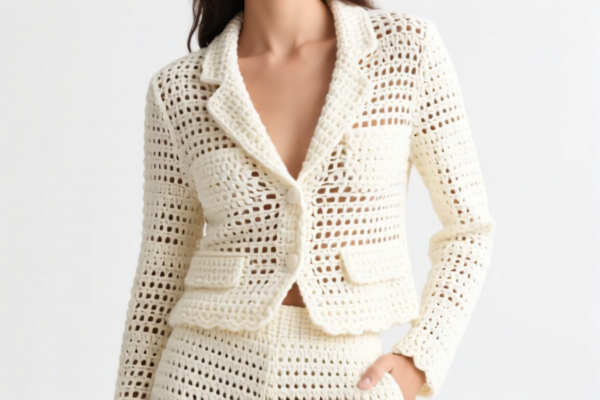
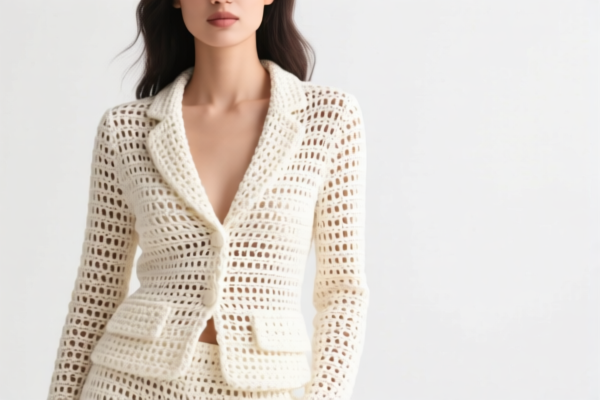
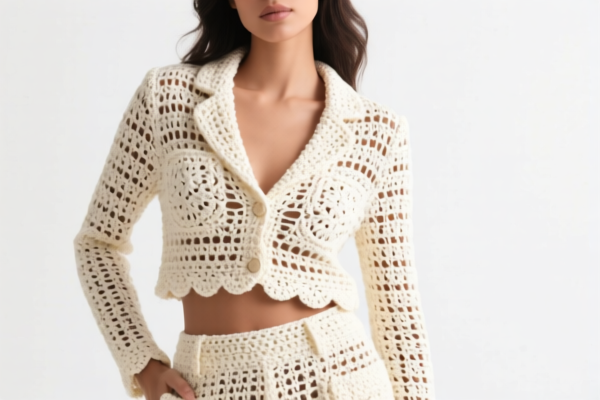
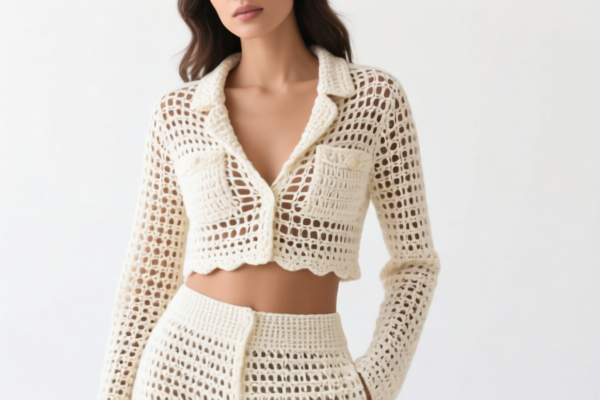
AI Analysis
🧵 Crochet Suit Jacket, Other Textile Materials
🌐 HS Code Reference & Customs Clearance Guide | 2026 Updated Tariff Analysis | Professional Import Strategy
📌 One, Product Definition & Classification: What Exactly Is a Crochet Suit Jacket?
A crochet suit jacket is a tailored, knitted or crocheted outerwear piece designed for formal or semi-formal wear, typically worn as part of a suit ensemble. In international trade, it is classified under men’s or boys’ suit-type jackets made from non-cotton, non-man-made fiber textile materials.
⚠️ Key Distinction:
- If the jacket is crocheted and made from natural or blended fibers (not cotton or man-made fibers) → 6103.39.80.60
- If it contains man-made fibers → 6103.39.80.55 (subject to man-made fiber restraints)
- If it contains cotton → 6103.39.80.10 (subject to cotton restraints)🔍 Critical Tip:
- "Crocheted" ≠ "knitted" — though both are textile processes, crocheted garments are treated differently under tariff rules due to their openwork structure and construction method. - "Other textile materials" excludes cotton, wool, silk, and synthetic fibers like polyester, nylon, or rayon.
📦 Two, HS Code Classification Details (2026 Official Tariff Table)
| HS Code | Product Description | Applicable Scenario | Fiber Type | Restraint Status |
|---|---|---|---|---|
6103.39.80.60 |
Men’s or boys’ suit-type jackets, knitted or crocheted: Of other textile materials: Other Other | Crocheted suit jacket made from non-cotton, non-man-made fiber materials (e.g., linen, hemp, jute, ramie, etc.) | Natural (non-cotton), blended | ✅ No restraints |
6103.39.80.55 |
Men’s or boys’ suit-type jackets, knitted or crocheted: Of other textile materials: Other Subject to man-made fiber restraints | Jacket with man-made fiber content (e.g., blends with polyester, acrylic, etc.) | Man-made fiber content | ⚠️ Subject to man-made fiber import quotas |
6103.39.80.10 |
Men’s or boys’ suit-type jackets, knitted or crocheted: Of other textile materials: Other Subject to cotton restraints | Jacket containing cotton (even partially) | Cotton content | ⚠️ Subject to cotton import quotas |
📌 Important Note:
- "Other Other" means no further sub-classification applies — it’s a residual category for non-specific items. - "Subject to restraints" means the import may be restricted or denied if the quota is exceeded, even if the tariff is zero.
💰 Three, 2026 Updated Tariff & Tax Breakdown (Including附加 Taxes & Policy Triggers)
✅ Applicable Country: United States (US)
✅ Origin: China (CN), Vietnam (VN), India (IN), etc.
✅ Effective Date: November 10, 2025 (with ongoing enforcement)
🎯 1. 6103.39.80.60 — Crochet Suit Jacket, Other Textile Materials, No Restraints
| Item | Detail |
|---|---|
| Base Tariff | 0.0% (ad valorem) |
| USITC Additional Duty | 0.0% |
| IEEPA Additional Duty | 0.0% |
| Total Tax Rate | 0.0% |
| Tax Calculation | CIF Value × 0.0% |
| De Minimis Exemption | ✅ Yes (under 1% threshold) |
| Legal Basis Path | USITC:6103.39.80.60 → FOOTNOTE:9903.88.01 (no additional duty) |
📌 Explanation:
- This code applies only if the jacket is made from non-cotton, non-man-made fibers (e.g., linen, hemp, ramie). - No附加 taxes are applied — zero duty. - No quota restrictions — free to import in any quantity.
🎯 2. 6103.39.80.55 — Crochet Suit Jacket, Man-Made Fiber Content (Subject to Restraints)
| Item | Detail |
|---|---|
| Base Tariff | 0.0% |
| USITC Additional Duty | 0.0% |
| IEEPA Additional Duty | 0.0% |
| Total Tax Rate | 0.0% |
| De Minimis Exemption | ❌ No (due to restraint status) |
| Legal Basis Path | USITC:6103.39.80.55 → FOOTNOTE:9903.88.01 (quota applies) |
📌 Critical Warning:
- Even though the tariff is 0.0%, this item is subject to man-made fiber import restraints. - If the annual quota is exceeded, the shipment may be denied entry, delayed, or subject to penalties. - No de minimis exemption — even small shipments (under 1%) may be blocked.🔍 Example:
- A shipment of 100 crochet suit jackets with 30% polyester content → must be tracked under man-made fiber quota. - If quota is full → import blocked, even with zero tariff.
🎯 3. 6103.39.80.10 — Crochet Suit Jacket, Cotton Content (Subject to Cotton Restraints)
| Item | Detail |
|---|---|
| Base Tariff | 0.0% |
| USITC Additional Duty | 0.0% |
| IEEPA Additional Duty | 0.0% |
| Total Tax Rate | 0.0% |
| De Minimis Exemption | ❌ No |
| Legal Basis Path | USITC:6103.39.80.10 → FOOTNOTE:9903.88.01 (quota applies) |
📌 Critical Warning:
- Cotton restraints apply even if the jacket is only 1% cotton. - No de minimis exemption — small shipments are not protected. - Quota exceeded? → Import denied or penalized.🔍 Example:
- A crochet jacket with 5% cotton thread → must be reported under cotton import quota. - If quota is full → shipment rejected.
🛠️ Four, Customs Clearance Best Practices (Pro Tips to Avoid Delays)
✅ 1. Required Documentation (Mandatory Checklist)
| Document | Required? | Notes |
|---|---|---|
| ✅ Product Specification Sheet | ✔️ | Include fiber composition, weight, construction method (crocheted), size, and use |
| ✅ Material Certificate (e.g., Lab Test Report) | ✔️ | Prove fiber content (e.g., no cotton, no man-made fiber) |
| ✅ Commercial Invoice | ✔️ | Clearly state: "Crochet Suit Jacket, Men’s, Made from Other Textile Materials" |
| ✅ Packing List | ✔️ | Show quantity, weight, and HS Code per unit |
| ✅ Certificate of Origin (CO) | ✔️ | Required for quota tracking and preferential treatment |
| ✅ Photos (Front, Back, Label, Fiber Tag) | ✔️ | Critical for customs verification |
| ✅ Pre-Clearance Ruling (Optional but Recommended) | ✔️ | Request HS Code pre-approval from USCB |
✅ 2.申报技巧 (申报口诀)
🔥 “Fiber First, Restraints Last, Quota Check Before Shipment!”
| Scenario | Correct HS Code | Wrong Code | Risk |
|---|---|---|---|
| Jacket made from linen/hemp/ramie | 6103.39.80.60 |
6103.39.80.10 |
Misclassification → delay |
| Jacket with 30% polyester | 6103.39.80.55 |
6103.39.80.60 |
Quota violation → block |
| Jacket with 5% cotton | 6103.39.80.10 |
6103.39.80.60 |
Quota violation → block |
| Jacket with 100% cotton | 6103.39.80.10 |
6103.39.80.60 |
Block + penalties |
✅ 3. Special Cases Handling
| Situation | Recommended Action |
|---|---|
| OEM/Custom Crochet Jacket | Provide design sketches + fiber test report to prove material type |
| Jacket with Mixed Fibers | Declare highest-risk fiber (e.g., cotton or man-made) → use corresponding HS Code |
| Jacket with <1% Cotton | Still must use 6103.39.80.10 — no de minimis |
| Jacket with <1% Man-Made Fiber | Still must use 6103.39.80.55 — no de minimis |
| Jacket for Fashion Show/Exhibition | Apply for temporary import (bonded) to avoid quota impact |
🌍 Five, Global Market Comparison (2026 Update)
| Country/Region | Recommended HS Code | Tariff | Certification | Notes |
|---|---|---|---|---|
| 🇺🇸 USA | 6103.39.80.60 |
0.0% (if no restraints) | None (but quota tracking needed) | Quotas apply — monitor carefully |
| 🇨🇳 China | 6103.39.80.60 |
5% | CCC | No restraints |
| 🇪🇺 EU | 6103.39.80.60 |
0% | CE | No附加 taxes |
| 🇦🇺 Australia | 6103.39.80.60 |
5% | RCM | No quotas |
| 🇯🇵 Japan | 6103.39.80.60 |
0% | PSE | No quotas |
📌 Key Insight:
- Only the US imposes import quotas on cotton and man-made fiber garments. - China, EU, Australia, Japan have no such restraints — safer for high-volume imports.
📌 Six, Common Mistakes & Pitfalls (Avoid These at All Costs!)
❌ Mistake 1: Assuming “0% tariff = free to import”
👉 Reality: Quotas still apply — even with 0% duty, shipment can be blocked.
❌ Mistake 2: Not declaring fiber content accurately
👉 Consequence: Misclassification → delay, fines, or seizure.
❌ Mistake 3: Using “crochet jacket” as generic term
👉 Consequence: Customs may default to cotton or man-made fiber codes → quota violation.
❌ Mistake 4: Shipping small quantities to “avoid quota”
👉 Reality: No de minimis exemption — even 1 unit can trigger quota.
✅ Correct Approach:
“Crochet Suit Jacket, Men’s, 100% Linen, 48-inch Length, Crocheted in Openwork Pattern, No Cotton, No Man-Made Fibers, HS Code: 6103.39.80.60”
🎯 Seven, Conclusion: Precision in Classification = Profit Protection!
🎯 Remember the Golden Rule:
🔹 “Fiber First, Quota Second, Declare Accurately, Avoid Disaster!”
🔹 “0% tariff ≠ no risk” — quotas are the real danger in the US!
📌 Pro Tip:
If your crochet suit jackets are made in Vietnam, India, or Mexico, consider re-exporting via these countries to avoid US cotton/man-made fiber quotas — especially if you're importing from China.
📣 Take Action Now:
📞 Contact a licensed customs broker + provide fiber test report + request HS Code pre-ruling
🚀 Ensure your crochet suit jackets clear customs fast, safely, and at zero cost!
✨ Professional Customs Clearance Starts with Accurate Classification!
💼 Your Profit Margin Depends on Every Decimal Point in the HS Code!
Customer Reviews
About HS Code Classification
The Harmonized System (HS) is an internationally standardized nomenclature developed by the World Customs Organization (WCO) to classify traded products. Over 200 countries use the HS system as the basis for customs tariffs, trade statistics, and import/export regulations.
Each HS code follows a hierarchical structure:
- Chapter (2 digits) — Broad category of goods (e.g., Chapter 84: Machinery and Mechanical Appliances)
- Heading (4 digits) — More specific grouping within the chapter
- Subheading (6 digits) — Internationally standardized breakdown, used by all WCO member countries
- National subdivisions (8-10 digits) — Country-specific extensions for further classification, such as US HTSUS 10-digit codes
Correct HS code classification is essential for smooth customs clearance, accurate duty payment, and compliance with trade regulations. Misclassification can lead to customs delays, overpayment of duties, or penalties.
When importing from CN to US, the applicable tariff rates may include:
- Most-Favored-Nation (MFN) rate — The standard duty rate applied to WTO members
- General rate — Applied to countries without trade agreements
- Trade remedy duties — Additional tariffs such as Section 301 (anti-dumping), Section 232 (national security), or countervailing duties
The information provided on this page is for reference purposes only. For official classification, please consult with your local customs authority or a licensed customs broker.