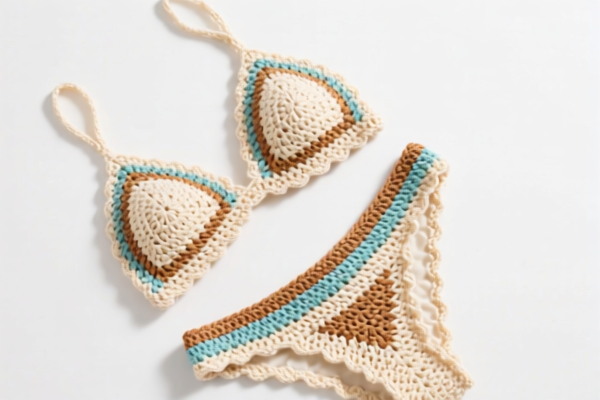
crocheted beachwear
CN → US| HS Code | Tariff Rate | Origin | Destination | Doc |
|---|---|---|---|---|
| 6112310010 | 35.9% | CN | US | Official Doc |
| 6109100060 | 34.0% | CN | US | Official Doc |
| 6211121010 | 21.8% | CN | US | Official Doc |
| 6211111010 | 37.8% | CN | US | Official Doc |
| 6112410030 | 34.9% | CN | US | Official Doc |
Product Images



AI Analysis
🏖️ Crocheted Beachwear: Ultimate HS Code Guide & Tax Strategy
🌐 Global Trade Classification & Duty Breakdown | 2026 Tax Compliance | Smart Import Strategy
📌 I. Product Definition: What is "Crocheted Beachwear"?
Crocheted Beachwear refers to swimwear and beach attire (including bikinis, cover-ups, and one-piece suits) manufactured using a crochet technique (interlocking loops of yarn with a single hook). These items are typically lightweight, breathable, and fashion-forward.
⚠️ Critical Classification Factors: - Knitted vs. Crocheted: In international trade, "Crocheted" is often treated similarly to "Knitted" under specific HS headings, but the material (Natural vs. Synthetic) drastically changes the code. - Intended Use: Must be clearly for swimming/beach (not just general casual wear). - Material Composition: The tax rate varies wildly depending on whether the yarn is Synthetic (e.g., Polyester, Nylon) or Cotton/Natural.
📦 II. HS Code Classification Matrix (Based on Your Data)
| HS Code | Product Description | Material Logic | Total Tax Rate | Tax Composition |
|---|---|---|---|---|
| 6112.31.00.10 | Swimsuits (Knitted/Crocheted) For men, women, boys, girls. Synthetic Fiber |
Synthetic (Nylon/Polyester blend) |
35.9% | Base: 25.9% Sec 301: 0% Section 122: 10% |
| 6109.10.00.60 | T-shirts & Similar Knitted Goods Specifically: Crocheted Vests/Top Cotton or Mixed Fiber |
Cotton (Cotton knit/crochet) |
34.0% | Base: 16.5% Sec 301: 7.5% Section 122: 10% |
| 6211.12.10.10 | Swimsuits (Woven) Fibers/Artificial Fibers |
Synthetic/Fiber (Woven construction logic) |
21.8% | Base: 11.8% Sec 301: 0% Section 122: 10% |
| 6211.11.10.10 | Swimsuits (Woven) Fibers/Artificial Fibers |
Synthetic/Fiber (Woven logic) |
37.8% | Base: 27.8% Sec 301: 0% Section 122: 10% |
| 6112.41.00.30 | Swimsuits (Knitted) Women's/Specialized Synthetic Fiber |
Synthetic (Knitted/Crochet) |
34.9% | Base: 24.9% Sec 301: 0% Section 122: 10% |
🔍 Deep Dive into Logic: - Knitted/Crocheted (Chapter 61): If the item is truly "crocheted," it usually falls under 6112.31.00.10 (Synthetic) or 6109.10.00.60 (if classified as a top/vest, Cotton). - Woven (Chapter 62): If the crochet technique is confused with a woven texture, or if the specific subheading for "swimsuit" in Chapter 62 is applied, the rates drop to 21.8% or spike to 37.8% depending on the base duty. - The "Section 122" Factor: All listed items carry a mandatory 10% Additional Duty (Section 122), which is critical for US importers.
💰 III. 2026 Tariff Rate Breakdown & Legal Basis
✅ Target Market: United States (US)
✅ Origin: China (CN)
✅ Effective Date: 2025–2026 (Current Trade War Rates)
🎯 Scenario A: Synthetic Crocheted Swimsuit
HS Code: 6112.31.00.10 (High Probability) Why? Most commercial "beachwear" is synthetic for quick-drying properties.
| Component | Rate | Legal Reference |
|---|---|---|
| Base Duty | 25.9% | HTSUS General Duty |
| Section 301 (Sec 301) | 0.0% | Excluded for this specific sub-category |
| Section 122 | +10.0% | Mandatory surcharge for textile/apparel from China |
| TOTAL | 35.9% | High Risk Category |
🎯 Scenario B: Crocheted Cotton Top / Vest
HS Code: 6109.10.00.60 (Alternative Classification) Why? If the beachwear is primarily a "top" or "vest" made of cotton.
| Component | Rate | Legal Reference |
|---|---|---|
| Base Duty | 16.5% | HTSUS General Duty |
| Section 301 (Sec 301) | +7.5% | China-specific punitive tariff |
| Section 122 | +10.0% | Mandatory surcharge |
| TOTAL | 34.0% | Moderate-High Risk |
🎯 Scenario C: Woven Classification (Risk of Error)
HS Code: 6211.12.10.10 (Lowest Base Rate, but risky) Why? If the crochet is deemed "woven" (rare but possible in customs interpretation).
| Component | Rate | Legal Reference |
|---|---|---|
| Base Duty | 11.8% | HTSUS General Duty |
| Section 301 | 0.0% | Excluded |
| Section 122 | +10.0% | Mandatory surcharge |
| TOTAL | 21.8% | Lowest Rate (Best Case) |
⚠️ Warning: If the item is misclassified as 6211.11.10.10, the Base Duty jumps to 27.8%, making the Total 37.8%. Accuracy is money!
🛠️ IV. Customs Clearance Strategy (Action Plan)
✅ 1. Material Verification (The #1 Priority)
Before shipping, you must know the exact fiber composition: - If Synthetic (Polyester/Nylon/Elastane): Likely 6112.31.00.10 (35.9%). - If Cotton: Likely 6109.10.00.60 (34.0%). - If Blended: Customs will assign the component with the higher duty or the "last substantial transformation" rule.
🚫 Do Not Guess: If you declare "Cotton" but the lab test shows 5% Polyester, you risk fines and a 34% vs 35.9% discrepancy.
✅ 2. Documentation Checklist
| Document | Requirement | Why? |
|---|---|---|
| Material Composition Certificate | ✅ Mandatory | Must specify % of Cotton vs. Synthetic. |
| Photos (Close-up) | ✅ Mandatory | Clearly show the crochet stitch to prove "knitted/crocheted" vs. "woven". |
| Commercial Invoice | ✅ Mandatory | Must list HS Code and "Crocheted Beachwear" explicitly. |
| Section 122 Declaration | ✅ Mandatory | Acknowledge the 10% surcharge. |
✅ 3. Declaration Tips
- Avoid "Vague" Terms: Do not write "Beach Shirt." Write "Women's Crocheted Synthetic Swimsuit (6112.31.00.10)".
- The "Woven" Trap: If you want to claim the 21.8% rate (6211.12.10.10), you must prove the item is technically woven, not crocheted. If it is crocheted, claiming 6211 is a misclassification risk.
🌍 V. Global Market Comparison (US vs. Rest of World)
| Market | Recommended HS Code | Est. Total Duty (China Origin) | Note |
|---|---|---|---|
| 🇺🇸 USA | 6112.31.00.10 |
35.9% | Heavy Section 122 surcharge. |
| 🇨🇦 Canada | 6112.31.00.10 |
~30% | Lower base, but similar textile rules. |
| 🇪🇺 EU | 6112.31.00 |
~12% | NO Section 122. Much lower! |
| 🇦🇺 Australia | 6112.31.00 |
~5% | NO Section 122. Very competitive. |
📌 Conclusion: The US market is the most expensive for crocheted beachwear due to the 10% Section 122 surcharge. Consider diversifying markets or relocating production to Vietnam/Indonesia to avoid these tariffs.
📌 VI. Common Pitfalls & Solutions
❌ Mistake 1: Declaring "Beachwear" as "Cotton" when it is Synthetic. 👉 Result: 35.9% vs 34.0% → Penalties for under-declaring duties.
❌ Mistake 2: Claiming it is "Woven" (6211) to get the 21.8% rate. 👉 Result: Customs inspection reveals crochet stitches → Reclassification to 6112 + 10% penalty.
❌ Mistake 3: Ignoring the "Section 122" 10% tax. 👉 Result: Budget miscalculation → Profit margin erosion.
✅ Pro Tip:
"If the item is Crocheted, it is almost always Chapter 61 (Knitted/Crocheted). Only declare Chapter 62 (Woven) if the stitch pattern mimics weaving and the construction is technically woven. Otherwise, budget for 34% - 37.8%."
🎯 VII. Final Verdict: Strategic Recommendation
- Verify Material: Send a fabric swatch to a lab. Synthetic = 35.9%, Cotton = 34.0%.
- Avoid Woven Claims: Unless you have a very strong technical defense, stick to 6112.31.00.10 (35.9%) to avoid audit risks.
- Calculate Landed Cost: Ensure your pricing includes the 10% Section 122 surcharge.
- Explore Alternatives: If margins are tight, consider sourcing from non-China origins (Vietnam/Thailand) to bypass the Section 122 and Section 301 tariffs.
📣 Act Now!
📞 Contact a Customs Broker to run a Binding Ruling on your specific crochet pattern. 🚀 Secure your supply chain before the next tariff hike!
✨ Precision in Classification = Profit in Your Pocket!
💼 Don't let a 14% tax difference eat your margins!
Customer Reviews
About HS Code Classification
The Harmonized System (HS) is an internationally standardized nomenclature developed by the World Customs Organization (WCO) to classify traded products. Over 200 countries use the HS system as the basis for customs tariffs, trade statistics, and import/export regulations.
Each HS code follows a hierarchical structure:
- Chapter (2 digits) — Broad category of goods (e.g., Chapter 84: Machinery and Mechanical Appliances)
- Heading (4 digits) — More specific grouping within the chapter
- Subheading (6 digits) — Internationally standardized breakdown, used by all WCO member countries
- National subdivisions (8-10 digits) — Country-specific extensions for further classification, such as US HTSUS 10-digit codes
Correct HS code classification is essential for smooth customs clearance, accurate duty payment, and compliance with trade regulations. Misclassification can lead to customs delays, overpayment of duties, or penalties.
When importing from CN to US, the applicable tariff rates may include:
- Most-Favored-Nation (MFN) rate — The standard duty rate applied to WTO members
- General rate — Applied to countries without trade agreements
- Trade remedy duties — Additional tariffs such as Section 301 (anti-dumping), Section 232 (national security), or countervailing duties
The information provided on this page is for reference purposes only. For official classification, please consult with your local customs authority or a licensed customs broker.