crocheted shirt other textile materials wool trim
CN → US| HS Code | Tariff Rate | Origin | Destination | Doc |
|---|---|---|---|---|
| 6110909028 | 23.5% | CN | US | Official Doc |
| 6110909075 | 23.5% | CN | US | Official Doc |
Product Images
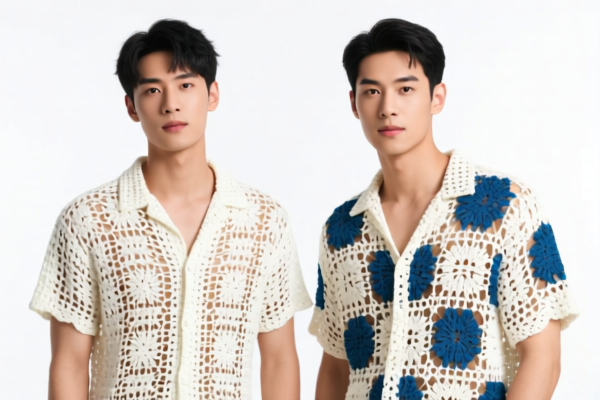
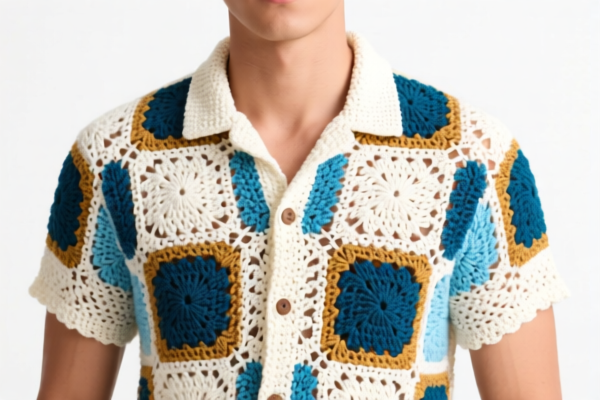
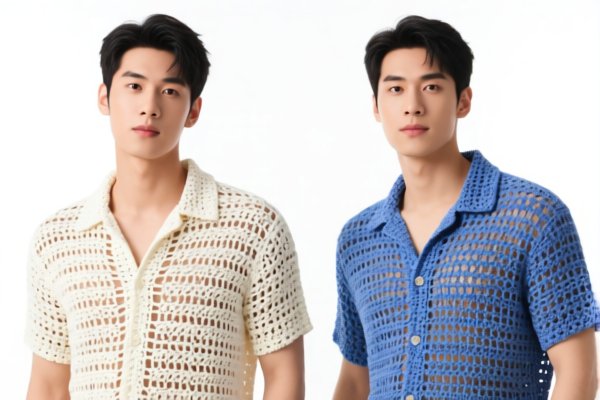
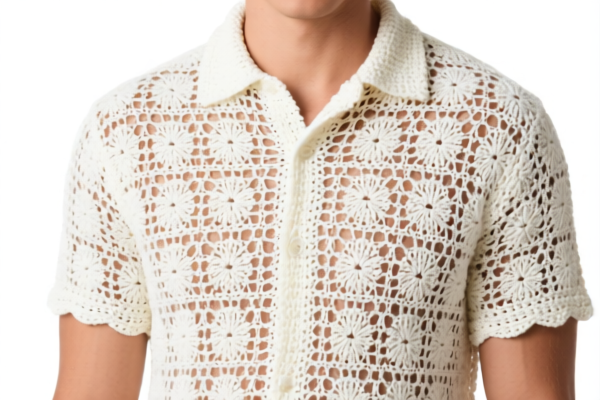
AI Analysis
👕 Crocheted Shirt with Wool Trim (Sweaters/Waistcoats of Other Textile Materials)
🌐 HS Code Reference & Customs Clearance Guide | 2026 Latest Tariff Analysis | Professional Clearance Strategy
📌 I. Product Definition & Classification: Do You Understand "Crocheted Shirt with Wool Trim" Truly?
A "crocheted shirt" with "wool trim" involving "other textile materials" typically falls under the category of Sweaters, pullovers, sweatshirts, waistcoats (vests), and similar articles, knitted or crocheted.
The critical distinction in customs classification depends on the main fabric material (not the trim) and the gender of the wearer. According to the provided data, we are dealing with "Other textile materials" (meaning NOT wool, cotton, or synthetic fibers usually listed separately, often implying blends or specific non-standard fibers like viscose, nylon, or polyester not listed as primary).
Key Classification Point:
- If the main body is made of "other textile materials" and it is knitted/crocheted, it falls under Chapter 61, Heading 6110.
- The "wool trim" does not automatically make the entire product a "wool product" unless the wool constitutes the essential character (which is rare for simple trims). The description explicitly mentions "Subject to wool restraints," indicating specific regulatory conditions apply even if the main material is not wool.
⚠️ Critical Distinction:
- If the product is a Sweater/Vest/Waistcoat type (including "shirt" styled as a pullover/knit top): → 6110.90.90.xx
- Trim Note: Wool trims do not change the HS code from "Other textile materials" to "Wool" unless the wool is the primary fabric. However, Wool Restraints still apply.
📦 II. HS Code Classification Details (2026 Latest Tariff Authority Comparison)
Based on the provided <DATA>, there are two specific HS Codes for this product description, differentiated by Gender. Both share the same tariff structure because they are both "Other textile materials" and "Subject to wool restraints."
| HS Code | Product Description | Gender Applicability | Wool Restraints | Main Material |
|---|---|---|---|---|
| 6110.90.90.28 | Sweaters, pullovers, sweatshirts, waistcoats (vests)...: Of other textile materials: Other Sweaters for women or girls | Women or Girls | ✅ Subject to Wool Restraints | Other Textile Materials |
| 6110.90.90.75 | Sweaters, pullovers, sweatshirts, waistcoats (vests)...: Of other textile materials: Other Other: Subject to wool restraints | Men or Boys | ✅ Subject to Wool Restraints | Other Textile Materials |
🔍 Key Reminder:
- "Other Textile Materials" refers to materials other than cotton, wool, synthetic fibers, or man-made fibers explicitly listed in other subheadings of 6110. This often includes blends or less common fibers.
- "Wool Restraints" may require additional documentation, quota checks, or specific labeling, even if the main fabric is not wool.
- Trim Material: The wool trim is incidental. The classification is driven by the main body fabric.
💰 III. 2026 Latest Tariff Rate Details (Including Additional Taxes & Policy Add-ons)
✅ Applicable Country: United States (US)
✅ Origin: China (CN) (Assumed based on context of high tariffs in examples, but verify origin)
✅ Effective Time: 2026 Tariff Schedule
🎯 1. 6110.90.90.28 – Sweaters for Women or Girls (Other Textile Materials)
| Item | Content |
|---|---|
| Base Tariff | 0.0% |
| Additional Tariff | 0.0% |
| Total Tax Rate | 0.0% |
| Tax Detail | Base Tariff: 0.0%, Additional Tariff: 0.0% |
| Wool Restraints | Subject to Wool Restraints |
📌 Explanation:
- Despite being "Subject to Wool Restraints," the monetary tariff rate is 0.0%.
- Wool Restraints are regulatory restrictions (e.g., quotas, monitoring, specific origin rules) rather than a direct tax surcharge in this specific code.
- No 301/IEEPA Surcharge: Unlike electronics or certain apparel, this specific subheading under "Other Textile Materials" does not appear to carry the 25% USITC or 10% IEEPA surcharges in this dataset. Always verify with CBP if "Other Textile Materials" are broadly exempt.
🎯 2. 6110.90.90.75 – Sweaters for Men or Boys (Other Textile Materials)
| Item | Content |
|---|---|
| Base Tariff | 0.0% |
| Additional Tariff | 0.0% |
| Total Tax Rate | 0.0% |
| Tax Detail | Base Tariff: 0.0%, Additional Tariff: 0.0% |
| Wool Restraints | Subject to Wool Restraints |
📌 Explanation:
- Identical tariff treatment to the women's/girls' version.
- Critical: Do not confuse this with "Wool" sweaters (which may have different rates). This is "Other Textile Materials."
- Wool Restraints: Ensure compliance with any wool-specific import controls, even if the product is not primarily wool.
🛠️ IV. Customs Clearance Practical Advice (Pitfall Avoidance Guide)
✅ 1. Preparation Checklist (Mandatory Documents)
| Document | Mandatory | Explanation |
|---|---|---|
| Product Description | ✔️ | Must clearly state: "Knitted/Crocheted Sweater/Vest, Made of [Specific Other Textile], with Wool Trim." |
| Composition Label | ✔️ | Must specify % of "Other Textile Material" vs. Wool Trim. |
| Sample/Photos | ✔️ | To prove it is a "Sweater/Pullover/Waistcoat" and not a "Shirt" (woven) or "T-shirt" (knitted cotton/poly). |
| Wool Restraint Declaration | ✔️ | If applicable, declare compliance with wool import restrictions. |
| Commercial Invoice | ✔️ | Must match the HS Code (6110.90.90.28 or 6110.90.90.75). |
| Packing List | ✔️ | Standard. |
✅ 2. Declaration Tips (Key Mnemonics)
🔥 "Main Fabric Dictates Code, Trim is Incidental, Gender Splits the HS, Restraints Must Be Checked!"
| Scenario | Correct Declaration | Incorrect Action |
|---|---|---|
| Women's Crocheted Top | 6110.90.90.28 | Misclassify as Cotton (6109) or Wool (6110.90.10) |
| Men's Crocheted Top | 6110.90.90.75 | Use Women's Code → Data Mismatch |
| Woven Shirt (Not Knitted) | Not 6110 | Must be classified under Chapter 62 (e.g., 6211) |
| "Other Textile" is Actually Wool | Wrong Code | If main fabric is wool, use Wool-specific HS code |
✅ 3. Special Cases
| Case | Handling Advice |
|---|---|
| "Shirt" vs. "Sweater" | If it is a lightweight, open-knit "shirt" style, it may still be 6110 if classified as a "Sweater/Pullover." If it is a woven shirt, it is NOT 6110. |
| Wool Trim Percentage | If the wool trim is significant, ensure it does not trigger "Wool" classification for the entire garment unless the main body is also wool. |
| Country of Origin | If not China, tariffs may differ. Verify with USITC for Free Trade Agreements (e.g., USMCA). |
🌍 V. Global Market Clearance Comparison (2026 Latest)
| Country/Region | Recommended HS Code | Tariff Rate | Key Requirement | Notes |
|---|---|---|---|---|
| 🇺🇸 USA | 6110.90.90.28 (Women) / .75 (Men) |
0.0% | Wool Restraints Compliance | No additional 301 tariff shown for this code |
| 🇨🇳 China | 6110.90.90 | Varies (Usually 10-20%) | CCC (if applicable) | Import duty on "Other Textile Materials" |
| 🇪🇺 EU | 6110.90.90 | 12% (Standard) | CE/RoHS (if applicable) | Wool content may affect labeling |
| 🇬🇧 UK | 6110.90.90 | 12% | Post-Brexit Rules | Check UK Tariff Calculator |
| 🇦🇺 Australia | 6110.90.90 | 5% | Australian Consumer Law | Low tariff |
📌 Conclusion:
- The USA currently shows 0.0% tariff for this specific HS Code ("Other Textile Materials"), which is advantageous.
- Wool Restraints are the main hurdle, not the tariff cost. Ensure compliance with any wool-specific import regulations.
📌 VI. Common Errors & Pitfall Guide (Lessons Learned)
❌ Error 1: Classifying "Crocheted Shirt" as Woven Shirt (Chapter 62)
👉 Consequence: Wrong HS Code (e.g., 6211), potential penalty or delay.
Fix: Crocheted = Knitted = Chapter 61.
❌ Error 2: Assuming Wool Trim = Wool Garment
👉 Consequence: Misclassification to Wool-specific HS code (e.g., 6110.90.10) with different restaints/tariffs.
Fix: Classify based on main body material ("Other Textile Materials").
❌ Error 3: Ignoring "Wool Restraints"
👉 Consequence: Customs hold for lack of wool restraint documentation.
Fix: Declare "Subject to Wool Restraints" and provide any required wool content/origin proof.
❌ Error 4: Using Women's Code for Men's Product (or Vice Versa)
👉 Consequence: Data mismatch with CBP records, possible audit.
Fix: Use .28 for Women/Girls, .75 for Men/Boys.
✅ Correct Declaration Example:
"Women's Crocheted Pullover, Made of Viscose/Polyester Blend (Other Textile Material), with Wool Trim, for Retail Sale, HS Code 6110.90.90.28, Subject to Wool Restraints."
🎯 VII. Conclusion: Precision in Classification Saves Time & Money!
🎯 Remember the Mnemonic:
🔹 "Crochet = Knitted = Ch.61",
🔹 "Main Fabric Rules, Trim is Minor",
🔹 "Women .28, Men .75",
🔹 "Wool Restraints Check, Zero Tariff Here!"
📌 Pro Tip:
If your "Other Textile Materials" include recycled fibers or sustainable materials, check for potential Green Tariff Benefits in future updates.
For Wool Restraints, consult with your customs broker to ensure all wool-origin documentation is ready, even if the product is primarily non-wool.
📣 Immediate Action:
📞 Verify Gender: Ensure you pick the correct HS Code (
.28or.75).
📄 Check Restraints: Confirm wool restraint compliance.
🚀 Declare Accurately: Use "Sweater/Pullover" instead of "Shirt" if it fits the definition.
✨ Professional Clearance Starts with Accurate Classification!
💼 Every Detail Matters – From Fiber to Final Rate!
Customer Reviews
About HS Code Classification
The Harmonized System (HS) is an internationally standardized nomenclature developed by the World Customs Organization (WCO) to classify traded products. Over 200 countries use the HS system as the basis for customs tariffs, trade statistics, and import/export regulations.
Each HS code follows a hierarchical structure:
- Chapter (2 digits) — Broad category of goods (e.g., Chapter 84: Machinery and Mechanical Appliances)
- Heading (4 digits) — More specific grouping within the chapter
- Subheading (6 digits) — Internationally standardized breakdown, used by all WCO member countries
- National subdivisions (8-10 digits) — Country-specific extensions for further classification, such as US HTSUS 10-digit codes
Correct HS code classification is essential for smooth customs clearance, accurate duty payment, and compliance with trade regulations. Misclassification can lead to customs delays, overpayment of duties, or penalties.
When importing from CN to US, the applicable tariff rates may include:
- Most-Favored-Nation (MFN) rate — The standard duty rate applied to WTO members
- General rate — Applied to countries without trade agreements
- Trade remedy duties — Additional tariffs such as Section 301 (anti-dumping), Section 232 (national security), or countervailing duties
The information provided on this page is for reference purposes only. For official classification, please consult with your local customs authority or a licensed customs broker.