crocodile leather belts
CN → US| HS Code | Tariff Rate | Origin | Destination | Doc |
|---|---|---|---|---|
| 4205006000 | 39.9% | CN | US | Official Doc |
| 4203300000 | 37.7% | CN | US | Official Doc |
| 4203403000 | 39.9% | CN | US | Official Doc |
| 4205008000 | 35.0% | CN | US | Official Doc |
Product Images
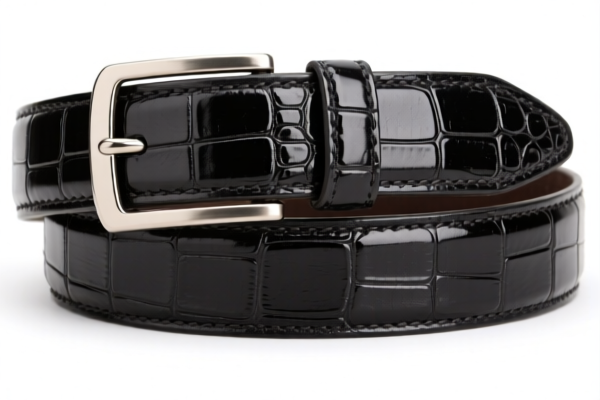
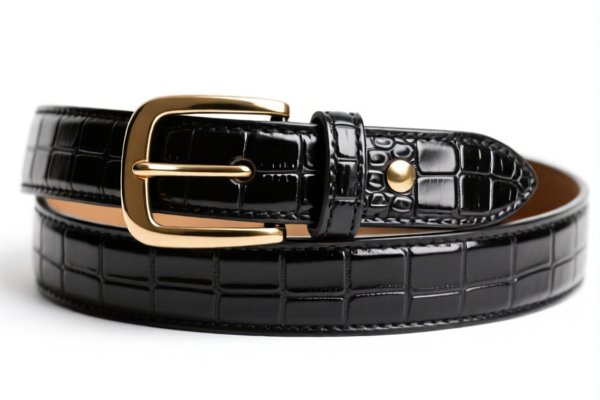
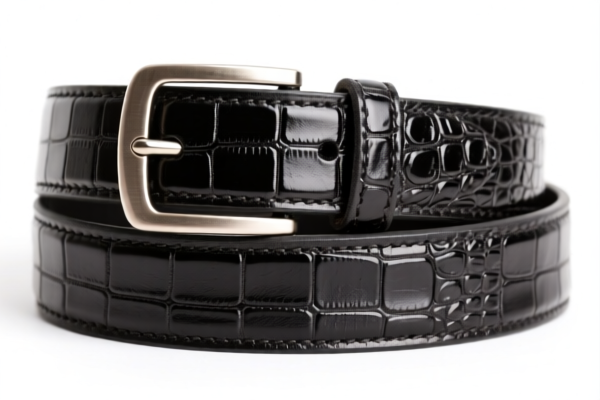
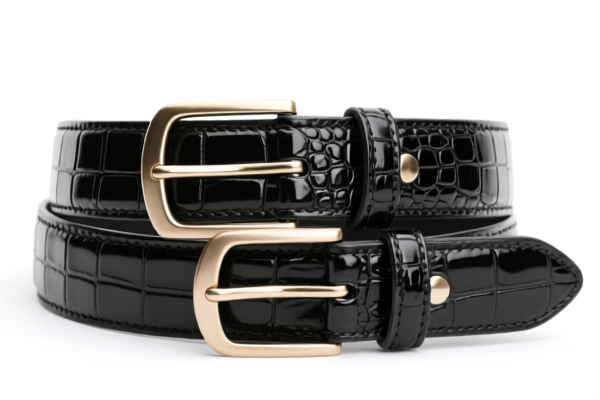
AI Analysis
🐊 Crocodile Leather Belts: HS Code Classification & Duty Breakdown | 2026 U.S. Customs Guide
🌐 HS Code Reference & Clearance Guide | 2026 Latest Tariff Analysis | Professional Clearance Strategy
📌 1. Product Definition & Classification: What Defines a "Crocodile Leather Belt"?
Crocodile leather belts are luxury accessories made from the skin of crocodilians (alligators, crocodiles, caimans). In international trade, their classification hinges on two key factors: 1. Material Specificity: Are they classified under general leather products (Chapter 42.03) or specific reptile skin products (Chapter 42.05)? 2. Construction: Do they include metal buckles or other accessories that might change the classification?
⚠️ Key Distinction:
- If classified under 4203, they are treated as general leather goods (buckles included).
- If classified under 4205, they are treated as other articles of leather, often implying reptile-specific categorization or accessory-focused grouping.
- Note: The U.S. uses an 8-digit HS code system. The first 6 digits are harmonized globally; digits 7-8 are U.S.-specific.
📦 2. HS Code Classification Details (2026 Latest Tariff Reference)
Based on the provided data, here are the four relevant HS codes for crocodile leather belts, along with their summaries and total tax rates:
| HS Code | Product Description & Summary | Total Tax Rate | Tax Breakdown |
|---|---|---|---|
| 4205.00.60.00 | Crocodile leather belts, classified under reptile leather and articles thereof | 39.9% | Base Duty: 4.9% Add-on Duty: 25.0% Section 122 Tariff: 10% |
| 4203.30.00.00 | Crocodile leather belts, classified as leather belts with or without buckles | 37.7% | Base Duty: 2.7% Add-on Duty: 25.0% Section 122 Tariff: 10% |
| 4203.40.30.00 | Crocodile leather belts, classified as reptile leather and clothing accessories | 39.9% | Base Duty: 4.9% Add-on Duty: 25.0% Section 122 Tariff: 10% |
| 4205.00.80.00 | Crocodile leather belts, classified as other leather or synthetic leather articles | 35.0% | Base Duty: 0.0% Add-on Duty: 25.0% Section 122 Tariff: 10% |
🔍 Key Takeaway:
- All classifications include a 25% Add-on Duty and a 10% Section 122 Tariff.
- The Base Duty varies from 0.0% to 4.9%, leading to total duty rates between 35.0% and 39.9%.
- 4205.00.80.00 offers the lowest total duty (35.0%) due to a 0% base duty.
💰 3. 2026 Latest Tariff Rate Explanation (Including Add-ons & Policy Surcharges)
✅ Applicable Country: United States (US)
✅ Origin: China (CN)
✅ Effective Date: From November 10, 2025 (including subsequent imports)
🎯 1. 4205.00.60.00 —— Reptile Leather & Articles Thereof
| Item | Detail |
|---|---|
| Base Duty Rate | 4.9% (ad valorem) |
| USITC Add-on Duty | +25% (under USITC Footnote 9903.88.01 or similar) |
| Section 122 Tariff | +10% (targeting specific leather/reptile products from China) |
| Total Duty Rate | 39.9% |
| Tax Calculation | CIF Value × 39.9% |
| De Minimis Eligibility | ❌ Not Eligible (deny_de_minimis) |
| Legal Basis Path | USITC:4205.00.60.00 → SECTION122:4205.00.60.00 |
📌 Explanation:
- Base Duty (4.9%): Standard U.S. duty for reptile leather articles.
- 25% Add-on: Part of broader U.S.-China trade measures (Section 301).
- 10% Section 122: Specific tariff targeting certain leather/reptile imports from China.
- Total: 39.9% – This is a high-duty classification.
🎯 2. 4203.30.00.00 —— Leather Belts with or without Buckles
| Item | Detail |
|---|---|
| Base Duty Rate | 2.7% (ad valorem) |
| USITC Add-on Duty | +25% |
| Section 122 Tariff | +10% |
| Total Duty Rate | 37.7% |
| Tax Calculation | CIF Value × 37.7% |
| De Minimis Eligibility | ❌ Not Eligible |
| Legal Basis Path | USITC:4203.30.00.00 → SECTION122:4203.30.00.00 |
📌 Note:
- Slightly lower total duty than 4205.00.60.00 due to a lower base duty (2.7%).
- Still subject to 35% in additional duties (25% + 10%).
🎯 3. 4203.40.30.00 —— Reptile Leather & Clothing Accessories
| Item | Detail |
|---|---|
| Base Duty Rate | 4.9% (ad valorem) |
| USITC Add-on Duty | +25% |
| Section 122 Tariff | +10% |
| Total Duty Rate | 39.9% |
| Tax Calculation | CIF Value × 39.9% |
| De Minimis Eligibility | ❌ Not Eligible |
| Legal Basis Path | USITC:4203.40.30.00 → SECTION122:4203.40.30.00 |
📌 Note:
- Same total duty as4205.00.60.00due to identical base and add-on rates.
- Classified under clothing accessories, which may have different regulatory scrutiny.
🎯 4. 4205.00.80.00 —— Other Leather or Synthetic Leather Articles
| Item | Detail |
|---|---|
| Base Duty Rate | 0.0% (ad valorem) |
| USITC Add-on Duty | +25% |
| Section 122 Tariff | +10% |
| Total Duty Rate | 35.0% |
| Tax Calculation | CIF Value × 35.0% |
| De Minimis Eligibility | ❌ Not Eligible |
| Legal Basis Path | USITC:4205.00.80.00 → SECTION122:4205.00.80.00 |
📌 Note:
- Lowest total duty (35.0%) due to 0% base duty.
- Classified as "other leather articles", which may be broader and less scrutinized.
- Recommendation: If legally justifiable, this classification offers the best cost efficiency.
🛠️ 4. Customs Clearance Practical Advice (Pitfall Avoidance Guide)
✅ 1. Required Documentation Checklist (Non-negotiable)
| Document | Must Provide | Explanation |
|---|---|---|
| ✅ Product Specification Sheet | ✔️ | Includes material composition (100% crocodile leather), dimensions, buckle material |
| ✅ Commercial Invoice | ✔️ | Must clearly state "Crocodile Leather Belt" and HS Code |
| ✅ Packing List | ✔️ | Details quantity, weight, and packaging |
| ✅ Proof of Origin (Certificate of Origin) | ✔️ | Critical for determining applicability of Section 122 and 301 tariffs |
| ✅ Material Test Report | ✔️ | To confirm leather type (reptile vs. synthetic) – avoid misclassification |
| ✅ CITES Permit (if applicable) | ✔️ | If the crocodile species is endangered, CITES documentation is mandatory |
| ✅ Photos of Product | ✔️ | Clear images of belt, buckle, and leather grain |
✅ 2. Classification Strategy (Key Tips)
🔥 "Choose the lowest base duty, verify legal justification, avoid misclassification!"
| Scenario | Recommended HS Code | Risk Level |
|---|---|---|
| General leather belt with buckle | 4203.30.00.00 |
✅ Low Risk |
| Reptile-specific classification | 4205.00.60.00 or 4203.40.30.00 |
⚠️ Medium Risk (may require CITES) |
| Broad "other leather article" | 4205.00.80.00 |
✅ Lowest Duty, but must justify under "other" |
| Synthetic crocodile-print belt | Different HS Code (e.g., 4202.32.00.00) | ❌ Do not use reptile HS codes – fraud risk |
📌 Critical Warning:
- If the belt is not genuine crocodile leather but synthetic, using reptile HS codes is customs fraud.
- CITES Compliance: If the crocodile is a CITES-listed species, you must provide a CITES permit. Failure to do so can result in seizure, fines, or criminal charges.
✅ 3. Special Cases Handling
| Case | Handling Advice |
|---|---|
| OEM Custom Belts | Provide design specs and material certs to prove leather type |
| Mixed Materials (Leather + Metal Buckle) | Still classified under leather (4203/4205), not as metal accessories |
| Belts with Synthetic Linings | Ensure primary material is leather; otherwise, may be classified differently |
| Used or Vintage Belts | Different HS Code (e.g., 6309.00.00.00) – do not use new goods HS codes |
🌍 5. Global Market Comparison (2026 Latest)
| Country/Region | Recommended HS Code | Tariff (China Origin) | Certification | Notes |
|---|---|---|---|---|
| 🇺🇸 USA | 4205.00.80.00 |
35.0% | CITES (if applicable) | Highest duty due to Section 122 + 301 |
| 🇨🇳 China | 4203.30.00.00 |
5% | None | No additional tariffs |
| 🇪🇺 EU | 4205.00.80.00 |
6% | CITES (if applicable) | No Section 122 equivalent |
| 🇬🇧 UK | 4205.00.80.00 |
6% | CITES (if applicable) | Post-Brexit tariffs apply |
| 🇯🇵 Japan | 4205.00.80.00 |
5% | CITES (if applicable) | No additional tariffs |
📌 Conclusion:
- U.S. has the highest duty due to Section 122 and 301 tariffs.
- CITES compliance is critical for reptile leather imports globally.
- Consider origin diversification (e.g., Vietnam, Thailand) to avoid U.S. tariffs.
📌 6. Common Mistakes & Pitfall Avoidance (Lessons Learned)
❌ Mistake 1: Misclassifying synthetic belts as genuine crocodile leather
👉 Consequence: Customs fraud charges, seizure, fines
✅ Fix: Provide material test reports; use correct HS codes for synthetic goods
❌ Mistake 2: Ignoring CITES requirements for endangered species
👉 Consequence: Seizure, import ban, criminal liability
✅ Fix: Verify species; obtain CITES permit before shipping
❌ Mistake 3: Using "other leather article" (4205.00.80.00) without justification
👉 Consequence: Customs dispute, delay, potential audit
✅ Fix: Ensure legal basis for classification; consult customs broker
❌ Mistake 4: Not declaring origin correctly
👉 Consequence: Incorrect tariff application, penalties
✅ Fix: Provide Certificate of Origin; verify country of manufacture
🎯 7. Conclusion: Precise Classification Saves Money!
🎯 Remember the Key Tips:
🔹 "Lowest base duty, verify legality, avoid misclassification!"
🔹 "CITES is mandatory for reptile leather – no exceptions!"
🔹 "U.S. duties are high – consider origin diversification!"
📌 Pro Tip:
- If your crocodile leather belts are originating from Vietnam, Thailand, or Italy, you may avoid Section 122 and 301 tariffs, reducing total duty to 4.9% or less.
- Apply for an Advance Ruling from U.S. Customs and Border Protection (CBP) to confirm HS code classification before shipping.
📣 Immediate Action:
📞 Contact a licensed customs broker
📤 Provide CITES permit (if applicable)
🚀 Ensure precise HS code classification to minimize duties and avoid clearance delays!
✨ Professional Clearance Starts with Accurate Classification!
💼 Every dollar saved on duty is pure profit!
Customer Reviews
About HS Code Classification
The Harmonized System (HS) is an internationally standardized nomenclature developed by the World Customs Organization (WCO) to classify traded products. Over 200 countries use the HS system as the basis for customs tariffs, trade statistics, and import/export regulations.
Each HS code follows a hierarchical structure:
- Chapter (2 digits) — Broad category of goods (e.g., Chapter 84: Machinery and Mechanical Appliances)
- Heading (4 digits) — More specific grouping within the chapter
- Subheading (6 digits) — Internationally standardized breakdown, used by all WCO member countries
- National subdivisions (8-10 digits) — Country-specific extensions for further classification, such as US HTSUS 10-digit codes
Correct HS code classification is essential for smooth customs clearance, accurate duty payment, and compliance with trade regulations. Misclassification can lead to customs delays, overpayment of duties, or penalties.
When importing from CN to US, the applicable tariff rates may include:
- Most-Favored-Nation (MFN) rate — The standard duty rate applied to WTO members
- General rate — Applied to countries without trade agreements
- Trade remedy duties — Additional tariffs such as Section 301 (anti-dumping), Section 232 (national security), or countervailing duties
The information provided on this page is for reference purposes only. For official classification, please consult with your local customs authority or a licensed customs broker.