crocodile leather card holders
CN → USProduct Images
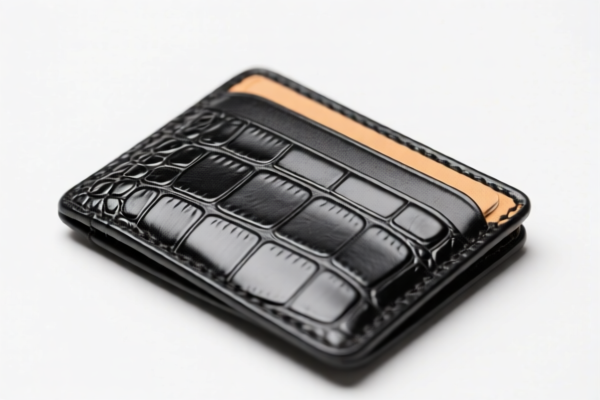
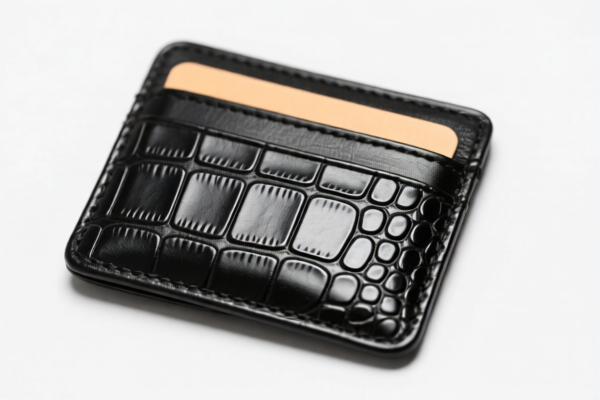
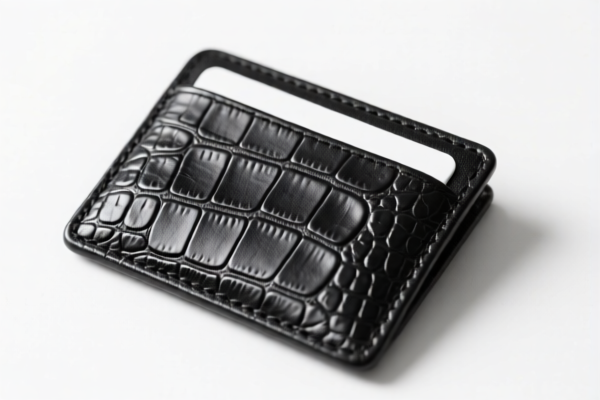
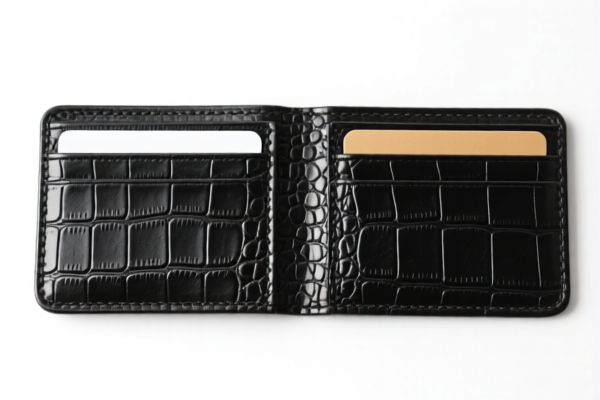
AI Analysis
👜 Crocodile Leather Card Holders (Luxury Accessories)
🌐 HS Code Reference & Clearance Guide | 2026 Latest Tariff Analysis | Premium Goods Strategy
📌 I. Product Definition & Classification: Do You Truly Understand "Crocodile Leather"?
Crocodile leather card holders are high-end accessories made from the skins of crocodilians (Crocodylidae, Alligatoridae, or Caimanidae). In international trade, the classification hinges critically on two factors: 1. The Type of Skin: Is it genuine crocodile/alligator skin? (Chapter 41 vs. Chapter 96). 2. The Form: Is it a "worked" leather good or a simple raw skin? (Chapter 42).
Key Distinction: * Genuine Crocodile/Alligator Leather: Classified under Chapter 42 (Articles of leather). * Imitation/Vegetable-Tanned "Croc-Effect" (Non-Crocodile): If it is not crocodile skin (e.g., bovine leather with embossing, PU, PVC), it falls under Chapter 42 but is taxed differently (often lower duties) and may not trigger CITES restrictions.
⚠️ Critical Compliance Point:
- If the product contains genuine crocodile/alligator skin, it is subject to CITES (Convention on International Trade in Endangered Species) regulations.
- Importers must provide CITES permits or proof of exemption (e.g., manufactured goods exemption, re-export certificate) depending on the destination country.
- Misdeclaring crocodile leather as "cow leather" can lead to severe fines, confiscation, and criminal charges.
📦 II. HS Code Classification Details (2026 Authoritative Reference)
| HS Code | Product Description | Applicable Scenario | CITES Restricted? |
|---|---|---|---|
4202.91.00.00 |
Travel goods, handbags, and similar containers: With outer surface of leather or composition leather | Most Common for Card Holders (if considered "other articles of leather") | ✅ Yes (if crocodile) |
4202.31.00.00 |
Articles of a kind commonly carried in the pocket or in the purse: With outer surface of leather or composition leather | Specifically for Wallets/Card Holders/Purses | ✅ Yes (if crocodile) |
4202.32.00.00 |
Same as above, but outer surface of plastic sheeting/textile material | For imitation crocodile (PU/PVC/Canvas) | ❌ No |
4202.92.00.00 |
Other articles of leather, with outer surface of plastic sheeting/textile material | Lined leather goods with textile exterior | ✅ Yes (if crocodile component) |
4107.92.00.00 |
Other leather, fully dressed or crusted, finished in a specific way (Raw Material) | Raw skins (not finished goods) | ✅ Yes |
9608.10.00.00 |
Pen refills | Wrong! Confusion with "holding" items | ❌ No |
🔍 Key Note:
-4202.31.00.00is the most accurate HS code for card holders, wallets, and coin purses made of genuine leather (including crocodile).
-4202.91.00.00is used for "other" leather goods (e.g., belts, gloves, decorative items).
- Do NOT classify under4203.40(Gloves/Mittens) or6307.90(Other made-up articles).
💰 III. 2026 Latest Tariff Rate Details (Including Surcharges & Policies)
✅ Applicable Country: United States (US)
✅ Country of Origin: China (CN) / Thailand / Italy (Common sources)
✅ Effective Date: 2025–2026
🎯 1. 4202.31.00.00 —— Wallets/Card Holders (Crocodile Leather)
| Item | Content |
|---|---|
| Base Tariff Rate | 0% (Most Favored Nation - MFN) |
| USITC Additional Tariff (Section 301) | +7.5% (List 4A) |
| IEEPA Additional Tariff | +10% (Effective Nov 10, 2025, for China origin) |
| Total Tariff Rate | 17.5% |
| Tax Calculation | CIF Value × 17.5% |
| De Minimis Exemption | ❌ Not Eligible (Value > $800 or non-qualified goods) |
| Legal Basis Path | IEEPA:9903.01.25 → USITC:4202.31.00.00 → FOOTNOTE:9903.88.01 |
📌 Explanation:
- Leather goods are not exempt from Section 301 tariffs.
- The 10% IEEPA surcharge applies to Chinese-origin luxury leather goods.
- Total: 17.5%. This is significantly lower than electronics (25%+), but still substantial for high-value items.
🎯 2. 4202.32.00.00 —— Imitation Crocodile (PU/PVC)
| Item | Content |
|---|---|
| Base Tariff Rate | 0% |
| USITC Additional Tariff | 7.5% |
| IEEPA Additional Tariff | 10% |
| Total Tariff Rate | 17.5% |
| CITES Permit | ❌ Not Required (Must prove non-crocodile material) |
📌 Note:
- If you declare as "Plastic Leather" but it is tested as "Genuine Crocodile," you face fraud penalties.
- If declared as "Plastic" but is actual crocodile, you risk CITES violation.
🛠️ IV. Clearance Practical Advice (Battle-Tested Tips)
✅ 1. Documentation Checklist (Non-Negotiable)
| Document | Required? | Description |
|---|---|---|
| ✅ Commercial Invoice | ✔️ | Must clearly state: "Genuine Crocodile Leather Card Holder" or "Imitation Crocodile (PU)" |
| ✅ CITES Permit / Exemption | ✔️ | If genuine crocodile: Provide CITES Re-export Permit (origin) and Import Permit (destination). |
| ✅ Material Certificate | ✔️ | Supplier declaration: "100% Crocodile Cauda (Tail) Leather" or "Synthetic PU Leather" |
| ✅ Product Photos | ✔️ | High-res images showing grain pattern, stitching, and interior lining |
| ✅ Packing List | ✔️ | Weight, dimensions, number of pieces |
| ✅ Brand Authorization | ✔️ | If branded (e.g., Hermès, Louis Vuitton), provide IP authorization to avoid seizure |
✅ 2. Declaration Tips (Key Mantra)
🔥 "Genuine or Faux? Declare Clearly! CITES Permit is Key!"
| Scenario | Correct Declaration | Wrong Practice |
|---|---|---|
| Genuine Crocodile | 4202.31.00.00 + "Genuine Crocodile Leather" + CITES Permit |
Declare as "Leather" without specifying species → Audit Risk |
| Imitation Crocodile | 4202.32.00.00 + "Polyurethane (PU) Leather with Crocodile Embossing" |
Declare as "Crocodile" → CITES Violation |
| Mixed Materials | Specify % of leather vs. lining | Vague "Luxury Accessory" → HS Code Dispute |
| Used/Vintage | Declare as "Used" + Age proof | Declare as "New" → Valuation Dispute |
✅ 3. Special Cases
| Scenario | Handling Advice |
|---|---|
| CITES Exemption (Manufactured Goods) | Some countries exempt finished leather goods from CITES if processed to a certain standard. Check local rules (e.g., US has some exemptions, but strict documentation needed). |
| Alligator vs. Crocodile | Both are CITES Appendix II. Declaration must specify species if required. |
| High-Value Items (>$10k) | May trigger anti-dumping or luxury tax scrutiny. Ensure valuation is accurate. |
| Brand Name (Louis Vuitton, etc.) | Must provide Letter of Authorization. Otherwise, customs may seize as counterfeit. |
🌍 V. Global Market Clearance Comparison (2026 Latest)
| Country/Region | Recommended HS Code | Tariff | CITES Requirement | Notes |
|---|---|---|---|---|
| 🇺🇸 USA | 4202.31.00.00 |
17.5% (CN) | ✅ Strict | CITES permit mandatory for genuine croc |
| 🇨🇳 China | 4202.31.00.00 |
5–10% | ✅ Strict | CITES permit required for import |
| 🇪🇺 EU | 4202.31.00.00 |
4% | ✅ Very Strict | EU CITES Regulation 338/97. Permits mandatory |
| 🇬🇧 UK | 4202.31.00.00 |
12% | ✅ Strict | Post-Brexit CITES rules apply |
| 🇦🇺 Australia | 4202.31.00.00 |
5% | ✅ Strict | CITES permit required |
📌 Conclusion:
- All major markets require CITES permits for genuine crocodile leather.
- Tariffs are moderate (0–12%), but compliance costs (permits) are high.
- USA and EU are the most stringent in enforcement.
📌 VI. Common Mistakes & Pitfalls (Lessons Learned)
❌ Mistake 1: Declaring "Crocodile Leather" without CITES permit
👉 Consequence: Goods held at customs for weeks, fined, or destroyed.
❌ Mistake 2: Using "Leather" as generic description
👉 Consequence: Customs requests clarification, delays clearance, may assign higher duty rate.
❌ Mistake 3: Mixing genuine and imitation items in one shipment
👉 Consequence: Entire shipment may be inspected. If one item lacks permit, whole batch delayed.
❌ Mistake 4: Undervaluing to avoid tax
👉 Consequence: Seizure, blacklisting, criminal charges for fraud.
✅ Correct Practice:
"CROCODILE LEATHER CARD HOLDER, MODEL XYZ, GENUINE CROCODILE CAUDA LEATHER, CITES PERMIT NO: XXXXX, MADE IN THAILAND"
🎯 VII. Conclusion: Compliance is Luxury
🎯 Remember:
🔹 "CITES is King for Crocodile. No Permit, No Entry."
🔹 "Genuine or Imitation? Declare Correctly. Penalties are Severe."
📌 Pro Tip:
If you are importing large volumes, apply for CITES Pre-Approval or work with a specialized customs broker who handles wildlife products.
For imitation crocodile, ensure materials are clearly documented as PU/Leather to avoid CITES scrutiny.
📣 Immediate Action:
📞 Verify CITES Status + Request Permits + Clear Declaration
🚀 Smooth Clearance, High Profit, Zero Risk!
✨ Professional Clearance Starts with Accurate Classification!
💼 Every Detail Matters in Luxury Trade!
Customer Reviews
About HS Code Classification
The Harmonized System (HS) is an internationally standardized nomenclature developed by the World Customs Organization (WCO) to classify traded products. Over 200 countries use the HS system as the basis for customs tariffs, trade statistics, and import/export regulations.
Each HS code follows a hierarchical structure:
- Chapter (2 digits) — Broad category of goods (e.g., Chapter 84: Machinery and Mechanical Appliances)
- Heading (4 digits) — More specific grouping within the chapter
- Subheading (6 digits) — Internationally standardized breakdown, used by all WCO member countries
- National subdivisions (8-10 digits) — Country-specific extensions for further classification, such as US HTSUS 10-digit codes
Correct HS code classification is essential for smooth customs clearance, accurate duty payment, and compliance with trade regulations. Misclassification can lead to customs delays, overpayment of duties, or penalties.
When importing from CN to US, the applicable tariff rates may include:
- Most-Favored-Nation (MFN) rate — The standard duty rate applied to WTO members
- General rate — Applied to countries without trade agreements
- Trade remedy duties — Additional tariffs such as Section 301 (anti-dumping), Section 232 (national security), or countervailing duties
The information provided on this page is for reference purposes only. For official classification, please consult with your local customs authority or a licensed customs broker.