crutch foot pads
CN → US| HS Code | Tariff Rate | Origin | Destination | Doc |
|---|---|---|---|---|
| 9021908100 | 10.0% | CN | US | Official Doc |
| 9021100090 | 10.0% | CN | US | Official Doc |
| 6602000000 | 21.5% | CN | US | Official Doc |
| 4016990500 | 20.9% | CN | US | Official Doc |
| 4016996050 | 37.5% | CN | US | Official Doc |
Product Images
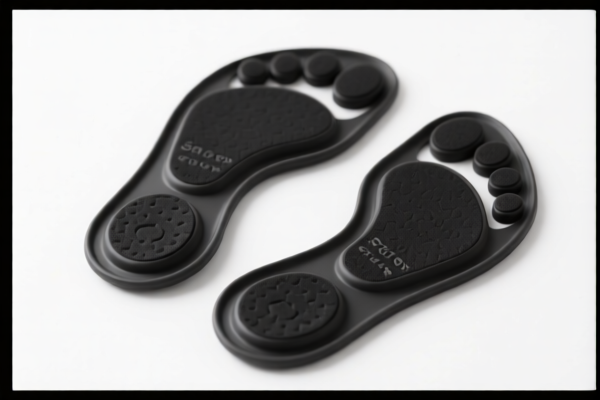
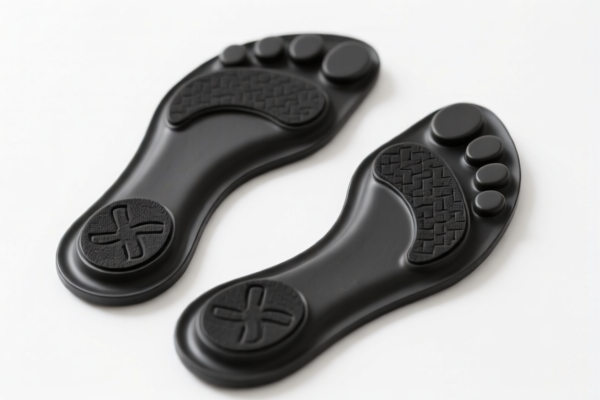
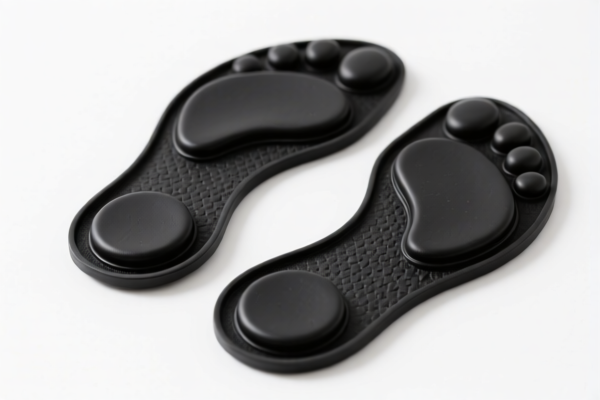
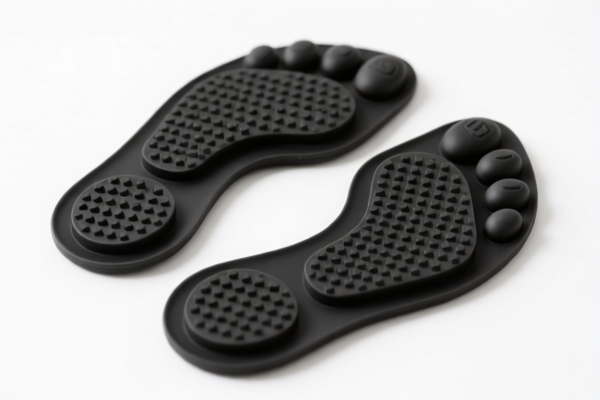
AI Analysis
🦯 Crutch Foot Pads (Rubber Accessories for Canes/Crutches)
🌐 HS Code Reference & Clearance Guide | 2026 Latest Tariff Analysis | Professional Customs Strategy
📌 I. Product Definition & Classification: Do You Really Understand “Crutch Foot Pads”?
Crutch foot pads (often made of rubber) are critical accessories for mobility aids such as walking canes, crutches, and surgical braces. In international trade, they are classified based on their functional role and material composition.
They are primarily categorized into two logical paths: 1. Orthopedic/Medical Accessory: Considered a part of orthopedic appliances or fracture apparatus. 2. Walking Stick Accessory: Considered a part or accessory of walking sticks or similar articles. 3. Rubber Product: Considered a vulcanized rubber article (generic).
⚠️ Key Distinction Point:
- If viewed as a medical/orthopedic component → Falls under Chapter 90 (Medical Instruments).
- If viewed as a general rubber good → Falls under Chapter 40 (Rubber).
- If viewed as a cane accessory → Falls under Chapter 66 (Umbrellas/Canes).
📦 II. HS Code Classification Details (2026 Latest Tariff Authority Comparison)
| HS Code | Product Description | Applicable Scenario | Classification Logic |
|---|---|---|---|
9021.90.81.00 |
Parts & accessories of orthopedic appliances | Rubber pads for crutches viewed as medical accessories | ✅ Medical/Orthopedic Logic |
9021.10.00.90 |
Other orthopedic appliances/fracture apparatus | Rubber pads as attachments for orthopedic surgery or fracture devices | ✅ Medical/Orthopedic Logic |
6602.00.00.00 |
Walking sticks, canes, seat-sticks, whips, etc. | Rubber pads viewed as accessories to walking sticks/crutches | ✅ Accessory to Stick Logic |
4016.99.05.00 |
Other vulcanized rubber articles (household) | Rubber pads viewed as general rubber household items | ✅ Generic Rubber Logic |
4016.99.60.50 |
Other vulcanized rubber articles (miscellaneous) | Rubber pads viewed as general rubber products | ✅ Generic Rubber Logic |
🔍 Key Reminder:
- The tariff burden varies significantly depending on which "logic" the customs officer accepts.
- Chapter 90 offers the lowest duty rate but requires strong medical/orthopedic justification.
- Chapter 66 and Chapter 40 carry higher tariffs due to additional levies (Section 301/122).
💰 III. 2026 Latest Tariff Rate Breakdown (Including Surcharges & Policy Add-ons)
✅ Applicable Country: USA (US)
✅ Origin: China (CN)
✅ Effective Date: Current 2026 Tariff Structure
🎯 1. 9021.90.81.00 & 9021.10.00.90 —— Orthopedic/Fracture Accessories (LOWEST TARIFF)
| Item | Content |
|---|---|
| Base Tariff | 0% (ad valorem) |
| Section 301 Surcharge | 0% (No additional 25% tariff for these specific medical subheadings in many cases, or exempt) |
| Section 122 Tariff | +10% (Specific surcharge for China-origin goods under this category) |
| Total Tariff | 10.0% |
| Tax Calculation | CIF Value × 10% |
| De Minimis Exemption | ❌ Not Applicable (Section 122 usually applies to imports >$800, no de minimis waiver for high tariffs) |
| Legal Basis Path | USITC:9021.90.81.00 → SECTION_122:10% |
📌 Explanation:
- These codes are classified under Chapter 90 (Medical/Orthopedic Instruments).
- Base tariff is 0%, avoiding the typical 25% Section 301 tariff that applies to many other categories.
- However, a 10% Section 122 tariff applies specifically to certain Chinese-origin goods.
- Total: 10%. This is the most cost-effective classification for rubber crutch pads if declared as medical accessories.
🎯 2. 6602.00.00.00 —— Walking Sticks/Canes Accessories (MEDIUM TARIFF)
| Item | Content |
|---|---|
| Base Tariff | 4.0% |
| Section 301 Surcharge | +7.5% (Partial 301 tariff application) |
| Section 122 Tariff | +10% |
| Total Tariff | 21.5% |
| Tax Calculation | CIF Value × 21.5% |
| De Minimis Exemption | ❌ Not Applicable |
| Legal Basis Path | USITC:6602.00.00.00 → SECTION_301:7.5% → SECTION_122:10% |
📌 Explanation:
- Classified under Chapter 66 (Umbrellas/Canes).
- Attributed as an "accessory to a walking stick."
- While the base tariff is low (4%), the combined surcharges (17.5%) result in a 21.5% total rate.
- Significantly higher than Chapter 90.
🎯 3. 4016.99.05.00 —— Vulcanized Rubber Articles (HIGH TARIFF)
| Item | Content |
|---|---|
| Base Tariff | 3.4% |
| Section 301 Surcharge | +7.5% |
| Section 122 Tariff | +10% |
| Total Tariff | 20.9% |
| Tax Calculation | CIF Value × 20.9% |
| De Minimis Exemption | ❌ Not Applicable |
| Legal Basis Path | USITC:4016.99.05.00 → SECTION_301:7.5% → SECTION_122:10% |
📌 Explanation:
- Classified under Chapter 40 (Rubber).
- Viewed as a "household rubber article."
- Similar surcharge structure to Chapter 66, resulting in 20.9% total.
🎯 4. 4016.99.60.50 —— Other Rubber Articles (HIGHEST TARIFF)
| Item | Content |
|---|---|
| Base Tariff | 2.5% |
| Section 301 Surcharge | +25.0% (Full 301 tariff) |
| Section 122 Tariff | +10% |
| Total Tariff | 37.5% |
| Tax Calculation | CIF Value × 37.5% |
| De Minimis Exemption | ❌ Not Applicable |
| Legal Basis Path | USITC:4016.99.60.50 → SECTION_301:25% → SECTION_122:10% |
📌 Explanation:
- Classified under Chapter 40 (Rubber) as a miscellaneous rubber good.
- Attributed the full 25% Section 301 tariff because it doesn’t qualify for the partial 7.5% rate often applied to certain rubber categories.
- Total: 37.5%. This is the most expensive classification and should be avoided.
🛠️ IV. Customs Clearance Practical Advice (Real-World Pitfall Avoidance)
✅ 1. Recommended Documentation Checklist (Non-negotiable)
| Document | Must Provide | Reason |
|---|---|---|
| ✅ Product Specification Sheet | ✔️ | Details material (e.g., "Natural Rubber," "Vulcanized Rubber"), shape, size. |
| ✅ Technical Drawing/CAD | ✔️ | Shows how it fits onto a crutch/cane shaft. |
| ✅ Product Photos | ✔️ | Clear images showing the pad attached to a crutch/cane for context. |
| ✅ Commercial Invoice | ✔️ | Description should align with the HS Code (e.g., "Rubber Foot Tip for Orthopedic Crutch"). |
| ✅ Declaration Statement | ✔️ | Explicitly state: "This is an accessory to an orthopedic appliance/crutch." |
✅ 2. Declaration Strategy (Key Mantra)
🔥 "Declare as Medical Accessory, Not Just Rubber!"
| Scenario | Correct Declaration | Risk if Incorrect |
|---|---|---|
| Rubber Pad for Crutch | 9021.90.81.00 (Orthopedic Accessory) |
Tax: 10% ✅ |
4016.99.60.50 (Generic Rubber) |
Tax: 37.5% ❌ (Heavy Penalty) | |
6602.00.00.00 (Cane Accessory) |
Tax: 21.5% ⚠️ (Higher than necessary) |
Crucial Tip:
- When declaring, use terms like "Orthopedic Appliance Accessory" or "Fracture Apparatus Part" to support the 9021 classification.
- Avoid generic terms like "Rubber Grip" or "Rubber Tip" without context, as this triggers Chapter 40 (Rubber) classification.
✅ 3. Special Case Handling
| Case | Handling Advice |
|---|---|
| OEM Custom Pads | Provide the OEM order with technical drawings showing specific fit for medical devices. |
| Sold as "Cane Tips" | Be prepared for customs to classify under 6602.00.00.00 (21.5%) if not clearly marked as medical. |
| Bulk Rubber Pieces | If not shaped for specific use, might fall under 4016.99.60.50 (37.5%). Shape matters! |
| Pre-cut Shapes | Ensure the shape is distinctive for crutch/cane use to argue for Chapter 90 or 66. |
🌍 V. Global Market Clearance Comparison (2026 Latest)
| Country/Region | Recommended HS Code | Tariff Rate | Certification Requirements | Notes |
|---|---|---|---|---|
| 🇺🇸 USA | 9021.90.81.00 |
10% | None Specific | Best option to avoid 25% 301 tariff. |
| 🇺🇸 USA | 4016.99.60.50 |
37.5% | None | Avoid this if possible. |
| 🇨🇳 China | 4016.99.60.50 |
~2-3% | RoHS (if electronics involved) | Low duty in China, but focus is on US export. |
| 🇪🇺 EU | 9021.90 |
0-4.7% | CE Mark (if medical device) | EU often classifies as medical parts. |
| 🇬🇧 UK | 9021.90 |
0-4.7% | UKCA Mark | Post-Brexit alignment with EU trends. |
📌 Conclusion:
- USA is the most challenging due to Section 122 and 301 tariffs.
- Chapter 90 (9021) is the golden ticket for US imports, keeping total tax at 10% vs. 37.5%.
- Justification is key: You must prove the item is specifically for orthopedic/medical use.
📌 VI. Common Mistakes & Pitfall Guide (Lessons Learned)
❌ Mistake 1: Declaring as "Rubber Tip" or "Glove" without context
👉 Consequence: Customs defaults to Chapter 40 → 37.5% Tax.
❌ Mistake 2: Splitting shipment into "Rubber Material" and "Packaging"
👉 Consequence: Increases scrutiny; still liable for full duty on the product.
❌ Mistake 3: Using 6602.00.00.00 when 9021 is more accurate
👉 Consequence: Paying 21.5% instead of 10% unnecessarily.
❌ Mistake 4: Ignoring Section 122
👉 Consequence: Underestimating the 10% surcharge even on the best-case scenario.
✅ Correct Practice:
"Rubber Foot Pad for Orthopedic Crutch, Vulcanized, Shape Fitted for Medical Device, Model XYZ"
🎯 VII. Conclusion: Precise Classification Saves Money!
🎯 Remember the Mantra:
🔹 "Orthopedic Logic = 10% Tax"
🔹 "Generic Rubber = 37.5% Tax"
🔹 "Don't let customs guess your product's purpose!"
📌 Pro Tip:
If your rubber pads are exclusively shaped for crutches/canes and come with medical packaging or instructional leaflets, emphasize the medical/orthopedic intent in your commercial invoice. This supports the 9021 classification.
📣 Immediate Action:
📞 Contact your customs broker to apply for an Advance Ruling on HS Code
9021.90.81.00for your specific product design.
🚀 Lower your tax burden from 37.5% to 10% with precise documentation.
✨ Professional Clearance Starts with Accurate Classification!
💼 Every percentage point of tax saved is profit added!
Customer Reviews
About HS Code Classification
The Harmonized System (HS) is an internationally standardized nomenclature developed by the World Customs Organization (WCO) to classify traded products. Over 200 countries use the HS system as the basis for customs tariffs, trade statistics, and import/export regulations.
Each HS code follows a hierarchical structure:
- Chapter (2 digits) — Broad category of goods (e.g., Chapter 84: Machinery and Mechanical Appliances)
- Heading (4 digits) — More specific grouping within the chapter
- Subheading (6 digits) — Internationally standardized breakdown, used by all WCO member countries
- National subdivisions (8-10 digits) — Country-specific extensions for further classification, such as US HTSUS 10-digit codes
Correct HS code classification is essential for smooth customs clearance, accurate duty payment, and compliance with trade regulations. Misclassification can lead to customs delays, overpayment of duties, or penalties.
When importing from CN to US, the applicable tariff rates may include:
- Most-Favored-Nation (MFN) rate — The standard duty rate applied to WTO members
- General rate — Applied to countries without trade agreements
- Trade remedy duties — Additional tariffs such as Section 301 (anti-dumping), Section 232 (national security), or countervailing duties
The information provided on this page is for reference purposes only. For official classification, please consult with your local customs authority or a licensed customs broker.