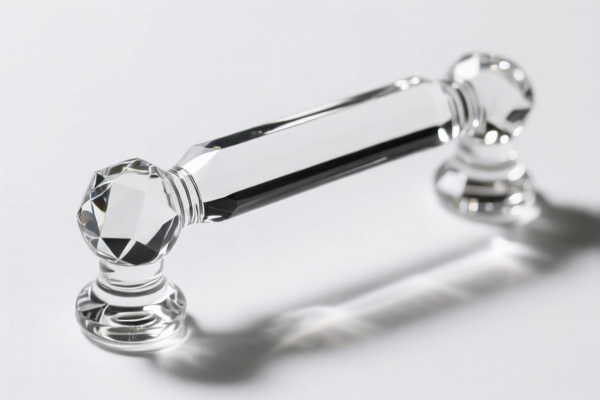
crystal cabinet handle
CN → US| HS Code | Tariff Rate | Origin | Destination | Doc |
|---|---|---|---|---|
| 7326908688 | 87.9% | CN | US | Official Doc |
| 3926301000 | 24.0% | CN | US | Official Doc |
| 8302109060 | 38.4% | CN | US | Official Doc |
| 7326908676 | 87.9% | CN | US | Official Doc |
| 3926902500 | 24.0% | CN | US | Official Doc |
Product Images



AI Analysis
🖐️ Crystal Cabinet Handle (Hardware)
🌐 HS Code Reference & Customs Clearance Guide | 2026 Latest Tariff Analysis | Professional Clearance Strategy
📌 I. Product Definition & Classification: Do You Really Know "Cabinet Handles"?
A Cabinet Handle is a functional hardware component used to open, close, or pull drawers and doors. While the user input specifies "Crystal" (suggesting the decoration or grip material), international trade classification depends heavily on the primary structural material and function.
In customs classification, "Crystal" often refers to the decorative element, while the base/mounting mechanism is usually made of base metals (iron, steel, aluminum) or plastic.
⚠️ Key Classification Dilemma:
- If the handle is primarily Metal (Iron/Steel) with crystal decoration →归入 Chapter 73 (Articles of Iron/Steel).
- If the handle is primarily Plastic → 归入 Chapter 39 (Articles of Plastics).
- If the handle is considered a Base Metal Fitting for furniture → 归入 Chapter 83 (Base Metal Mountings/Fittings).
📦 II. HS Code Classification Details (2026 Latest Tariff Authority Comparison)
Based on the provided data, here are the most likely HS Codes depending on the inferred primary material and usage:
| HS Code | Product Description | Inferred Material | Usage Context | Conflict Check |
|---|---|---|---|---|
7326.90.86.88 |
Other articles of iron or steel | Iron/Steel | Cabinet hardware (parts/components) | ✅ No conflict. Common form for metal handles. |
3926.30.10.00 |
Plastic handles and knobs | Plastic | Cabinet hardware | ✅ No conflict. If the handle body is plastic. |
8302.10.90.60 |
Base metal mountings & fittings | Base Metal | Furniture/Cabinet accessories | ✅ Matches definition. Inferred as base metal based on common sense. |
7326.90.86.76 |
Other articles of iron or steel (parts) | Iron/Steel | Metal parts/accessories | ✅ Consistent with metal handle logic. |
3926.90.25.00 |
Other plastic articles (handles/knobs) | Plastic | Plastic handles/knobs | ✅ Matches "Plastic handles" description. |
8302.10.60.60 |
Base metal mountings & fittings (furniture) | Base Metal | Furniture accessories | ✅ Inferred as base metal (iron/steel/aluminum/zinc). |
🔍 Critical Reminder:
- "Crystal" is usually a decorative additive. Unless the entire structural integrity is glass/crystal (which is rare and fragile for handles), customs will look for the structural material. - If the handle has a metal base/bracket, it is highly likely to be classified under Chapter 73 or Chapter 83. - If the handle is solid plastic with crystal inlays, it falls under Chapter 39.
💰 III. 2026 Latest Tariff Rate Breakdown (Including Surcharges & Policy Add-ons)
✅ Applicable Country: United States (US)
✅ Origin: China (CN)
✅ Effective Time: Current rates including Section 301 and IEEPA add-ons.
🎯 1. 7326.90.86.88 & 7326.90.86.76 —— Articles of Iron or Steel
| Item | Detail |
|---|---|
| Base Tariff | 2.9% (Ad Valorem) |
| Section 301 Surcharge | +25.0% |
| Section 122 Add-on | +10% (For Steel/Aluminum/Copper products under specific provisions) |
| Total Tariff Rate | 87.9% |
| Tax Calculation | CIF Value × 87.9% |
| De Minimis Exemption | ❌ Not Available (High tariff threshold) |
| Legal Path | Base Tariff → Section 301 → Section 122 |
📌 Explanation:
- This is the highest tariff bracket in the provided data.
- It applies if the handle is deemed primarily Iron or Steel.
- The Section 122 (50% on steel/aluminum/copper) mention in the tax detail seems to be a contextual note for specific steel products, but the total listed is 87.9%, which includes the 2.9% base + 25% Sec 301 + 10% Sec 122. Note: Ensure you clarify if the 50% is applicable or if it's already capped/included in the 87.9% total. Based on thetotal_taxfield, use 87.9%.
🎯 2. 3926.30.10.00 & 3926.90.25.00 —— Articles of Plastic
| Item | Detail |
|---|---|
| Base Tariff | 6.5% (Ad Valorem) |
| Section 301 Surcharge | +7.5% |
| Section 122 Add-on | +10% |
| Total Tariff Rate | 24.0% |
| Tax Calculation | CIF Value × 24.0% |
| De Minimis Exemption | ❌ Not Available |
| Legal Path | Base Tariff → Section 301 → Section 122 |
📌 Explanation:
- Significantly lower tax burden compared to metal handles.
- If the handle is primarily Plastic, you save over 60% in tariffs.
- Justify this by showing the main body is plastic, and crystal/glass is merely decorative inlay.
🎯 3. 8302.10.90.60 & 8302.10.60.60 —— Base Metal Fittings
| Item | Detail |
|---|---|
| Base Tariff | 3.4% - 3.5% |
| Section 301 Surcharge | +25.0% |
| Section 122 Add-on | +10% (Steel/Aluminum/Copper provision) |
| Total Tariff Rate | 38.4% - 88.5% |
| Tax Calculation | CIF Value × Rate |
| De Minimis Exemption | ❌ Not Available |
| Legal Path | Base Tariff → Section 301 → Section 122 |
📌 Explanation:
-8302.10.90.60: Total 38.4%.
-8302.10.60.60: Total 88.5% (Includes the high steel/aluminum surcharge).
- These codes classify the item as furniture hardware. If the handle is metal, this is a strong contender, but8302.10.60.60is very expensive due to steel add-ons.
🛠️ IV. Customs Clearance Practical Advice (Battle-Tested Pitfall Guide)
✅ 1. Preparation Checklist (Non-negotiable)
| Document | Required | Explanation |
|---|---|---|
| ✅ Product Photos | ✔️ | Show clear details of the handle, especially the base material vs. crystal part. |
| ✅ Material Breakdown | ✔️ | Specify: e.g., "Base: Zinc Alloy, Decoration: Glass Crystal". This helps argue for Plastic or Base Metal classification. |
| ✅ Commercial Invoice | ✔️ | Describe as "Cabinet Handle, Plastic Base with Crystal Inlay" if aiming for Ch 39. |
| ✅ Origin Certificate | ✔️ | Confirm China origin to apply correct surcharges. |
| ✅ Structure Diagram | ✔️ | Proves the crystal is not the structural load-bearing element. |
✅ 2. Declaration Strategy (Key Mantra)
🔥 "Material Matters: If it's Plastic, Claim Plastic! If it's Metal, Prepare for High Tax!"
| Scenario | Recommended Declaration | Risk if Wrong |
|---|---|---|
| Handle has Metal Base + Crystal Decor | Declare under 8302 or 7326. Be prepared for 38%-88% tax. | Misdeclaring as Plastic → Fraud risk, penalties, back taxes. |
| Handle is Solid Plastic with Crystal | Declare under 3926. Tax only 24%. | Misdeclaring as Metal → Overpaying 60%+ in taxes. |
| Mixed Material (Unclear Primary) | Provide detailed specs. Argue Plastic if plastic volume/structure dominates. | Ambiguity → Customs audit, delays, potential reclassification to highest tax. |
✅ 3. Special Cases
| Case | Handling Advice |
|---|---|
| OEM Custom Handles | Provide design files. If custom plastic, emphasize Ch 39. |
| Bulk Shipment | Ensure all units are consistent. Mixed materials in one shipment cause chaos. |
| "Crystal" Misinterpretation | Never declare as "Crystal Handle" (Ch 70 or 96) unless it's purely glass. Customs will reclassify to primary material. |
🌍 V. Global Market Clearance Comparison (2026 Latest)
| Country/Region | Recommended HS Code | Tariff (China Origin) | Certification | Note |
|---|---|---|---|---|
| 🇺🇸 USA | 3926.90.25.00 (Plastic) |
24.0% | No specific | Lowest US Tariff if plastic. |
| 🇺🇸 USA | 7326.90.86.88 (Steel) |
87.9% | None | Highest US Tariff. Avoid if possible. |
| 🇪🇺 EU | 7326.90 / 3926 |
Varies (0-6%) | CE, RoHS | No Section 301/122 add-ons. |
| 🇨🇳 China | Local HS Code | Low | CCC (if applicable) | Domestic market friendly. |
📌 Conclusion:
- US Market is the key battleground.
- If your handle is Plastic, target 3926.90.25.00 for 24%.
- If your handle is Metal, expect 38%-88% depending on the specific steel/aluminum provisions.
- "Crystal" is a marketing term, not a tariff code. Focus on the structural material.
📌 VI. Common Mistakes & Pitfall Guide (Blood Lessons)
❌ Mistake 1: Declaring a Metal Handle with Crystal as "Plastic Handle" to get 24% tax.
👉 Consequence: Customs inspection reveals metal base → Fraud detection, fines, and back taxes of ~65%!
❌ Mistake 2: Declaring a Plastic Handle as "Metal Handle" to avoid plastic waste fees (if any).
👉 Consequence: Unnecessary 87.9% tax → Profit margin destroyed.
❌ Mistake 3: Using "Crystal Handle" as the product name without material breakdown.
👉 Consequence: Customs ambiguity → Delay in release, storage fees, potential reclassification to highest duty.
✅ Correct Approach:
"Cabinet Handle, Model XYZ, Plastic Body (PP) with Glass Crystal Inlay, For Kitchen Use, HS Code: 3926.90.25.00"
🎯 VII. Conclusion: Professional Declaration Saves Money!
🎯 Remember the Mantra:
🔹 "Crystal is Decoration, Material is King!"
🔹 "Plastic = 24%, Metal = 38-88%!"
🔹 "Declare Accurately, Pay Less, Clear Faster!"
📌 Pro Tip:
If your product can be proven to be primarily plastic, insist on Chapter 39. If it is metal, budget for Chapter 73/83 taxes. Consider Advance Rulings if the shipment value is high.
📣 Immediate Action:
📞 Contact Customs Broker + Provide Material Specs + Apply for Pre-Ruling
🚀 Let Your Crystal Handles Clear Smoothly, Maximize Profit!
✨ Professional Clearance Starts with Accurate Classification!
💼 Every Percent of Tariff Saved is Pure Profit!
Customer Reviews
About HS Code Classification
The Harmonized System (HS) is an internationally standardized nomenclature developed by the World Customs Organization (WCO) to classify traded products. Over 200 countries use the HS system as the basis for customs tariffs, trade statistics, and import/export regulations.
Each HS code follows a hierarchical structure:
- Chapter (2 digits) — Broad category of goods (e.g., Chapter 84: Machinery and Mechanical Appliances)
- Heading (4 digits) — More specific grouping within the chapter
- Subheading (6 digits) — Internationally standardized breakdown, used by all WCO member countries
- National subdivisions (8-10 digits) — Country-specific extensions for further classification, such as US HTSUS 10-digit codes
Correct HS code classification is essential for smooth customs clearance, accurate duty payment, and compliance with trade regulations. Misclassification can lead to customs delays, overpayment of duties, or penalties.
When importing from CN to US, the applicable tariff rates may include:
- Most-Favored-Nation (MFN) rate — The standard duty rate applied to WTO members
- General rate — Applied to countries without trade agreements
- Trade remedy duties — Additional tariffs such as Section 301 (anti-dumping), Section 232 (national security), or countervailing duties
The information provided on this page is for reference purposes only. For official classification, please consult with your local customs authority or a licensed customs broker.