cue tip
CN → US| HS Code | Tariff Rate | Origin | Destination | Doc |
|---|---|---|---|---|
| 9603908050 | 70.3% | CN | US | Official Doc |
| 9603298090 | 0.0% | CN | US | Official Doc |
| 9504208000 | 10.0% | CN | US | Official Doc |
| 9504202000 | 17.5% | CN | US | Official Doc |
| 3926909989 | 22.8% | CN | US | Official Doc |
| 3926904590 | 13.5% | CN | US | Official Doc |
Product Images
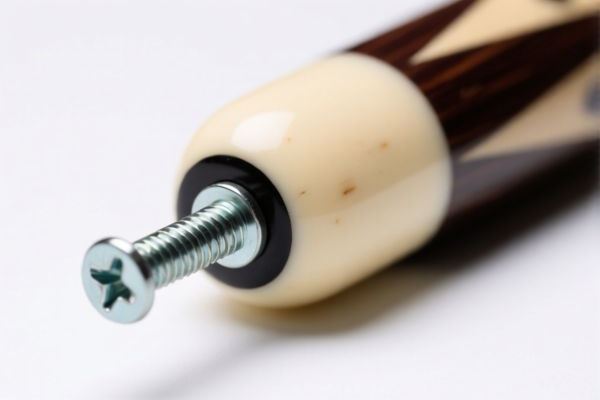
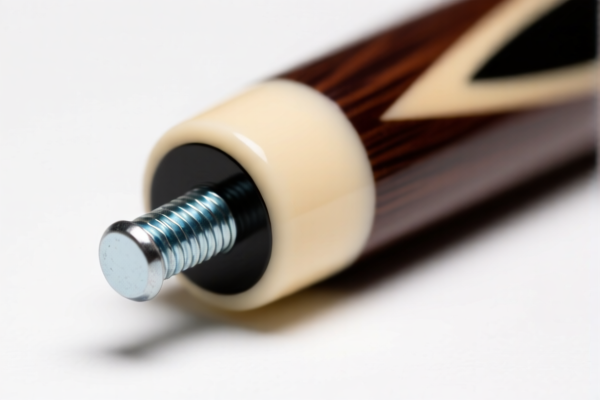
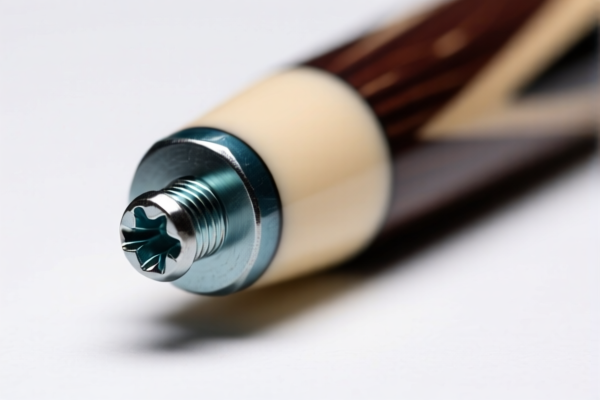
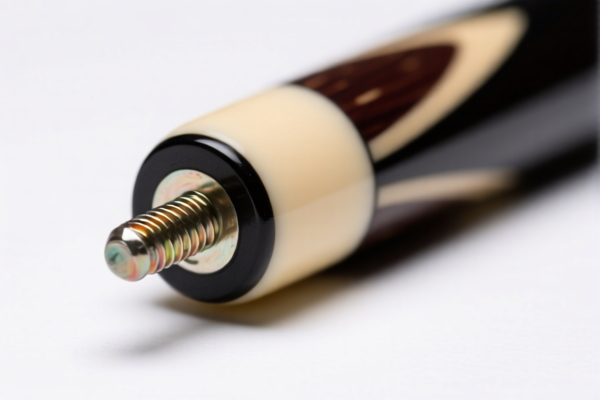
AI Analysis
🎱 Billiard Cue Tips: The Precision Point of Contact
🌐 HS Code Reference & Clearance Guide | 2026 Latest Tariff Analysis | Professional Clearance Strategy
📌 I. Product Definition & Classification: Do You Really Know What a "Cue Tip" Is?
A Cue Tip (often referred to as a "Cue Tip" or "Billiard Tip") is the small, usually leather or composite, attachment at the end of a billiard cue. It is the critical component that strikes the cue ball. In international trade, it is not classified as a complete billiard table or a standalone piece of furniture. Instead, it is categorized under "Articles and accessories for billiards of all kinds."
⚠️ Key Distinction:
- If the item is a replacement tip (leather, felt, or synthetic) intended to be attached to a cue → It is an Accessory for Billiards.
- If the item is a complete cue (stick + tip + shaft) → It may fall under different headings, but the tip itself is always an accessory.
- Do not confuse with "Balls": Cue tips are not billiard balls. Balls fall under9504.20.20.00. Tips fall under9504.20.80.00.
📦 II. HS Code Classification Details (2026 Latest Tariff Authority Comparison)
Based on the provided data, the correct HS Code for Cue Tips is explicitly defined under the category of "Other" articles and accessories for billiards.
| HS Code | Product Description | Application Scenario | Why This Code? |
|---|---|---|---|
9504.20.80.00 |
Other articles and accessories for billiards of all kinds (including parts and accessories) | Cue Tips, chalk, racks, brushes, cue cases, replacement parts for billiard tables | ✅ Correct. The description explicitly states: "Articles and accessories for billiards of all kinds: Other, including parts and accessories". Cue tips are integral accessories. |
9504.20.20.00 |
Articles and accessories for billiards of all kinds: Balls | Billiard balls (Pool balls, Snooker balls) | ❌ Incorrect for Tips. This is specifically for Balls. Do not misclassify tips here. |
🔍 Key Reminder:
- Cue Tips are parts/accessories of billiard equipment.
- The HS Code9504.20.80.00captures "Other" accessories, which includes tips, chalk, and brushes.
- Never classify cue tips under plastics (3926) unless they are purely decorative and not functional accessories for billiards, which is rare. Functional tips are billiard accessories.
💰 III. 2026 Latest Tariff Rate Details (Including Surtaxes & Policy Add-ons)
✅ Applicable Country: United States (US)
✅ Origin: China (CN)
✅ Effective Date: Current rates apply as per provided data.
🎯 1. 9504.20.80.00 —— Cue Tips & Billiard Accessories
| Item | Content |
|---|---|
| Basic Tariff | 0.0% |
| Surtax (Section 301 / Additional) | 7.5% |
| Total Tax Rate | 7.5% |
| Tax Calculation | CIF Value × 7.5% |
| De Minimis Eligibility | ⚠️ Check Carefully: While the base rate is low, high-value shipments or specific anti-dumping reviews may affect eligibility. Standard de minimis ($800) may apply if no other restrictions. |
| Legal Basis Path | USITC:9504.20.80.00 → Surtax:7.5% |
📌 Explanation:
- Basic Tariff 0%: Billiard accessories generally have low base tariffs.
- Surtax 7.5%: This is an additional tariff applied to Chinese-origin goods in this category.
- Total Cost Impact: For every $10,000 of CIF value, you pay $750 in duties.
- Note: This is significantly lower than industrial plastics or cleaning products, making it a relatively cost-effective import category if classified correctly.
🛠️ IV. Customs Clearance Practical Advice (Battle-Tested Pitfall Guide)
✅ 1. Documentation Checklist (Non-Negotiable)
| Document | Mandatory | Description |
|---|---|---|
| ✅ Commercial Invoice | ✔️ | Must clearly state "Billiard Cue Tips" or "Accessories for Billiards". Do not use vague terms like "Leather Goods" or "Plastic Parts". |
| ✅ Packing List | ✔️ | Itemize contents. If mixing tips with chalk or brushes, list each separately if possible to clarify HS codes. |
| ✅ Product Specification Sheet | ✔️ | Material composition (e.g., "Genuine Leather", "Felt", "Composite Resin"). This helps customs determine if it’s truly a billiard accessory. |
| ✅ Proof of Origin | ✔️ | If claiming any potential FTAA benefits (unlikely for US-China), provide CO. For standard imports, it confirms CN origin for surtax calculation. |
✅ 2. Declaration Tips (Key Mantras)
🔥 "Be Specific: 'Cue Tip', Not 'Leather Part'!"
| Scenario | Correct Declaration | Wrong Declaration |
|---|---|---|
| Leather Cue Tips | Billiard Cue Tips (HS 9504.20.80.00) |
Leather Parts for Sports Equipment → Risk of misclassification to 3926 or 4203 |
| Synthetic/Felt Tips | Synthetic Billiard Tips (HS 9504.20.80.00) |
Plastic Components → Risk of 3926.90.99.89 (12.8% + surtax) |
| Bulk Packaging | 1000 pcs Billiard Cue Tips |
Miscellaneous Accessories → High risk of audit |
✅ 3. Special Handling
| Scenario | Handling Advice |
|---|---|
| Mixed Materials | If tips have plastic ferrules (metal/plastic collars), the principal material determines classification. For tips, the striking surface (leather/felt) is key, but the whole item is an accessory. |
| OEM/Custom Tips | Provide design drawings or sample photos to prove they are specifically for billiard cues, not general craft items. |
| High-Value Premium Tips | Even if expensive, they remain accessories. Do not let high value trigger a reclassification to "jewelry" or "luxury goods". |
🌍 V. Global Main Market Clearance Comparison (2026 Latest)
| Country/Region | Recommended HS Code | Tariff | Certification | Notes |
|---|---|---|---|---|
| 🇺🇸 United States | 9504.20.80.00 |
7.5% (China Origin) | None Standard | Base 0% + 7.5% surtax. |
| 🇪🇺 European Union | 9504.20.80 |
0% (General) | CE (if applicable) | EU often has 0% for sports goods. |
| 🇨🇳 China | 9504.20.80 |
8% | CCC (if applicable) | Import duty for foreign goods. |
| 🇯🇵 Japan | 9504.20.80 |
0% | PSE (if electronic, not here) | Low tariffs for sports accessories. |
📌 Conclusion:
- The US surtax of 7.5% is the main cost factor for Chinese-origin cue tips.
- Other major markets (EU, Japan) often have 0% tariffs, making them more attractive if supply chain diversification is possible.
- Always confirm if the surtax applies to your specific supplier's origin.
📌 VI. Common Errors & Pitfall Guide (Lessons from the Frontlines)
❌ Error 1: Classifying Cue Tips under Plastics (3926.90.99.89)
👉 Consequence: Tax jumps from 7.5% to 12.8% (Base 5.3% + Surtax 7.5%). Unnecessary cost increase!
👉 Fix: Always classify as Billiard Accessories (9504.20.80.00) unless they are purely decorative plastic figurines.
❌ Error 2: Confusing Cue Tips with Billiard Balls (9504.20.20.00)
👉 Consequence: While the tax rate is similar (7.5%), incorrect description can lead to clearance delays and audits. Customs may suspect misdeclaration.
👉 Fix: Use distinct product names: "Tips" vs. "Balls".
❌ Error 3: Calling them "Leather Goods" (4203)
👉 Consequence: Higher base tariff (often 10-12%) and potential additional regulations.
👉 Fix: Emphasize their function as billiard accessories, not general leather goods.
✅ Correct Practice:
"Billiard Cue Tips, Material: Leather/Felt, Quantity: 500pcs, HS Code: 9504.20.80.00, Origin: China"
🎯 VII. Conclusion: Precision in Classification, Precision in Savings!
🎯 Remember the Mantra:
🔹 "Tip is an Accessory, Not a Ball or Plastic!"
🔹 "9504.20.80.00 is your Gold Code for Billiard Tips!"
🔹 "7.5% Total Tax is Low, But Misclassification is Expensive!"
📌 Pro Tip:
If you are importing large volumes, consider negotiating FOB terms carefully to keep the CIF value low, thereby reducing the 7.5% surtax base. Always keep product photos of the tips in their packaging to prove they are specifically for billiard cues.
📣 Immediate Action:
📞 Work with a Customs Broker to pre-classify your specific cue tip material (leather vs. synthetic).
🚀 Ensure your invoice description is precise to avoid delays and incorrect tax assessments.
💼 Your bottom line depends on this 7.5%!
✨ Professional Clearance, Starting with Accurate Classification!
💼 Every Cent Saved is a Cent Earned!
Customer Reviews
About HS Code Classification
The Harmonized System (HS) is an internationally standardized nomenclature developed by the World Customs Organization (WCO) to classify traded products. Over 200 countries use the HS system as the basis for customs tariffs, trade statistics, and import/export regulations.
Each HS code follows a hierarchical structure:
- Chapter (2 digits) — Broad category of goods (e.g., Chapter 84: Machinery and Mechanical Appliances)
- Heading (4 digits) — More specific grouping within the chapter
- Subheading (6 digits) — Internationally standardized breakdown, used by all WCO member countries
- National subdivisions (8-10 digits) — Country-specific extensions for further classification, such as US HTSUS 10-digit codes
Correct HS code classification is essential for smooth customs clearance, accurate duty payment, and compliance with trade regulations. Misclassification can lead to customs delays, overpayment of duties, or penalties.
When importing from CN to US, the applicable tariff rates may include:
- Most-Favored-Nation (MFN) rate — The standard duty rate applied to WTO members
- General rate — Applied to countries without trade agreements
- Trade remedy duties — Additional tariffs such as Section 301 (anti-dumping), Section 232 (national security), or countervailing duties
The information provided on this page is for reference purposes only. For official classification, please consult with your local customs authority or a licensed customs broker.