curb ramp
CN → US| HS Code | Tariff Rate | Origin | Destination | Doc |
|---|---|---|---|---|
| 7308909530 | 85.0% | CN | US | Official Doc |
| 7308909560 | 85.0% | CN | US | Official Doc |
| 860190 | 0.0% | CN | US | Official Doc |
| 870899 | 0.0% | CN | US | Official Doc |
| 6810910000 | 35.0% | CN | US | Official Doc |
| 6810110070 | 38.2% | CN | US | Official Doc |
| 3926909940 | 22.8% | CN | US | Official Doc |
| 3926909989 | 22.8% | CN | US | Official Doc |
Product Images
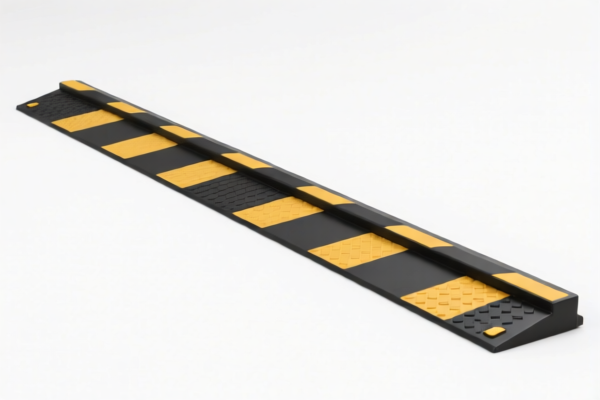
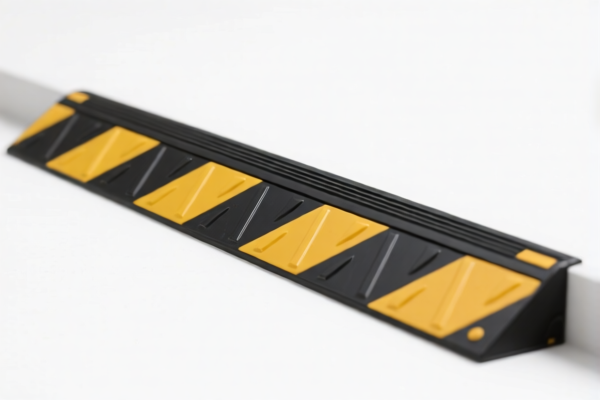
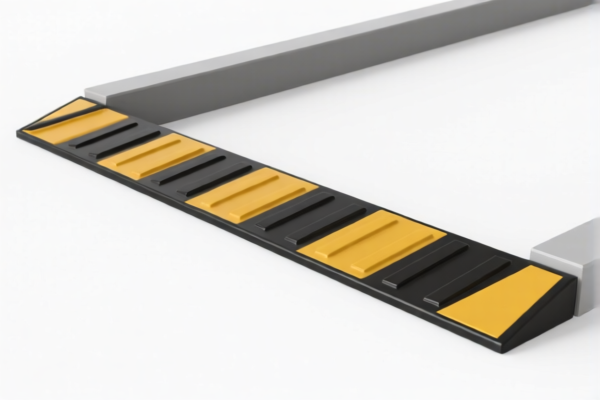
AI Analysis
🚧 Curb Ramps (Pedestrian & Railway Access Solutions)
🌐 HS Code Reference & Customs Clearance Guide | 2026 Latest Tariff Analysis | Professional Clearance Strategy
📌 I. Product Definition & Classification: What Exactly is a "Curb Ramp"?
A Curb Ramp is an architectural and infrastructure component designed to bridge the height difference between a street level and a sidewalk, ensuring accessibility for pedestrians, wheelchair users, and maintenance vehicles. In international trade, these products are highly specific. Misclassification is common because the duty rate varies drastically depending on the material (metal vs. concrete/plastic) and the application (railway vs. general road).
Key Distinction: - Metal/Steel Curbs: Often treated as structural iron/steel articles or railway accessories. - Concrete/Artificial Stone: Treated as building materials. - Plastic/Rubber: Treated as plastic articles or vehicle parts (depending on design).
⚠️ Critical Warning:
- If the ramp is made of metal and intended for railways/trams, it falls under 8601.90.
- If the ramp is made of metal for general roads, it often falls under 7308.90 (Structural parts of iron/steel).
- If the ramp is made of concrete/plastic, it falls under 6810 or 3926.
- Do not assume "Curb Ramp" is a single HS code. The material dictates the tariff!
📦 II. HS Code Classification Matrix (2026 Latest Tariff Reference)
| HS Code | Product Description | Material/Type | Application | Base Tariff | Added Tariff (US) | Total Effective Tax |
|---|---|---|---|---|---|---|
6810.91.00.00 |
Articles of cement, concrete, or artificial stone; Prefabricated structural components | Concrete/Cement | Building/Civil Engineering | 0.0% | 25.0% | 25.0% |
6810.11.00.70 |
Building blocks and bricks (including similar curb blocks) | Concrete/Cement | General Construction | 0.0% | 0.0% | 0.0% |
7308.90.95.30 |
Structures of iron/steel; Sheet-metal roofing/siding/rain gear | Steel/Metal | Road/Rail Infrastructure (Metal) | 0.0% | 25% + 50% (Steel Surcharge) | 75.0% |
7308.90.95.60 |
Structures of iron/steel; Architectural/Ornamental work | Steel/Metal | Road/Rail Infrastructure (Metal) | 0.0% | 25% + 50% (Steel Surcharge) | 75.0% |
8601.90 |
Other locomotives; Parts thereof | Metal | Railway/Tramway Systems | Error | Error | Error (Data Missing) |
8708.99 |
Parts and accessories of motor vehicles | Rubber/Plastic | Pedestrian/Road Curbs | Error | Error | Error (Data Missing) |
3926.90.99.40 |
Other articles of plastics; Covers, rings/frames for manholes; drainage gates | Plastic | Drainage/Manhole Covers/Ramps | 0.0% | 0.0% | 0.0% |
3926.90.99.89 |
Other articles of plastics; Other | Plastic | General Plastic Infrastructure | 5.3% | 7.5% | 12.8% |
🔍 Important Note on Data Gaps:
-8601.90(Railway Metal Ramps) and8708.99(Rubber/Plastic Ramps) show "Failed to retrieve tax information" in the source data.
- Risk Alert: When tax data is missing, customs may apply the General Most Favored Nation (MFN) rate or subject the goods to additional scrutiny. You must verify the exact MFN rate with a local customs broker, as it is not explicitly provided in theDATAset.
💰 III. Detailed Tax Analysis & Policy Explanation (USA Source)
✅ Applicable Country: United States (US)
✅ Origin: China (CN)
✅ Context: 2026 Tariff Structure including Section 301 & Steel/Aluminum Surcharges
🎯 1. Concrete & Artificial Stone (6810 Series)
| HS Code | Total Tax | Explanation |
|---|---|---|
6810.91.00.00 |
25.0% | - Base: 0% - Section 301 Surcharge: 25% - Note: High-profile prefabricated components attract the standard steel/industrial surcharge. |
6810.11.00.70 |
0.0% | - Base: 0% - Surcharge: 0% - Note: Classified as basic "building blocks/bricks." If your curb ramp is designed to look like a standard concrete block, it may qualify for 0%. Strategy: Emphasize "interlocking block" design in documentation. |
🎯 2. Metal/Steel Curb Ramps (7308 Series) — HIGH RISK AREA
| HS Code | Total Tax | Explanation |
|---|---|---|
7308.90.95.307308.90.95.60 |
75.0% | - Base: 0% - Section 301 Surcharge: 25% - Steel/Aluminum Surcharge (Section 232): 50% - Total: 75%! - Why so high? The tax data explicitly states: "Steel, Aluminum, Copper products surcharge: 50%." Any metal curb ramp imported into the US is subject to this massive penalty. |
📌 Interpretation:
- If your curb ramp is made of steel, iron, or aluminum, the duty is 75%. This is punitive.
- There is no de minimis exemption for Section 232 goods in most commercial shipments.
🎯 3. Plastic & Rubber Ramps (3926 / 8708)
| HS Code | Total Tax | Explanation |
|---|---|---|
3926.90.99.40 |
0.0% | - Base: 0% - Surcharge: 0% - Note: Specifically covers "covers, rings, frames for manholes; drainage gates." If the plastic ramp is structurally a "cover" or "drainage frame," it may qualify. |
3926.90.99.89 |
12.8% | - Base: 5.3% - Surcharge: 7.5% - Note: Generic "other plastic articles." If the product doesn't fit the specific "manhole/drainage" definition, it falls here. |
8601.90 / 8708.99 |
Unknown/Error | - Data Missing: Tax details are "Failed to retrieve." - Action Required: Must consult US HTSUS for MFN rates. Do not assume 0%. |
🛠️ IV. Customs Clearance Recommendations (Practical Pitfall Avoidance)
✅ 1. Preparation Checklist (Critical for Metal/Plastic)
| Document | Requirement | Why? |
|---|---|---|
| Product Specification Sheet | ✔️ Mandatory | Must clearly state Material Composition (e.g., "100% HDPE Plastic" vs. "Galvanized Steel"). |
| Design Drawings | ✔️ Mandatory | For metal ramps, drawings help argue whether it's a "structural part" (7308) or "railway part" (8601). |
| Commercial Invoice | ✔️ Mandatory | Do NOT just write "Curb Ramp." Write: "Plastic Drainage Frame for Road Curb, Model XYZ, Made of HDPE" or "Steel Architectural Curb Edge, Galvanized." |
| Photo Documentation | ✔️ Mandatory | Show the product installed. If it looks like a "block," it might argue for 6810.11. If it looks like a "frame," it might argue for 3926.90.99.40. |
✅ 2. Classification Strategy (How to Minimize Duty)
| Scenario | Recommended Strategy | Potential HS Code | Duty |
|---|---|---|---|
| Metal Ramp | Avoid if possible. If unavoidable, verify if it qualifies as "Railway Part" (8601) rather than "Steel Structure" (7308). Railway parts might have different rates, but data is missing. |
8601.90 |
Verify |
| Plastic Ramp | Argue that the product is a "Drainage Gate/Frame" or "Manhole Cover" accessory. This allows usage of 3926.90.99.40 (0% duty). |
3926.90.99.40 |
0.0% |
| Concrete Ramp | If it's a simple block-style ramp, classify as "Building Block" (6810.11.00.70) to get 0% duty. If it's a complex prefabricated structure, accept 25%. |
6810.11.00.70 |
0.0% |
🔥 Golden Rule:
"Material is King. Metal = 75%. Plastic/Concrete = 0-25%."
If you can switch from Metal to Plastic/Concrete, you save 50-75% in duties!
✅ 3. Special Handling for "Error" Codes (8601.90, 8708.99)
- For Railway Ramps (
8601.90): Since tax data is missing, this is a high-compliance risk area. US Customs may classify it under a different heading if the "railway" intent is not proven. Requirement: Provide a letter of certification from the railway authority or engineering firm stating these ramps are specifically designed for railway/tramway transition. - For Rubber/Ramp (
8708.99): This is typically for vehicle parts. A curb ramp is unlikely to be a "part of a motor vehicle." If misclassified here, it may be rejected. Ensure the description emphasizes "Pedestrian/Infrastructure Use" not "Automotive Use."
🌍 V. Global Market Comparison (2026 Outlook)
| Market | Preferred HS Code | Est. Duty | Notes |
|---|---|---|---|
| 🇺🇸 USA | 3926.90.99.40 (Plastic)7308.90.95 (Metal) |
0% (Plastic) 75% (Metal) |
Steel surcharge (50%) is the killer. Plastic is the safest bet. |
| 🇨🇳 China | 3926.90 or 7308 |
Varies | Check local tariff schedules. |
| 🇪🇺 EU | 3926 or 7308 |
0-6.5% | No Section 301/232 surcharges. Metal is much cheaper in EU than US. |
| 🇨🇦 Canada | 3926 or 7308 |
0-5% | CUSMA eligible if originating. |
📌 Conclusion:
- The US market is hostile to metal construction materials due to the 50% steel surcharge.
- Plastic and Concrete alternatives are significantly more competitive in the US due to 0% or low tariffs.
📌 VI. Common Errors & Pitfalls
❌ Error 1: Labeling a Steel Ramp as "Plastic"
👉 Consequence: Fraud investigation, seizure, and penalties.
❌ Error 2: Using 7308 for Railway Ramps without proof
👉 Consequence: Customs reclassifies to higher duty rate or denies entry.
❌ Error 3: Assuming 8601.90 is 0% because it's missing data
👉 Consequence: Unpaid duties discovered later during post-entry audit.
❌ Error 4: Mixing "Drainage Frames" with "Structural Supports"
👉 Consequence: If the ramp is primarily structural, 3926.90.99.40 (0%) may be challenged.
✅ Correct Description Example:
"Interlocking Plastic Curb Ramp for Pedestrian Accessibility, Made of Recycled HDPE, Functioning as Drainage Frame, Model CR-100."
(This supports classification under3926.90.99.40for 0% duty.)
🎯 VII. Final Verdict & Action Plan
🎯 For Importers into the USA:
1. Avoid Steel/Aluminum Curb Ramps if possible due to the 75% total duty.
2. Switch to Plastic: Classify as 3926.90.99.40 (0% duty) by emphasizing the "drainage frame/manhole cover" function.
3. Concrete Option: Use 6810.11.00.70 (0% duty) if the design allows "block-like" classification.
4. Railway Specifics: If you must import metal railway ramps, prepare extensive documentation to justify 8601.90 and verify the MFN rate with a broker, as the 50% steel surcharge might still apply depending on interpretation.
📞 Immediate Action:
📄 Request a Binding Ruling (Pre-Advisory) from US Customs if your product is borderline between Plastic (
3926) and Structural Metal (7308).
📉 Cost Saving: Shifting from Metal to Plastic can save 50-75% on landed costs.
✨ Professional Customs Clearance Starts with Accurate Classification!
💼 Don't let the Steel Surcharge destroy your margin. Choose the right HS Code!
Customer Reviews
About HS Code Classification
The Harmonized System (HS) is an internationally standardized nomenclature developed by the World Customs Organization (WCO) to classify traded products. Over 200 countries use the HS system as the basis for customs tariffs, trade statistics, and import/export regulations.
Each HS code follows a hierarchical structure:
- Chapter (2 digits) — Broad category of goods (e.g., Chapter 84: Machinery and Mechanical Appliances)
- Heading (4 digits) — More specific grouping within the chapter
- Subheading (6 digits) — Internationally standardized breakdown, used by all WCO member countries
- National subdivisions (8-10 digits) — Country-specific extensions for further classification, such as US HTSUS 10-digit codes
Correct HS code classification is essential for smooth customs clearance, accurate duty payment, and compliance with trade regulations. Misclassification can lead to customs delays, overpayment of duties, or penalties.
When importing from CN to US, the applicable tariff rates may include:
- Most-Favored-Nation (MFN) rate — The standard duty rate applied to WTO members
- General rate — Applied to countries without trade agreements
- Trade remedy duties — Additional tariffs such as Section 301 (anti-dumping), Section 232 (national security), or countervailing duties
The information provided on this page is for reference purposes only. For official classification, please consult with your local customs authority or a licensed customs broker.