cycling water bottle
CN → US| HS Code | Tariff Rate | Origin | Destination | Doc |
|---|---|---|---|---|
| 3924104000 | 13.4% | CN | US | Official Doc |
| 3924905650 | 20.9% | CN | US | Official Doc |
Product Images
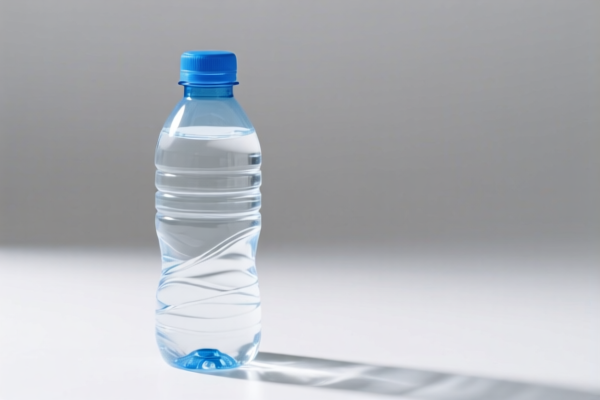
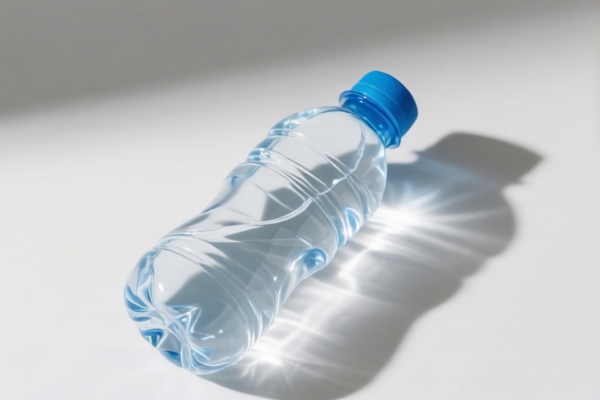
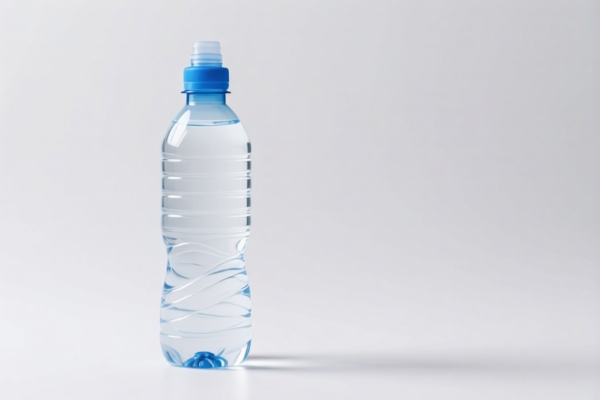
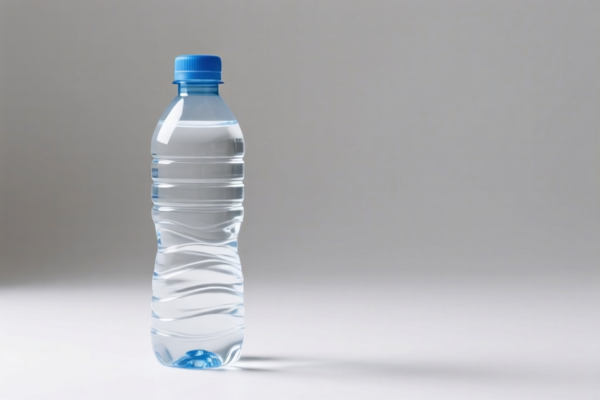
AI Analysis
🚴♂️ Cycling Water Bottle (Sports Hydration Vessels)
🌐 HS Code Reference & Customs Clearance Guide | 2026 Latest Tariff Analysis | Professional Clearance Strategy
📌 I. Product Definition & Classification: Do You Really Understand a "Cycling Water Bottle"?
A cycling water bottle is not merely a container; it is a specialized sports accessory designed for high-efficiency hydration during athletic activities. In international trade, these items fall under the broad category of "Plastic Articles for Household Use." However, the specific classification depends on whether the bottle is considered "tableware/kitchenware" or a general "household article."
Key Distinction: - Standard Plastic Bottles (No Integrated Mechanism): Usually classified as general household articles. - Specialized Sports Bottles (with valves/straws): Often grouped under tableware/kitchenware if designed for direct oral consumption from the container, similar to cups or mugs.
⚠️ Critical Classification Point:
- If the item is a simple plastic bottle with a screw cap or flip-top, it may fall under 3924.90 (Other household articles).
- If it is explicitly marketed and designed as "tableware" (e.g., reusable drinking cups/bottles for human consumption), it falls under 3924.10 (Tableware and kitchenware).
- Note: Customs authorities often scrutinize whether "sports bottles" are truly "tableware." However, recent trends and specific sub-headings favor classifying dedicated drinking vessels under 3924.10 or 3924.90 depending on material and design complexity.
📦 II. HS Code Classification Details (2026 Latest Tariff Authority Comparison)
| HS Code | Product Description | Applicable Scenario | Classification Logic |
|---|---|---|---|
3924.10.40.00 |
Tableware and kitchenware of plastics: Other | Reusable sports bottles, drinking cups, mugs (Plastic) | ✅ Classified as Tableware/Kitchenware |
3924.90.56.50 |
Other household articles of plastics: Other Other | Generic plastic containers, non-tableware bottles, storage containers | ✅ Classified as Other Household Articles |
🔍 Key Reminder:
-3924.10.40.00: Applies to items that are clearly "tableware" (used for eating/drinking). If your cycling bottle is a reusable, washable container intended for direct drinking, this is the most common classification for Plastic bottles.
-3924.90.56.50: Applies to plastic items that are not tableware/kitchenware (e.g., plastic frames for bottles, non-drinking containers, or items not primarily for oral consumption).
- Material Matters: This guide assumes Plastic material (Chapter 39). If the bottle is Stainless Steel (Chapter 73) or Glass (Chapter 70), these codes DO NOT APPLY.
💰 III. 2026 Latest Tariff Rate Breakdown (Including Surtaxes & Policy Add-ons)
✅ Applicable Country: United States (US)
✅ Country of Origin: China (CN)
✅ Effective Time: 2025/2026 Tariff Schedule (Post-Trade War Adjustments)
🎯 1. 3924.10.40.00 —— Tableware/Kitchenware (Plastic)
| Item | Content |
|---|---|
| Base Tariff Rate | 3.4% (Ad Valorem) |
| Section 301 Surtax (USITC) | 0.0% |
| Total Tariff Rate | 3.4% |
| Tax Calculation | CIF Value × 3.4% |
| De Minimis Eligibility | ❌ No (If value > $800, standard duties apply; if < $800, may be duty-free under Section 321, but surtaxes may still apply depending on enforcement) |
| Legal Basis | HTSUS:3924.10.40.00 → USITC Footnote |
📌 Explanation:
- Base Rate: The standard Most Favored Nation (MFN) rate for plastic tableware is 3.4%.
- Surtax: Currently, many plastic tableware items from China are exempt from the 25% Section 301 surtax, or the surtax is 0% for specific sub-headings. Verify current USITC exclusion lists.
- Result: A relatively low-cost classification compared to electronics or textiles.
🎯 2. 3924.90.56.50 —— Other Household Articles (Plastic)
| Item | Content |
|---|---|
| Base Tariff Rate | 3.4% (Ad Valorem) |
| Section 301 Surtax (USITC) | 7.5% |
| Total Tariff Rate | 10.9% |
| Tax Calculation | CIF Value × 10.9% |
| De Minimis Eligibility | ❌ No (Subject to standard duties) |
| Legal Basis | HTSUS:3924.90.56.50 → USITC Footnote |
📌 Explanation:
- Base Rate: Also 3.4%.
- Surtax: This specific sub-heading is subject to a 7.5% additional tariff (Section 301 or similar trade remedies).
- Result: Higher tax burden than tableware classification.
🛠️ IV. Customs Clearance Practical Advice (Battle-Tested Pitfall Guide)
✅ 1. Document Checklist (Non-Negotiable)
| Document | Mandatory? | Explanation |
|---|---|---|
| ✅ Product Specification Sheet | ✔️ | Must state: Material (e.g., HDPE, PP, Tritan), Capacity, Intended Use (Sports/Drinking). |
| ✅ Product Photos | ✔️ | Clear images of the bottle, cap mechanism, and any branding. Must show it’s a drinking vessel. |
| ✅ Commercial Invoice | ✔️ | Description must match HS Code logic. Use terms like "Reusable Plastic Sports Water Bottle" or "Plastic Tableware." |
| ✅ Material Declaration | ✔️ | Confirm 100% Plastic (Chapter 39). If it contains metal parts (e.g., steel lid), classification may change to mixed material. |
| ✅ FCC/Prop 65 Compliance | ✔️ | If marketed in California, ensure Prop 65 warning if applicable. |
✅ 2. Declaration Strategy (Key Mantras)
🔥 “Material First, Use Defines Code, Tableware is Cheaper!”
| Scenario | Correct HS Code | Wrong Approach | Consequence |
|---|---|---|---|
| Plastic Bottle for Drinking | 3924.10.40.00 (3.4%) |
Declare as "Container" (3924.90) | Pay extra 7.5% tax unnecessarily |
| Plastic Bottle with Metal Parts | 3924.10.40.00 or 7323.99 |
Declare as pure plastic | Customs may reclassify and penalize |
| Glass/Metal Bottle | Not 3924.xxxx | Use 3924 codes | Rejected – Wrong Chapter |
✅ 3. Special Case Handling
| Situation | Handling Advice |
|---|---|
| Bottle with Silicone Sleeve | If silicone is the primary feature, it might fall under Chapter 40. If plastic body is dominant, stay in Chapter 39. |
| Disposable Bottles | Still 3924.10.40.00 if designed for single-use drinking. |
| Custom Shaped Bottles | As long as it’s for drinking, it’s tableware. Design doesn’t change the function. |
🌍 V. Global Market Customs Comparison (2026 Latest)
| Country/Region | Recommended HS Code | Tariff | Certification | Notes |
|---|---|---|---|---|
| 🇺🇸 USA | 3924.10.40.00 |
3.4% | No special certs | Best for tax optimization |
| 🇨🇳 China | 3924.10.40.00 |
6.5% | None | Import tax is higher |
| 🇪🇺 EU | 3924.10.40.00 |
0% - 6.5% | CE (if toy-like) / Food Contact | Varies by member state |
| 🇬🇧 UK | 3924.10.40.00 |
0% - 6.5% | UKCA | Post-Brexit rules apply |
| 🇦🇺 Australia | 3924.10.40.00 |
5% | SAA | Low risk clearance |
📌 Conclusion:
- USA: Classify as Tableware (3924.10.40.00) to save 7.5% in surtaxes.
- EU/UK: Generally low or zero tariffs for plastic tableware if proper standards met.
📌 VI. Common Errors & Pitfall Guide (Lessons Learned)
❌ Error 1: Classifying a plastic water bottle as 3924.90.56.50
👉 Consequence: Pay 10.9% instead of 3.4%. You lose 7.5% in unnecessary taxes.
👉 Fix: Prove it is "tableware" (used for drinking).
❌ Error 2: Claiming it’s "Sports Equipment" (e.g., 9503)
👉 Consequence: Customs will reject. Water bottles are not "toys" or "professional sports gear" (like bikes).
👉 Fix: Stick to Chapter 39 (Plastics) or Chapter 73/70 for non-plastic.
❌ Error 3: Ignoring Material Composition
👉 Consequence: If the bottle has a steel cap (30% metal), it might be a "mixed material" good, potentially changing the chapter.
👉 Fix: Check the "principal character" test. If plastic >50% by weight/value, Chapter 39 is usually safe.
✅ Correct Declaration Example:
"Reusable Plastic Sports Water Bottle, 750ml, Made of BPA-Free Tritan Plastic, for Cycling/Hydration. HS Code: 3924.10.40.00."
🎯 VII. Conclusion: Professional Declaration, Maximize Profit!
🎯 Remember Mantra:
🔹 "Plastic Bottle = Tableware = 3.4% Tax."
🔹 "Don’t declare as 'Other Household' unless you must = 10.9% Tax."
🔹 "Check material: If Steel/Glass, Forget Chapter 39!"
📌 Pro Tip:
- If your bottles are made in Vietnam, Malaysia, or Thailand, you may qualify for FTA benefits (e.g., CPTPP, ASEAN-Australia FTA), potentially reducing US tariffs to 0%.
- Always request a Binding Tariff Information (BTI) or Advance Ruling from US Customs if you are shipping large volumes.
📣 Immediate Action:
📞 Verify Material % → 📝 Declare as
3924.10.40.00→ 💰 Save 7.5% Tax!
🚀 Smooth Clearance, Lower Costs, Higher Margins!
✨ Professional Customs Clearance Starts with Accurate Classification!
💼 Every Percentage Point Counts in Global Trade!
Customer Reviews
About HS Code Classification
The Harmonized System (HS) is an internationally standardized nomenclature developed by the World Customs Organization (WCO) to classify traded products. Over 200 countries use the HS system as the basis for customs tariffs, trade statistics, and import/export regulations.
Each HS code follows a hierarchical structure:
- Chapter (2 digits) — Broad category of goods (e.g., Chapter 84: Machinery and Mechanical Appliances)
- Heading (4 digits) — More specific grouping within the chapter
- Subheading (6 digits) — Internationally standardized breakdown, used by all WCO member countries
- National subdivisions (8-10 digits) — Country-specific extensions for further classification, such as US HTSUS 10-digit codes
Correct HS code classification is essential for smooth customs clearance, accurate duty payment, and compliance with trade regulations. Misclassification can lead to customs delays, overpayment of duties, or penalties.
When importing from CN to US, the applicable tariff rates may include:
- Most-Favored-Nation (MFN) rate — The standard duty rate applied to WTO members
- General rate — Applied to countries without trade agreements
- Trade remedy duties — Additional tariffs such as Section 301 (anti-dumping), Section 232 (national security), or countervailing duties
The information provided on this page is for reference purposes only. For official classification, please consult with your local customs authority or a licensed customs broker.