dairy processing machinery
CN → US| HS Code | Tariff Rate | Origin | Destination | Doc |
|---|---|---|---|---|
| 8434100000 | 17.5% | CN | US | Official Doc |
| 8419899560 | 39.2% | CN | US | Official Doc |
| 8434200000 | 35.0% | CN | US | Official Doc |
| 8419390270 | 35.0% | CN | US | Official Doc |
| 8434100000 | 17.5% | CN | US | Official Doc |
Product Images
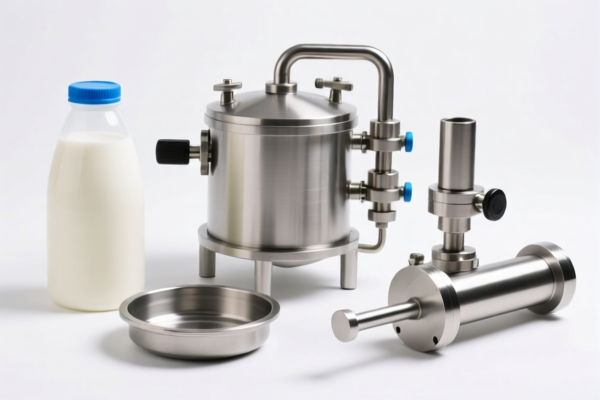
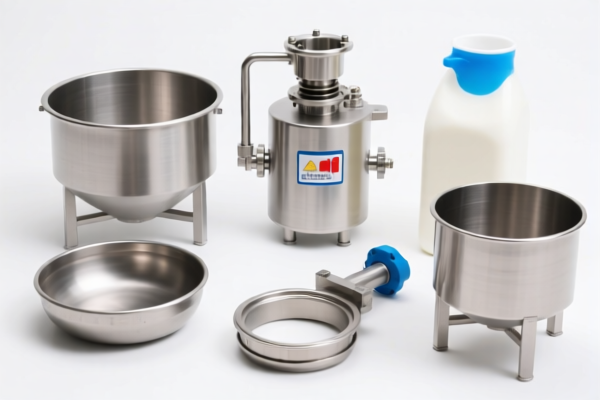
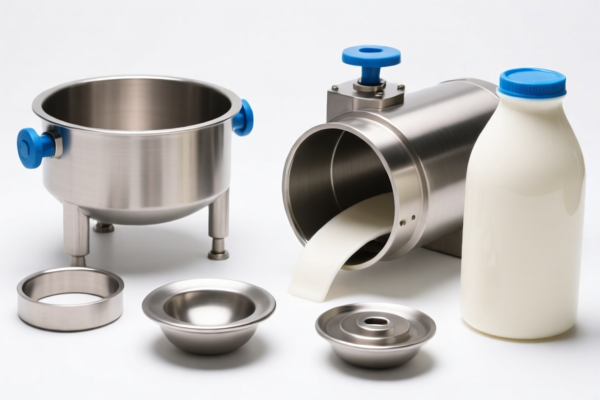
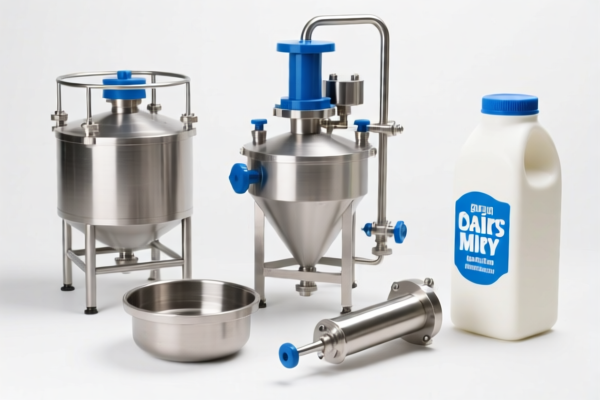
AI Analysis
🥛 Dairy Processing Machinery: The Ultimate HS Code & Tariff Breakdown (2026 Guide)
🌐 HS Code Reference & Customs Clearance Guide | 2026 Latest Tariff Analysis | Professional Clearance Strategy
📌 I. Product Definition & Classification: Do You Truly Understand "Dairy Machinery"?
Dairy processing machinery is a broad category encompassing equipment used for the collection, separation, pasteurization, sterilization, cooling, and packaging of milk and dairy products. In international trade, precise classification is critical because tariffs vary drastically depending on the specific function (e.g., milking vs. processing/pasteurization).
Key Distinction: * Milking & Direct Collection Equipment: Machines designed for extracting milk from animals (e.g., milking machines, milk coolers directly at the source). These generally carry lower tariffs. * Processing & Transformation Equipment: Machines designed to alter the state of the product (e.g., pasteurizers, homogenizers, separators, UHT plants). These are often subject to higher tariffs and strict "Section 122" penalties.
⚠️ Critical Clarification Point:
- If the machine is explicitly for milking (extraction) → Classified under 8434.10
- If the machine is for processing (heating, cooling, separating) → Classified under 8419 or 8434.20
- Misclassification Risk: Declaring a pasteurizer (8419) as a milking machine (8434) to save on duties will result in severe penalties, back-taxes, and seizure.
📦 II. HS Code Classification Matrix (2026 Latest Tariff Authority)
Based on the provided data, here is the authoritative breakdown for Dairy Processing Machinery imports into the US (assuming US origin due to "122" and high tariff references):
| HS Code | Product Description | Application Scenario | Tax Rate | Key Characteristic |
|---|---|---|---|---|
8434.10.00.00 |
Milking Machines & Dairy Machinery (Extraction) | Milking parlors, direct-from-farm collection equipment | 17.5% | Matches "Milking Machines" description exactly. |
8419.89.95.60 |
Machinery for Heating/Cooling (Food & Bev) | Pasteurizers, UHT processors, cooling tanks | 39.2% | "Food & Beverage Machinery" category. Highest duty. |
8434.20.00.00 |
Milk Separators & Purifiers | Cream separators, centrifuges, clarifiers | 35.0% | Specific for separation functions. |
8419.39.02.70 |
Machinery for Processing Food/Beverage | Thermal processing units, homogenizers (temp change) | 35.0% | Functions by changing temperature of materials. |
🔍 Important Note:
-8434.10.00.00is the "Golden Ticket" for lower tariffs but is strictly limited to milking/extraction functions.
-8419.89.95.60and8419.39.02.70attract the highest combined tariff (39.2%). These cover most industrial processing lines.
-8434.20.00.00is a middle ground for separation equipment.
💰 III. 2026 Latest Tariff Rate Breakdown (Detailed Breakdown)
✅ Applicable Country: United States (US)
✅ Origin: China (CN)
✅ Effective Date: 2025/2026 (Current Trade Policy)
🎯 1. 8434.10.00.00 — Milking Machines & Related Dairy Machinery
| Item | Content |
|---|---|
| Base Tariff | 0.0% (Most Favored Nation) |
| Section 301 / Add-on Tariff | +7.5% (Specific to this subheading) |
| Section 122 Tariff | +10% (Newly applied surcharge for certain agricultural/food machinery) |
| Total Effective Rate | 17.5% |
| Tax Calculation | CIF Value × 17.5% |
| De Minimis Exemption | ❌ Not Eligible (Commercial import) |
| Legal Basis Path | HTS:8434.10.00.00 → Section 301: 7.5% → Section 122: 10% |
📌 Explanation:
- This category is the most favorable. However, it ONLY applies if the machinery is explicitly a milking machine or directly related to the extraction phase.
- If you import a pasteurizer under this code, Customs will reclassify it, leading to a tax increase from 17.5% to 39.2%.
🎯 2. 8419.89.95.60 — Machinery for Heating/Cooling (Food & Beverage)
| Item | Content |
|---|---|
| Base Tariff | 4.2% |
| Section 301 / Add-on Tariff | +25.0% (Standard high tariff for food processing machinery) |
| Section 122 Tariff | +10% (Additional surcharge) |
| Total Effective Rate | 39.2% |
| Tax Calculation | CIF Value × 39.2% |
| De Minimis Exemption | ❌ Not Eligible |
| Legal Basis Path | HTS:8419.89.95.60 → Section 301: 25% → Section 122: 10% |
📌 Explanation:
- This is the highest tariff bracket. It covers general-purpose heating/cooling machinery used in food and beverage production, including pasteurizers, sterilizers, and industrial milk coolers (not milking coolers).
- Cost Impact: A $100,000 machine incurs $39,200 in duties alone.
🎯 3. 8434.20.00.00 — Milk Separators
| Item | Content |
|---|---|
| Base Tariff | 0.0% |
| Section 301 / Add-on Tariff | +25.0% |
| Section 122 Tariff | +10% |
| Total Effective Rate | 35.0% |
| Tax Calculation | CIF Value × 35.0% |
| De Minimis Exemption | ❌ Not Eligible |
| Legal Basis Path | HTS:8434.20.00.00 → Section 301: 25% → Section 122: 10% |
📌 Explanation:
- Specific to cream separators and centrifugal purifiers.
- While base duty is 0%, the add-ons push it to 35%.
🎯 4. 8419.39.02.70 — Thermal Processing Machinery
| Item | Content |
|---|---|
| Base Tariff | 0.0% |
| Section 301 / Add-on Tariff | +25.0% |
| Section 122 Tariff | +10% |
| Total Effective Rate | 35.0% |
| Tax Calculation | CIF Value × 35.0% |
| De Minimis Exemption | ❌ Not Eligible |
| Legal Basis Path | HTS:8419.39.02.70 → Section 301: 25% → Section 122: 10% |
📌 Explanation:
- Covers machinery that processes food/drink by changing temperature (e.g., UHT, HTST pasteurization).
- If your machine is a "Pasteurizer," this is the likely correct code, not 8434.
🛠️ IV. Customs Clearance Practical Advice (Battle-Tested Pitfall Guide)
✅ 1. Documentation Checklist (Non-Negotiable)
| Document | Required? | Notes |
|---|---|---|
| ✅ Product Specification Sheet | ✔️ | Must clearly state Function (e.g., "Milking" vs. "Pasteurization"). |
| ✅ Technical Diagrams | ✔️ | Show internal components. Does it have a milking teat cluster? Or a heat exchanger? |
| ✅ Commercial Invoice | ✔️ | Must match HS Code description exactly. Avoid vague terms like "Dairy Machine." |
| ✅ Country of Origin Certificate | ✔️ | Essential for determining Section 122 applicability. |
| ✅ Photos (Whole Unit + Nameplate) | ✔️ | Visual proof of function. |
✅ 2. Declaration Strategy (Key Mantra)
🔥 "Function Dictates Code, Not Name! Separate Milking from Processing!"
| Scenario | Correct HS Code | Wrong Declaration | Risk |
|---|---|---|---|
| Milking Machine | 8434.10.00.00 |
Declaring as "Processing Machine" | Overpaying tax (17.5% vs 39.2%) |
| Pasteurizer | 8419.39.02.70 |
Declaring as "Milking Machine" | Severe Penalty + Back Tax (21.7% gap) |
| Cream Separator | 8434.20.00.00 |
Declaring as "General Machinery" | Higher base duty + potential audit |
| Mixed Line (Milker + Cooler) | Split Declaration | Single Invoice for both | Customs will reject mixed classification; split must be clear. |
✅ 3. Special Situations
| Situation | Handling Advice |
|---|---|
| Integrated Systems | If a milking robot includes a built-in cooling tank, declare the primary function. If it's primarily a milking robot, use 8434.10. If primarily a cooling unit, use 8419. |
| Spare Parts | Spare parts for milking machines may qualify for different rates, but often follow the principal machine's HS Code. Check HTS Chapter 84 Notes. |
| Software-Defined Machinery | If the machine's function is defined by software (e.g., a programmable PLC-controlled pasteurizer), ensure the hardware capability is declared, not just the software. |
| Used Machinery | Used dairy equipment faces stricter scrutiny for sanitation and safety. Provide detailed maintenance logs. |
🌍 V. Global Market Comparison (2026)
| Country/Region | Recommended HS Code | Approx. Tariff (China Origin) | Certification Requirements | Notes |
|---|---|---|---|---|
| 🇺🇸 USA | 8434.10 / 8419 |
17.5% – 39.2% | FDA Registration + NSF | High Section 122 taxes apply. |
| 🇨🇳 China | 8434.10 / 8419 |
5% – 10% | CCC (if applicable) | No Section 122. Lower barrier. |
| 🇪🇺 EU | 8434 / 8419 |
0% – 4.5% | CE Mark + EHEDG | Strict hygiene standards. |
| 🇦🇺 Australia | 8434 / 8419 |
5% | RCM + Food Standards Australia NZ | No major add-on tariffs. |
📌 Conclusion:
- The US market is the most expensive for dairy machinery due to Section 301 (25%) and Section 122 (10%) tariffs.
- EU and China offer significantly lower tariff barriers, making them more competitive for export unless the US has specific supply chain advantages.
📌 VI. Common Mistakes & Pitfalls (Blood-Teaching Lessons)
❌ Mistake 1: Calling a Pasteurizer a "Dairy Machine" and hoping for 8434.10 rates.
👉 Consequence: Customs AI flags the description mismatch. Audit triggered. Back taxes + 25% penalty.
❌ Mistake 2: Splitting a Single Integrated Unit into "Machinery" and "Parts" to lower duties.
👉 Consequence: Customs treats it as one commodity. Confiscation or heavy fines.
❌ Mistake 3: Ignoring Section 122.
👉 Consequence: Even if base duty is 0%, missing the 10% Section 122 charge leads to underpayment notices upon entry.
❌ Mistake 4: Using generic HS Codes like 8438.10 (Food Industry Machinery) without checking specific dairy headings.
👉 Consequence: 8438.10 may have different rates. Always check Chapter 84 Notes for specific dairy exclusions.
✅ Correct Action:
"Milking Machine Model XYZ, 4 Stall, Automatic, No Processing Function" →
8434.10.00.00
"HTST Pasteurizer, 5000 L/H, Stainless Steel" →8419.39.02.70
🎯 VII. Conclusion: Precision Classification, Profit Protection!
🎯 Remember the Mantra:
🔹 "Milking = 17.5%, Processing = 39.2%. Don't Mix Them!"
🔹 "Section 122 is the Silent Killer – It's 10% on Top!"
🔹 "Clear Description Saves 20% Tax!"
📌 Pro Tip:
If you are importing both milking and processing equipment in the same container, separate the invoices. Do not combine them. This ensures each item is classified correctly under its own HS Code, avoiding the "highest rate applies to all" rule.
📣 Immediate Action:
📞 Consult a licensed customs broker.
📄 Submit Pre-Ruling Requests to US CBP if the machine's function is ambiguous.
🚀 Optimize your supply chain by knowing the exact duty burden before you ship.
✨ Professional Clearance Starts with Accurate Classification!
💼 Every percentage point saved is pure profit!
Customer Reviews
About HS Code Classification
The Harmonized System (HS) is an internationally standardized nomenclature developed by the World Customs Organization (WCO) to classify traded products. Over 200 countries use the HS system as the basis for customs tariffs, trade statistics, and import/export regulations.
Each HS code follows a hierarchical structure:
- Chapter (2 digits) — Broad category of goods (e.g., Chapter 84: Machinery and Mechanical Appliances)
- Heading (4 digits) — More specific grouping within the chapter
- Subheading (6 digits) — Internationally standardized breakdown, used by all WCO member countries
- National subdivisions (8-10 digits) — Country-specific extensions for further classification, such as US HTSUS 10-digit codes
Correct HS code classification is essential for smooth customs clearance, accurate duty payment, and compliance with trade regulations. Misclassification can lead to customs delays, overpayment of duties, or penalties.
When importing from CN to US, the applicable tariff rates may include:
- Most-Favored-Nation (MFN) rate — The standard duty rate applied to WTO members
- General rate — Applied to countries without trade agreements
- Trade remedy duties — Additional tariffs such as Section 301 (anti-dumping), Section 232 (national security), or countervailing duties
The information provided on this page is for reference purposes only. For official classification, please consult with your local customs authority or a licensed customs broker.