dartboard protector ring
CN → US| HS Code | Tariff Rate | Origin | Destination | Doc |
|---|---|---|---|---|
| 6307909891 | 24.5% | CN | US | Official Doc |
| 6307909875 | 17.0% | CN | US | Official Doc |
| 9506990530 | 17.5% | CN | US | Official Doc |
| 9506996080 | 21.5% | CN | US | Official Doc |
Product Images

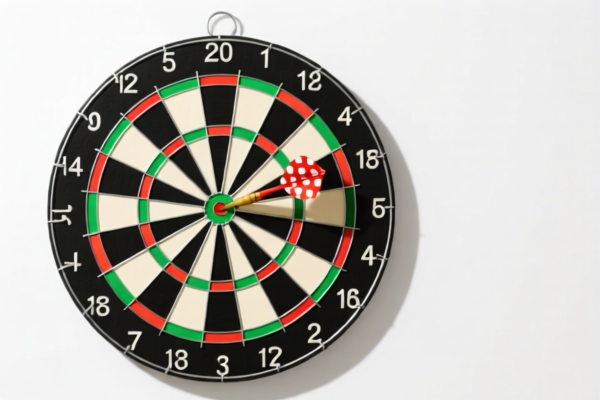


AI Analysis
🎯 Dartboard Protector Ring (Target Shield)
🌐 HS Code Reference & Customs Clearance Guide | 2026 Latest Tariff Analysis | Professional Clearance Strategy
📌 I. Product Definition & Classification: Do You Really Understand "Dartboard Protector Ring"?
The Dartboard Protector Ring (also known as a target shield or surround) is a peripheral accessory for dart boards. Its primary function is to protect the wall or surrounding area from stray darts. In international trade, it is classified based on its specific material, structure, and intended use. The following breakdown explains why it falls under the specific HS Codes provided in the data, strictly adhering to the provided tariff details.
⚠️ Key Distinction Point:
- If primarily viewed as a Sporting Equipment Accessory → Matches 9506.99.60.80 or 9506.99.05.30
- If primarily viewed as a Textile/Cloth Protection → Matches 6307.90.98.91
- If viewed as a Generic "Other" Accessory → Matches 6307.90.98.75
📦 II. HS Code Classification Details (2026 Latest Tariff Authority Comparison)
Based on the provided <DATA>, here is the detailed breakdown of why each HS Code applies and the corresponding tax implications.
🎯 1. 9506.99.60.80 – Sporting Goods Accessories (Primary Classification)
| Item | Content |
|---|---|
| Product Description | Dartboard Protector Ring classified as an accessory to other sporting goods. |
| Applicable Scenario | Matched to "Other sporting equipment and their parts/accessories." |
| Total Tax Rate | 21.5% |
| Tax Detail Breakdown | - Base Duty: 4.0% - Section 301/Add'l Duty: 7.5% - Section 301 (Section 122): 10% - Section 232 (Steel/Aluminum/Copper): 50% (Conditional) |
📌 Explanation:
- This code categorizes the ring as a part of sporting equipment.
- The 50% Section 232 duty is critical: If the protector ring is made of steel, aluminum, or copper (e.g., metal wire mesh or rigid metal frame), this high additional tariff applies, potentially making the effective rate much higher or triggering specific material declarations.
- If the material is non-metallic (e.g., plastic/fabric), the 50% may not apply, but the base 21.5% still stands.
🎯 2. 6307.90.98.91 – Textile/Protective Coverings (Alternative Classification)
| Item | Content |
|---|---|
| Product Description | Dartboard Protector Ring classified as a protective cover component. |
| Applicable Scenario | Matches default logic for "Accessories" under other categories, specifically protective fabric covers. |
| Total Tax Rate | 24.5% |
| Tax Detail Breakdown | - Base Duty: 7.0% - Section 301/Add'l Duty: 7.5% - Section 301 (Section 122): 10% |
📌 Explanation:
- This code is used if the ring is considered a textile or fabric-based protective covering (e.g., felt, canvas, or woven mesh) rather than a hard sporting good part.
- No Section 232 (50%) applies here, as it is not classified as metal.
- However, the Base Duty (7.0%) is higher than the sporting goods code (4.0%), resulting in a higher total tax (24.5% vs 21.5%).
🎯 3. 6307.90.98.75 – Generic "Other" Made-Up Articles (Fallback Classification)
| Item | Content |
|---|---|
| Product Description | Dartboard Protector Ring classified as an accessory part under "Other made-up articles." |
| Applicable Scenario | Matches fallback category for "Other masks/finished goods" – a generic兜底 (catch-all) for parts. |
| Total Tax Rate | 17.0% (Lowest Base Tax) |
| Tax Detail Breakdown | - Base Duty: 7.0% - Section 301/Add'l Duty: 0.0% (Exempt or Non-Applicable) |
| - Section 301 (Section 122): 10% |
📌 Explanation:
- This code represents a fallback classification. It assumes the item is a generic "other" accessory.
- Key Advantage: The Add'l Duty is 0.0%, which is unique in this dataset.
- Risk: This classification may be challenged by customs if the product is clearly a "sporting good part" (9506). Using a fallback code incorrectly can lead to customs audits.
- Note: The 50% Section 232 does not apply here.
🎯 4. 9506.99.05.30 – Specific Sporting Equipment Parts (Precise Match)
| Item | Content |
|---|---|
| Product Description | Dartboard Protector Ring classified as parts and accessories for dartboards. |
| Applicable Scenario | Matched to "Sports Equipment Accessories" specifically for dartboard器材 (equipment). |
| Total Tax Rate | 17.5% |
| Tax Detail Breakdown | - Base Duty: 0.0% (Zero Base Duty) |
| > - Section 301/Add'l Duty: 7.5% - Section 301 (Section 122): 10% - Section 232 (Steel/Aluminum/Copper): 50% (Conditional) |
📌 Explanation:
- This is a highly specific code for dartboard accessories.
- Key Advantage: Base Duty is 0.0%, which is the lowest possible base rate.
- Critical Risk: Like code9506.99.60.80, the 50% Section 232 duty applies if the material is metal (steel/aluminum/copper). If it is plastic/fabric, the total is 17.5%.
- Recommendation: This is often the most accurate classification for dartboard-specific parts if the material is non-metallic.
🎯 5. 9506.99.60.80 (Duplicate Entry) – Reiteration
| Item | Content |
|---|---|
| Product Description | Dartboard Protector Ring as a dartboard accessory, classified under other sporting goods parts. |
| Total Tax Rate | 21.5% |
| Tax Detail | Same as #1 above. Base 4.0% + Add'l 7.5% + Sec 122 10% + Sec 232 50% (if metal). |
📌 Note: This is a duplicate of the first entry, reinforcing that 9506.99.60.80 is a common but potentially costly classification due to the 50% metal surcharge.
💰 III. 2026 Latest Tariff Rate Details (Includes Add'l Taxes & Policies)
✅ Applicable Country: USA (US)
✅ Origin: China (CN)
✅ Effective Time: Current trade terms (Section 301, Section 232, Section 122)
🎯 Comparative Tax Summary Table
| HS Code | Classification Basis | Base Duty | Add'l Duty | Sec 122 | Sec 232 (Metal) | Total (Non-Metal) | Total (Metal) |
|---|---|---|---|---|---|---|---|
9506.99.60.80 |
Sporting Goods Accessory | 4.0% | 7.5% | 10% | 50% | 21.5% | 71.5% |
6307.90.98.91 |
Protective Cover/Textile | 7.0% | 7.5% | 10% | 0% | 24.5% | 24.5% |
6307.90.98.75 |
Generic Other Accessory | 7.0% | 0.0% | 10% | 0% | 17.0% | 17.0% |
9506.99.05.30 |
Specific Sporting Part | 0.0% | 7.5% | 10% | 50% | 17.5% | 67.5% |
🔍 Key Takeaways: - Non-Material (Plastic/Fabric): The lowest total tax is 17.0% (
6307.90.98.75) or 17.5% (9506.99.05.30). - Metal Material (Steel/Aluminum): Taxes explode to 67.5% - 71.5% if classified under sporting goods (9506). - Section 232 Impact: The 50% tariff for steel/aluminum is the most dangerous clause for metal protector rings.
🛠️ IV. Customs Clearance Practical Advice (Battle-Tested Pitfall Guide)
✅ 1. Preparation Checklist (Must-Have Documents)
| Document | Required | Explanation |
|---|---|---|
| ✅ Product Specification Sheet | ✔️ | Must clearly state Material (Plastic, Steel, Fabric, etc.). This is critical for determining Section 232 applicability. |
| ✅ Product Photos | ✔️ | Show the ring installed on a dartboard. Prove it is a sporting accessory, not a standalone item. |
| ✅ Commercial Invoice | ✔️ | Description must be precise: "Dartboard Protector Ring, Plastic, for Indoor Sports." Avoid vague terms like "Cover." |
| ✅ Material Declaration | ✔️ | Explicitly state: "Material: 100% Plastic" or "Material: Steel Wire." This controls the 50% tariff risk. |
| ✅ Packing List | ✔️ | List dimensions and weight. |
✅ 2. Declaration Strategy (Key Mantra)
🔥 "Material Determines Duty, Function Determines HS, Metal Triggers 50%!"
| Situation | Correct Declaration | Wrong Approach | Consequence |
|---|---|---|---|
| Plastic/Fabric Ring | 9506.99.05.30 (Sporting Part) or 6307.90.98.75 (Generic) |
Declare as 9506.99.60.80 |
Unnecessary risk; 17.5% is better than 21.5%. |
| Metal Ring (Steel/Aluminum) | Pre-approve with Customs | Declare as 6307.90.98.75 (to avoid 50%) |
High Risk: Customs may reclassify as 9506 → 67.5% Tax + Penalties. |
| Composite Material | Declare primary material | Hide material type | Audit delay, potential back-taxes. |
| Dartboard + Protector Ring | Combine or Split? | Split into "Dartboard" + "Ring" | Ensure HS codes are compatible. Better to declare as a kit if sold together. |
✅ 3. Special Cases Handling
| Scenario | Handling Advice |
|---|---|
| OEM Custom Metal Rings | Provide engineering drawings. Argue for 9506.99.05.30 with Material Declaration to clarify if Section 232 applies. |
| Fabric/Felt Rings | Use 9506.99.05.30 for lowest base duty (0%) + 17.5% total. Avoid 6307 codes which have 7% base. |
| Plastic Rings | Strongly recommend 9506.99.05.30. It is the most "correct" sporting good classification with 0% base duty. |
| Unclear Material | Do NOT guess. Submit a Binding Ruling Request to CBP. Guessing wrong leads to massive retroactive taxes. |
🌍 V. Global Market Comparison (2026 Latest)
| Country/Region | Recommended HS Code | Tariff (China Origin) | Notes |
|---|---|---|---|
| 🇺🇸 USA | 9506.99.05.30 |
17.5% (Plastic) 67.5% (Metal) |
Section 232 & 301 are critical. Metal is extremely expensive. |
| 🇨🇳 China | 9506.99.05.30 |
~5-7% | Lower base duty. No Section 232/301. |
| 🇪🇺 EU | 9506.99.80 |
0-3.7% | Generally low tariffs. No Section 232 equivalent. |
| 🇬🇧 UK | 9506.99.80 |
0-4.5% | Post-Brexit tariffs similar to EU. |
📌 Conclusion:
- The USA is the most complex market due to Section 232 (50% for metals) and Section 301 (10-25%).
- Plastic/Fabric rings are cost-effective to export to the US (17.5% total).
- Metal rings face prohibitive tariffs in the US (67.5%+). Consider alternative markets or sourcing from non-China origins for metal parts.
📌 VI. Common Errors & Pitfalls (Blood & Tears Lessons)
❌ Error 1: Declaring a Plastic ring as 6307.90.98.91 (Textile)
👉 Result: Higher base duty (7% vs 0%). You overpay by 5.5% unnecessarily.
❌ Error 2: Declaring a Steel ring as 6307.90.98.75 to avoid 50% Section 232
👉 Result: Customs audit. If they determine it's a "sporting part," they apply 9506 + 50%. Back taxes + penalties.
❌ Error 3: Using vague description "Dart Accessory"
👉 Result: CBP assigns the highest applicable rate or delays clearance for further inquiry.
✅ Correct Practice:
"Dartboard Protector Ring, 100% Polypropylene Plastic, Non-Metal, for Indoor Sports, Model XYZ, HS 9506.99.05.30"
🎯 VII. Conclusion: Professional Declaration Saves Money!
🎯 Remember the Mantra:
🔹 "Plastic Ring: Use 9506.99.05.30 (17.5%)."
🔹 "Metal Ring: High Risk! 67.5%+! Check Section 232."
🔹 "Fabric Ring: 6307.90.98.91 (24.5%) is OK, but 9506 is better if possible."
🔹 "HS Code Life or Death, Tax Difference $100s, Declaration One Step, Penalty Thousands!"
📌 Pro Tip:
If your product is Plastic or Fabric, you are in a good position with 17.0% - 17.5% total tax.
If your product is Metal, consult a customs broker immediately to evaluate if a Section 232 Exclusion applies or if a different classification is defensible.
📣 Take Action Now:
📞 Contact Professional Customs Broker + Provide Product Photos + Declare Material Explicitly
🚀 Let your Dartboard Protector Ring Clear Customs Smoothly, Maximize Profit!
✨ Professional Clearance Starts with Accurate Classification!
💼 Every Cent of Cost Deserves Precise Calculation!
Customer Reviews
About HS Code Classification
The Harmonized System (HS) is an internationally standardized nomenclature developed by the World Customs Organization (WCO) to classify traded products. Over 200 countries use the HS system as the basis for customs tariffs, trade statistics, and import/export regulations.
Each HS code follows a hierarchical structure:
- Chapter (2 digits) — Broad category of goods (e.g., Chapter 84: Machinery and Mechanical Appliances)
- Heading (4 digits) — More specific grouping within the chapter
- Subheading (6 digits) — Internationally standardized breakdown, used by all WCO member countries
- National subdivisions (8-10 digits) — Country-specific extensions for further classification, such as US HTSUS 10-digit codes
Correct HS code classification is essential for smooth customs clearance, accurate duty payment, and compliance with trade regulations. Misclassification can lead to customs delays, overpayment of duties, or penalties.
When importing from CN to US, the applicable tariff rates may include:
- Most-Favored-Nation (MFN) rate — The standard duty rate applied to WTO members
- General rate — Applied to countries without trade agreements
- Trade remedy duties — Additional tariffs such as Section 301 (anti-dumping), Section 232 (national security), or countervailing duties
The information provided on this page is for reference purposes only. For official classification, please consult with your local customs authority or a licensed customs broker.