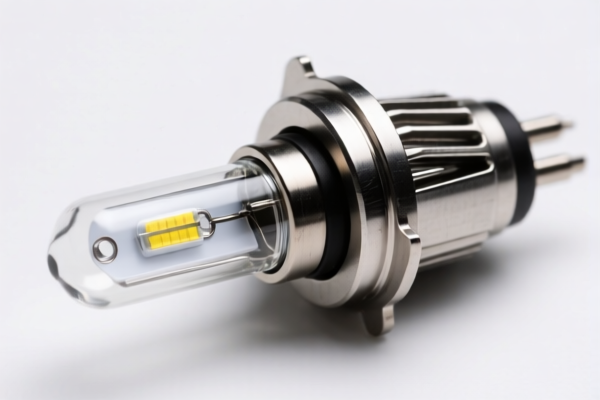
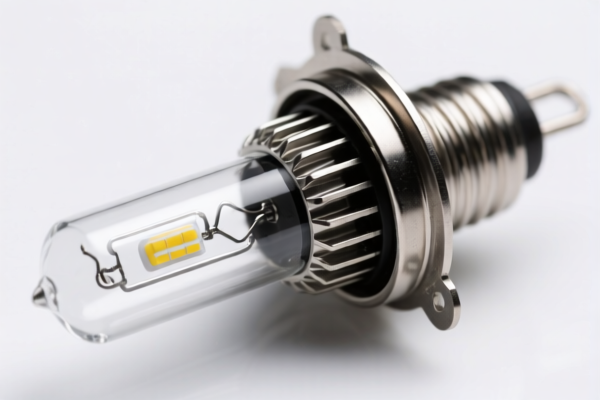
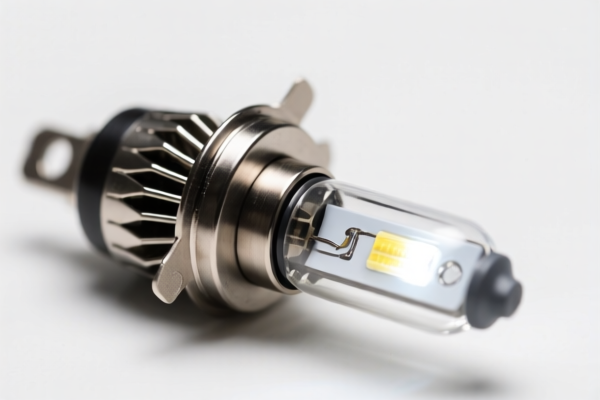
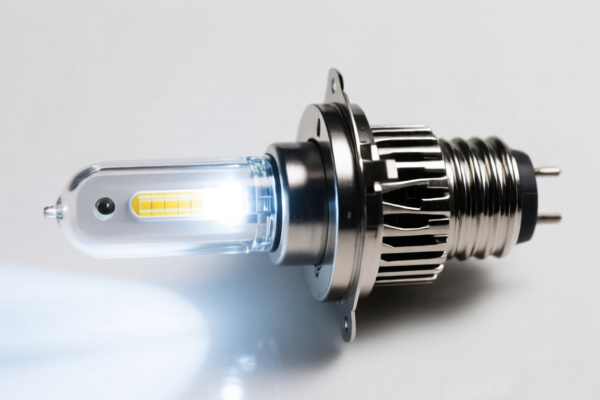
daytime running light
CN → US| HS Code | Tariff Rate | Origin | Destination | Doc |
|---|---|---|---|---|
| 8512202080 | 35.0% | CN | US | Official Doc |
| 8512202040 | 35.0% | CN | US | Official Doc |
Product Images
AI Analysis
🚗 Daytime Running Lights (DRLs) & Vehicle Lighting Equipment
🌐 HS Code Reference & Customs Clearance Guide | 2026 Latest Tariff Analysis | Professional Clearance Strategy
📌 I. Product Definition and Classification: Do You Really Understand "Daytime Running Lights"?
Daytime Running Lights (DRLs) are electric lighting or signaling equipment specifically designed to improve the visibility of motor vehicles during daytime conditions. They are distinct from headlamps, turn signals, or brake lights, though they are often integrated into the same housing.
In international trade, they fall under Heading 8512, which covers:
"Electrical lighting or signaling equipment (excluding articles of heading 8539), windshield wipers, defrosters and demisters, of a kind used for cycles or motor vehicles; parts thereof."
⚠️ Key Distinction Point:
- If the device is standalone or integrated as a complete unit for lighting/signaling (not a bare bulb/headlamp of Heading 8539), it belongs to 8512.20.
- Exclusions: Bare lamps (e.g., HID/LED modules meant to be installed into existing fixtures) may fall under 8539; DRLs with specific vehicle compatibility are classified under 8512.20.
📦 II. HS Code Classification Details (2026 Latest Tariff Authority Comparison)
Based on the provided <DATA>, there are two primary HS Codes for "Other Lighting or Visual Signaling Equipment" under subheading 8512.20. The distinction lies in the type of vehicle the equipment is intended for.
| HS Code | Product Description | Applicable Vehicles | Tax Rate |
|---|---|---|---|
8512.20.20.80 |
Other lighting or visual signaling equipment: Lighting equipment - Other | General Purpose (Standard passenger cars, SUVs, trucks not covered by the specific subheadings below) |
25.0% (Base: 0%, Additional: 25%) |
8512.20.20.40 |
Other lighting or visual signaling equipment: Lighting equipment - For specific vehicle classes | Specialized Vehicles (Vehicles of subheading 8701.21–8701.29 or headings 8702, 8703, 8704, 8705, 8711) Includes: Heavy trucks, buses, motorcycles, tractors, special purpose vehicles |
25.0% (Base: 0%, Additional: 25%) |
🔍 Critical Clarification:
- Both codes carry the exact same tax rate (25%).
- The difference is administrative and structural:
- Use8512.20.20.40if the DRLs are explicitly designed for large trucks (8701 series), buses (8702), passenger cars of subheading 8703, or motorcycles (8711).
- Use8512.20.20.80for all other automotive lighting not falling into the above specific heavy/specialized categories (e.g., standard passenger car accessories not tied to the specific HS subheadings of 8701-8705).
- Note: Even if the DRL is for a standard car (8703), if the customs authority mandates the use of the more specific code8512.20.20.40for cars under 8703, use that. However, based on the description provided,8512.20.20.40is explicitly linked to headings 8701-8705. For a generic "Daytime Running Light" where the specific vehicle class is not specified,8512.20.20.80is often the safer "catch-all" for general automotive accessories, but8512.20.20.40is correct if the product is marketed for heavy-duty or specific commercial vehicles listed.
💰 III. 2026 Latest Tariff Rate Details (Detailed Tax Breakdown)
✅ Applicable Country: United States (US)
✅ Origin: China (CN) (Assumed based on typical 25% additional tariff context)
✅ Effective Date: Current 2026 Framework
🎯 1. 8512.20.20.80 —— General Automotive Lighting Equipment
| Item | Content |
|---|---|
| Basic Tariff | 0% (ad valorem) |
| Section 301 Additional Tariff | +25% |
| Total Effective Tax Rate | 25.0% |
| Tax Calculation | CIF Value × 25% |
| De Minimis Eligibility | ❌ Not Eligible (For shipments over $800, full duty applies; no de minimis exemption for Section 301 goods) |
| Legal Basis | USITC:8512.20.20.80 + Section 301 Footnote |
📌 Explanation:
- The 0% base rate reflects the MFN (Most Favored Nation) treatment for lighting equipment.
- The 25% additional tariff is imposed under U.S. trade remedy laws (Section 301) on Chinese-origin goods.
- No further IEEPA or other surcharges are listed in the<DATA>for this specific code. The total burden is strictly 25%.
🎯 2. 8512.20.20.40 —— Lighting Equipment for Specific Vehicle Classes (8701-8711)
| Item | Content |
|---|---|
| Basic Tariff | 0% (ad valorem) |
| Section 301 Additional Tariff | +25% |
| Total Effective Tax Rate | 25.0% |
| Tax Calculation | CIF Value × 25% |
| De Minimis Eligibility | ❌ Not Eligible |
| Legal Basis | USITC:8512.20.20.40 + Section 301 Footnote |
📌 Note:
- Identical tax treatment to8512.20.20.80.
- Misclassification here can lead to customs audits if the vehicle type does not match the heading (8701–8711).
🛠️ IV. Customs Clearance Operational Advice (Practical Pitfall Avoidance Guide)
✅ 1. Required Documentation Checklist
| Document | Mandatory? | Description |
|---|---|---|
| ✅ Product Specification Sheet | ✔️ | Must state: "Daytime Running Light," voltage, wattage, IP rating, and compliance standards (e.g., SAE, ECE). |
| ✅ Installation Diagram | ✔️ | Shows if the unit is standalone or part of a headlamp assembly. |
| ✅ Commercial Invoice | ✔️ | Must clearly describe the goods as "LED Daytime Running Lights for Motor Vehicles" to justify HS 8512. |
| ✅ Certificate of Origin (CO) | ✔️ | Proves Chinese origin (subject to 25% tariff). |
| ✅ FCC/SAE Certification | ✔️ | Electronic lighting equipment requires FCC approval for RF emissions and SAE/JIS standards for photometry. |
| ✅ HS Code Ruling (Optional but Recommended) | ✔️ | Pre-clearance ruling if the product is novel or complex. |
✅ 2. Classification Strategy (Key Mnemonic)
🔥 “DRLs are 8512, Not 8539! Check the Vehicle Class!”
| Scenario | Correct HS Code | Why? |
|---|---|---|
| Standard LED DRL Bar (aftermarket accessory) | 8512.20.20.80 |
General lighting equipment for vehicles not exclusively for heavy/special classes defined in 8701-8711. |
| DRLs for Heavy Trucks/Tractors | 8512.20.20.40 |
Specifically for vehicles under headings 8701 (tractors) or 8704 (trucks). |
| Bare LED Bulb/Module (no housing) | Heading 8539 | ⚠️ Exclude: If it’s just a bulb/component, it’s NOT 8512. |
| Complete Headlamp Assembly (with DRL function) | Heading 8512 or 8539? | Usually 8512.20 if it’s a complete signaling unit; check specific exclusions. |
⚠️ Warning:
- Do not classify DRLs as "Auto Parts" under Chapter 87. Lighting equipment is explicitly in Chapter 85.
- Misclassification into 8708 (parts of vehicles) is a common error and will be corrected by customs, potentially causing delays and penalties.
✅ 3. Special Handling Tips
| Situation | Handling Advice |
|---|---|
| OEM vs. Aftermarket | Both are treated similarly under HS 8512. However, OEM parts may be shipped with vehicle chassis, while aftermarket are shipped separately. Classification remains the same. |
| Integrated with Headlamp | If the DRL is non-removable and part of the main headlamp housing, it may still be classified as 8512.20 (lighting equipment), not as a "part of a headlamp" (8512.90) unless specifically requested. However, 8512.20 covers the function. |
| Voltage Specifics | Ensure the invoice states "12V/24V DC" to confirm it is for automotive use, not household lighting (8513 or 8539). |
🌍 V. Global Market Comparison (2026 Latest)
| Country/Region | Recommended HS Code | Tariff (China Origin) | Key Certifications | Notes |
|---|---|---|---|---|
| 🇺🇸 USA | 8512.20.20.80 or .40 |
25% (Total) | FCC, SAE | High compliance cost; 25% tariff is significant. |
| 🇨🇳 China | 8512.20.20.80 |
0–5% (Varies) | CCC | Low entry barrier. |
| 🇪🇺 EU | 8512.20.20.20 |
0% (Most Cases) | ECE R87, R10 | Strict photometric standards (ECE R87). |
| 🇯🇵 Japan | 8512.20.10.00 |
0% | JIS Standards | PSE mark may be required for electrical safety. |
📌 Conclusion:
- The USA imposes a significant 25% tariff on these goods.
- EU and Japan offer 0% MFN tariffs, but have stricter technical standards.
- Cost Optimization: Consider sourcing from Vietnam or Thailand if eligible for preferential tariffs, but ensure Substantial Transformation occurs to avoid US rules of origin violations.
📌 VI. Common Errors & Pitfalls (Lessons Learned)
❌ Error 1: Classifying DRLs under 8708.99 (Parts of Vehicles)
👉 Consequence: Customs reclassifies to 8512, assesses 25% tariff + penalties. Never do this. Lighting is Chapter 85.
❌ Error 2: Using 8539.90 (Lamps) for DRLs
👉 Consequence: Incorrect. 8539 excludes articles of 8512. DRLs are explicitly "lighting equipment for vehicles," so 8512 prevails.
❌ Error 3: Ignoring the Vehicle Class distinction in 8512.20.20.40
👉 Consequence: If you use .40 for a car (8703) that doesn't fit the specific "other" definition, or vice versa, it may trigger an audit. Match the description to the invoice.
✅ Correct Declaration Example:
"LED Daytime Running Lights for Automotive Use, 12V DC, IP67 Rated, Model DRL-X100"
HS Code:8512.20.20.80
Value: $1000
Duty: $250 (25%)
🎯 VII. Conclusion: Precision Classification for Cost Efficiency
🎯 Remember the Rules:
🔹 "DRLs are Lighting (8512), Not Parts (8708)."
🔹 "USA Tariff is 25%—Plan for it!"
🔹 "Check Vehicle Heading for .40 vs .80."
📌 Pro Tip:
If your DRLs are exported to the US, calculate the 25% duty into your landed cost immediately.
Consider pre-classification rulings if you have mixed shipments (e.g., DRLs + Wipers + Defrosters) to avoid separate classifications and delays.
📣 Immediate Action:
📞 Contact your freight forwarder to verify if your specific DRL model is considered "standalone lighting" or "part of a headlamp."
📄 Ensure your invoice matches the HS Code description precisely.
🚀 Optimize your supply chain to mitigate the 25% US tariff impact.
✨ Professional clearance starts with accurate classification!
💼 Your profit margin depends on getting the HS Code right!
Customer Reviews
About HS Code Classification
The Harmonized System (HS) is an internationally standardized nomenclature developed by the World Customs Organization (WCO) to classify traded products. Over 200 countries use the HS system as the basis for customs tariffs, trade statistics, and import/export regulations.
Each HS code follows a hierarchical structure:
- Chapter (2 digits) — Broad category of goods (e.g., Chapter 84: Machinery and Mechanical Appliances)
- Heading (4 digits) — More specific grouping within the chapter
- Subheading (6 digits) — Internationally standardized breakdown, used by all WCO member countries
- National subdivisions (8-10 digits) — Country-specific extensions for further classification, such as US HTSUS 10-digit codes
Correct HS code classification is essential for smooth customs clearance, accurate duty payment, and compliance with trade regulations. Misclassification can lead to customs delays, overpayment of duties, or penalties.
When importing from CN to US, the applicable tariff rates may include:
- Most-Favored-Nation (MFN) rate — The standard duty rate applied to WTO members
- General rate — Applied to countries without trade agreements
- Trade remedy duties — Additional tariffs such as Section 301 (anti-dumping), Section 232 (national security), or countervailing duties
The information provided on this page is for reference purposes only. For official classification, please consult with your local customs authority or a licensed customs broker.