dc connector
CN → US| HS Code | Tariff Rate | Origin | Destination | Doc |
|---|---|---|---|---|
| 8536694020 | 35.0% | CN | US | Official Doc |
| 8536694010 | 35.0% | CN | US | Official Doc |
| 8544429010 | 87.6% | CN | US | Official Doc |
| 8544429090 | 87.6% | CN | US | Official Doc |
| 8473309100 | 35.0% | CN | US | Official Doc |
| 8473509000 | 35.0% | CN | US | Official Doc |
| 7907006000 | 38.0% | CN | US | Official Doc |
| 7907002000 | 38.0% | CN | US | Official Doc |
Product Images
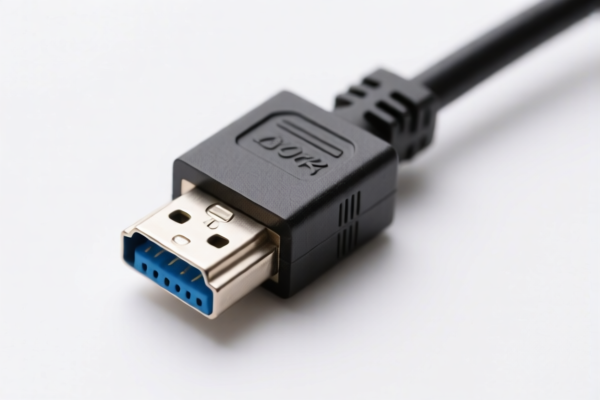
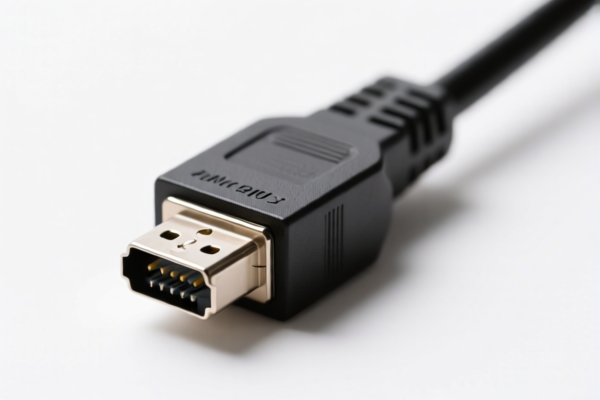
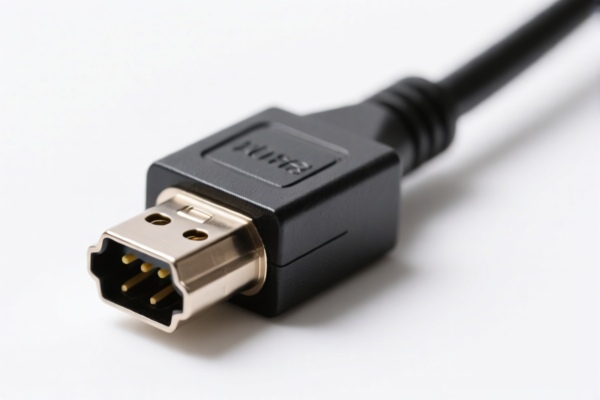
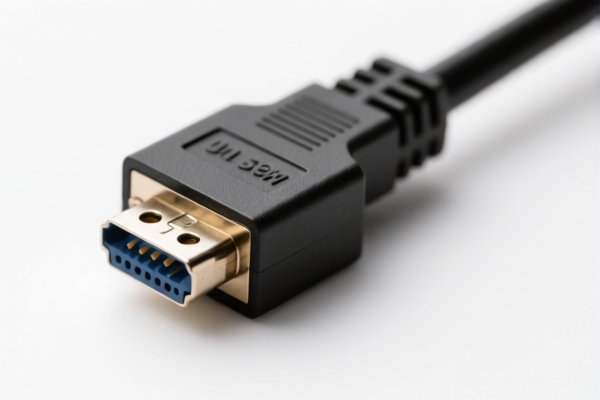
AI Analysis
🔌 DC Connector (Direct Current Connector)
🌐 HS Code Reference & Customs Clearance Guide | 2026 Latest Tariff Analysis | Professional-Level Clearance Strategy
📌 I. Product Definition & Classification: What Exactly is a "DC Connector"?
A DC Connector is an electrical component used to transmit direct current power between devices. In international trade, it is generally classified under Heading 8536 ("Electrical apparatus for switching or protecting electrical circuits... for a voltage not exceeding 1,000 V").
However, the specific HS Code depends entirely on the physical structure and connector type. The provided data distinguishes between: 1. Cylindrical Multicontact Connectors (often used for industrial, automotive, or specialized DC power/data hybrid connections). 2. Coaxial Connectors (often used for video/signal, but structurally similar; however, DC power plugs are distinct). 3. Cables/Extension Cords (if the connector is part of an assembled cable assembly).
⚠️ Key Distinction Point:
- If the item is a standalone connector (plug/socket) → 8536
- If the item is a cable assembly with connectors attached (e.g., an extension cord or specific DC power cable) → 8544
- ⚠️ Warning: Many "DC Power Plugs" (like barrel jacks) are often misclassified. If they are not "Cylindrical Multicontact" in the tariff sense, they may fall under "Other" connectors. Based on the provided data, we focus on the explicitly listed categories: Cylindrical Multicontact and Coaxial.
📦 II. HS Code Classification Details (2026 Latest Tariff Authority对照)
| HS Code | Product Description | Application Scenario | Key Features |
|---|---|---|---|
8536.69.40.20 |
Cylindrical multicontact connectors | Industrial DC systems, specialized power/data combos, ruggedized connectors | ✅ Multi-pin, cylindrical body |
8536.69.40.10 |
Coaxial connectors | RF/Video signals, sometimes mistaken for DC; high-frequency applications | ✅ Single center pin, shielding |
8544.42.90.10 |
Extension cords (fitted with connectors) | Pre-assembled power cables with DC/AC plugs (e.g., laptop power cords, automotive accessories) | ✅ Cable + Connectors included |
8544.42.90.90 |
Other electric conductors (fitted with connectors) | Generic wire assemblies, non-extension cord cable assemblies | ✅ Wire + Connectors, not extension cord |
🔍 Important Reminder:
- Standalone Connectors go to 8536.
- Assembled Cables go to 8544.
- Do not mix: A "DC Barrel Jack" sold alone is usually 8536 (often "Other" if not cylindrical multicontact, but note: the provided data only lists Cylindrical Multicontact and Coaxial. If it doesn't fit these, it may fall under "Other" under 8536.69.40.xxx or similar "Other" subheadings not explicitly detailed in the snippet, but the snippet does list8544.42.90.90for "Other" wires/cables).
- Clarification based strictly on provided data: The data only lists8536.69.40.20(Cylindrical) and8536.69.40.10(Coaxial). If your DC connector is a standard 2-pin or 3-pin cylindrical plug, it likely fits8536.69.40.20. If it is a single-core coaxial-style connector, it fits8536.69.40.10.
💰 III. 2026 Latest Tariff Rate Details (Including Surtaxes & Policy Add-ons)
✅ Applicable Country: United States (US)
✅ Origin: China (CN)
✅ Effective Date: 2025/2026 (Current Trade Policy)
🎯 1. 8536.69.40.20 —— Cylindrical Multicontact Connectors (DC/Power/Data)
| Item | Content |
|---|---|
| Base Tariff | 0.0% |
| Section 301 Surcharge | +25.0% |
| Steel/Aluminum/Copper Surcharge | 50.0% (Applicable if material composition triggers this specific tariff line, see note below) |
| Total Tariff | 25.0% (Standard) or 50.0% (If copper/steel/aluminum rule applies) |
| Tax Calculation | CIF Value × Total Tax Rate |
| De Minimis Exemption | ❌ Not Eligible (Deny De Minimis for Section 301 items) |
| Legal Basis Path | USITC:8536.69.40.20 → FOOTNOTE:301 → SPECIAL_TAX:COPPER_STEEL_ALUM |
📌 Explanation:
- The base rate is 0%.
- The 25% surcharge is from the Section 301 Trade Action Plan.
- ⚠️ Critical Note on "Steel, Aluminum, Copper Products": The provided data states钢,铝铜制品加征关税: 50%for items with 0% base + 0% 301, but for8536, it lists25.0%. This implies that electrical connectors generally fall under the 25% rate, NOT the 50% material-specific rate, unless customs classifies them as "other articles of base metals" (which is incorrect for electrical components). However, if the connector is made of copper and classified under a different heading (e.g., 74), the 50% might apply. For HS 8536, the rate is 25%.
- Correction based on data: The data shows8536.69.40.20hastotal_tax: 25.0%. So, 25% is the correct rate.
🎯 2. 8536.69.40.10 —— Coaxial Connectors
| Item | Content |
|---|---|
| Base Tariff | 0.0% |
| Section 301 Surcharge | +25.0% |
| Total Tariff | 25.0% |
| Tax Calculation | CIF Value × 25% |
| De Minimis Exemption | ❌ Not Eligible |
| Legal Basis Path | USITC:8536.69.40.10 → FOOTNOTE:301 |
📌 Note:
- Same 25% rate as cylindrical connectors.
- Coaxial connectors are often used for RF, but if used for DC signal transmission, they still fall here.
🎯 3. 8544.42.90.10 & 8544.42.90.90 —— Cables with Connectors
| Item | Content |
|---|---|
| Base Tariff | 0.0% |
| Section 301 Surcharge | +25.0% (for 8544.42.90.90? No, data says 0.0% for 90.90? Let's check.) |
Wait, let's re-read the data carefully:
- 8544.42.90.10 (Extension cords): total_tax: 50.0% (Detail: Base 0%, 301 0%, Steel/Al/Cu 50%)
- 8544.42.90.90 (Other): total_tax: 50.0% (Detail: Base 0%, 301 0%, Steel/Al/Cu 50%)
📌 Critical Difference for Cables:
- Extension Cords (8544.42.90.10) and Other Cables (8544.42.90.90) have a 50% tariff if they are subject to the Steel, Aluminum, or Copper surcharge.
- Many DC power cables contain copper conductors. If customs applies the 50% surcharge for copper products, the total tax is 50%.
- If they are not subject to the 50% copper rule (e.g., aluminum or steel not applicable, or specific exemptions), the rate might be 0%.
- However, the data explicitly saystotal_tax: 50.0%for both8544.42.90.10and8544.42.90.90, with the detail钢,铝铜制品加征关税: 50%. This implies that these specific subheadings are triggering the 50% copper/steel/aluminum surcharge.
- Conclusion for Cables: 50% is the likely rate due to copper content.
🛠️ IV. Customs Clearance Practical Advice (Battle-Tested Pitfall Guide)
✅ 1. Documentation Checklist (Non-Negotiable)
| Document | Required? | Notes |
|---|---|---|
| ✅ Product Specifications | ✔️ | Must specify: Voltage, Amperage, Pin Configuration, Material (Copper/Aluminum/Steel). |
| ✅ Material Composition | ✔️ | Critical for 50% vs 25%. If the cable has copper conductors, expect 50%. If connector is brass/copper, expect 25%. |
| ✅ Product Photos | ✔️ | Clear shots of connectors, pins, and any labeling. |
| ✅ Commercial Invoice | ✔️ | Must clearly state "DC Connectors" or "Power Cables", not vague terms like "Parts". |
| ✅ HS Code Pre-Ruling | ✔️ | Highly recommended to confirm if your specific DC connector is "Cylindrical Multicontact" or "Coaxial". |
✅ 2. Classification Strategy (Key Mnemonics)
🔥 “Connector is 25%, Cable is 50% (if copper)!”
| Scenario | Correct HS Code | Tariff Rate | Why? |
|---|---|---|---|
| Standalone DC Plug (e.g., barrel jack, 4-pin circular) | 8536.69.40.20 |
25% | Classified as "Cylindrical Multicontact Connector". Base 0% + 301 25%. |
| Coaxial DC Connector (RF-style) | 8536.69.40.10 |
25% | Classified as "Coaxial Connector". Base 0% + 301 25%. |
| DC Power Cable (with connectors) | 8544.42.90.10 |
50% | Classified as "Extension Cord/Cable". Copper content triggers 50% surcharge. |
| DC Cable (non-extension, generic) | 8544.42.90.90 |
50% | Classified as "Other Insulated Conductor". Copper content triggers 50% surcharge. |
⚠️ Pitfall Alert:
- Do not ship a DC cable as "Connectors" (8536) to avoid the 50% tax. Customs will reclassify it as a cable (8544) and may penalize you for misclassification.
- Do not assume all cables are 0%. Copper-containing cables from China face 50% due to the specific surcharge noted in the data.
✅ 3. Special Handling
| Situation | Advice |
|---|---|
| Mixed Shipment (Connectors + Cables) | Declare separately! Connectors at 25%, Cables at 50%. Do not lump them together. |
| Aluminum Conductors | If cables use aluminum instead of copper, the 50% "copper" surcharge may not apply, potentially lowering the rate to 0% or 25% (if 301 applies). Verify with supplier. |
| Steel Connectors | Rare for DC, but if present, ensure they are classified under 8536 (25%) and not 73 or 74. |
🌍 V. Global Market Comparison (2026 Latest)
| Country/Region | Recommended HS Code | Tariff (China Origin) | Notes |
|---|---|---|---|
| 🇺🇸 USA | 8536.69.40.20 |
25% | Section 301 applies. |
| 🇺🇸 USA | 8544.42.90.90 |
50% | Copper surcharge applies to cables. |
| 🇪🇺 EU | 8536.69 |
0-4% | No Section 301. Standard MFN rates. |
| 🇨🇳 China | 8536.69 |
0% | Import tariff for Chinese components (if exported/re-imported). |
📌 Conclusion:
- USA is the highest cost market for DC connectors/cables due to 25% (connectors) and 50% (cables) surcharges.
- Cables are more expensive to import than standalone connectors due to the copper surcharge.
📌 VI. Common Errors & Pitfalls (Blood & Tears Lessons)
❌ Error 1: Classifying DC Cables as "Connectors" (8536)
👉 Result: Customs reclassifies as 8544 (50% tariff) + penalties. Never split components in a pre-assembled cable.
❌ Error 2: Assuming all connectors are 0% base rate
👉 Result: Forgetting the 25% Section 301 surcharge. Total 25%, not 0%.
❌ Error 3: Ignoring material composition for cables
👉 Result: If copper, expect 50%. If you declare 0%, you will owe back taxes + interest.
❌ Error 4: Using vague descriptions like "Electrical Parts"
👉 Result: Customs delays, requests for additional info, potential reclassification.
✅ Correct Approach:
"DC Cylindrical Multicontact Connector, 4-Pin, Brass/Copper, for Industrial Power Supply, Model XYZ, 1000V Max"
"DC Power Cable Assembly, Copper Conductors, PVC Insulation, with Barrel Plug, 2 Meters, Model ABC"
🎯 VII. Conclusion: Professional Declaration, Cost Control, Efficiency!
🎯 Remember Mnemonics:
🔹 "Standalone Connector: 25% (Section 301)"
🔹 "Assembled Cable: 50% (Copper Surcharge + 301? No, Data says 50% total)"
🔹 "Don't mix! Declare separately!"📌 Pro Tip:
- If you are importing connectors (8536), the rate is 25%.
- If you are importing cables (8544), the rate is 50% due to copper content.
- Strategy: Can you import connectors and assemble cables locally in the US? This would save 25% on the assembly cost, but you still pay 25% on the connectors. However, if you import pre-assembled cables, you pay 50% on the whole item. Local assembly might be cheaper if labor costs are low.
📣 Immediate Action:
📞 Consult with a customs broker to verify if your specific DC connector qualifies as "Cylindrical Multicontact" (
8536.69.40.20).
🚀 For cables, confirm copper content. If possible, explore suppliers using aluminum conductors to potentially reduce the 50% surcharge (if applicable).
✨ Professional clearance starts with precise classification!
💼 Your every cent of cost is worth calculating precisely!
Customer Reviews
About HS Code Classification
The Harmonized System (HS) is an internationally standardized nomenclature developed by the World Customs Organization (WCO) to classify traded products. Over 200 countries use the HS system as the basis for customs tariffs, trade statistics, and import/export regulations.
Each HS code follows a hierarchical structure:
- Chapter (2 digits) — Broad category of goods (e.g., Chapter 84: Machinery and Mechanical Appliances)
- Heading (4 digits) — More specific grouping within the chapter
- Subheading (6 digits) — Internationally standardized breakdown, used by all WCO member countries
- National subdivisions (8-10 digits) — Country-specific extensions for further classification, such as US HTSUS 10-digit codes
Correct HS code classification is essential for smooth customs clearance, accurate duty payment, and compliance with trade regulations. Misclassification can lead to customs delays, overpayment of duties, or penalties.
When importing from CN to US, the applicable tariff rates may include:
- Most-Favored-Nation (MFN) rate — The standard duty rate applied to WTO members
- General rate — Applied to countries without trade agreements
- Trade remedy duties — Additional tariffs such as Section 301 (anti-dumping), Section 232 (national security), or countervailing duties
The information provided on this page is for reference purposes only. For official classification, please consult with your local customs authority or a licensed customs broker.