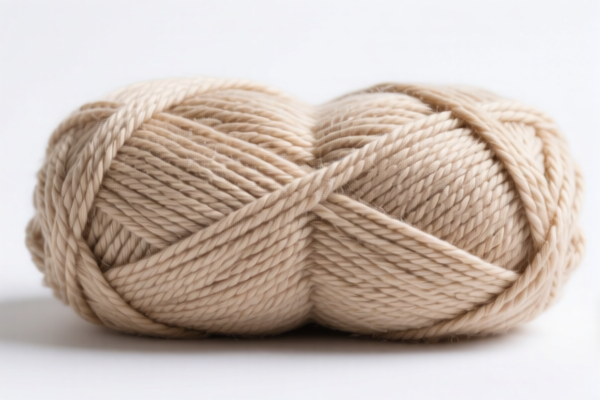
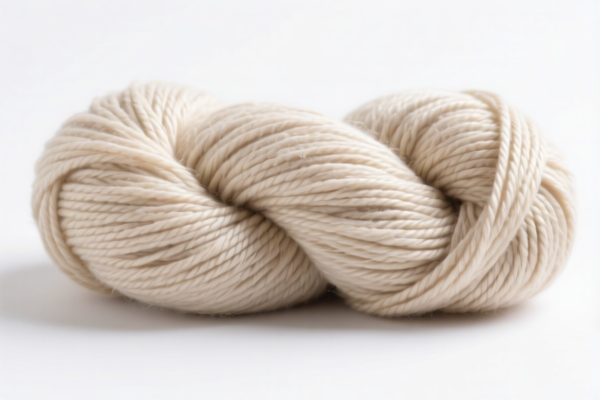
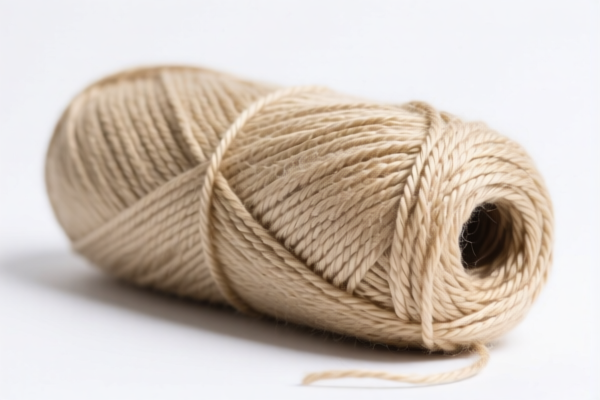
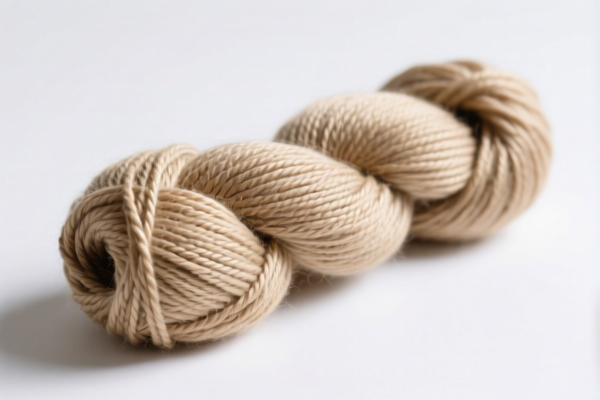
decorative catgut
CN → US| HS Code | Tariff Rate | Origin | Destination | Doc |
|---|---|---|---|---|
| 4206001910 | 13.9% | CN | US | Official Doc |
| 5609004000 | 38.9% | CN | US | Official Doc |
| 9601908000 | 21.2% | CN | US | Official Doc |
| 9601906000 | 17.5% | CN | US | Official Doc |
| 4206001930 | 13.9% | CN | US | Official Doc |
Product Images
AI Analysis
🐱 Decorative Catgut (Gut String/Thread for Ornamental Use)
🌐 HS Code Reference & Customs Clearance Guide | 2026 Latest Tariff Analysis | Professional Clearance Strategy
📌 I. Product Definition & Classification: What is "Decorative Catgut"?
"Decorative Catgut" refers to strings or threads made from animal intestines (typically sheep or goat), processed and refined for ornamental, musical, or craft purposes. In international trade, the classification depends heavily on the material nature, processing level, and intended use (e.g., pure decoration vs. functional instrument string).
Key Distinction Points:
- If the product is strictly for decoration/ornamentation and viewed as an article of animal origin (gut/bone/hoof category) → May fall under Chapter 96.
- If the product is processed specifically as surgical or musical gut (classified as "other articles of gut") → Falls under Chapter 42.
- If it is woven or twisted into bands/strings resembling textile-like materials → May fall under Chapter 56.
⚠️ Critical Note:
- Misclassification can lead to significant tariff differences (from 13.9% to 38.9%).
- Customs authorities scrutinize whether the item is a "finished article" or a "material."
📦 II. HS Code Classification Details (2026 Latest Tariff Authority Comparison)
| HS Code | Product Description | Application Scenario | Material Characteristic |
|---|---|---|---|
4206.00.19.10 |
Other articles of gut, other than those of heading 4205 (e.g., decorative gut items) | Decorative gut crafts, ornamental threads | ✅ Gut material, non-textile |
4206.00.19.30 |
Other articles of gut, other than those of heading 4205 (Other uses) | Decorative gut, general gut articles | ✅ Gut material, other use |
5609.00.40.00 |
Articles of yarn, strip, or the like of heading 5404 or 5405, of gut or other animal substances | Decorative gut bands, twisted gut strings | ✅ Animal fiber/yarn form |
9601.90.60.00 |
Articles of ivory, bone, tortoise-shell, pearl, mother-of-pearl, coral, mother-of-pearl, jet, or other animal substances (excluding vegetable substances) | Gut-based artistic crafts, carved gut decorations | ✅ Animal organic substance |
9601.90.80.00 |
Other articles of animal substances (excluding vegetable substances) | General decorative gut articles not elsewhere specified | ✅ Animal source material |
🔍 Key Reminder:
-4206focuses on gut as a material for articles;
-5609focuses on gut processed into yarns/stripes;
-9601focuses on gut as a luxury/ornamental animal substance (like bone/ivory substitutes).
💰 III. 2026 Latest Tariff Rate Details (Including Surtaxes, Policy Add-ons)
✅ Applicable Country: United States (US)
✅ Origin: China (CN)
✅ Effective Date: From November 10, 2025 (including subsequent imports)
🎯 1. 4206.00.19.10 & 4206.00.19.30 — Other Articles of Gut
| Item | Content |
|---|---|
| Base Tariff | 3.9% (ad valorem) |
| Section 301 Surtax | 0.0% |
| IEEPA Surtax (122-Clause) | +10% (Applied to China/China-origin products) |
| Total Tariff Rate | 13.9% |
| Tax Calculation | CIF Value × 13.9% |
| De Minimis Exemption Available? | ❌ No (deny_de_minimis) |
| Legal Basis Path | IEEPA:122 → USITC:4206.00.19.10 / 4206.00.19.30 |
📌 Explanation:
- Base 3.9%: Standard MFN rate for "Other articles of gut."
- IEEPA 10%: Additional surcharge under Section 122 of the Trade Expansion Act (or similar executive order) targeting specific Chinese goods.
- No Section 301: Unlike electronics or steel, gut articles are not subject to the 25% Section 301 tariff.
- Lowest Tax Bracket: This is the most cost-effective classification for decorative catgut.
🎯 2. 5609.00.40.00 — Articles of Yarn/Strip of Animal Substances
| Item | Content |
|---|---|
| Base Tariff | 3.9% |
| Section 301 Surtax | +25.0% |
| IEEPA Surtax (122-Clause) | +10% |
| Total Tariff Rate | 38.9% |
| Tax Calculation | CIF Value × 38.9% |
| De Minimis Exemption Available? | ❌ No (deny_de_minimis) |
| Legal Basis Path | IEEPA:122 → USITC:5609.00.40.00 → FOOTNOTE:301 |
📌 Warning:
- If customs classifies your catgut as "yarn" or "strip" (twisted/woven form), the 25% Section 301 tariff applies.
- Total 38.9% is nearly triple the 13.9% rate.
- Do NOT classify as textile-like unless the product is explicitly a yarn/ribbon for weaving.
🎯 3. 9601.90.80.00 — Other Articles of Animal Substances
| Item | Content |
|---|---|
| Base Tariff | 3.7% |
| Section 301 Surtax | +7.5% |
| IEEPA Surtax (122-Clause) | +10% |
| Total Tariff Rate | 21.2% |
| Tax Calculation | CIF Value × 21.2% |
| De Minimis Exemption Available? | ❌ No (deny_de_minimis) |
| Legal Basis Path | IEEPA:122 → USITC:9601.90.80.00 → FOOTNOTE:301 |
📌 Note:
- Falls under "Other animal substances" (like bone/ivory crafts).
- Subject to 7.5% Section 301 surtax (lower than textile-like 25%, higher than 0%).
- Middle-ground tax option.
🎯 4. 9601.90.60.00 — Articles of Animal Substances (Specific)
| Item | Content |
|---|---|
| Base Tariff | 0.0% |
| Section 301 Surtax | +7.5% |
| IEEPA Surtax (122-Clause) | +10% |
| Total Tariff Rate | 17.5% |
| Tax Calculation | CIF Value × 17.5% |
| De Minimis Exemption Available? | ❌ No (deny_de_minimis) |
| Legal Basis Path | IEEPA:122 → USITC:9601.90.60.00 → FOOTNOTE:301 |
📌 Note:
- Zero base tariff makes this attractive, but still subject to 17.5% total due to surtaxes.
- Requires proof that the item fits the "specific animal substance" category (e.g., carved gut art).
🛠️ IV. Customs Clearance Practical Advice (Real-World Pitfall Guide)
✅ 1. Required Documentation Checklist (Non-negotiable)
| Document | Required | Description |
|---|---|---|
| ✅ Product Specifications | ✔️ | Material: "100% Sheep Intestine," Treatment: "Treated/Untreated," Use: "Decorative/Craft" |
| ✅ Product Photos | ✔️ | Clear images showing texture, packaging, and any labels. Must show it is not a surgical thread. |
| ✅ Commercial Invoice | ✔️ | Must specify "Decorative Catgut" or "Ornamental Gut Thread." Avoid vague terms like "String." |
| ✅ Certificate of Origin (CO) | ✔️ | Required for IEEPA/Section 301 determination. |
| ✅ Bill of Lading | ✔️ | Standard shipping document. |
| ✅ Material Composition Statement | ✔️ | Confirm it is animal-based (gut), not synthetic. |
✅ 2. Declaration Strategy (Key Mnemonics)
🔥 “Don’t Call It Yarn, Call It Gut Art! 13.9% Beats 38.9% Every Time!”
| Scenario | Correct Declaration | Incorrect Declaration |
|---|---|---|
| Twisted gut for decoration | 4206.00.19.10 (Article of Gut) |
5609.00.40.00 (Article of Yarn) → 38.9% |
| Carved gut ornaments | 9601.90.60.00 or 9601.90.80.00 |
6307.90 (Textile) → Illegal |
| Surgical gut (not decorative) | 3006.50 (Surgical) |
4206 (Decorative) → Different Regulation |
| Raw untreated gut | 0504.00 (Intestines, bladders, stomachs) |
4206 (Article) → Different Stage |
📌 Tip:
- Use "Decorative Gut Article" or "Ornamental Gut Thread" in the description.
- Avoid words like "Yarn," "String," "Thread" unless the product is explicitly a weaving material.
- Emphasize "Animal Substance" and "Craft/Decoration" to steer toward Chapter 96 or 42.
✅ 3. Special Cases
| Situation | Recommendation |
|---|---|
| Mixed Materials | If catgut is combined with silk or metal, classify by essential character or consult a broker. |
| Musical Instruments | If sold with an instrument, the instrument’s HS code may dominate. If sold separately, 4206 is best. |
| Small Quantity (De Minimis) | ❌ No Exemption: All listed codes are excluded from Section 321 (De Minimis) due to IEEPA/Section 301. Even $800 packages are taxed. |
| Pre-Ruling | ✅ Strongly Recommend: Apply for an Advance Ruling with CBP to lock in 4206.00.19.10 (13.9%) and avoid disputes. |
🌍 V. Global Market Comparison (2026 Latest)
| Country/Region | Recommended HS Code | Total Tariff (China Origin) | Certification/Notes |
|---|---|---|---|
| 🇺🇸 USA | 4206.00.19.10 |
13.9% | IEEPA 10% + Base 3.9%. Avoid 5609 (38.9%). |
| 🇨🇳 China | 4206.00.19.10 |
3.9% | No additional surtaxes. |
| 🇪🇺 EU | 4206.00.19.10 |
3.9% - 6.5% | Varies by member state. No Section 301. |
| 🇬🇧 UK | 4206.00.19.10 |
3.9% - 6.5% | Post-Brexit tariff structure. |
| 🇯🇵 Japan | 4206.00.19.10 |
3.9% - 6.0% | Generally low tariffs. |
📌 Conclusion:
- The USA is the most complex market due to IEEPA and Section 301 surtaxes.
- Correct HS Code selection (4206vs5609) can save 25% in taxes.
- Other markets have stable, lower tariffs without punitive surtaxes.
📌 VI. Common Mistakes & Pitfall Guide (Lessons from Experience)
❌ Mistake 1: Classifying "Decorative Catgut" as Textile Yarn (5609.00.40.00)
👉 Consequence: Pay 38.9% instead of 13.9%. Overpay by 25%!
❌ Mistake 2: Assuming De Minimis Exemption applies to gut articles
👉 Consequence: Shipments under $800 are still taxed at 13.9%-38.9%. No duty-free entry.
❌ Mistake 3: Using vague terms like "Animal String" or "Natural Thread"
👉 Consequence: Customs may assign a higher code or demand additional documentation, causing delays.
❌ Mistake 4: Confusing Surgical Catgut with Decorative Catgut
👉 Consequence: Surgical gut (3006.50) has different regulations (FDA). Decorative gut (4206) does not require medical certification but must be clearly labeled as non-medical.
✅ Correct Approach:
"Decorative Gut String, 100% Sheep Intestine, Processed for Ornamental Use, Not for Medical or Musical Instrument Purpose, Model DEC-001"
🎯 VII. Conclusion: Precise Classification Saves Money!
🎯 Remember:
🔹 “Gut is not Yarn! 4206 is King! 13.9% vs 38.9%, choose wisely!”
🔹 “De Minimis is Dead for Gut! Tax it all!”
🔹 “Customs Watch: Animal Substance, Not Textile!”
📌 Pro Tip:
If your decorative catgut is originating from Vietnam, Mexico, or Thailand, you may qualify for IEEPA Exemptions or lower Section 301 rates.
Recommendation: Apply for an Advance Ruling with U.S. Customs and Border Protection (CBP) to confirm 4206.00.19.10 eligibility.
📣 Action Now:
📞 Contact a Licensed Customs Broker + Provide Product Photos + Request HS Code Advance Ruling
🚀 Ensure Smooth Clearance, Minimize Tax Burden, Maximize Profit!
✨ Professional Clearance Starts with Accurate Classification!
💼 Every Penny Saved is a Penny Earned!
Customer Reviews
About HS Code Classification
The Harmonized System (HS) is an internationally standardized nomenclature developed by the World Customs Organization (WCO) to classify traded products. Over 200 countries use the HS system as the basis for customs tariffs, trade statistics, and import/export regulations.
Each HS code follows a hierarchical structure:
- Chapter (2 digits) — Broad category of goods (e.g., Chapter 84: Machinery and Mechanical Appliances)
- Heading (4 digits) — More specific grouping within the chapter
- Subheading (6 digits) — Internationally standardized breakdown, used by all WCO member countries
- National subdivisions (8-10 digits) — Country-specific extensions for further classification, such as US HTSUS 10-digit codes
Correct HS code classification is essential for smooth customs clearance, accurate duty payment, and compliance with trade regulations. Misclassification can lead to customs delays, overpayment of duties, or penalties.
When importing from CN to US, the applicable tariff rates may include:
- Most-Favored-Nation (MFN) rate — The standard duty rate applied to WTO members
- General rate — Applied to countries without trade agreements
- Trade remedy duties — Additional tariffs such as Section 301 (anti-dumping), Section 232 (national security), or countervailing duties
The information provided on this page is for reference purposes only. For official classification, please consult with your local customs authority or a licensed customs broker.