decorative lamp
CN → US| HS Code | Tariff Rate | Origin | Destination | Doc |
|---|---|---|---|---|
| 8512202040 | 10.0% | CN | US | Official Doc |
| 8531200040 | 35.0% | CN | US | Official Doc |
| 8531809051 | 17.5% | CN | US | Official Doc |
| 8512202080 | 35.0% | CN | US | Official Doc |
| 9405428440 | 38.9% | CN | US | Official Doc |
Product Images
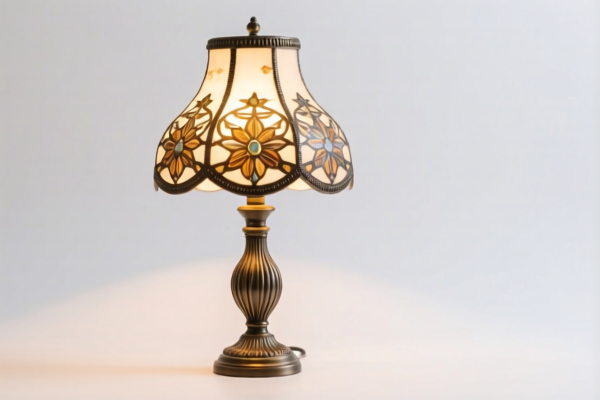
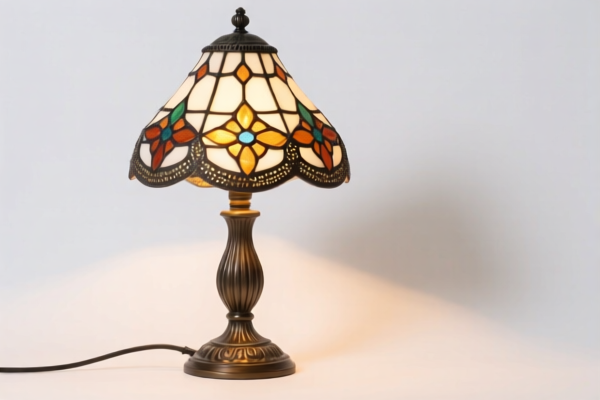
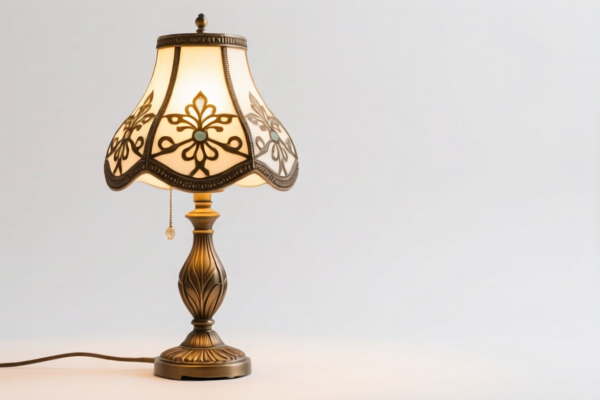
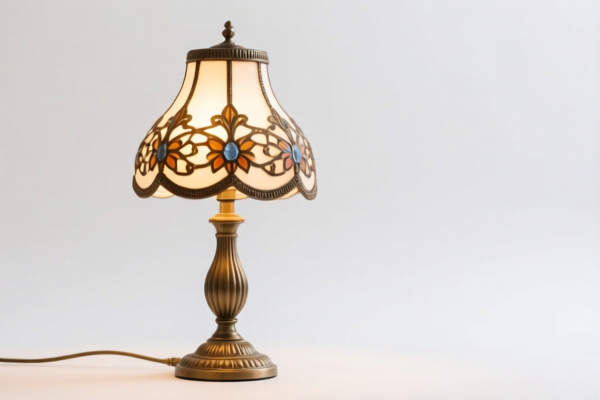
AI Analysis
💡 Decorative Lamp (Automotive Decorative Lighting)
🌐 HS Code Reference & Clearance Guide | 2026 Latest Tariff Analysis | Professional Customs Strategy
📌 I. Product Definition & Classification: What is an "Automotive Decorative Lamp"?
Automotive decorative lamps, often referred to as underglow, ambient interior lighting, or accent LED strips, are specialized lighting devices designed to enhance the aesthetic appeal of vehicles. In international trade, their classification is not straightforward because they straddle the line between lighting equipment and visual signaling devices.
⚠️ Key Classification Conflict:
- Are they general lighting (like household lamps)? → Chapter 85 (Electrical machinery)
- Are they visual signals (like indicators)? → Chapter 85 (Electrical machinery)
- Are they general illumination? → Chapter 94 (Furniture/Lamps)
The correct HS Code depends heavily on the primary function and technical composition (e.g., presence of specific LEDs, control units, or mounting hardware). Misclassification can lead to massive duty differences (from 10% to 38.9%).
📦 II. HS Code Classification Details (2026 Latest Tariff Authority Comparison)
Based on the provided data for Automotive Decorative Lamps, here are the four potential classifications with their tax implications:
| HS Code | Product Description | Application Scenario | Key Characteristic |
|---|---|---|---|
8512.20.20.40 |
Electrical equipment for lighting/signaling of vehicles | Automotive decoration lights, matching other categories | No material conflict; treated as specific vehicle lighting |
8531.20.00.40 |
Visual signaling equipment with LED elements | LED-based decorative lights, indicators | Contains LED components; classified as signaling |
8531.80.90.51 |
Visual signaling apparatus (other) | Generic visual signal devices, fallback category | "Other" category for visual signals; no specific LED match |
8512.20.20.80 |
Electrical lighting equipment for vehicles | General automotive electrical lighting | Material compatible; standard vehicle lighting |
9405.42.84.40 |
Lamp fittings and lighting accessories (incl. LED) | General purpose decorative lamps, possibly containing LEDs | Classified under Chapter 94 (General Lighting), not Chapter 85 |
🔍 Critical Distinction:
- Ch 85 (8512/8531): Focuses on electrical function and vehicle integration. Usually lower base duty (0%) but subject to Section 301/IEEPA surcharges.
- Ch 94 (9405): Focuses on general illumination. May have a 3.9% base duty plus additional surcharges, leading to the highest total rate (38.9%).
💰 III. 2026 Latest Tariff Rate Detailed Breakdown (Including Additional Taxes & Policy Surcharges)
✅ Applicable Country: United States (US)
✅ Origin: China (CN)
✅ Effective Date: November 10, 2025 onwards (for subsequent imports)
🎯 1. 8512.20.20.40 —— Electrical Equipment for Vehicle Lighting (Specific Match)
| Item | Content |
|---|---|
| Base Duty | 0.0% (Ad valorem) |
| Section 301 Surcharge | 0.0% (No additional 301 duty for this specific subheading in some contexts, or excluded) |
| IEEPA Surcharge (Sec. 122) | +10% (Targeting China-origin goods) |
| Total Duty Rate | 10.0% |
| Tax Calculation | CIF Value × 10% |
| De Minimis Exemption | ❌ Not Eligible (High-value industrial/electronic goods usually excluded) |
| Legal Basis Path | IEEPA:122 → USITC:8512.20.20.40 |
📌 Explanation:
- This code is highly favorable because the base duty is 0% and Section 301 is 0%.
- Only the 10% IEEPA surcharge applies.
- Best Case Scenario: Lowest total duty among all options.
🎯 2. 8531.20.00.40 —— Visual Signaling Equipment (With LED Elements)
| Item | Content |
|---|---|
| Base Duty | 0.0% |
| Section 301 Surcharge | +25.0% (Standard 301 rate for many electronic signaling devices) |
| IEEPA Surcharge (Sec. 122) | +10% |
| Total Duty Rate | 35.0% |
| Tax Calculation | CIF Value × 35% |
| De Minimis Exemption | ❌ Not Eligible |
| Legal Basis Path | IEEPA:122 → USITC:8531.20.00.40 → FOOTNOTE:301 |
📌 Explanation:
- Classified as "Visual Signaling" due to LED presence.
- High Duty: The 25% Section 301 duty significantly increases costs.
- Risk: If the product is purely decorative (not a signal), challenging this code may be possible.
🎯 3. 8531.80.90.51 —— Visual Signaling Apparatus (Other/Fallback)
| Item | Content |
|---|---|
| Base Duty | 0.0% |
| Section 301 Surcharge | +7.5% (Reduced 301 rate for "other" signaling devices) |
| IEEPA Surcharge (Sec. 122) | +10% |
| Total Duty Rate | 17.5% |
| Tax Calculation | CIF Value × 17.5% |
| De Minimis Exemption | ❌ Not Eligible |
| Legal Basis Path | IEEPA:122 → USITC:8531.80.90.51 |
📌 Explanation:
- A "fallback" category for visual signals that don’t fit specific LED signaling codes.
- Moderate Duty: 17.5% is better than 35% but worse than 10%.
- Use Case: When the product is a signal but doesn’t match the specific LED subheadings.
🎯 4. 8512.20.20.80 —— Electrical Lighting Equipment for Vehicles (General Match)
| Item | Content |
|---|---|
| Base Duty | 0.0% |
| Section 301 Surcharge | +25.0% |
| IEEPA Surcharge (Sec. 122) | +10% |
| Total Duty Rate | 35.0% |
| Tax Calculation | CIF Value × 35% |
| De Minimis Exemption | ❌ Not Eligible |
| Legal Basis Path | IEEPA:122 → USITC:8512.20.20.80 |
📌 Explanation:
- Similar to8512.20.20.40but classified under a different subheading that incurs the 25% 301 duty.
- Same High Cost as8531.20.00.40.
- Differentiation: Often depends on whether it’s considered a "signal" (8531) or "lighting" (8512) and the specific technical specs.
🎯 5. 9405.42.84.40 —— Lamp Fittings & Lighting Accessories (General Purpose)
| Item | Content |
|---|---|
| Base Duty | 3.9% |
| Section 301 Surcharge | +25.0% |
| IEEPA Surcharge (Sec. 122) | +10% |
| Total Duty Rate | 38.9% |
| Tax Calculation | CIF Value × 38.9% |
| De Minimis Exemption | ❌ Not Eligible |
| Legal Basis Path | IEEPA:122 → USITC:9405.42.84.40 |
📌 Explanation:
- Highest Duty Rate: 38.9%.
- Reason: Base duty of 3.9% + 25% 301 + 10% IEEPA.
- Risk: Only use if the product is clearly not for automotive use (e.g., general interior decor lamps not installed in the car). If imported for automotive installation, this code is dangerous due to high cost and potential misclassification penalties.
🛠️ IV. Customs Clearance Practical Advice (Real-World Pitfall Guide)
✅ 1. Document Preparation Checklist (Mandatory)
| Document | Required | Description |
|---|---|---|
| ✅ Product Specification Sheet | ✔️ | Must detail voltage, wattage, LED type, control method (wireless/app/wire) |
| ✅ Technical Drawing | ✔️ | Shows mounting points, wiring harness, and integration with vehicle electrical system |
| ✅ Photos (Labeled) | ✔️ | Clear images of the lamp, connectors, and control box. Must show if it’s "plug-and-play" |
| ✅ Commercial Invoice | ✔️ | Use precise description: "Automotive LED Decorative Lamp, Not for Safety Signaling" |
| ✅ Origin Certificate (CO) | ✔️ | Essential for proving China origin to apply (or defend against) IEEPA duties |
| ✅ UL/CE/RoHS Reports | ✔️ | Safety certifications are critical for electrical goods |
✅ 2. Declaration Strategy (Key Mantras)
🔥 “Function Defines Code, Description Avoids Pitfalls!”
| Scenario | Correct Declaration | Incorrect Practice |
|---|---|---|
| Purely Decorative (Ambient Light) | 8512.20.20.40 |
Declare as 9405 → 38.9% Duty |
| LED Strip with Control Module | 8512.20.20.40 or 8531.20.00.40 |
Declare as 9405 → High Risk |
| Glowing Wheels/Underglow | 8512.20.20.40 |
Declare as 8531 (Signaling) → 35% Duty |
| General Room Decor Lamp (Not Auto) | 9405.42.84.40 |
Declare as Auto Light → Misclassification |
✅ 3. Special Cases Handling
| Situation | Handling Advice |
|---|---|
| "Kit" Contains Wiring + Lamp | Declare as a Set. The essential character is the lamp. Do not split wires into separate codes. |
| OEM Custom Lighting | Provide design files to prove it’s for a specific vehicle model. Supports 8512 classification. |
| Ambient Interior Light vs. External Underglow | Both are 8512. However, external lights may face stricter scrutiny for "signaling" (8531) classification. |
| Product with Bluetooth/Wi-Fi | Still classified by lighting function, not communication. Remains 8512 or 8531. |
🌍 V. Global Market Comparison (2026 Latest)
| Country/Region | Recommended HS Code | Duty Rate | Certification | Notes |
|---|---|---|---|---|
| 🇺🇸 USA | 8512.20.20.40 |
10.0% | FCC + DOT (if external) | Best Option. Low base duty. |
| 🇨🇳 China | 8512.20.20.40 |
10-15% | CCC | Domestic trade, lower barriers. |
| 🇪🇺 EU | 8512.20 |
0-2.7% | CE + E-Mark | No IEEPA/301 equivalent. Low duty. |
| 🇬🇧 UK | 8512.20 |
0-2.7% | UKCA | Post-Brexit, similar to EU. |
| 🇦🇺 Australia | 8512.20 |
5% | RCM | Moderate duty. |
📌 Conclusion:
- USA is the most complex market due to IEEPA and Section 301 duties.
- Target8512.20.20.40to minimize duty to 10%.
- Avoid9405unless the product is genuinely not for automotive use.
📌 VI. Common Errors & Pitfall Guide (Lessons Learned)
❌ Error 1: Declaring automotive lamps as 9405 (General Lamps)
👉 Consequence: 38.9% Duty + Potential Penalty for Misclassification.
👉 Fix: Prove automotive integration.
❌ Error 2: Declaring all LED lights as 8531 (Signaling)
👉 Consequence: 35% Duty.
👉 Fix: Argue "Decorative/Ambient" function, not "Signaling/Safety." Use 8512.20.20.40.
❌ Error 3: Ignoring IEEPA Surcharge
👉 Consequence: Unexpected 10% cost increase at border.
👉 Fix: Factor 10% IEEPA into all China-origin electrical goods.
❌ Error 4: Splitting "Kit" components for lower duties
👉 Consequence: Total duty may exceed 80% if parts are classified separately.
👉 Fix: Declare as "Set" under the principal item (the lamp).
✅ Correct Declaration Example:
"LED Decorative Ambient Lamp Kit for Automotive Interior, Voltage: 12V, Includes Wiring Harness & Controller, Not for Safety Signaling, Model: XYZ123, Origin: China"
🎯 VII. Conclusion: Professional Declaration, Cost Optimization!
🎯 Remember the Mantra:
🔹 “Auto Lamp is Ch 85, Not Ch 94.
🔹8512.20.20.40is Your Friend (10% Duty).
🔹8531is Expensive (35% Duty).
🔹9405is a Trap (38.9% Duty).”
📌 Pro Tip:
If your decorative lamps are not for automotive use (e.g., home interior decor), they might qualify for 9405, but verify if they are marketed for car use. If marketed for cars, always use Ch 85.
📣 Immediate Action:
📞 Contact a Customs Broker + Provide Product Photos + Request Advance Ruling for
8512.20.20.40.
🚀 Ensure Smooth Clearance, Minimize Duties, Maximize Profit!
✨ Professional Clearance Starts with Precise Classification!
💼 Every Percent of Duty Saved is Pure Profit!
Customer Reviews
About HS Code Classification
The Harmonized System (HS) is an internationally standardized nomenclature developed by the World Customs Organization (WCO) to classify traded products. Over 200 countries use the HS system as the basis for customs tariffs, trade statistics, and import/export regulations.
Each HS code follows a hierarchical structure:
- Chapter (2 digits) — Broad category of goods (e.g., Chapter 84: Machinery and Mechanical Appliances)
- Heading (4 digits) — More specific grouping within the chapter
- Subheading (6 digits) — Internationally standardized breakdown, used by all WCO member countries
- National subdivisions (8-10 digits) — Country-specific extensions for further classification, such as US HTSUS 10-digit codes
Correct HS code classification is essential for smooth customs clearance, accurate duty payment, and compliance with trade regulations. Misclassification can lead to customs delays, overpayment of duties, or penalties.
When importing from CN to US, the applicable tariff rates may include:
- Most-Favored-Nation (MFN) rate — The standard duty rate applied to WTO members
- General rate — Applied to countries without trade agreements
- Trade remedy duties — Additional tariffs such as Section 301 (anti-dumping), Section 232 (national security), or countervailing duties
The information provided on this page is for reference purposes only. For official classification, please consult with your local customs authority or a licensed customs broker.