decorative lanyard
CN → US| HS Code | Tariff Rate | Origin | Destination | Doc |
|---|---|---|---|---|
| 7117192000 | 28.5% | CN | US | Official Doc |
| 7117191500 | 25.5% | CN | US | Official Doc |
| 5609001000 | 37.9% | CN | US | Official Doc |
| 5609003000 | 39.5% | CN | US | Official Doc |
| 5806321095 | 41.0% | CN | US | Official Doc |
Product Images
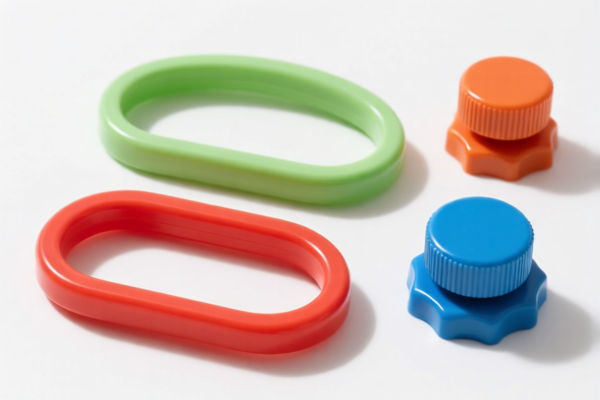
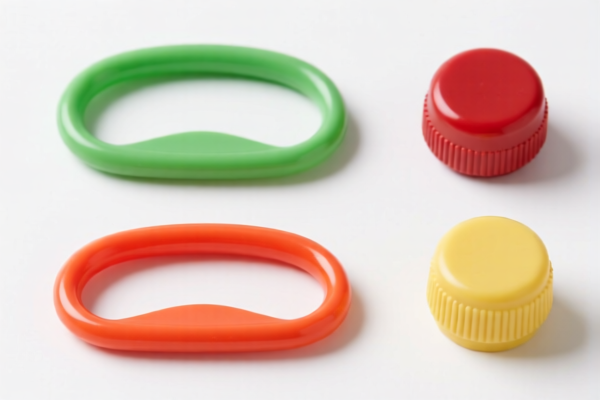


AI Analysis
🎀 Lanyards for Decorative Purposes (Imitation Jewelry & Accessories)
🌐 HS Code Reference & Customs Clearance Guide | 2026 Latest Tariff Analysis | Professional Clearance Strategy
📌 I. Product Definition & Classification: Do You Really Understand "Lanyards"?
A decorative lanyard is a versatile item, typically used to hold keys, badges, ID cards, or small accessories. In international trade, its classification depends heavily on its material composition and primary function. It is often categorized as either Imitation Jewelry or Textile/String Products.
Key Distinction Points: * Imitation Jewelry (Chapter 71): If the lanyard is made of base metals, alloys, or has significant decorative metallic elements that define its character as "jewelry-like," it falls under HS 7117. * Textile/String (Chapters 56/58): If the lanyard is primarily made of cords, ropes, braids, or woven fabrics (synthetic or natural fibers), it falls under HS 5609 or 5806.
⚠️ Critical Note: Misclassification between "Jewelry" and "Textiles" can lead to significant tariff differences, especially when additional duties (such as Section 301 or Section 232) are applied.
📦 II. HS Code Classification Details (2026 Latest Tariff Authority Match)
Based on the provided data, here are the precise HS Codes and their corresponding tax structures.
🏷️ Option 1: Imitation Jewelry (Metallic/Decorative Focus)
| HS Code | Summary Description | Why This Code? |
|---|---|---|
7117.19.20.00 |
Lanyards classified as Imitation Jewelry | Lanyards are considered chains, strings, or similar items that fit the characteristics of imitation jewelry. |
7117.19.15.00 |
Other Imitation Jewelry (Base Metal Strings) | Lanyards may be string-like/chain products made of base metals, fitting the "Other" category description. |
🏷️ Option 2: Textile & String Products (Fiber Focus)
| HS Code | Summary Description | Why This Code? |
|---|---|---|
5609.00.10.00 |
Rope, Cord, or Braid Articles | Lanyards fall under ropes/bands, fitting the characteristics of yarn, banding, or similar articles. |
5609.00.30.00 |
String Articles (Artificial Fiber) | Lanyards belong to string articles; material may be artificial fiber, meeting the heading requirements. |
5806.32.10.95 |
Decorative Woven Bands | Decorative webbing belongs to woven fabrics/bands used for decoration, likely made of artificial or synthetic fiber. |
💰 III. 2026 Latest Tariff Rate Breakdown (Including Additional Duties)
✅ Applicable Country: United States (US)
✅ Country of Origin: China (CN) (Based on the 122-Clause and Additional Tariff context)
✅ Effective Time: Current Tariff Structure
🎯 1. 7117.19.20.00 – Imitation Jewelry (Lanyards)
| Item | Content |
|---|---|
| Base Tariff | 11.0% |
| Additional Tariff (Section 301/122) | +7.5% |
| 122-Clause Tariff | +10% |
| Total Tax Rate | 28.5% |
| Tax Calculation | CIF Value × 28.5% |
| Legal Basis | Base Rate (11%) + Add'l (7.5%) + 122-Clause (10%) |
📌 Explanation:
- This code assumes the lanyard is treated as imitation jewelry.
- The 28.5% total rate includes the base duty plus specific additional tariffs often applied to Chinese-origin goods under current trade policies.
- Advantage: Lower total tax compared to textile options in some cases, but requires proof of jewelry-like nature.
🎯 2. 7117.19.15.00 – Other Imitation Jewelry (Base Metal)
| Item | Content |
|---|---|
| Base Tariff | 8.0% |
| Additional Tariff (Section 301/122) | +7.5% |
| 122-Clause Tariff | +10% |
| Total Tax Rate | 25.5% |
| Tax Calculation | CIF Value × 25.5% |
| Legal Basis | Base Rate (8%) + Add'l (7.5%) + 122-Clause (10%) |
📌 Explanation:
- This code is for lanyards made of base metals (e.g., zinc alloy, iron) with a chain/rope shape.
- Lowest Total Rate among all options at 25.5%.
- Key Requirement: Must be primarily metallic or have metal as the defining feature.
🎯 3. 5609.00.10.00 – Rope/Cord Articles
| Item | Content |
|---|---|
| Base Tariff | 2.9% |
| Additional Tariff (Section 301/122) | +25.0% |
| 122-Clause Tariff | +10% |
| Total Tax Rate | 37.9% |
| Tax Calculation | CIF Value × 37.9% |
| Legal Basis | Base Rate (2.9%) + Add'l (25%) + 122-Clause (10%) |
📌 Explanation:
- This code applies to textile-based lanyards (nylon, polyester cords).
- Despite a low base rate (2.9%), the Section 301 Additional Tariff is 25%, pushing the total to 37.9%.
- Risk: High additional duty makes this more expensive than jewelry classification for Chinese goods.
🎯 4. 5609.00.30.00 – String Articles (Artificial Fiber)
| Item | Content |
|---|---|
| Base Tariff | 4.5% |
| Additional Tariff (Section 301/122) | +25.0% |
| 122-Clause Tariff | +10% |
| Total Tax Rate | 39.5% |
| Tax Calculation | CIF Value × 39.5% |
| Legal Basis | Base Rate (4.5%) + Add'l (25%) + 122-Clause (10%) |
📌 Explanation:
- Similar to the above, but specifically for artificial fiber strings.
- Highest Total Rate at 39.5% among textile options.
- Not Recommended for cost optimization if metal/jewelry classification is viable.
🎯 5. 5806.32.10.95 – Decorative Woven Bands
| Item | Content |
|---|---|
| Base Tariff | 6.0% |
| Additional Tariff (Section 301/122) | +25.0% |
| 122-Clause Tariff | +10% |
| Total Tax Rate | 41.0% |
| Tax Calculation | CIF Value × 41.0% |
| Legal Basis | Base Rate (6%) + Add'l (25%) + 122-Clause (10%) |
📌 Explanation:
- Applies to woven decorative webbing or ribbons.
- Highest Overall Tax Rate at 41.0%.
- Only suitable if the lanyard is essentially a woven band with no other components.
🛠️ IV. Customs Clearance Practical Advice (Battle-Tested Guide)
✅ 1. Documentation Checklist (Non-Negotiable)
| Document | Required? | Notes |
|---|---|---|
| ✅ Product Specifications | ✔️ | Must clearly state material (e.g., "Zinc Alloy," "Polyester," "Cotton"). |
| ✅ Material Composition Statement | ✔️ | Critical for distinguishing between Chapter 71 (Jewelry) and Chapters 56/58 (Textiles). |
| ✅ Product Photos | ✔️ | Show metal clasps, fabric texture, and any decorative elements. |
| ✅ Commercial Invoice | ✔️ | Describe as "Decorative Lanyard" or "Imitation Jewelry Lanyard," not just "Lanyard." |
| ✅ Origin Certificate | ✔️ | Confirm CN origin to apply correct additional tariffs. |
✅ 2. Classification Strategy (Key Mnemonic)
🔥 “Metal Jewelry, Textile String; 25.5% vs. 41%, Choose Wisely!”
| Scenario | Correct HS Code | Why? |
|---|---|---|
| Lanyard with Metal Clasps & Decorative Metal Elements | 7117.19.15.00 |
Lowest Tax (25.5%). Classify as imitation jewelry. |
| 100% Polyester/Nylon Cord with Plastic Buckle | 5609.00.10.00 |
High Additional Duty (37.9%). Acceptable if metal is minimal. |
| Woven Fabric Ribbon Lanyard | 5806.32.10.95 |
Highest Tax (41.0%). Avoid if possible due to cost. |
| Mixed Material (Metal + Fabric) | 7117.19.15.00 |
If metal provides the "essential character," use jewelry code. |
✅ 3. Special Handling Tips
| Situation | Recommendation |
|---|---|
| OEM Custom Lanyards | Provide design files showing material breakdown. Prove metal dominance if claiming 7117. |
| Bulk Shipments | Ensure all units have consistent material composition. Mixed lots can trigger audits. |
| Sample Shipments | Clearly mark "Sample, No Commercial Value" to potentially mitigate duties, but HS Code still applies. |
| De Minimis (Section 321) | ❌ Not Eligible. All listed codes exceed the de minimis threshold for tax-exempt entry under current rules for Chinese goods. |
🌍 V. Global Market Comparison (2026 Latest)
| Country/Region | Recommended HS Code | Total Tax (China Origin) | Certification | Note |
|---|---|---|---|---|
| 🇺🇸 USA | 7117.19.15.00 |
25.5% | None specific | Best Option for cost efficiency. |
| 🇺🇸 USA | 5609.00.10.00 |
37.9% | None specific | High due to 25% additional tariff. |
| 🇪🇺 EU | 7117.19.00 |
~0% - 2.5% | CE/REACH | No Section 301 equivalent, but watch for VAT. |
| 🇨🇳 China | 7117.19.00 |
~11% | CCC (if applicable) | Domestic trade rules apply. |
📌 Conclusion:
- USA is the most challenging market due to additional tariffs.
- Classification as "Imitation Jewelry" (7117.19.15.00) is the most cost-effective strategy for Chinese-origin decorative lanyards with metallic components, saving ~10-15% compared to textile classifications.
📌 VI. Common Mistakes & Pitfalls (Lessons Learned)
❌ Mistake 1: Classifying a metal-heavy lanyard as "Textile Rope" (5609).
👉 Consequence: Pay 37.9% instead of 25.5%. Unnecessary cost.
❌ Mistake 2: Claiming "De Minimis" for lanyards from China.
👉 Consequence: Seizure, penalties, or forced payment of full duties + storage fees.
❌ Mistake 3: Vague Description "Lanyard" on Invoice.
👉 Consequence: CBP may assign the highest default rate or request additional documentation, causing delays.
✅ Correct Approach:
"Decorative Lanyard, 100% Zinc Alloy with Enamel Plating, Imitation Jewelry, Model XYZ"
vs.
"Decorative Lanyard, Polyester Webbing, 25mm Width, Custom Printed"
🎯 VII. Conclusion: Precision Classification, Cost Optimization!
🎯 Key Takeaway:
🔹 If it looks like jewelry, classify as jewelry (
7117).
🔹 If it looks like rope, classify as textile (5609).
🔹 25.5% vs. 41% is a massive difference. Don't leave money on the table.
📌 Pro Tip:
If your lanyards are 100% fabric with no metal, you may have no choice but to pay the higher textile tariff. However, adding decorative metal charms or clasps can sometimes shift the "essential character" to Chapter 71, qualifying you for the lower 25.5% rate. Always consult a customs broker for pre-classification rulings.
📣 Immediate Action:
📞 Review your product's material composition.
📄 Update your invoice descriptions to match the HS Code.
🚀 Optimize your supply chain costs with accurate classification!
✨ Professional Clearance Starts with Accurate Classification!
💼 Every percentage point saved is pure profit!
Customer Reviews
About HS Code Classification
The Harmonized System (HS) is an internationally standardized nomenclature developed by the World Customs Organization (WCO) to classify traded products. Over 200 countries use the HS system as the basis for customs tariffs, trade statistics, and import/export regulations.
Each HS code follows a hierarchical structure:
- Chapter (2 digits) — Broad category of goods (e.g., Chapter 84: Machinery and Mechanical Appliances)
- Heading (4 digits) — More specific grouping within the chapter
- Subheading (6 digits) — Internationally standardized breakdown, used by all WCO member countries
- National subdivisions (8-10 digits) — Country-specific extensions for further classification, such as US HTSUS 10-digit codes
Correct HS code classification is essential for smooth customs clearance, accurate duty payment, and compliance with trade regulations. Misclassification can lead to customs delays, overpayment of duties, or penalties.
When importing from CN to US, the applicable tariff rates may include:
- Most-Favored-Nation (MFN) rate — The standard duty rate applied to WTO members
- General rate — Applied to countries without trade agreements
- Trade remedy duties — Additional tariffs such as Section 301 (anti-dumping), Section 232 (national security), or countervailing duties
The information provided on this page is for reference purposes only. For official classification, please consult with your local customs authority or a licensed customs broker.