decorative lights
CN → US| HS Code | Tariff Rate | Origin | Destination | Doc |
|---|---|---|---|---|
| 8512202040 | 35.0% | CN | US | Official Doc |
| 8531200040 | 35.0% | CN | US | Official Doc |
| 8531809051 | 17.5% | CN | US | Official Doc |
| 8512202080 | 35.0% | CN | US | Official Doc |
| 9405428440 | 38.9% | CN | US | Official Doc |
Product Images
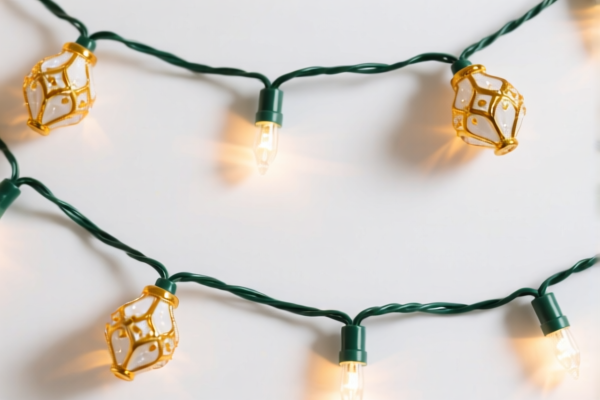
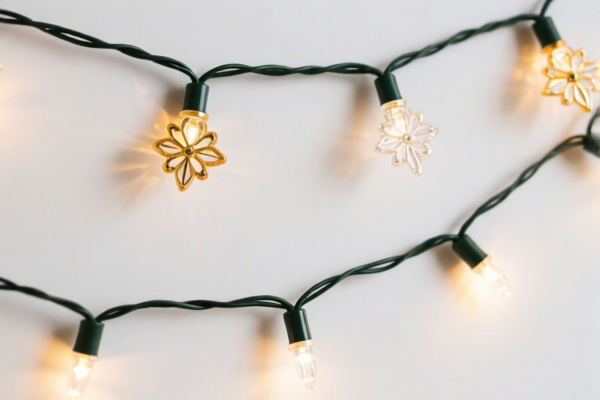
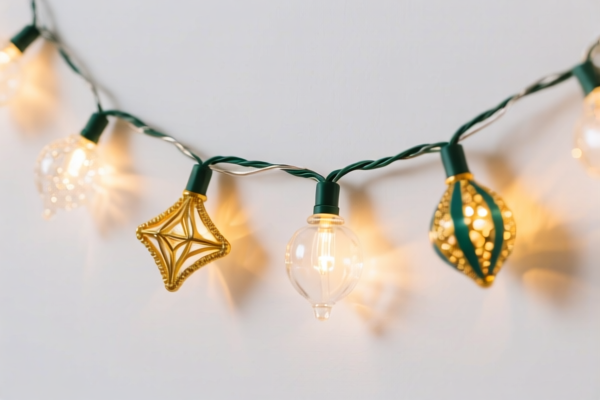

AI Analysis
💡 Decorative Lights (Automotive & General Lighting)
🌐 HS Code Reference & Customs Clearance Guide | 2026 Latest Tariff Analysis | Professional Clearance Strategy
📌 I. Product Definition & Classification: What Exactly Are "Decorative Lights"?
"Decorative Lights" is a broad term, but in the context of international trade and the provided data, it often refers to Automotive Decorative Lights (interior/exterior ambient lighting, accent strips, underglow, etc.). These products fall into a complex classification boundary between automotive parts, electrical lighting equipment, and visual signaling devices.
⚠️ Key Classification Dilemma:
- Are they "Parts of Vehicles"? → Often rejected for lighting functions.
- Are they "General Lighting Appliances" (Chapter 94)? → Usually excluded if specifically for automotive use (Chapter 85).
- Are they "Electrical Lighting Equipment for Vehicles" (Chapter 85, Heading 8512)? → The most common and favorable classification.
- Are they "Visual Signaling Appliances" (Chapter 85, Heading 8531)? → Applicable if they function as indicators/panels.
📦 II. HS Code Classification Details (Based on Provided Data)
| HS Code | Product Description | Summary & Logic | Total Tax Rate |
|---|---|---|---|
8512.20.20.40 |
Automotive decorative lights belong to lighting equipment, matching other categories, no material conflict. | General Automotive Lighting: Standard LED accent/ambient lights for cars. | 35.0% |
8531.20.00.40 |
Automotive decorative lights belong to visual signaling equipment, containing LED elements, fitting indicator panel classification. | LED Indicator Panels: Lights functioning as complex visual signals or dashboard-style decorative panels. | 35.0% |
8531.80.90.51 |
Automotive decorative lights belong to visual signaling devices, matching other devices fallback attributes. | Other Visual Signaling: A "catch-all" for signaling devices not specifically listed elsewhere. | 17.5% |
8512.20.20.80 |
Automotive decorative lights belong to electrical lighting equipment for automobiles; material inferred as plastic or metal. | Automotive Electrical Lighting: Specific to vehicle use, generic material (plastic/metal housing). | 35.0% |
9405.42.84.40 |
Automotive decorative lights belong to lighting appliances, possibly containing LED light sources, no material conflict. | General Lighting Appliances: Risky classification. Usually for household/office use, not automotive-specific. | 38.9% |
🔍 Critical Insight:
- Most Common:8512.20.20.40and8512.20.20.80are the standard choices for automotive-specific decorative LEDs.
- Lowest Tax Option:8531.80.90.51offers 17.5% total tax, but only if the product can be legally classified as a general "visual signaling device" rather than a vehicle part.
- Highest Tax Risk:9405.42.84.40has the highest rate (38.9%) and may be rejected by customs if the product is clearly for automotive use.
💰 III. 2026 Latest Tariff Rate Breakdown (Including Surcharges & Policy Add-ons)
✅ Applicable Country: USA (US)
✅ Origin: China (CN)
✅ Effective Date: From November 10, 2025 (inclusive)
🎯 1. 8512.20.20.40 & 8512.20.20.80 & 8531.20.00.40
(Standard Automotive/Signaling LED Lights)
| Item | Detail |
|---|---|
| Basic Tariff | 0.0% (Ad Valorem) |
| Section 301 Tariff (USITC) | +25.0% |
| Section 122 Tariff (IEEPA) | +10.0% (Specific to China-origin goods) |
| Total Tax Rate | 35.0% |
| Tax Calculation | CIF Value × 35% |
| De Minimis Exemption | ❌ Not Applicable (Denied) |
| Legal Basis Path | USITC:8512.20.20.40/80 → FOOTNOTE:301 → IEEPA:9903.01.25 |
📌 Explanation:
- The 25% Section 301 tariff applies to most electrical lighting and signaling equipment from China.
- The 10% Section 122 tariff is a specific surcharge added by executive order for certain Chinese imports.
- Total 35% is the baseline for most automotive LED decorative lights.
🎯 2. 8531.80.90.51
(Visual Signaling Devices - Lower Tax Bracket)
| Item | Detail |
|---|---|
| Basic Tariff | 0.0% |
| Section 301 Tariff (USITC) | +7.5% |
| Section 122 Tariff (IEEPA) | +10.0% |
| Total Tax Rate | 17.5% |
| Tax Calculation | CIF Value × 17.5% |
| De Minimis Exemption | ❌ Not Applicable (Denied) |
| Legal Basis Path | USITC:8531.80.90.51 → FOOTNOTE:301 → IEEPA:9903.01.25 |
📌 Strategic Value:
- This is the only option with a lower Section 301 surcharge (7.5%).
- Condition: You must prove the product is a "visual signaling device" (e.g., programmable LED panels, complex indicator arrays) and not merely a "light bulb" or "ambient strip."
- Risk: Customs may reclassify it as8512if it’s clearly an automotive part, leading to back taxes.
🎯 3. 9405.42.84.40
(General Lighting Appliances - High Risk)
| Item | Detail |
|---|---|
| Basic Tariff | 3.9% |
| Section 301 Tariff (USITC) | +25.0% |
| Section 122 Tariff (IEEPA) | +10.0% |
| Total Tax Rate | 38.9% |
| Tax Calculation | CIF Value × 38.9% |
| De Minimis Exemption | ❌ Not Applicable (Denied) |
| Legal Basis Path | USITC:9405.42.84.40 → FOOTNOTE:301 → IEEPA:9903.01.25 |
📌 Warning:
- This is the most expensive classification.
- Chapter 94 is for "Furniture, Lamps, Lighting Fittings," but excludes goods specified in Chapter 85 (like automotive lighting).
- Using this code for automotive lights is a high-risk misclassification that could lead to penalties.
🛠️ IV. Customs Clearance Practical Advice (Battle-Tested Pitfall Avoidance Guide)
✅ 1. Document Checklist (Non-Negotiable)
| Document | Mandatory? | Description |
|---|---|---|
| ✅ Product Spec Sheet | ✔️ | Must detail voltage, wattage, LED type, IP rating, and intended use (e.g., "For interior ambient lighting in vehicles"). |
| ✅ Circuit Diagram | ✔️ | Critical to distinguish between simple wiring (8512) and complex signaling panels (8531). |
| ✅ Product Photos | ✔️ | Clear images of the light, connectors, and any mounting hardware. |
| ✅ Commercial Invoice | ✔️ | Must accurately describe the item as "LED Decorative Light for Automotive Use" or "Visual Signaling Device." Avoid vague terms like "Decorative Light." |
| ✅ Certificate of Origin | ✔️ | Required to calculate Section 301 and 122 tariffs accurately. |
| ✅ Installation Manual | ✔️ | Proves automotive application if using 8512. |
✅ 2. Classification Strategy (Key Mantra)
🔥 "If it's for a car, go to 8512. If it's a complex signal, try 8531. Avoid 9405 unless it's a home lamp!"
| Scenario | Recommended HS Code | Reason |
|---|---|---|
| Standard LED Strips/Ambient Lights | 8512.20.20.40 or 8512.20.20.80 |
Clearly defined as "lighting equipment for vehicles." |
| Programmable LED Dash/Panel Lights | 8531.20.00.40 or 8531.80.90.51 |
Functions as a signaling/indicator panel, not just illumination. |
| Non-Automotive Decorative String Lights | 9405.42.84.40 |
If clearly not for vehicles (e.g., Christmas lights), but note the high tax. |
| Mixed Shipment (Auto + Home) | Split Declaration | Do not mix automotive and general lighting in one HS code. |
✅ 3. Special Situations & Handling
| Situation | Handling Advice |
|---|---|
| "Universal Fit" Claims | Even if labeled "Universal," if it uses automotive connectors or is marketed for cars, Customs will likely assign 8512. |
| OEM vs. Aftermarket | Both fall under 8512. Provide proof of compatibility (e.g., "Fits Honda Civic 2020-2023") to support automotive classification. |
| LED Driver Included | If the driver is integral, it’s still 8512. If shipped separately, the driver might be 8504, but better to bundle for accuracy. |
| Pre-Ruling Application | Highly Recommended. Apply for an Advance Ruling with CBP before shipping, especially if using 8531 to claim the 17.5% rate. |
🌍 V. Global Market Comparison (2026 Latest)
| Country/Region | Recommended HS Code | Tariff (China Origin) | Certification | Notes |
|---|---|---|---|---|
| 🇺🇸 USA | 8512.20.20.40 |
35.0% | FCC, DOT (if external) | 122 and 301 tariffs apply. |
| 🇨🇳 China | 8512.20.20.40 |
~6-10% | CCC (if required) | Lower entry barriers. |
| 🇪🇺 EU | 8512.20.20.40 |
0-4% | E-Mark, CE | No major surcharges. |
| 🇬🇧 UK | 8512.20.20.40 |
0-4% | UKCA | Post-Brexit rules apply. |
| 🇦🇺 Australia | 8512.20.20.40 |
5% | RCM, ADR | No surcharges. |
📌 Conclusion:
- The USA market is the most expensive due to Section 301 and 122 tariffs.
- Diversify sourcing if targeting the US: Consider importing from Vietnam, Mexico, or Thailand to potentially bypass Chinese-origin tariffs (check specific rules of origin).
📌 VI. Common Mistakes & Pitfall Guide (Lessons Learned)
❌ Mistake 1: Classifying automotive LED strips as 9405 (General Lighting)
👉 Result: Customs rejects it as misclassification, reclassifies to 8512, and applies 35% + penalties.
✅ Fix: Always state "For Automotive Use" in the description.
❌ Mistake 2: Assuming all LED lights qualify for the lower 8531 rate
👉 Result: If the product is a simple strip light, Customs will downgrade it to 8512 (35%).
✅ Fix: Only use 8531 if the product has complex signaling functionality (e.g., customizable patterns, integration with vehicle systems).
❌ Mistake 3: Ignoring Section 122 Tariff
👉 Result: Underestimating total landed cost. The 10% surcharge is often overlooked.
✅ Fix: Include 10% in your price calculation for all China-origin goods to the US.
🎯 VII. Conclusion: Professional Classification Saves Money!
🎯 Remember the Mantra:
🔹 "Auto LEDs go to 8512 (35%). Complex Signals try 8531 (17.5%). General Lights are 9405 (38.9%). Don't mix them up!"
🔹 "301 + 122 = 35%. Plan your pricing accordingly."
📌 Pro Tip:
If your decorative lights are small, low-value items (under $800), check if they qualify for De Minimis exemptions in other countries, but NOT for the US. For the US, always assume full duty for China-origin goods.
📣 Immediate Action:
📞 Contact a Customs Broker to apply for a Pre-Ruling for your specific product.
📦 Prepare Detailed Specs showing automotive connectivity or signaling functions.
🚀 Optimize for Clearance: Accurate HS codes mean faster release and predictable costs.
✨ Professional Clearance, Starting with Precise Classification!
💼 Every cent of tariff matters in your profit margin.
Customer Reviews
About HS Code Classification
The Harmonized System (HS) is an internationally standardized nomenclature developed by the World Customs Organization (WCO) to classify traded products. Over 200 countries use the HS system as the basis for customs tariffs, trade statistics, and import/export regulations.
Each HS code follows a hierarchical structure:
- Chapter (2 digits) — Broad category of goods (e.g., Chapter 84: Machinery and Mechanical Appliances)
- Heading (4 digits) — More specific grouping within the chapter
- Subheading (6 digits) — Internationally standardized breakdown, used by all WCO member countries
- National subdivisions (8-10 digits) — Country-specific extensions for further classification, such as US HTSUS 10-digit codes
Correct HS code classification is essential for smooth customs clearance, accurate duty payment, and compliance with trade regulations. Misclassification can lead to customs delays, overpayment of duties, or penalties.
When importing from CN to US, the applicable tariff rates may include:
- Most-Favored-Nation (MFN) rate — The standard duty rate applied to WTO members
- General rate — Applied to countries without trade agreements
- Trade remedy duties — Additional tariffs such as Section 301 (anti-dumping), Section 232 (national security), or countervailing duties
The information provided on this page is for reference purposes only. For official classification, please consult with your local customs authority or a licensed customs broker.