decorative mirror
CN → US| HS Code | Tariff Rate | Origin | Destination | Doc |
|---|---|---|---|---|
| 3926400090 | 15.3% | CN | US | Official Doc |
| 3926400010 | 15.3% | CN | US | Official Doc |
Product Images
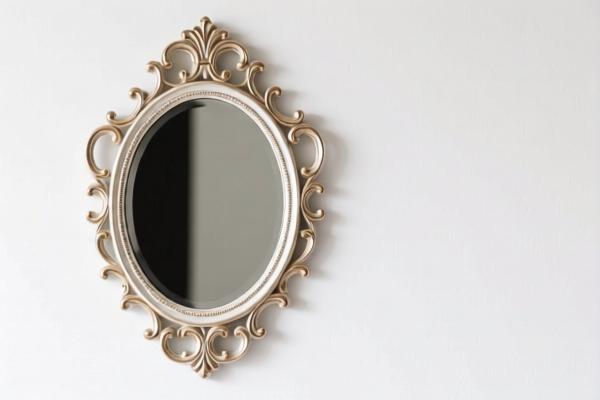

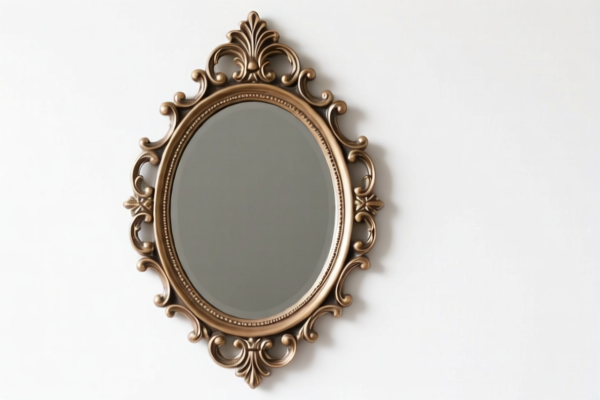
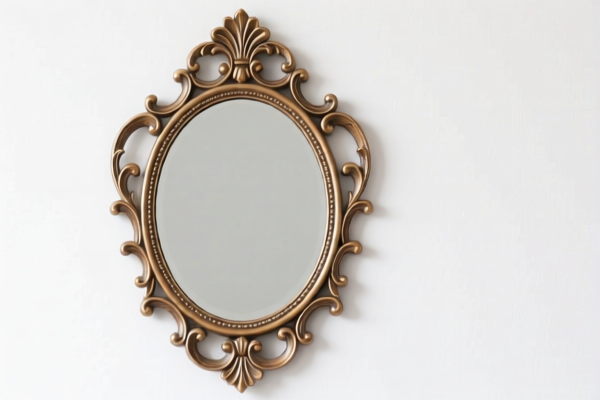
AI Analysis
🪞 Decorative Mirror (Decorative Articles of Glass/Plastic)
🌐 HS Code Reference & Customs Clearance Guide | 2026 Latest Tariff Analysis | Professional Compliance Strategy
📌 Part 1: Product Definition & Classification: Do You Really Understand "Decorative Mirrors"?
A decorative mirror is an article designed primarily for ornamental purposes rather than functional use (such as personal grooming or safety). In international trade, the classification depends strictly on the material and primary function.
Key Distinction:
- If the item is primarily a mirror surface (glass/metalized) used for reflection/decoration → It generally falls under Chapter 70 (Glass) or Chapter 71 (Jewelry/Imitation Jewelry).
- If the item is a statuette, figurine, or ornamental object made of plastics (or other materials from headings 3901–3914) → It falls under Chapter 39.
⚠️ CRITICAL WARNING FOR THIS DATA SET:
The provided<DATA>contains only HS Codes under Chapter 39 (Plastics). This means the data ONLY covers decorative mirrors (or mirror-like ornamental articles) that are manufactured from plastics (e.g., acrylic mirrors, plastic figurines with reflective surfaces) or articles made of other materials from headings 3901–3914.
If your product is a traditional glass mirror, these HS codes DO NOT APPLY. You must look for Chapter 70 codes (e.g., 7009).
For the purpose of this analysis, we assume the product is a PLASTIC decorative ornamental article (e.g., acrylic mirror wall decor, plastic statuettes with mirror finishes).
📦 Part 2: HS Code Classification Details (2026 Latest Tariff Authority Match)
Based strictly on the provided <DATA>, the products are classified as "Other articles of plastics... Statuettes and other ornamental articles."
| HS Code | Product Description | Applicable Scenario | Material Condition |
|---|---|---|---|
3926.40.00.90 |
Other articles of plastics and articles of other materials of headings 3901 to 3914: Statuettes and other ornamental articles Other | Plastic ornamental mirrors, acrylic wall art with reflective finishes, non-bow plastic decor | ✅ Plastic/Non-Bow |
3926.40.00.10 |
Other articles of plastics and articles of other materials of headings 3901 to 3914: Statuettes and other ornamental articles Bows and similar products for decorative purposes including gift-packaging and the like | Plastic bows, decorative ribbon-like ornaments, gift-packaging accessories with mirror effects | ✅ Plastic/Bow-Type |
🔍 Key Insight:
-3926.40.00.90is the "catch-all" for other plastic ornamental articles (e.g., plastic figurines, acrylic decorative panels with mirror-like appearance).
-3926.40.00.10is specific to bows and similar decorative products. If your "mirror" is actually a plastic bow-shaped ornament, use this code.
- ❌ No Glass Mirrors: If the product is >50% glass or traditional silvered glass, these codes are incorrect. Use Chapter 70 instead.
💰 Part 3: 2026 Latest Tariff Rate Breakdown (Including Surcharges & Policy Add-ons)
✅ Applicable Country: United States (US)
✅ Country of Origin: China (CN)
✅ Effective Date: 2025/2026 (Current Trade Policy)
🎯 1. 3926.40.00.90 – Plastic Statuettes & Other Ornamental Articles (Other)
| Item | Content |
|---|---|
| Basic Tariff Rate | 5.3% (Ad Valorem) |
| Section 301 Additional Tariff | 0.0% |
| IEEPA Additional Tariff | 0.0% |
| Total Tariff Rate | 5.3% |
| Tax Calculation | CIF Value × 5.3% |
| De Minimis Eligibility | ✅ Yes (If value < $800, typically duty-free under Section 321) |
| Legal Basis Path | HTSUS:3926.40.00.90 → Section 301: Footnote 1 (Check specific exclusion list) |
📌 Explanation:
- Plastic ornamental articles are generally not subject to the high 25% Section 301 tariffs that apply to many electronics or heavy machinery.
- Total Tax = 5.3% is considered a low-risk, moderate-cost classification.
- No IEEPA 10% surcharge applies to most plastic goods in this subheading unless specifically flagged.
🎯 2. 3926.40.00.10 – Bows & Similar Decorative Products
| Item | Content |
|---|---|
| Basic Tariff Rate | 5.3% (Ad Valorem) |
| Section 301 Additional Tariff | 0.0% |
| IEEPA Additional Tariff | 0.0% |
| Total Tariff Rate | 5.3% |
| Tax Calculation | CIF Value × 5.3% |
| De Minimis Eligibility | ✅ Yes (If value < $800) |
| Legal Basis Path | HTSUS:3926.40.00.10 → Section 301: Footnote 1 |
📌 Note:
- Same tax rate as3926.40.00.90.
- Ensure the product is genuinely a "bow" or "ribbon-like" decoration. Misclassifying a plastic statuette as a bow could trigger scrutiny.
🛠️ Part 4: Customs Clearance Practical Advice (Combat Pitfalls)
✅ 1. Document Checklist (Required)
| Document | Mandatory? | Description |
|---|---|---|
| ✅ Product Specifications | ✔️ | Must state: "Plastic," "Acrylic," "Non-Glass." Include material composition (% plastic). |
| ✅ Material Declaration | ✔️ | Explicitly declare: "100% Polymer" or "Acrylic Mirror Effect." |
| ✅ Product Photos | ✔️ | Clear images showing it is not a traditional glass mirror. Show edges, back, and texture. |
| ✅ Commercial Invoice | ✔️ | Description must match HS Code: "Plastic Ornamental Mirror Decoration" or "Acrylic Statuette." |
| ✅ Packing List | ✔️ | Standard format. |
✅ 2. Declaration Tips (Key Rules)
🔥 "Plastic Declare Plastic, Mirror Declare Ornament, No Glass, No Issue!"
| Scenario | Correct Declaration | Wrong Action |
|---|---|---|
| Acrylic "Mirror" Wall Art | 3926.40.00.90 "Plastic Ornamental Article" |
Declare as "Glass Mirror" → 0% but high fraud risk |
| Plastic Bow with Reflective Finish | 3926.40.00.10 "Decorative Bow" |
Declare as "Statuette" → Wrong subheading, potential audit |
| Traditional Glass Mirror | NOT COVERED IN DATA | Using these codes → Seizure & Penalty |
| Plastic Figurine with Mirror Paint | 3926.40.00.90 |
Declare as "Toy" → Wrong Chapter |
✅ 3. Special Cases
| Situation | Handling Advice |
|---|---|
| Mixed Materials | If frame is wood and mirror is plastic → Classify by essential character (usually the plastic mirror part if dominant). |
| Gift Sets | If packaged with other items, declare all components separately to avoid misclassification. |
| Custom OEM Designs | Provide design sketches to prove it is an "ornamental article" and not a "toy" or "household article." |
🌍 Part 5: Global Market Comparison (2026 Latest)
| Country/Region | Recommended HS Code | Tariff (China Origin) | Certification Requirements | Remarks |
|---|---|---|---|---|
| 🇺🇸 USA | 3926.40.00.90 |
5.3% | None | Low tariff, easy clearance. |
| 🇨🇳 China | 3926.40.00.90 |
5.3% | None | Import tax. |
| 🇪🇺 EU | 3926.40.00.90 |
6.8% | REACH (Plastics) | No Section 301. |
| 🇯🇵 Japan | 3926.40.00.90 |
6.0% | None | Stable policy. |
| 🇬🇧 UK | 3926.40.00.90 |
6.0% | None | Post-Brexit tariff. |
📌 Conclusion:
- Plastic ornamental mirrors enjoy low tariffs globally (5–7%).
- USA remains attractive with only 5.3% total tax (no 301 surcharge for this category).
- Avoid Glass: Glass mirrors face different duties and environmental certifications (e.g., energy labeling in EU).
📌 Part 6: Common Errors & Pitfall Guide (Lessons Learned)
❌ Error 1: Declaring a glass mirror as 3926.40.00.90
👉 Consequence: Customs will reject the declaration, impose fines, and delay shipment. Glass is Chapter 70, not 39.
❌ Error 2: Not specifying "Plastic" in the description
👉 Consequence: Customs may classify it as "Miscellaneous Plastic Articles" (9619) or "Other" (3926.90) with higher scrutiny.
❌ Error 3: Misclassifying a plastic statuette as a bow (3926.40.00.10)
👉 Consequence: Audit risk. While tax is the same, incorrect classification can lead to penalties for fraud.
❌ Error 4: Ignoring De Minimis for small shipments
👉 Consequence: If value < $800, you can enter under Section 321 (duty-free) without even paying the 5.3%. Always check de minimis eligibility.
✅ Correct Practice:
"Acrylic Decorative Mirror Panel, Plastic, Ornamental, Model XYZ, 50% Recycled Plastic"
🎯 Part 7: Conclusion: Smart Classification Saves Money!
🎯 Remember the Rules:
🔹 "Plastic Ornament = 3926.40"
🔹 "Glass Mirror = 7009 (Not in this data)"
🔹 "Total Tax = 5.3% (Low Risk)"
🔹 "De Minimis < $800 = Duty-Free"
📌 Pro Tip:
If your product is plastic-based with a mirror-like finish, ensure your invoice clearly states "Plastic" or "Acrylic" to avoid customs questioning. If it's glass, do NOT use these codes.
📣 Immediate Action:
📞 Confirm Material: Plastic or Glass?
📄 Update Description: Add "Plastic Ornamental Article"
🚀 Use3926.40.00.90for general decor,3926.40.00.10for bows.
💰 Enjoy 5.3% Tax and smooth US clearance!
✨ Professional Clearance Starts with Accurate Classification!
💼 Your Every Dollar Saved Matters!
Customer Reviews
About HS Code Classification
The Harmonized System (HS) is an internationally standardized nomenclature developed by the World Customs Organization (WCO) to classify traded products. Over 200 countries use the HS system as the basis for customs tariffs, trade statistics, and import/export regulations.
Each HS code follows a hierarchical structure:
- Chapter (2 digits) — Broad category of goods (e.g., Chapter 84: Machinery and Mechanical Appliances)
- Heading (4 digits) — More specific grouping within the chapter
- Subheading (6 digits) — Internationally standardized breakdown, used by all WCO member countries
- National subdivisions (8-10 digits) — Country-specific extensions for further classification, such as US HTSUS 10-digit codes
Correct HS code classification is essential for smooth customs clearance, accurate duty payment, and compliance with trade regulations. Misclassification can lead to customs delays, overpayment of duties, or penalties.
When importing from CN to US, the applicable tariff rates may include:
- Most-Favored-Nation (MFN) rate — The standard duty rate applied to WTO members
- General rate — Applied to countries without trade agreements
- Trade remedy duties — Additional tariffs such as Section 301 (anti-dumping), Section 232 (national security), or countervailing duties
The information provided on this page is for reference purposes only. For official classification, please consult with your local customs authority or a licensed customs broker.