decorative sequins
CN → US| HS Code | Tariff Rate | Origin | Destination | Doc |
|---|---|---|---|---|
| 3926903500 | 24.0% | CN | US | Official Doc |
| 3926903300 | 16.5% | CN | US | Official Doc |
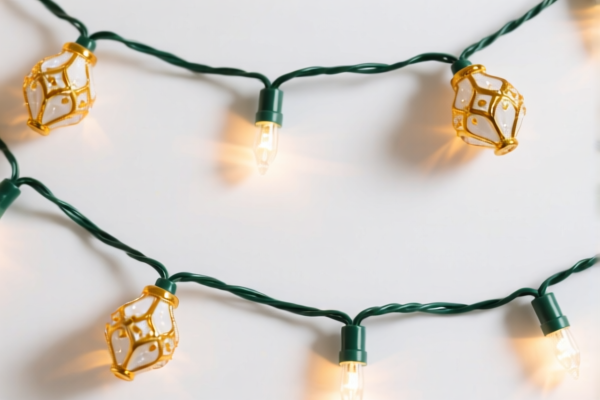
Product Images



AI Analysis
✨ Decorative Sequins & Beads (Plastic/Non-Textile)
🌐 HS Code Reference & Customs Clearance Guide | 2026 Latest Tariff Analysis | Professional-Level Clearance Strategy
📌 I. Product Definition & Classification: Do You Really Understand "Decorative Sequins"?
Decorative sequins, beads, and bugles are essential embellishment materials used in fashion, apparel, crafts, and industrial manufacturing. In international trade, their classification depends heavily on material composition and state of assembly.
Based on the provided data, these items fall under Chapter 39 (Plastics and Articles Thereof), specifically Heading 3926 (Other articles of plastics and articles of other materials of headings 3901 to 3914).
Key Distinction:
- Unstrung/Unset Sequins & Beads: Small, individual decorative elements not assembled into strings or fixed onto other goods. → Classified under 3926.90.35.00.
- Plastic Handbags: Finished goods made of plastic materials, even if they contain decorative elements. → Classified under 3926.90.33.00.
⚠️ Critical Note:
- If your "sequins" are made of textile fabric or metal, this data does not apply (they would fall under Chapters 50–63 or 71).
- This guide strictly applies to plastic-made or non-textile material sequins/beads as per the provided HS Codes.
- The phrase "not strung (except temporarily) and not set" is the legal key to classifying loose decorative items.
📦 II. HS Code Classification Details (2026 Latest Tariff Authority Comparison)
| HS Code | Product Description | Applicable Scenario | Tax Rate (China → US) |
|---|---|---|---|
3926.90.35.00 |
Beads, bugles, and spangles (sequins), not strung and not set; articles thereof. | Loose plastic sequins, plastic beads for sewing/crafting, plastic bugles (tubes), not attached to fabric or jewelry. | 14.0% (Base: 6.5% + Additional: 7.5%) |
3926.90.33.00 |
Handbags | Finished plastic handbags, purses, or similar containers, even if decorated with sequins/beads. | 6.5% (Base: 6.5% + Additional: 0.0%) |
🔍 Key Insight:
- Loose decorative items (sequins, beads) are considered "articles of plastic" and incur higher tariffs (14.0%) due to additional duties.
- Finished goods (like handbags) are classified as specific end-products and may have lower or zero additional duties (6.5% total).
- Do NOT misclassify loose sequins as "accessories" or "parts" of other goods; they have a specific subheading (3926.90.35.00).
💰 III. 2026 Latest Tariff Rate Breakdown (Including Additional Duties & Policy Surcharges)
✅ Applicable Country: United States (US)
✅ Origin: China (CN)
✅ Effective Date: As per current USITC and USTR regulations for Chinese goods.
🎯 1. 3926.90.35.00 —— Beads, Bugles, and Spangles (Unstrung, Unset)
| Item | Content |
|---|---|
| Base Tariff | 6.5% (Ad valorem) |
| Additional Tariff (Section 301 / USTR) | 7.5% |
| Total Tariff | 14.0% |
| Tax Calculation | CIF Value × 14.0% |
| De Minimis Exemption | ❌ Not Applicable for Section 301 goods (generally) |
| Legal Basis Path | HTSUS:3926.90.35.00 → USTR:Section 301 List 4 → Additional Duty: 7.5% |
📌 Explanation:
- Base Rate (6.5%): Standard Most Favored Nation (MFN) rate for other articles of plastics.
- Additional Rate (7.5%): Applies to Chinese-origin goods under specific USTR exclusions. This is the critical cost driver.
- Total Cost Impact: A $10,000 shipment of loose plastic sequins will incur $1,400 in duties.
🎯 2. 3926.90.33.00 —— Handbags (Plastic/Other Material)
| Item | Content |
|---|---|
| Base Tariff | 6.5% |
| Additional Tariff | 0.0% |
| Total Tariff | 6.5% |
| Tax Calculation | CIF Value × 6.5% |
| De Minimis Exemption | ❌ Not Applicable |
| Legal Basis Path | HTSUS:3926.90.33.00 → USTR:Excluded or Lower Rate Category |
📌 Explanation:
- Handbags, even if made of plastic, are classified as specific finished goods.
- No additional 7.5% duty applies (as per the provided data).
- Cost Efficiency: A $10,000 shipment of plastic handbags incurs only $650 in duties—50% less than loose sequins!
🛠️ IV. Customs Clearance Practical Advice (Real-World Pitfall Avoidance Guide)
✅ 1. Required Documentation Checklist (Missing Any = Delays)
| Document | Required | Explanation |
|---|---|---|
| ✅ Commercial Invoice | ✔️ | Must clearly state: "Plastic Sequins, Unstrung, Not Set" or "Plastic Handbag". |
| ✅ Product Photos | ✔️ | Show individual sequins/beads (for 3926.90.35.00) vs. finished handbag (for 3926.90.33.00). |
| ✅ Material Composition Statement | ✔️ | Confirm material is plastic (e.g., PVC, PET, Acrylic). Non-plastic materials (metal, glass, textile) will be misclassified. |
| ✅ Packing List | ✔️ | Detail quantity per package. Ensure no mixing of loose beads and finished bags in a way that confuses customs. |
| ✅ Certified Lab Report (if requested) | ✔️ | Proves material is plastic (FTIR test). |
✅ 2. Declaration Tips (Critical Mnemonics)
🔥 "Loose Beads Pay More, Bags Pay Less! Clarify Material, Avoid Stress!"
| Scenario | Correct Declaration | Incorrect Action | Consequence |
|---|---|---|---|
| Loose plastic sequins | 3926.90.35.00 |
Declare as "Fashion Accessories" or "Parts of Garments" | 14% Duty vs. potential 0-5% if misclassified (but high risk of penalty) |
| Plastic Handbags | 3926.90.33.00 |
Declare as "Bags" without material specification | May be reassigned to higher duty categories |
| Mixed Shipment | Split Declaration | Declare all as "Plastic Articles" | Customs will inspect and reclassify, causing delays |
| Non-Plastic Sequins | Wrong HS Code | Using 3926 codes for metal/glass sequins | Misdeclaration Penalty + Rejection |
✅ 3. Special Cases Handling
| Situation | Handling Advice |
|---|---|
| Sequins on a Garment | If sequins are sewn onto fabric, the garment is usually classified under Chapter 61/62 (Textiles), NOT 3926. The sequins are considered part of the garment. Do not use 3926.90.35.00 for sequined clothes! |
| Bejeweled Handbags | If the bag is plastic but heavily decorated with non-plastic beads, consult classification carefully. The base material of the bag often dictates the chapter. |
| Bulk vs. Retail | Bulk sequins for manufacturers → 3926.90.35.00. Retail-ready sequin packets → Still 3926.90.35.00 if unstrung. |
| Origin Labeling | Clearly mark "Made in China" to ensure correct application of additional duties. |
🌍 V. Global Main Market Clearance Comparison (2026 Latest)
| Country/Region | Recommended HS Code | Tariff (China Origin) | Certification Required | Notes |
|---|---|---|---|---|
| 🇺🇸 United States | 3926.90.35.00 |
14.0% (6.5% + 7.5%) | None (General) | High additional duty for plastic accessories. |
| 🇺🇸 United States | 3926.90.33.00 |
6.5% (6.5% + 0%) | None (General) | Lower duty for finished handbags. |
| 🇪🇺 European Union | 3926 90 97 (Likely) | ~6.0% | CE, REACH (Plastics) | No Section 301 equivalent, but REACH compliance is strict. |
| 🇨🇳 China (Import) | 3926 90 90 | ~5-10% | CCC (if applicable) | Varies by specific subheading. |
| 🇬🇧 United Kingdom | 3926 90 97 | ~6.0% | UKCA | Post-Brexit tariffs align closely with EU. |
📌 Conclusion:
- US Market: Plastic sequins/beads face significantly higher tariffs (14%) compared to finished plastic handbags (6.5%).
- Supply Chain Strategy: If you are manufacturing finished handbags, the tariff advantage is clear. If you are exporting loose sequins, factor in the 7.5% additional duty into your pricing.
- EU/Other Markets: Generally lower tariffs, but strict chemical safety (REACH) regulations apply to plastic materials.
📌 VI. Common Errors & Pitfalls (Lessons Learned)
❌ Error 1: Classifying sequined garments as "plastic sequins"
👉 Consequence: Wrong HS Code, potential 14% duty on entire garment if misclassified, or penalty for misdeclaration.
Correct: Garments are classified under Chapter 61/62 (Textiles).
❌ Error 2: Declaring mixed materials as "plastic"
👉 Consequence: If sequins contain metal or glass, they cannot be classified under 3926.
Correct: Identify material correctly. Metal sequins → Chapter 71; Glass beads → Chapter 70.
❌ Error 3: Ignoring the "Unstrung/Unset" condition
👉 Consequence: If sequins are pre-strung or set on backing, they may fall under different headings (e.g., 3926.90.97 or textiles).
Correct: Ensure products are loose and not permanently attached for 3926.90.35.00.
✅ Correct Declaration Example:
"Plastic Sequins, Assorted Colors, Unstrung, Unset, For Clothing Decoration, HS Code: 3926.90.35.00, Origin: China"
🎯 VII. Conclusion: Professional Declaration Saves Money!
🎯 Remember the Mnemonic:
🔹 "Loose Plastic Beads: 14% (6.5+7.5)"
🔹 "Plastic Handbags: 6.5% (6.5+0)"
🔹 "Sequins on Clothes? Think Textile, Not Plastic!"
📌 Tips:
- If your product is textile-based (fabric sequins), do not use these HS Codes. Seek classification under Chapters 50–63.
- Always provide photos and material specs to customs brokers to avoid reclassification delays.
- For high-volume shipments, consider applying for Exclusions under Section 301 (if applicable) to reduce the 7.5% additional duty.
📣 Immediate Action:
📞 Contact a licensed customs broker + Provide product photos + Verify material composition
🚀 Clear customs smoothly, reduce costs, and boost profitability!
✨ Professional Clearance Starts with Accurate Classification!
💼 Every dollar saved in duty is pure profit!
Customer Reviews
About HS Code Classification
The Harmonized System (HS) is an internationally standardized nomenclature developed by the World Customs Organization (WCO) to classify traded products. Over 200 countries use the HS system as the basis for customs tariffs, trade statistics, and import/export regulations.
Each HS code follows a hierarchical structure:
- Chapter (2 digits) — Broad category of goods (e.g., Chapter 84: Machinery and Mechanical Appliances)
- Heading (4 digits) — More specific grouping within the chapter
- Subheading (6 digits) — Internationally standardized breakdown, used by all WCO member countries
- National subdivisions (8-10 digits) — Country-specific extensions for further classification, such as US HTSUS 10-digit codes
Correct HS code classification is essential for smooth customs clearance, accurate duty payment, and compliance with trade regulations. Misclassification can lead to customs delays, overpayment of duties, or penalties.
When importing from CN to US, the applicable tariff rates may include:
- Most-Favored-Nation (MFN) rate — The standard duty rate applied to WTO members
- General rate — Applied to countries without trade agreements
- Trade remedy duties — Additional tariffs such as Section 301 (anti-dumping), Section 232 (national security), or countervailing duties
The information provided on this page is for reference purposes only. For official classification, please consult with your local customs authority or a licensed customs broker.