denim fabric
CN → US| HS Code | Tariff Rate | Origin | Destination | Doc |
|---|---|---|---|---|
| 6204621511 | 34.1% | CN | US | Official Doc |
| 6204628011 | 34.1% | CN | US | Official Doc |
| 5211420060 | 43.1% | CN | US | Official Doc |
| 6203420711 | 34.1% | CN | US | Official Doc |
| 6203424511 | 34.1% | CN | US | Official Doc |
| 5208130000 | 42.9% | CN | US | Official Doc |
Product Images


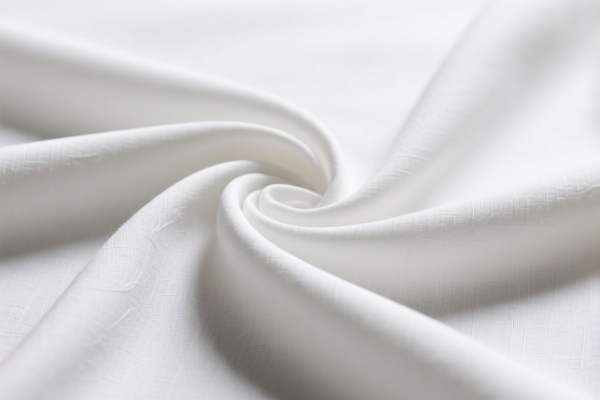
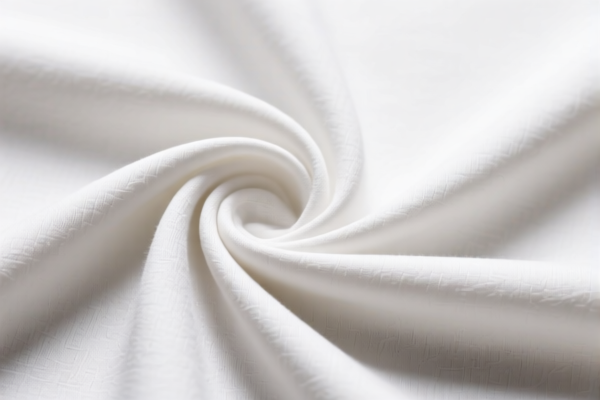
AI Analysis
👖 Denim Fabric: The Ultimate HS Code & Taxation Guide for Global Trade
🌐 HS Code Reference & Customs Clearance Guide | 2026 Latest Tariff Breakdown | Professional Clearance Strategy
📌 I. Product Definition & Classification: Do You Truly Understand "Denim Fabric"?
Denim fabric is a sturdy cotton warp-faced textile, traditionally used in jeans, jackets, and workwear. In international trade, its classification depends heavily on material composition, weave structure, end-use, and form (finished vs. unfinished).
⚠️ Critical Classification Logic:
- Raw/Semi-Finished Denim (e.g., grey fabric, unwashed, undyed) → Classified under 5208 / 5211 (cotton woven fabrics).
- Finished Denim Apparel (e.g., jeans, pants) → Classified under 6203 / 6204 (woven trousers).
- Specific Composition (e.g., cotton/man-made fiber blends) → May shift to 5211.
- Country of Origin: All data below assumes China (CN) origin, importing into the United States (US).
📦 II. HS Code Classification Details (2026 Latest Tariff Authority)
Based on your provided dataset, here is the precise mapping for denim-related items:
| HS Code | Product Description | Composition/Form | Application Scenario |
|---|---|---|---|
| 5208.13.00.00 | Denim Fabric, Cotton Woven Fabric | 100% Cotton, Unfinished/Plain Weave | Raw denim rolls, textile mills, upstream supply |
| 5211.42.00.60 | Denim Fabric, Cotton/Man-made Fiber Blend | Cotton blended with synthetic fibers | Blended denim for stretch wear, fashion fabric |
| 6203.42.07.11 | Denim Jeans, Blue Denim, Men's Pants | Finished garment, Men's specific | Men's blue jeans, formal/work denim wear |
| 6203.42.45.11 | Denim Jeans, Blue Denim, Pants | Finished garment, Unisex/General | General men's/unisex blue jeans |
| 6204.62.15.11 | Denim Jeans, Denim Fabric, Pants Form | Finished garment, Female/General | Women's denim jeans, generic denim trousers |
| 6204.62.80.11 | Denim Jeans, Finished Consumer Goods | Semi-finished fabric → Finished product | Consumer denim, ready-to-wear jeans |
🔍 Key Distinction:
- Fabric (52xx): Sold in rolls, no cuts, no sewing → Raw material.
- Garments (62xx): Sewn, sized, tagged, ready to wear → Finished product.
- Material Mix: Pure cotton (5208) vs. Blends (5211) drastically changes the base tariff rate.
💰 III. 2026 Tariff Rate Breakdown (Including Add-on Taxes & Policy Surcharges)
✅ Applicable Country: United States (US)
✅ Country of Origin: China (CN)
✅ Effective Date: 2025 Nov 10+ (Continued import regime)
🎯 1. 5208.13.00.00 — Cotton Denim Fabric (100% Cotton)
| Item | Content |
|---|---|
| Base Tariff | 7.9% |
| Section 301 / Additional Tariff | +25.0% (USITC Add-on) |
| Section 122 Tariff | +10.0% (China-specific surcharge) |
| Total Tax Rate | 42.9% |
| Tax Calculation | CIF Value × 42.9% |
| De Minimis Exemption | ❌ No (Denied for fabric imports) |
| Legal Path | Base: 5208.13.00.00 → USITC: +25% → Sec 122: +10% |
📌 Explanation:
- Base 7.9%: Standard Most-Favored-Nation (MFN) rate for cotton fabrics.
- +25%: Section 301 "Additional Tariff" imposed on Chinese textiles.
- +10%: "Section 122" specific surcharge on certain Chinese textile products.
- Total 42.9% is extremely high; fabric importers must factor this into pricing.
🎯 2. 5211.42.00.60 — Denim Fabric (Cotton/Man-Made Fiber Blend)
| Item | Content |
|---|---|
| Base Tariff | 8.1% |
| Section 301 / Additional Tariff | +25.0% |
| Section 122 Tariff | +10.0% |
| Total Tax Rate | 43.1% |
| Tax Calculation | CIF Value × 43.1% |
| De Minimis Exemption | ❌ No |
| Legal Path | Base: 5211.42.00.60 → USITC: +25% → Sec 122: +10% |
📌 Note:
- Blended denim incurs slightly higher base tax (8.1% vs 7.9%) but the same surcharges.
- Stretch denim (often blended) falls here; ensure accurate label declaration to avoid misclassification.
🎯 3. 6203.42.07.11 & 6203.42.45.11 — Men's Denim Jeans
| Item | Content |
|---|---|
| Base Tariff | 16.6% |
| Section 301 / Additional Tariff | +7.5% |
| Section 122 Tariff | +10.0% |
| Total Tax Rate | 34.1% |
| Tax Calculation | CIF Value × 34.1% |
| De Minimis Exemption | ❌ No |
| Legal Path | Base: 6203.42... → USITC: +7.5% → Sec 122: +10% |
📌 Explanation:
- Garments have a higher base rate (16.6%) compared to raw fabric (7.9%) due to value-added processing.
- The additional tariff is lower (7.5% vs 25%) than for raw fabric, but still significant.
- Gender specificity: "Men's" (6203) vs. "Women's" (6204) affects the sub-code but not the total rate in this dataset.
🎯 4. 6204.62.15.11 & 6204.62.80.11 — Women's / General Denim Jeans
| Item | Content |
|---|---|
| Base Tariff | 16.6% |
| Section 301 / Additional Tariff | +7.5% |
| Section 122 Tariff | +10.0% |
| Total Tax Rate | 34.1% |
| Tax Calculation | CIF Value × 34.1% |
| De Minimis Exemption | ❌ No |
| Legal Path | Base: 6204.62... → USITC: +7.5% → Sec 122: +10% |
📌 Note:
- Same tax structure as men's jeans.
- "Finished Consumer Goods" (6204.62.80.11) explicitly denotes ready-to-wear status, ensuring no classification as "semi-finished."
🛠️ IV. Customs Clearance Practical Advice (Pitfall Avoidance Guide)
✅ 1. Essential Documentation Checklist
| Document | Required? | Purpose |
|---|---|---|
| ✅ Fabric Composition Certificate | ✔️ | Prove % cotton vs. man-made fibers (critical for 5208 vs 5211) |
| ✅ Yarn Count & Weave Specification | ✔️ | Verify "Denim" status (twill weave, 3:1 warp) |
| ✅ Product Photos (Rolls vs. Garments) | ✔️ | Distinguish between fabric (52xx) and garments (62xx) |
| ✅ Commercial Invoice | ✔️ | Must clearly state "Denim Fabric" or "Denim Jeans" |
| ✅ Packing List | ✔️ | Show weight, volume, and unit type (rolls, bundles, pairs) |
| ✅ Labeling & Tagging Samples | ✔️ | For garments: confirm gender, size, care instructions |
✅ 2. Declaration Strategy (Key Mantra)
🔥 "Material First, Form Second, Label Precisely, Tax Drops!"
| Scenario | Correct Declaration | Mistake to Avoid |
|---|---|---|
| Raw Denim Rolls | 5208.13.00.00 (Cotton) or 5211.42.00.60 (Blend) |
Misdeclare as "Jeans" → 34.1% (incorrectly high) |
| Finished Jeans | 6203.42.07.11 (Men's) or 6204.62.15.11 (Women's) |
Misdeclare as "Fabric" → 42.9% (incorrectly high) |
| Unwashed Grey Denim | Declare as "Grey Fabric" + Composition | Call it "Denim" without proof of twill weave |
| Stretch Denim | Must declare Blend (5211.42.00.60) |
Declare as 100% Cotton → Penalty for false labeling |
✅ 3. Special Handling Cases
| Situation | Strategy |
|---|---|
| OEM Private Label | Provide OEM contract + design sheets; avoid "Generic" labels |
| Mixed Shipment (Fabric + Garments) | Split Declaration: Fabric on 52xx, Garments on 62xx; do not mix! |
| Semi-Finished Denim (Pre-wash) | If not sewn: still 52xx; if sewn but not finished: check "Garment" definition carefully |
| Non-Cotton Denim (Poly/Cotton) | Must declare blend ratio; if >85% cotton, still 52xx; if mixed differently, re-evaluate |
🌍 V. Global Market Comparison (2026 Tariffs for Denim)
| Country/Region | Recommended HS Code | Total Tariff (CN Origin) | Certification Needed | Notes |
|---|---|---|---|---|
| 🇺🇸 USA | 5208.13.00.00 (Fabric) / 6203.42.07.11 (Men's Jeans) |
42.9% / 34.1% | FCC (for electronic tags), Textile Marking Act | Highest global tariff; Section 122 applies |
| 🇨🇳 China | 5208.13.00.00 / 6203.42.07.11 |
5% – 8% | CCC, GB Standards | No Section 122 or Section 301 |
| 🇪🇺 EU | 5208.13.00.00 / 6203.42.07.11 |
8% – 12% | OEKO-TEX, REACH | No Section 301; GSP not applicable to China |
| 🇨🇦 Canada | 5208.13.00.00 / 6203.42.07.11 |
7% – 10% | CSA, Textile Labelling | Lower than US, but still significant |
| 🇦🇺 Australia | 5208.13.00.00 / 6203.42.07.11 |
5% | ALC | No Section 301; low tariff |
📌 Conclusion:
- The US is the most expensive market for Chinese denim due to Section 301 + Section 122.
- Fabric importers face ~43% total tax; Garment importers face ~34%.
- Consider supply chain shifts (e.g., Vietnam, Bangladesh) if US market is too costly.
📌 VI. Common Mistakes & Lessons (From the Field)
❌ Mistake 1: Calling "Grey Denim" as "Finished Jeans"
👉 Result: Incorrect 34.1% tariff applied → Overpayment + Re-export costs.
❌ Mistake 2: Mixing 100% cotton and blend denim in one shipment without separate declaration
👉 Result: Customs audit → 42.9% applied to entire shipment (penalty rate).
❌ Mistake 3: Not specifying "Denim" in the description
👉 Result: Misclassification as "Other Cotton Fabric" → 10–15% lower tariff initially, but audited later + fines.
❌ Mistake 4: Forgetting Section 122 in cost modeling
👉 Result: Underpricing → Loss of 10% margin on every unit.
✅ Correct Practice:
“Denim Fabric, 100% Cotton, 12oz, Twill Weave, Grey, Unwashed, HS Code: 5208.13.00.00”
“Men’s Denim Jeans, Blue, 100% Cotton, 14oz, HS Code: 6203.42.07.11”
🎯 VII. Final Thoughts: Precision Classification = Profit Protection
🎯 Remember the Mantra:
🔹 "Fabric is 43%, Garment is 34%; Material mix matters; Section 122 is real!"
🔹 "HS Code saves money; Tax difference costs thousands!"
📌 Pro Tip:
If your denim fabric originates from Vietnam, India, Bangladesh, or Cambodia, you may qualify for Section 301 exemptions or lower rates.
Recommendation: Apply for Pre-Ruling (Advance Ruling) from US Customs (CBP) before first shipment.
📣 Take Action Now:
📞 Contact a Licensed Customs Broker + Submit Product Samples + Request HS Code Pre-Ruling
🚀 Let your denim trade smoothly, efficiently, and profitably!
✨ Professional Classification Starts Here!
💼 Every cent of your tax cost deserves precise calculation!
Customer Reviews
About HS Code Classification
The Harmonized System (HS) is an internationally standardized nomenclature developed by the World Customs Organization (WCO) to classify traded products. Over 200 countries use the HS system as the basis for customs tariffs, trade statistics, and import/export regulations.
Each HS code follows a hierarchical structure:
- Chapter (2 digits) — Broad category of goods (e.g., Chapter 84: Machinery and Mechanical Appliances)
- Heading (4 digits) — More specific grouping within the chapter
- Subheading (6 digits) — Internationally standardized breakdown, used by all WCO member countries
- National subdivisions (8-10 digits) — Country-specific extensions for further classification, such as US HTSUS 10-digit codes
Correct HS code classification is essential for smooth customs clearance, accurate duty payment, and compliance with trade regulations. Misclassification can lead to customs delays, overpayment of duties, or penalties.
When importing from CN to US, the applicable tariff rates may include:
- Most-Favored-Nation (MFN) rate — The standard duty rate applied to WTO members
- General rate — Applied to countries without trade agreements
- Trade remedy duties — Additional tariffs such as Section 301 (anti-dumping), Section 232 (national security), or countervailing duties
The information provided on this page is for reference purposes only. For official classification, please consult with your local customs authority or a licensed customs broker.