desktop partition
CN → US| HS Code | Tariff Rate | Origin | Destination | Doc |
|---|---|---|---|---|
| 7308909590 | 85.0% | CN | US | Official Doc |
| 7308909530 | 85.0% | CN | US | Official Doc |
| 9403200078 | 85.0% | CN | US | Official Doc |
| 9403999040 | 85.0% | CN | US | Official Doc |
| 3925900000 | 40.3% | CN | US | Official Doc |
| 3925200091 | 22.8% | CN | US | Official Doc |
Product Images
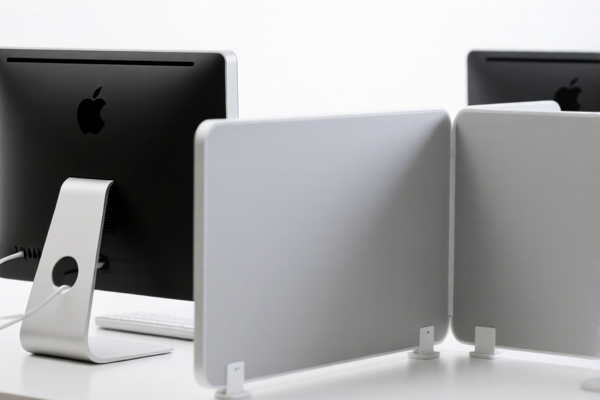
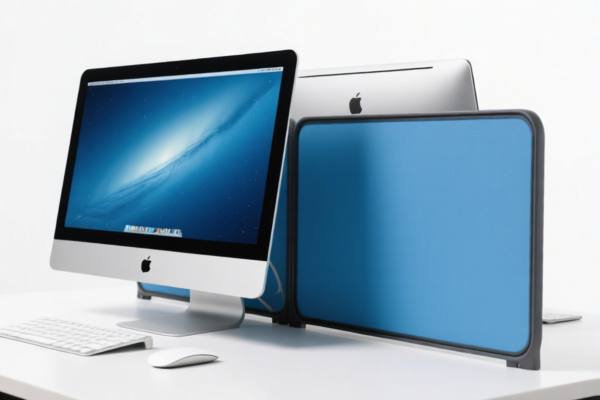
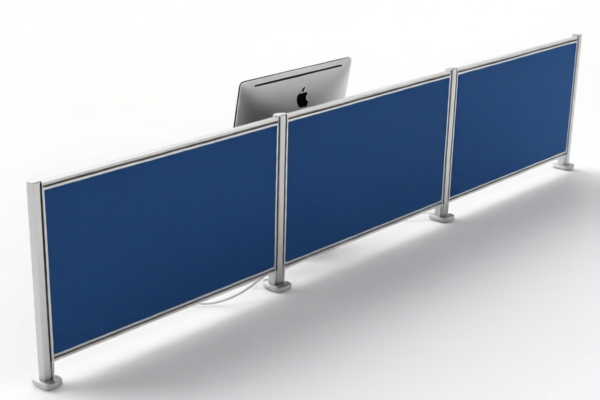

AI Analysis
🏗️ Desktop Partitions & Structural Fixtures
🌐 HS Code Reference & Customs Clearance Guide | 2024/2025 Latest Tariff Analysis | Professional Level Strategy
📌 I. Product Definition & Classification: What Exactly Is a "Desktop Partition"?
In the context of office furniture and interior construction, "Desktop Partitions" refer to dividers, screens, or modular walls used to separate workspaces. However, in international trade, the HS Code depends heavily on the material and function of the partition.
They are generally categorized into two main streams: 1. Office Furniture Components: If the partition is made of metal, wood, or plastic and is part of an office workstation system → Classified under Chapter 94 (Furniture). 2. Building Materials/Structures: If the partition is made of steel, aluminum, or plastics and serves as a permanent or semi-permanent structural element of a building (walls, roofing, siding) → Classified under Chapter 39 (Plastics) or Chapter 73 (Steel Structures).
⚠️ Key Distinction Point:
- If it is a movable office screen or part of a desk setup → HS Code 9403 (Furniture).
- If it is a steel/plastic wall panel, roofing, or structural siding for a building/warehouse → HS Code 7308 or 3925 (Builders' Ware/Structures).
📦 II. HS Code Classification Details (Based on Provided Data)
Below are the specific HS Codes and tax implications derived strictly from the provided data. Note that the tax rates vary significantly based on whether the item is considered "Furniture" or "Builders' Ware."
| HS Code | Product Description | Application Scenario | Material |
|---|---|---|---|
9403.20.00.78 |
Storage Lockers (Sub-category of Metal Furniture) | Metal partition panels used as locker fronts, or rigid metal office dividers integrated into storage systems | Metal (Steel) |
9403.99.90.40 |
Parts of Metal Furniture (Specifically for Steel Racks) | Panels, brackets, or connectors specifically designed for steel rack partitions or shelving units | Metal (Steel) |
7308.90.95.90 |
Other Structures/Parts of Iron/Steel (General) | Structural steel partitions, beams, or frames used in building construction (not prefabricated buildings) | Iron/Steel |
7308.90.95.30 |
Sheet-Metal Roofing, Siding, Flooring | Steel or metal sheets used as wall siding or partition panels in industrial/commercial buildings | Iron/Steel |
3925.90.00.00 |
Builders' Ware of Plastics (Other) | Plastic wall panels, plastic structural dividers not specified elsewhere | Plastic |
3925.20.00.91 |
Doors, Windows, Frames & Thresholds (Plastics) | Plastic frames or threshold strips for partition doors/windows | Plastic |
🔍 Critical Note:
- "Desktop Partition" is ambiguous. If it is a simple desk screen, it might be argued as furniture (9403). If it is a structural wall panel made of metal or plastic, it falls under7308or3925. - The provided data does not include a generic "Office Desk Screen" under9403.90but specifically lists Storage Lockers (9403.20.00.78) and Parts for Steel Racks (9403.99.90.40). Ensure your product fits these specific descriptions or the structural categories.
💰 III. Detailed Tariff Rate Breakdown (2024/2025 Update)
✅ Applicable Country: USA (US)
✅ Origin: China (CN)
✅ Context: 2024/2025 Tariff Rates including Base Duty and Additional Duties (Section 301 & IEEPA)
🎯 1. Furniture Category (Low Base Duty)
🏷️ 9403.20.00.78 – Metal Storage Lockers / Metal Partitions
| Item | Detail |
|---|---|
| Base Duty | 0.0% |
| Additional Duty (Section 301) | +25.0% (Steel/Aluminum/Copper products surcharge) |
| Total Duty | 25.0% |
| Calculation | CIF Value × 25% |
| De Minimis Exemption | ❌ Not Eligible (High risk of audit if de minimis claimed) |
| Legal Basis | USITC:9403.20.00.78 → FOOTNOTE:Steel/Al/Cu Surcharge |
📌 Explanation:
- While the base duty is 0%, the 25% additional tariff applies because this is classified as a steel/iron product.
- This is significantly cheaper than structural steel options if the goods can be legally classified as "furniture parts" rather than "building structures."
🏷️ 9403.99.90.40 – Parts of Steel Racks/Furniture
| Item | Detail |
|---|---|
| Base Duty | 0.0% |
| Additional Duty (Section 301) | +25.0% |
| Total Duty | 25.0% |
| Calculation | CIF Value × 25% |
| De Minimis Exemption | ❌ Not Eligible |
📌 Explanation:
- If your "desktop partition" consists of panels, connectors, or brackets for steel office racking/partition systems, this code applies.
- Tip: Ensure the documentation clearly states "Parts for Office Steel Racking" to avoid being reclassified as building structures.
🎯 2. Structural/Building Materials Category (High Base Duty)
🏷️ 7308.90.95.90 – Other Iron/Steel Structures
| Item | Detail |
|---|---|
| Base Duty | 0.0% |
| Additional Duty (Section 301) | +25.0% |
| Additional Duty (Steel/Al/Cu Surcharge) | +50.0% |
| Total Duty | 75.0% |
| Calculation | CIF Value × 75% |
| De Minimis Exemption | ❌ Strictly Prohibited |
📌 Explanation:
- This is the highest risk classification. If customs determines your partition is a "structure of iron or steel" (e.g., welded steel frame walls), the total tariff is 75%.
- This applies to heavy-duty steel frames, not light furniture parts.
🏷️ 7308.90.95.30 – Sheet-Metal Roofing/Siding/Flooring
| Item | Detail |
|---|---|
| Base Duty | 0.0% |
| Additional Duty (Section 301) | +25.0% |
| Additional Duty (Steel/Al/Cu Surcharge) | +50.0% |
| Total Duty | 75.0% |
| Calculation | CIF Value × 75% |
📌 Explanation:
- If your partition is made of corrugated steel sheets or metal siding used as a wall, it falls here.
- Warning: Do not use this code for office furniture parts. It triggers the maximum 75% tariff.
🎯 3. Plastic Builders' Ware
🏷️ 3925.90.00.00 – Builders' Ware of Plastics (Other)
| Item | Detail |
|---|---|
| Base Duty | 0.0% |
| Additional Duty | 0.0% |
| Total Duty | 0.0% |
| Calculation | CIF Value × 0% |
| De Minimis Exemption | ✅ Possible (If under $800 and not prohibited) |
📌 Explanation:
- Plastic partitions that are not "doors/windows" may qualify for 0% duty.
- This is the most cost-effective option for plastic partitions. Ensure the product is not described as a "door" or "window frame" to avoid the higher tax category below.
🏷️ 3925.20.00.91 – Plastic Doors, Windows, Frames
| Item | Detail |
|---|---|
| Base Duty | 5.3% |
| Additional Duty | +7.5% |
| Total Duty | 12.8% |
| Calculation | CIF Value × 12.8% |
📌 Explanation:
- If your plastic partition includes a door or window frame component, it may be classified here.
- Strategy: If possible, avoid classifying simple wall panels as "frames" to stay under3925.90.00.00(0% duty).
🛠️ IV. Customs Clearance Practical Advice
✅ 1. Documentation Checklist (Must-Haves)
| Document | Requirement | Purpose |
|---|---|---|
| Product Specification Sheet | ✔️ | Clearly define material (Steel, Plastic, Wood) and dimensions. |
| Commercial Invoice | ✔️ | Description must match HS Code. Use "Office Partition Panel" vs. "Steel Structural Beam". |
| Photos | ✔️ | Show the product in an office setting (for furniture) or as a building component (for structures). |
| Bill of Lading | ✔️ | Ensure packaging weight and volume are accurate. |
| Origin Certificate | ✔️ | Required for determining additional duties (China origin triggers surcharges). |
✅ 2. Declaration Strategy (Key Tips)
| Scenario | Correct Declaration | Incorrect Declaration | Risk |
|---|---|---|---|
| Steel Office Partition | "Steel Office Desk Partition Panel, Part of Office Furniture" | "Steel Building Structure" | High risk of 75% tax if misclassified. |
| Plastic Partition | "Plastic Decorative Wall Panel for Office Use" | "Plastic Door Frame" | Risk of 12.8% tax instead of 0%. |
| Metal Rack Components | "Parts for Steel Office Racking System" | "Steel Storage Locker" | Ensure it's not a standalone locker (9403.20) if it's just a part. |
✅ 3. Special Considerations
| Situation | Recommendation |
|---|---|
| Mix of Materials | If partition is steel frame with plastic panels, declare as Furniture Parts (9403.99.90.40) to benefit from lower base duty and 25% surcharge vs. 75%. |
| De Minimis (Section 321) | Only applicable for Plastic (3925.90) if under $800 and not subject to specific restrictions. Avoid for Steel/Plastic Doors due to high duty rates. |
| Pre-Arrival Review | For large shipments of steel partitions, apply for an Advance Ruling to confirm if they are "Furniture" or "Structure." |
🌍 V. Global Comparison (Quick Reference)
| Market | Recommended HS Code | Est. Duty Rate (China Origin) | Notes |
|---|---|---|---|
| 🇺🇸 USA | 9403.99.90.40 (Steel Parts) |
25.0% | Best for steel furniture parts. |
| 🇺🇸 USA | 3925.90.00.00 (Plastic) |
0.0% | Best for plastic partitions. |
| 🇪🇺 EU | 9403.20 (Metal Furniture) |
6.0% | No Section 301 equivalent. |
| 🇨🇳 China | 9403.20 |
0.0% - 5.0% | Low import duty. |
📌 Conclusion for US Imports:
- Plastic Partitions are the most tariff-efficient (0%).
- Steel Furniture Parts are moderately taxed (25%).
- Steel Structures are heavily taxed (75%).
- Strategy: Always try to classify partitions as "Furniture Parts" (9403) rather than "Building Structures" (7308) or "Doors" (3925.20) to minimize duties.
📌 VI. Common Mistakes & Pitfalls
❌ Mistake 1: Classifying steel office partitions as "Building Structures" (7308.90.95.90).
👉 Result: 75% duty instead of 25%.
✅ Fix: Emphasize "Office Use" and "Furniture Component" in documentation.
❌ Mistake 2: Describing plastic wall panels as "Plastic Doors" (3925.20.00.91).
👉 Result: 12.8% duty instead of 0%.
✅ Fix: Use description "Wall Panel" or "Divider," not "Door/Frame."
❌ Mistake 3: Ignoring the Steel/Aluminum/Copper 50% Surcharge.
👉 Result: Unexpected high costs at customs.
✅ Fix: Always check the "Additional Duty" column for steel/plastic builders' ware.
🎯 VII. Conclusion: Optimize Your Classification
🎯 Key Takeaway:
🔹 Plastic > Furniture Parts > Structures (in terms of low tax).
🔹 Plastic Wall Panels: Target3925.90.00.00(0% duty).
🔹 Steel Partitions: Target9403.99.90.40(25% duty).
🔹 Avoid:7308(75% duty) and3925.20(12.8% duty) unless absolutely necessary.
📣 Action Plan:
1. Audit Product: Is it movable furniture or fixed structure?
2. Select Code: Choose 9403 for steel furniture parts or 3925.90 for plastic.
3. Document: Label clearly as "Office Partition" or "Furniture Part."
4. Declare: Submit with accurate CIF value to calculate 25% or 0% duty.
✨ Professional Customs Clearance Starts with Accurate Classification!
💼 Minimize Your Duty, Maximize Your Profit!
Customer Reviews
About HS Code Classification
The Harmonized System (HS) is an internationally standardized nomenclature developed by the World Customs Organization (WCO) to classify traded products. Over 200 countries use the HS system as the basis for customs tariffs, trade statistics, and import/export regulations.
Each HS code follows a hierarchical structure:
- Chapter (2 digits) — Broad category of goods (e.g., Chapter 84: Machinery and Mechanical Appliances)
- Heading (4 digits) — More specific grouping within the chapter
- Subheading (6 digits) — Internationally standardized breakdown, used by all WCO member countries
- National subdivisions (8-10 digits) — Country-specific extensions for further classification, such as US HTSUS 10-digit codes
Correct HS code classification is essential for smooth customs clearance, accurate duty payment, and compliance with trade regulations. Misclassification can lead to customs delays, overpayment of duties, or penalties.
When importing from CN to US, the applicable tariff rates may include:
- Most-Favored-Nation (MFN) rate — The standard duty rate applied to WTO members
- General rate — Applied to countries without trade agreements
- Trade remedy duties — Additional tariffs such as Section 301 (anti-dumping), Section 232 (national security), or countervailing duties
The information provided on this page is for reference purposes only. For official classification, please consult with your local customs authority or a licensed customs broker.